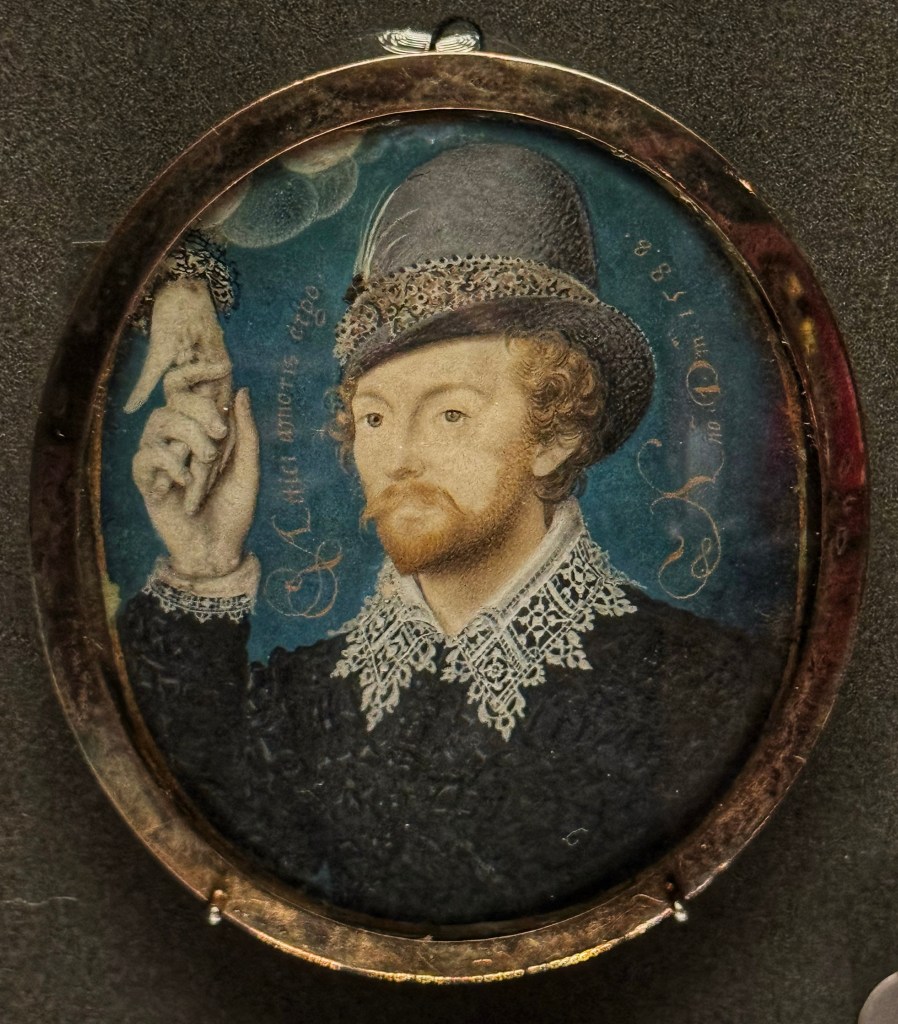
Nicholas Hilliard(1547-1619),Man Clasping a Hand from a Cloud, 1588, Watercolour and bodycolour on vellum, 6.0 cm × 4.95 cm, Victoria and Albert Museum, London
Nicholas Hilliard(1547-1619), Man Clasping a Hand from a Cloud, 1588, Watercolour and bodycolour on vellum, 6.0 cm × 4.95 cm, Victoria and Albert Museum, London
This small miniature portrait (limning) is a tight theatre of signs, where colour, gesture, and motto create an image at once intimate and enigmatic.
By 1588, Hilliard was painting in a voice honed by his French experience and tempered in the atmosphere of Henri III’s Valois court, where allegory and cipher were as important as likeness. This limning is one of the clearest proofs of that refinement: the sitter’s poised gesture, the hand descending from cloud, the lapidary blue ground and the motto in fine gold all combine in a closed performance.
This portrait presents itself as a riddle that resists resolution, inviting reflection rather than disclosure. As with many Renaissance portraits, ambiguity was not a failure of language but a mark of wit.The Latin motto, ‘Attici amoris ergo’, lies at the centre of the mystery. Attempts at translation—‘for the sake of Attic love’, ‘in honour of Greek love’, ‘by reason of Attic style’—never settle. Elizabethan courtiers, like their Valois peers, delighted in fractured Latin, half-remembered from school and burnished with a learned gloss. By the late sixteenth century, such phrases often had little of the integrity of Cicero; they were gnomic, compact, designed to carry resonance only for those in the know. Meaning was shaped by context, shared memory, and the intimacy of private exchange. The motto may have had force only for sitter, recipient and artist, opaque to all beyond that circle—just as our own invented idioms, memes or wordplay would puzzle strangers centuries later.
Tracing possible sources only multiplies uncertainties. ‘Attici’ might conjure Athens and its rhetorical elegance, making the cloud-hand an allegory of muse or beloved; it might equally recall the Elizabethan commonplace of ‘Greek love’, ranging from exalted friendship to more explicit suggestion. Neither can be proved. The clasp itself may signify fidelity, mystical union, or staged desire that refuses to name its object. It is not even certain whether we see a man’s or a woman’s hand, and while some propose a mourning context, the motto resists such a reading. What remains is irresolution, and this irresolution is central to the very purpose of impresa limnings—works never intended to yield a single solution, but to preserve an enigma bound to private understanding.
Portrait miniatures like this one were intensely personal objects, often worn close to the body and intended for the gaze of only a few.To demand transparency is to misread their function. They are dialogues in image and fragmentary Latin, and their unresolved nature is the very essence of their operation. Just as private groups today mint their own verbal codes, so Hilliard’s patrons cultivated mottos legible only to themselves. The cloud, the hand, the inscription together form an emblem whose meaning has slipped from us; but in that very loss lies its testimony to the closed culture that produced it. What appears as a riddle without answer is in fact the survival of a language meant never to be public in the first place. The limning’s enigma is not an obstacle to interpretation but its core.
References
Goldring, E. (2019) Nicholas Hilliard: Life of an Artist. New Haven and London: Yale University Press. Hearn, K. (2005) Nicholas Hilliard. London: Unicorn Publishing Group.
MacLeod, C. (ed.) (2019) Elizabethan Treasures: Miniatures by Hilliard and Oliver. London: National Portrait Gallery Publications
Strong, R. (1983) The English Renaissance Miniature. London: Thames and Hudson
Strong, R. (2019) The Elizabethan Image: An Introduction to English Portraiture, 1558 to 1603. New Haven: Yale University Press
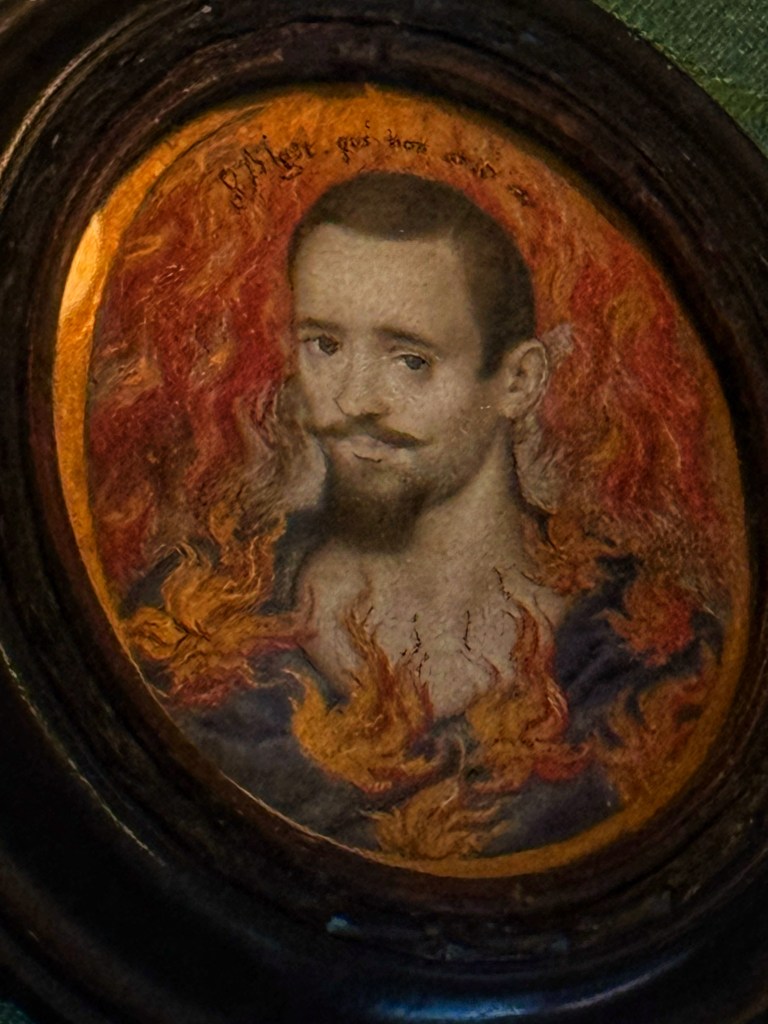
Isaac Oliver (1565-1617), A Man Consumed by Flames (c.1600–10), Watercolour and bodycolour with gold on vellum, 5.2 x 4.4 cm, Ham House, Surrey
Isaac Oliver (1565-1617), A Man Consumed by Flames (c.1600–10), Watercolour and bodycolour with gold on vellum, 5.2 x 4.4 cm, Ham House, Surrey
Renaissance allegorical portraits often preserve more mysteries than certainties: the identities of sitters, the circumstances of commission, and even the intended meaning are often uncertain, yet such ambiguity only intensifies their allure. Isaac Oliver’s A Man Consumed by Flames (c.1600–10) is a Jacobean miniature in the English Renaissance tradition, remarkable for its fusion of portraiture and allegory. The sitter, engulfed by fire and accompanied by the motto Alget, qui non ardet (‘He grows cold, who does not burn’), epitomises the central intrigue: do the flames signify Petrarchan love passion or Protestant zeal? The work hovers between amatory token and religious device, and its fascination lies in this ambivalence.
The imagery belongs to a broad European allegorical language in which fire carried multiple meanings. Andrea Alciato’s (1492–1550) Emblematum liber (first ed. 1531), the text that inaugurated the emblem tradition, codified flame as a symbol of both ardour and trial, pairing images with mottoes and epigrams. Alciato’s successors elaborated these themes: Joachim Camerarius (1500–1574), in his Symbola et Emblemata (1590–1604), repeatedly depicted the heart consumed by fire as an emblem of fidelity tested by suffering, while Hadrianus Junius (1511–1575), in his Emblemata (1565), presented the burning heart as a purifying ordeal of virtue. Such devices were deliberately double-edged: in an amorous context they signified constancy, while in a devotional frame they symbolised the soul inflamed by divine grace.
Literary traditions reinforced this iconography. Francesco Petrarca (1304–1374), in the Canzoniere, had made fire and the burning heart central metaphors of desire, at once destructive, refining, and transcendent. Neoplatonic philosophy gave these images further depth: Marsilio Ficino (1433–1499), in De amore (1469) and the Theologia Platonica (1469–74), described love as a divine fire (ignis divinus) binding mortal and eternal, while Giovanni Pico della Mirandola (1463–1494), in the Oration on the Dignity of Man (1486), extended the theme of ardour as the means of ascent to God. Religious discourse added a sharper edge, as in Revelation 3:15–16, which condemned the ‘lukewarm’ soul that failed to burn with zeal. Thus the same image of fire within a portrait could represent steadfast Petrarchan love, the ascent of the soul in Neoplatonic thought, or the fervour of evangelical faith, depending on context.
Scholars have proposed the identity of the sitter as William Strachey (1572–1621), secretary of the Virginia Company, and connected the miniature’s commission to the circumstances of his Virginia voyage. Both remain uncertain, but the association provides further intrigue. Strachey repeatedly employed the rare motto Alget, qui non ardet in his Lawes Divine, Morall & Martiall (1612) and the Historie of Travaile into Virginia-Britania (c.1612). His celebrated account of the Sea Venture shipwreck of 1609, which describes fiery storm phenomena later echoed in Shakespeare’s Tempest, gave the phrase the weight of Protestant zeal and colonial endurance. If linked to these circumstances, the miniature functions not as a Petrarchan love token but as a Protestant impresa announcing constancy and evangelical mission.
This portrait ultimately reflects a Renaissance culture that prized ambiguity. Its flames may be read as amorous passion, Protestant constancy, or Neoplatonic ascent, and all these readings were available to a cultivated audience. Oliver’s miniature collapses the boundaries between sacred and profane, private and public, earthly and divine. Its enigma lies not in the resolution of the allegory but in recognising that its very ambivalence was the point: for Renaissance beholders, trained in the logic of emblems and Neoplatonic metaphor, the consuming fire was not a matter of choosing between meanings, but a single image in which fervour, passion, and trial coincided, holding faith, love, and truth together rather than apart.
References
MacLeod, C. (ed.) (2019) Elizabethan Treasures: Miniatures by Hilliard and Oliver. London: National Portrait Gallery Publications
Forty Hall, built between 1629 and 1632 for Sir Nicholas Rainton (1569–1646), is a remarkably complete example of a Jacobean merchant’s mansion on the northern edge of London. Rainton, a successful haberdasher, made his fortune through the import of fine silks—taffeta and satin from Florence and velvet from Genoa. His business success led to steady civic advancement: Alderman of Aldgate Ward in 1621, Sheriff in 1622, Lord Mayor in 1632, and a knighthood in 1633. The house he built at Enfield was not only a retreat from the dirt and clamour of the City, but also a physical expression of status, ambition, and social authority—rooted in English tradition yet shaped by continental ideas.
Forty Hall’s architecture reflects a moment of stylistic transition. Possibly attributed to Edward Carter, Chief Clerk of the King’s Works, it avoids the formal classicism of Inigo Jones, belonging instead to a broader Jacobean tradition that drew on Italian and Flemish sources through pattern books and the skills of foreign craftsmen working in England before the Civil War. The house is symmetrical in massing but not strictly classical, ornamental yet grounded in native forms. Built of red brick on a square plan, it has stone banding between its three storeys and rusticated stone quoins at the corners. A hipped slate roof and tall chimney stacks, some rebuilt in keeping with the original design, complete the compact form.
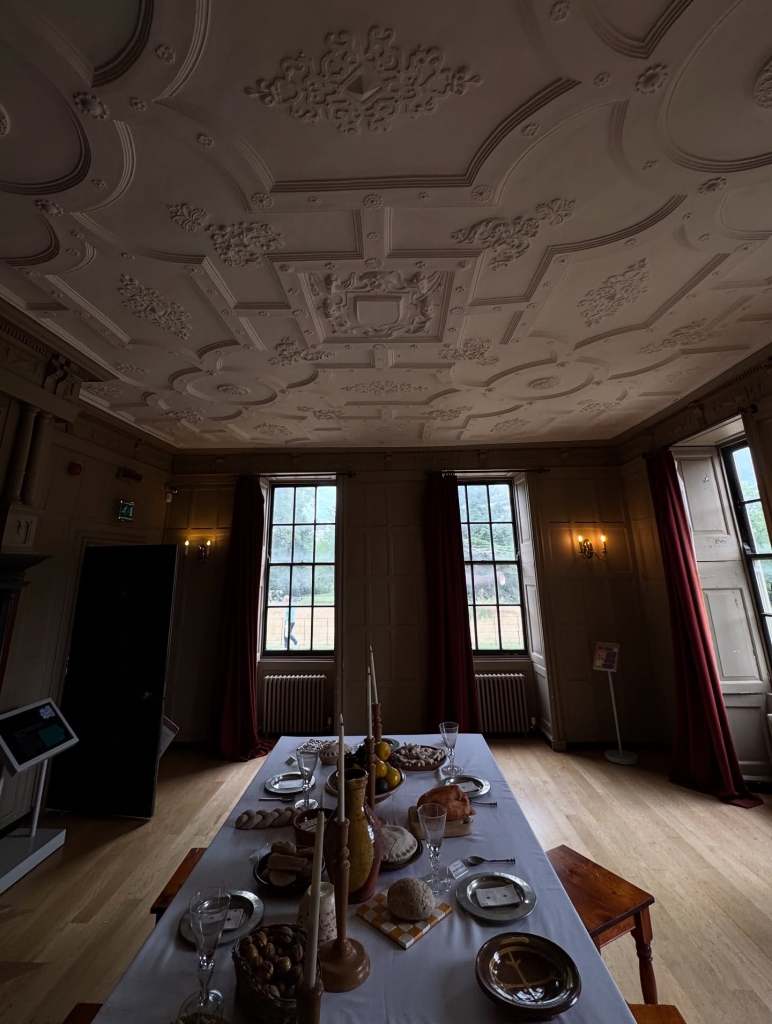
Three façades are formally balanced, while the fourth—facing west—was altered early to accommodate service rooms such as the kitchen, buttery, and steward’s quarters. Inside, the layout combines formality and order: the Great Hall is entered through a carved screen with grotesque heads and scallop shells, while the ceilings display complex strapwork plaster decoration in the Dutch style. Panelling, pilasters, and ornamental plasterwork reflect both international influence and the tastes of a confident mercantile class.
In 1636, two low service wings were added. Major changes came in the eighteenth century, when Sir Nicholas Wolstenholme, a descendant by marriage, undertook modernisation. Around 1708, porches with Ionic columns and cartouches were added to the three main fronts, softening the Jacobean character with a Georgian rhythm. In the 1790s, Edmund Armstrong had the brick exterior coated in white-painted stucco, later removed to reveal the original masonry.
Georgian alterations included decorative plaster ceilings, reconfigured partitions, and columned screens, yet the essential Jacobean core—its structure, decorative language, and hierarchy of public and private rooms—remains clear.
Among the house’s treasures is a portrait of Sir Nicholas Rainton, painted in the early 1640s by an unknown English artist in the manner of van Dyck. Depicted in his Lord Mayor’s robes with the civic collar and badge, he is shown in the years leading to the outbreak of the Civil War in 1642. Though a Puritan and supporter of Parliament, Rainton declined a seat on the Committee of Safety that year and withdrew to Forty Hall, where he died in 1646 as the first phase of the conflict ended. The portrait captures both civic pride and the quiet withdrawal of a man stepping back from political crisis.
A later addition is a sensitive portrait of Princess Mary, daughter of Charles I—an unexpected survival linking this Parliamentarian merchant’s house to the wider artistic world of Stuart England, and to a cultural memory reaching far beyond its Puritan origins.
English School, Portrait of Sir Nicholas Rainton (1569–1646), c.1632, Oil on canvas, Forty Hall, Estate, Enfield, LondonForty Hall Estate, Enfield, LondonForty Hall Estate, Enfield, LondonForty Hall Estate, Enfield, LondonForty Hall Estate, Enfield, LondonForty Hall Estate, Enfield, LondonForty Hall Estate, Enfield, LondonForty Hall Estate, Enfield, LondonEnglish School,Portrait of Henrietta Anne (1644–1670), daughter of King Charles I (1600–1649), late 17th century, Oil on canvas, Forty Hall Estate, Enfield, London English School, Portrait of Sir Nicholas Rainton (1569–1646), c.1632, Oil on canvas, Forty Hall, Estate, Enfield, London
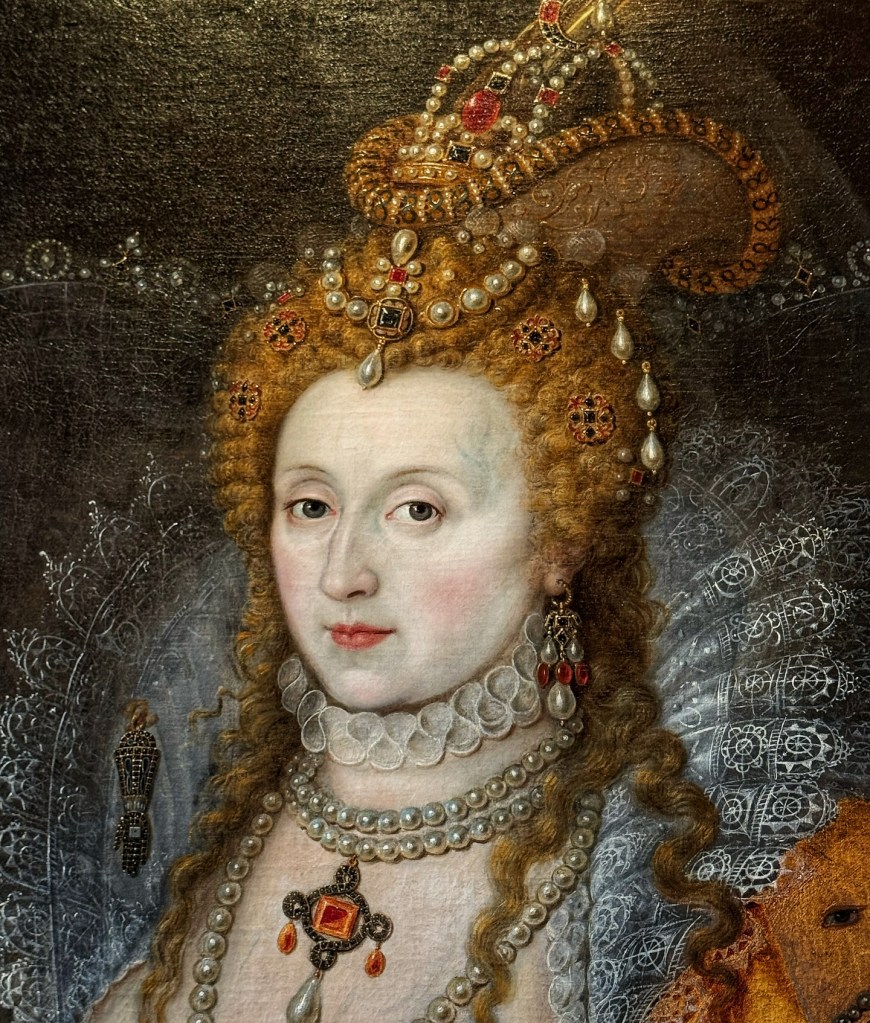
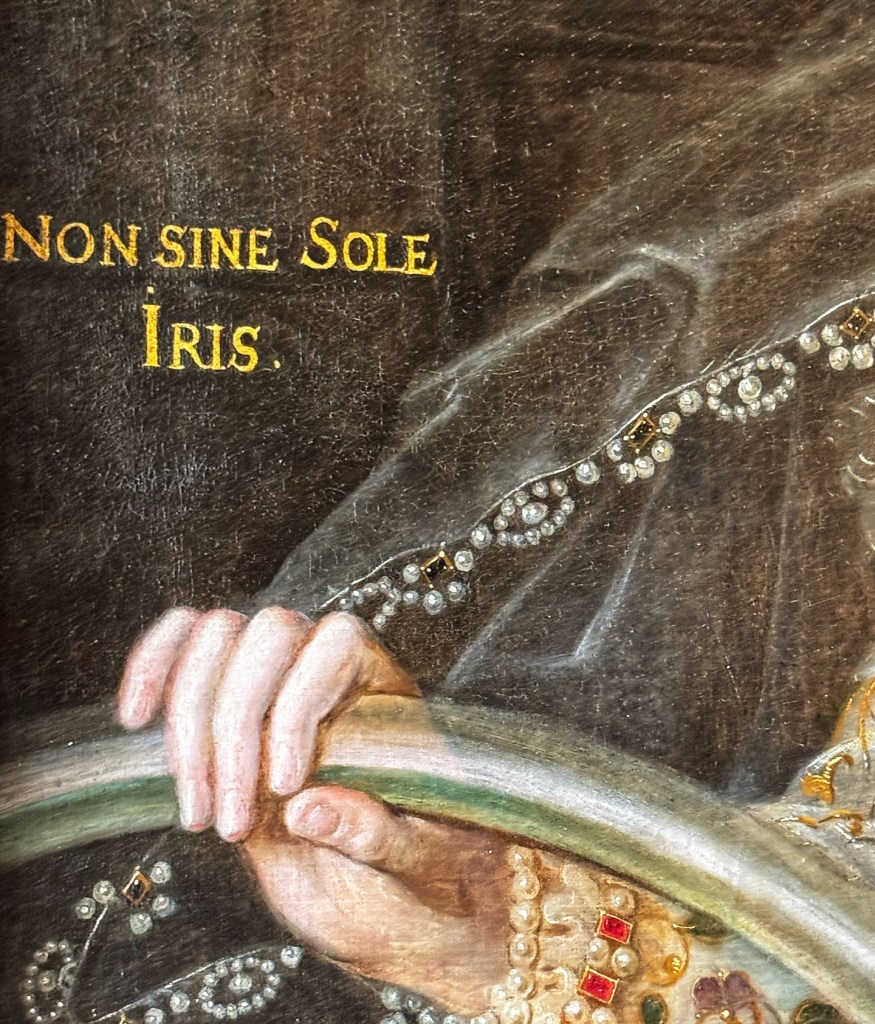
Traditionally attributed to Marcus Gheeraerts the Younger (1561–after 1636), Rainbow Portrait of Elizabeth I, Oil on canvas, 128 x 101 cm, Hatfield House, Hertfordshire
Traditionally attributed to Marcus Gheeraerts the Younger (1561–after 1636), Rainbow Portrait of Elizabeth I, Oil on canvas, 128 x 101 cm, Hatfield House, HertfordshireTraditionally attributed to Marcus Gheeraerts the Younger (1561–after 1636), Rainbow Portrait of Elizabeth I, Oil on canvas, 128 x 101 cm, Hatfield House, Hertfordshire
This masterpiece was probably commissioned by Sir Robert Cecil (1563–1612), one of Elizabeth I’s most powerful ministers in her final years and a central organiser of her later intelligence operations. For centuries it hung at Hatfield House, the Cecil family seat, which Robert Cecil built between 1607 and 1611 after exchanging his former residence at Theobalds with James I. The portrait is generally dated to around 1600–1602, placing it at the very close of Elizabeth’s reign and lending the image a quality of deliberate, almost valedictory, political statement.
The face shows evidence of pattern transfer — most likely by means of a stencil or pounced cartoon — a technique typical of elite portrait production in late Elizabethan England, where the standardisation of the royal image across multiple versions was as much a matter of political control as of studio practice. The result is the so-called ‘mask of youth’: a smooth, ageless countenance that bears no relation to the aged reality of a queen who was in her late sixties when the portrait was made. While traditionally attributed to Marcus Gheeraerts the Younger — who had trained in the Low Countries before arriving in England as a Protestant refugee from Bruges and who later became the dominant court portraitist of his generation — alternative attributions have included Isaac Oliver (c.1565–1617), John de Critz (c.1551–1642), and Robert Peake the Elder (c.1551–1619). The attribution to Gheeraerts is complicated by his family connections to the de Critz workshop, having married the sister of John de Critz, which makes the attribution landscape here unusually entangled. Oliver, primarily known as a miniaturist, and Peake, who held the office of Sergeant Painter, represent equally plausible candidates given the collaborative and somewhat fluid nature of royal studio production at the time.
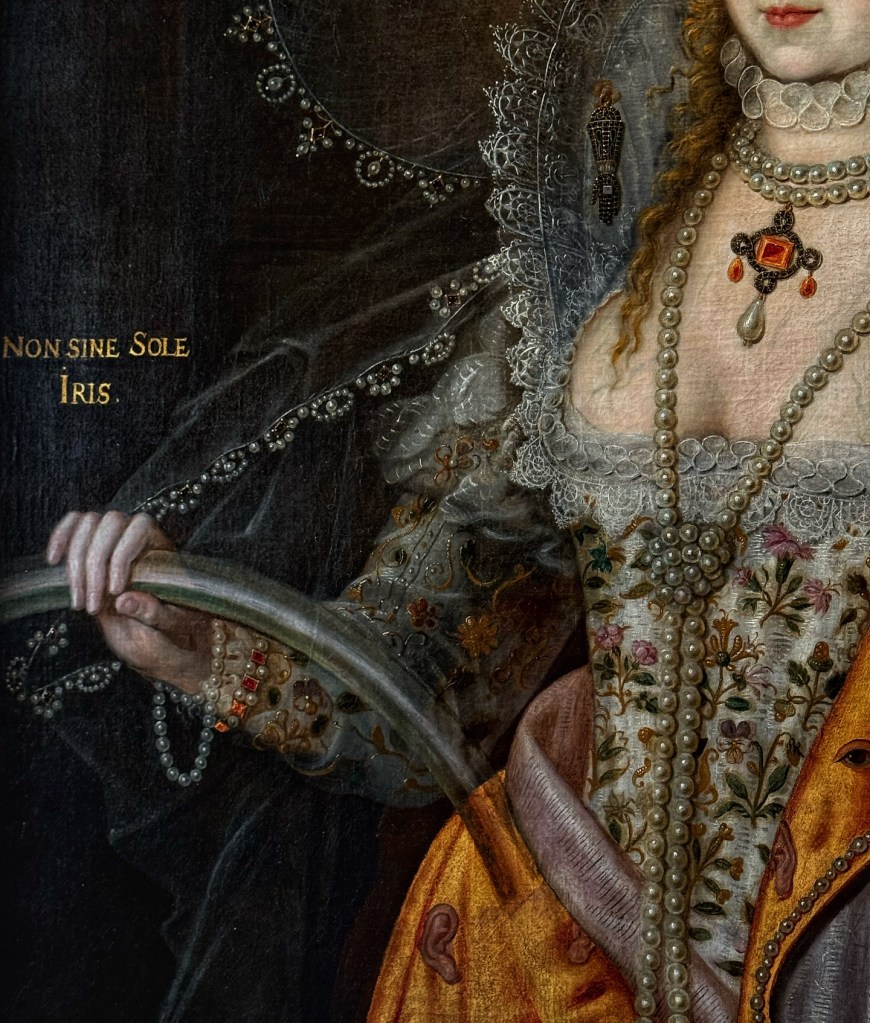
Elizabeth is shown holding a rainbow, a deliberate symbol of peace and harmony. The Latin inscription beside it, Non sine sole iris (‘No rainbow without the sun’), proclaims that peace — the rainbow — can only exist under her authority, figured here as the sun. The emblem-and-motto pairing was familiar from contemporary emblem books, including Geoffrey Whitney’s A Choice of Emblemes (1586) and the influential Latin collections of Andrea Alciato, ensuring that the intended meaning would be instantly understood by informed viewers. The rainbow itself, in the classical tradition associated with Iris, the divine messenger between heaven and earth, adds a further theological resonance: the queen as cosmic intermediary, dispensing harmony from above.
Her gown is lavishly embroidered with eyes and ears — an image of monarchical omniscience that alludes to the Queen’s vigilance and the reach of her intelligence network. This system, first developed under Sir Francis Walsingham and later expanded by Robert Cecil, was capable of infiltrating Catholic conspiracies, intercepting ciphered correspondence, and uncovering assassination plots. Walsingham’s network exposed the Babington Plot in 1586, which led directly to the execution of Mary, Queen of Scots, while Cecil’s operations in the 1590s and early 1600s maintained the same rigorous surveillance, securing Elizabeth’s authority until the end of her reign. The embroidered motifs therefore function not merely as decorative ornament but as a kind of wearable political manifesto: the queen clothes herself in the instruments of her own power.
The serpent on her sleeve symbolises wisdom and prudence, themes well established in Renaissance Neoplatonic and emblematic imagery, where the motif also carried moral and political associations. Notably, the serpent appears to hold a heart-shaped ruby in its mouth, a detail that sharpens the allegory considerably: reason — embodied by the serpent — governs passion, figured by the heart. The elaborate fan behind her head, possibly of lace or set with jewels, serves a visual function akin to a radiant halo, reinforcing her image as a solar monarch in line with the broader Renaissance tradition of equating sovereign authority with the sun. Her headdress, meanwhile, incorporates a crescent-moon ornament, drawing on the parallel Elizabethan iconography of the queen as Cynthia or Diana — the chaste moon goddess — a persona cultivated with particular intensity by the poets of her court, among them Sir Walter Raleigh and Edmund Spenser. The coexistence of solar and lunar symbolism within a single portrait is characteristic of the studied polyvalence of Elizabethan royal imagery, in which no single meaning was ever permitted to exhaust the icon.
Jewels and pearls, distributed throughout the composition, allude to virginity and purity — qualities central to the quasi-religious cult of Elizabeth’s self-fashioning as the ‘Virgin Queen’. Pearls, long associated with the Virgin Mary as well as with chastity more broadly, appear in her headdress, her earrings, and across the surface of her gown, accumulating into something close to a devotional language of the body. Taken together, the portrait synthesises political theology, emblematic wit, and conspicuous magnificence into one of the most carefully constructed images of sovereign power that the Elizabethan age produced.
Traditionally attributed to Marcus Gheeraerts the Younger (1561–after 1636), Rainbow Portrait of Elizabeth I, Oil on canvas, 128 x 101 cm, Hatfield House, HertfordshireTraditionally attributed to Marcus Gheeraerts the Younger (1561–after 1636), Rainbow Portrait of Elizabeth I, Oil on canvas, 128 x 101 cm, Hatfield House, HertfordshireTraditionally attributed to Marcus Gheeraerts the Younger (1561–after 1636), Rainbow Portrait of Elizabeth I, Oil on canvas, 128 x 101 cm, Hatfield House, HertfordshireTraditionally attributed to Marcus Gheeraerts the Younger (1561–after 1636), Rainbow Portrait of Elizabeth I, Oil on canvas, 128 x 101 cm, Hatfield House, Hertfordshire
References
Frye, S. (1993) Elizabeth I: The Competition for Representation. Oxford: Oxford University Press
Hackett, H. (1995) Virgin Mother, Maiden Queen: Elizabeth I and the Cult of the Virgin Mary. Basingstoke: Macmillan
Undentified London Workshop, Double Alabaster Tomb of Elizabeth Brocket, and her mother Agnes Saunders,1612, St Etheldreda’s Church in Hatfield, Hertfordshire
For a parish church in Hertfordshire to carry the name of a seventh century East Anglian abbess is, on the face of it, surprising. Etheldreda founded the great monastery at Ely, in the Fens of Cambridgeshire, and her cult belonged firmly to that region. The connection makes sense only once the landholding history is understood. From the late tenth century the manor of Hatfield was held by the abbey of Ely, and after 1109 by the Bishops of Ely, who took Etheldreda as their patron. When a parish church was raised here around 1240, its dedication followed the lord of the manor rather than any local tradition. The saint of distant Ely arrived with the bishops’ authority.
What survives of that thirteenth century building places St Etheldreda’s among the richer parish ensembles of the county. Its earliest fabric belongs to the first phase of English Gothic, often called Early English, a style of the years around 1180 to 1275 that favoured slim proportions, pointed arches, and restrained ornament. Tall narrow windows, known as lancets, pierce the chancel. The arches are tightly moulded in dark, polished Purbeck marble, a Dorset stone valued in this period for the costly, almost jewelled quality it gave to ecclesiastical interiors. The capitals of the transepts are cut with stiff leaf foliage, the stylised carving of curling stems and buds that became the signature ornament of the early Gothic mason. Set into the chancel floor is a grave slab showing a knight in chainmail with crossed legs, probably a local retainer of the bishop and one of the earliest surviving monuments on the site. Older guidebooks read the crossed legs as a sign of crusading service. Current scholarship treats them as a stylistic convention of the later thirteenth and early fourteenth centuries rather than a biographical statement.
The fourteenth century brought the looser line of the next phase, known as Decorated Gothic, in which masons cut stone into flowing geometries: four-lobed shapes called quatrefoils, net-like patterns described as reticulated, and foliate carving handled more freely than the stiff leaf of the earlier generation. Between roughly 1480 and 1500 the building was reshaped again, this time in the Perpendicular style, the final phase of English Gothic, which favoured vertical emphasis and flat panels of tracery. This late medieval campaign added an upper range of windows above the nave, called the clerestory, widened the arcade dividing nave from aisles, and raised a west tower with battlements and the diagonal buttresses typical of the period. The new work sits comfortably alongside the older Gothic fabric rather than overwriting it.
The Brocket Chapel, on the south side, was originally the thirteenth century Ponsbourne Aisle. It was rebuilt in the fifteenth century by the Fortescue family, lords of the manor of Ponsbourne, and later furnished with the principal Brocket monuments. The wall tablet of Sir John Brocket stands beside the double alabaster tomb of his second wife Elizabeth Brocket, born Elizabeth Moore (d. 1612), and her mother Agnes Saunders (d. 1588). The tomb belongs to a recognisable type of London workshop production of the early seventeenth century: alabaster recumbent effigies framed by an architectural canopy, with kneeling figures of relatives and painted heraldry forming part of the design.
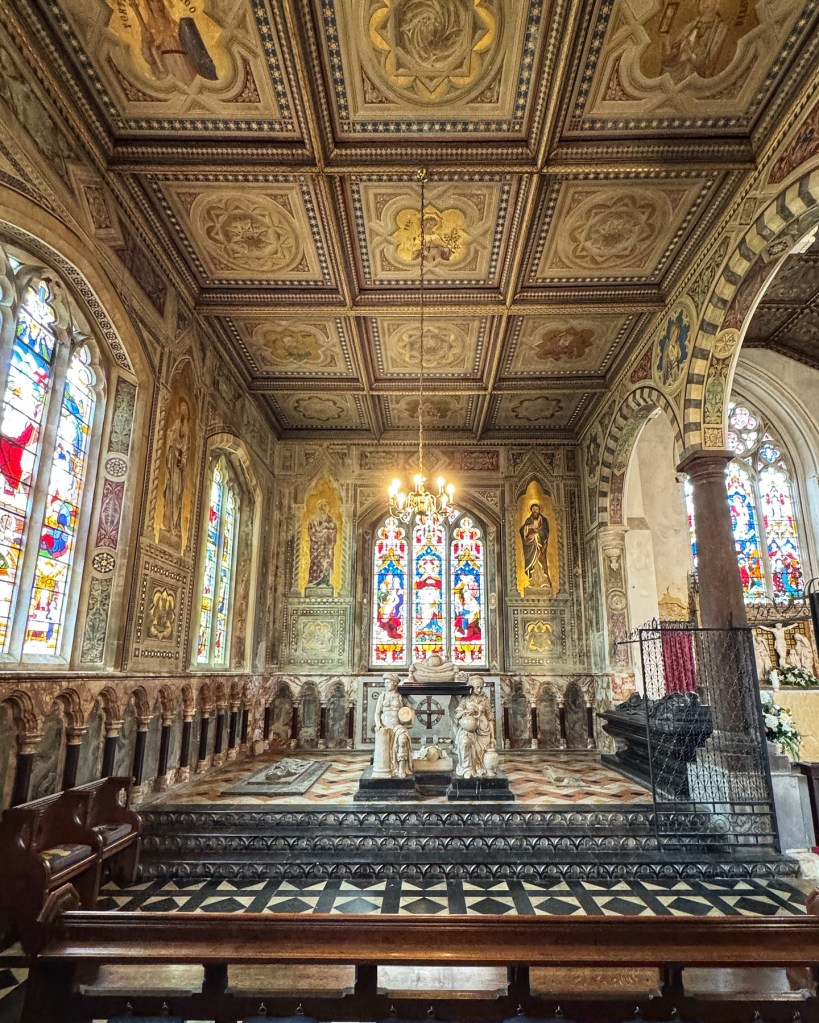
The Salisbury Chapel, added to the north side of the chancel by 1618, breaks decisively with the Gothic vocabulary of the rest of the church. It is entered through three round headed arches resting on Tuscan columns, the simplest of the classical orders inherited from antiquity, with a plain shaft and unadorned capital. Inside, the walls are articulated with pilasters, the flat, applied form of a column, and ornamented with strapwork, the interlaced bands derived from continental pattern books that had become the signature decorative idiom of late Elizabethan and Jacobean design. Above the openings run moulded entablatures, the horizontal bands that crown classical columns, and the surfaces carry painted heraldry and bold mouldings throughout. The space is symmetrical, classical in language, and self contained: a chapel conceived as a small classical building inserted into a medieval church. Its design reflects the Palladian and Northern Mannerist patterns then reaching England through engraved books, and its date and patronage place it within the wider Cecil project at Hatfield, contemporary with the construction of Hatfield House by Robert Cecil, first Earl of Salisbury (1563–1612).
For a parish church, St Etheldreda’s stood unusually close to the events of English history. Elizabeth I received word of her accession at the nearby Old Palace of Hatfield in November 1558. In 1647 Charles I, by then a captive of Parliament held at Hatfield, was permitted to attend worship here. A nineteenth century restoration carried out in the spirit of the Gothic Revival refitted the interior while, on the whole, respecting the layered history that had accumulated on the site since the thirteenth century.
St Etheldreda’s Church in Hatfield, HertfordshireSt Etheldreda’s Church in Hatfield, HertfordshireThe Salisbury family Chapel, St Etheldreda’s Church in Hatfield, Hertfordshire
Bettley, J., Pevsner, N. and Cherry, B. (2019) Hertfordshire. The Buildings of England. New Haven and London: Yale University Press.
Blanton, V. (2007) Signs of Devotion: The Cult of St Æthelthryth in Medieval England, 695–1615. University Park, PA: Pennsylvania State University Press.
Cecil, D. (1973) The Cecils of Hatfield House: An English Ruling Family. London: Constable
Maximilian Colt (c. 1570 – after 1641), Monument to Robert Cecil, 1st Earl of Salisbury (1563–1612), 1610-1614, Marble and alabaster sculpture, Salisbury Chapel, St Etheldreda’s Church, Hatfield, Hertfordshire
Maximilian Colt (c. 1570 – after 1641), Monument to Robert Cecil, 1st Earl of Salisbury (1563–1612), 1610-1614, Marble and alabaster sculpture, Salisbury Chapel, St Etheldreda’s Church, Hatfield, Hertfordshire
Maximilian Colt (fl.1595–after 1641) was born in Arras, in the County of Artois in the Spanish Netherlands, as Maximilian Poultrain, and came to England probably via Utrecht in the mid-1590s. He was most likely a Protestant refugee, part of the sustained emigration of Calvinist craftsmen from the Spanish Netherlands that had been reshaping skilled trades in London since the late 1560s. He settled in Bartholomew Close, Smithfield, Anglicised his name, and was naturalised in January 1607. His sculptural formation was entirely that of the Southern Netherlands: a practice built on the interplay of carved stone and painted surface, on compact figural proportions, on the dense treatment of drapery, and on the classical allegorical repertoire as it had been transmitted through Antwerp printed sources in the later sixteenth century. This was not a decorative tradition separate from the main current of Northern Mannerist art but entirely continuous with it, the same visual culture that circulated through workshops in Mechelen, Antwerp, and Utrecht before dispersing across Protestant Europe with the craftsmen who carried it.
London by the 1590s was already sustained by these craftsmen in the matter of funerary monument production. The Cure family workshop in Southwark, established by William Cure I when he was brought over to work on Henry VIII’s palace of Nonsuch, had been supplying the trade in alabaster tomb commissions since the 1560s; Cornelius Cure (d.1607) served as Master Mason to both Elizabeth I and James I, and his son William continued after him. The Janssen workshop, established by Gheerart Janssen (fl.1568–1611) from Amsterdam, operated alongside and produced, among much else, what is generally thought to be Shakespeare’s funerary monument at Stratford. These were family workshop operations, passing commissions and appointments between generations, employing journeymen and apprentices. There was no native English tradition of monumental marble carving capable of competing with them at any level; Thomas Elyot (c.1490–1546) had noted as early as 1531 that English patrons resorted to foreigners for anything well carved, and that observation remained structurally true a century later. Colt moved within this world but occupied a different position within it: where the Southwark workshops served the gentry market in alabaster, he took on the marble commissions, the royal and aristocratic work that required both the material and the formation his Continental training had given him.
His professional connection to Robert Cecil (1563–1612), 1st Earl of Salisbury, was established early. Cecil, serving simultaneously as Secretary of State and Lord Treasurer under James I (1566–1625), administered the commission for the Westminster Abbey monument to Queen Elizabeth I (1533–1603) on the crown’s behalf and contracted it to Colt in March 1605. The work was completed by the end of 1606, Elizabeth’s coffin having been moved in the same year from the vault of Henry VII, where it had lain since her death, to rest beneath the new monument in the north aisle of Henry VII’s Lady Chapel. What Colt and John de Critz (c.1551–1642) made there was a polychrome construction in which the carved marble and the painted surface were equally load-bearing as image. A German drawing of around 1618–20 records the effigy as originally completed: Elizabeth in an ermine-lined crimson robe, her orb blue, her face given flesh colouring, the four corner lions gilded. De Critz’s painting, now entirely lost to view, was as much part of the monument’s meaning as anything beneath it. The effigy itself was deliberately aged, drawn from portraits of the queen in old age rather than from any idealising convention, and scholarship has established that the monuments to Elizabeth and to Mary Queen of Scots in the opposite aisle were conceived and commissioned simultaneously, James I managing both his English inheritance and his mother’s rehabilitation as a single dynastic programme, the heraldic language on Elizabeth’s tomb quietly adjusted to foreground his own Darnley descent. Colt also went on to carve two smaller Westminster monuments for James’s infant daughters, Princess Sophia (d.1606) and Princess Mary (d.1607), working in each case within a quite different formal register from the great royal tomb: intimate in scale, the Sophia monument taking the form of a cradle, Mary’s effigy carved in ivory. Between these commissions and his appointment as King’s Master Carver in July 1608, Colt also worked at Hatfield House, carving the marble chimneypiece in the King James Drawing Room. He was the sculptor Cecil knew best and had worked alongside most consistently.
Cecil died on 24 May 1612 at Marlborough, Wiltshire, on the road home from Bath, where he had gone seeking relief from the tumours diagnosed the previous August. He was forty-eight, in considerable pain, and left debts. He had been born with a curvature of the spine, said to have resulted from a nursemaid’s accident in infancy, and had spent his entire public career navigating the gap between his father William Cecil, 1st Baron Burghley’s (1520–1598) formidable shadow and his own physical presence at court. Elizabeth I had called him “my pygmy”; James I called him “my little beagle.” His enemies used his back more bluntly. The seventeenth century found the equation between physical imperfection and political character irresistible, and Cecil gave it more material than most. He had rebuilt Hatfield House on ground exchanged with James I in 1607, spending heavily on a house he would barely inhabit; he had sustained the patronage of musicians including William Byrd (c.1543–1623), who wrote a pavane in his memory. His motto, ‘Sero, sed serio,’ meant late but in earnest, which his detractors would have received with some scepticism. He was buried at St Etheldreda’s Church, Hatfield.
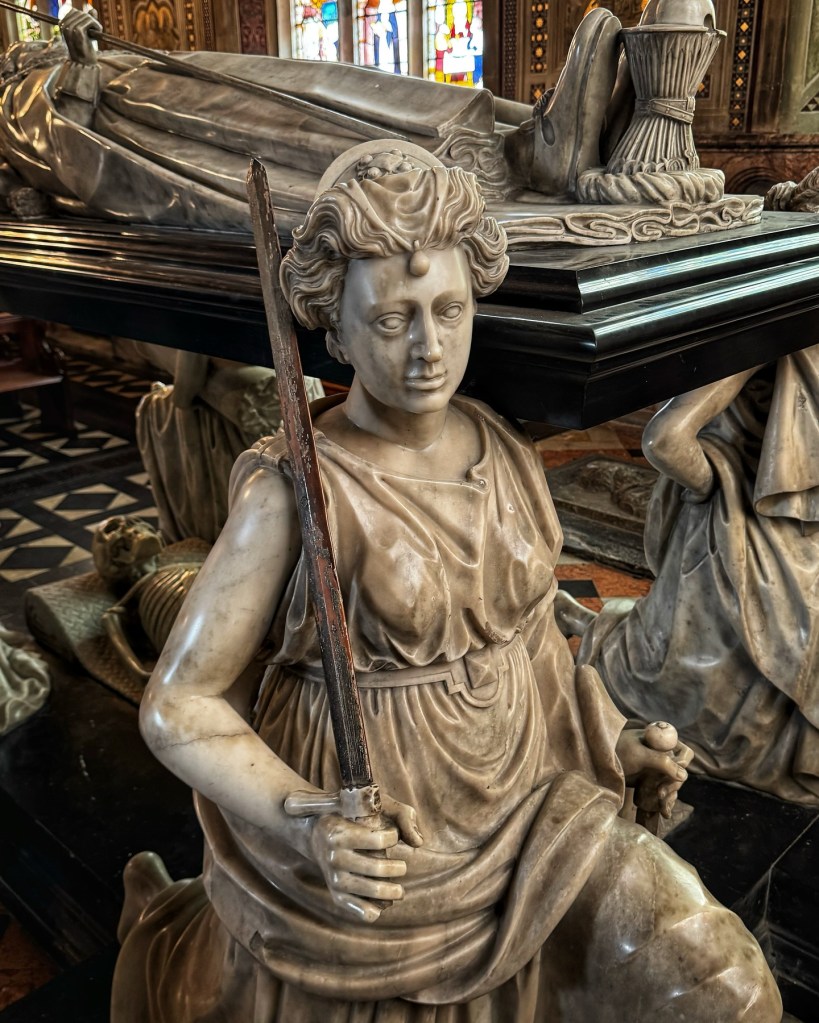
The monument Colt made for him, installed in the newly constructed Salisbury Chapel and completed by around 1614, is a quite different proposition from the Westminster work. At Westminster, Colt had been producing a royal monument within a dynastic programme shaped by James I’s political interests: a single polychrome effigy, a queen in state, the visual language calibrated to serve a specific and ongoing act of memory management. The Hatfield monument is a private aristocratic commission of the highest ambition, and it draws on a different tradition. Cecil lies above in full Garter robes, his head on a cushion, his body in the heraldic repose the English effigy convention required. Below, in the lower chamber of the tomb structure, lies the cadaver: a full-length skeleton on a rush mat, its hollow abdomen and exposed ribcage rendered without horror or anatomical literalism. This is a stylised transi, descended from the late medieval Northern European funerary tradition in which the skeleton or emaciated cadaver was placed in deliberate counterpoint to the dignified figure above, the two registers completing each other rather than competing. The figure is composed and authoritative, not a memento mori in the simple homiletic sense but a formal statement of equivalence: whatever distinction the figure above carries, the skeleton carries equally. The four Cardinal Virtues, Prudence, Justice, Fortitude, and Temperance, kneel at the corners of the platform in black and white marble, compact in their proportions, their drapery given a sculptural density that distinguishes Colt’s handling from more attenuated Mannerist figural types, their iconographic particulars drawn from the classical allegorical repertoire as transmitted through Flemish printed sources.
The European comparison the monument invites is instructive. The mausoleum of Henri II (1519–1559) and Catherine de’ Medici (1519–1589) at Saint-Denis, designed by Francesco Primaticcio (1504–1570) and executed by Germain Pilon (c.1525–1590) between 1560 and 1573, also combines a double effigy programme with four Cardinal Virtues at the corners, and it also deploys the naked cadavers of the royal pair at the lower level beneath their kneeling bronze priants above. But the differences are as telling as the similarities. The Saint-Denis programme operates within a Italianate Mannerist conception in which the recumbent cadavers are rendered as idealised nude figures in classical repose, drawing on antique funerary conventions filtered through the Fontainebleau aesthetic; the Cardinal Virtues monumental in scale, and formally indebted to Michelangelo’s Medici Chapel figures as much as to any Northern source. The kneeling priants above are animated portraiture of intense psychological presence. Catherine initially rejected Pilon’s first version of her cadaver effigy as too emaciated, commissioning the gentler, Venus-derived version now at Saint-Denis. The whole enterprise is a monument to the assimilation of Italian humanist funerary art into the French royal tradition. Colt’s Hatfield programme makes none of these moves. The skeleton is not classicised but rendered as skeleton, skeletal, fixed in a mode that owes nothing to antique convention and everything to the Northern transi tradition that runs from late medieval English and German funerary practice through to the Reformation period. The upper effigy is a gisant in full official dress, not a priant, not a figure caught in an active spiritual posture, but a body in heraldic stillness. And the Virtues, though their iconographic types share a common source with those at Saint-Denis, are carved in the Flemish Mannerist idiom rather than cast in Italianate bronze. The monument does not aspire to the conditions of French or Italian royal funerary culture. It is, in the most considered sense, a Northern aristocratic monument, and at the highest level that category had reached in England outside Westminster Abbey.
Maximilian Colt (c. 1570 – after 1641), Monument to Robert Cecil, 1st Earl of Salisbury (1563–1612), 1610-1614, Marble and alabaster sculpture, Salisbury Chapel, St Etheldreda’s Church, Hatfield, Hertfordshire
Howarth, D. (1997) Images of rule: art and politics in the English Renaissance, 1485–1649. London: Macmillan.
White, A. (1999) ‘A Biographical Dictionary of London Tomb Sculptors c.1560–c.1660’, Walpole Society, 61, pp. 1–162. Available at: https://www.jstor.org/stable/41829632 (Accessed: 25 May 2026).
Bracken, S. (2002) ‘Robert Cecil as Art Collector’, in Croft, P. (ed.) Patronage, Culture and Power: The Early Cecils 1558–1612. New Haven and London: Yale University Press for the Paul Mellon Centre for Studies in British Art
Gapper, C., Newman, J. and Ricketts, A. (2002) ‘Hatfield: A House for a Lord Treasurer’, in Croft, P. (ed.) Patronage, Culture and Power: The Early Cecils 1558–1612. New Haven and London: Yale University Press for the Paul Mellon Centre for Studies in British Art
Llewellyn, N. (1993) ‘Honour in Life, Death and in the Memory: Funeral Monuments in Early Modern England’, Transactions of the Royal Historical Society, 6th ser., 6, pp. 179–200. Available at: https://www.jstor.org/stable/3679235 (Accessed: 20 July 2025)
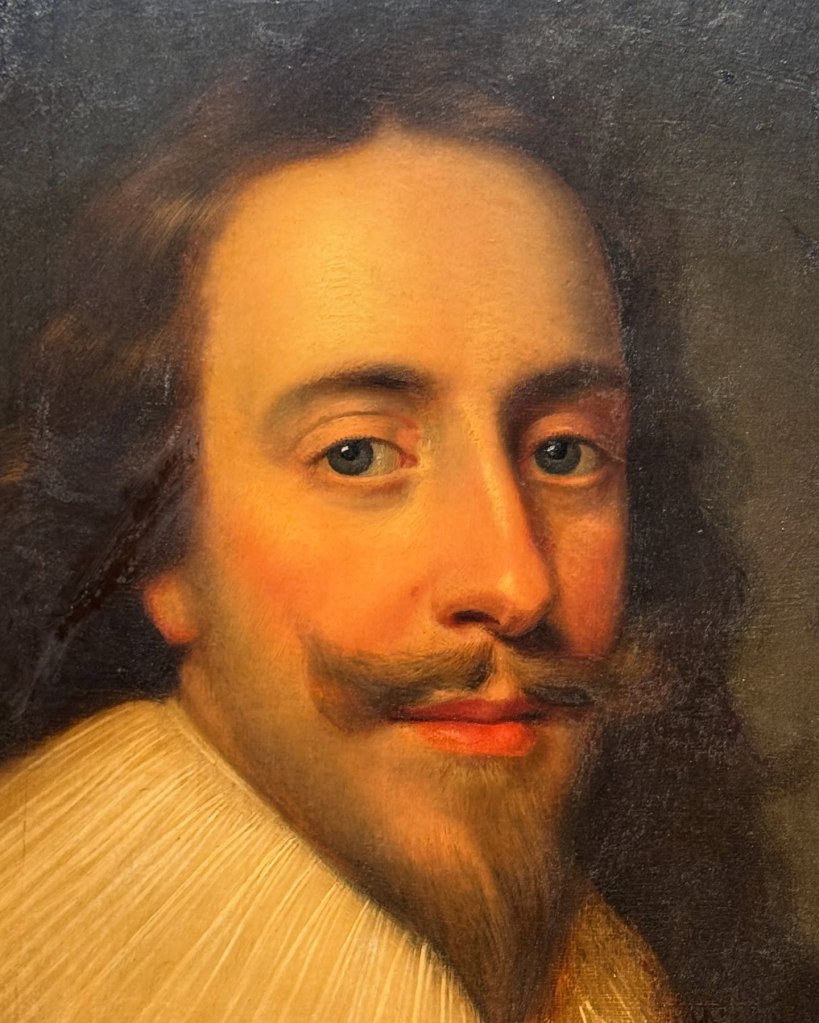
Cornelis Johnson van Ceulen I (1593–1661), Portrait of King Charles I (1600-1649), 1632, Oil on panel, 77.4 x 61.5 cm, Christie’s Old Masters Evening Sale, 1 July 2025
Cornelis Johnson van Ceulen I (1593–1661), Portrait of King Charles I (1600-1649), 1632, Oil on panel, 77.4 x 61.5 cm, Christie’s Old Masters Evening Sale, 1 July 2025Cornelis Johnson van Ceulen I (1593–1661), ‘Portrait of King Charles I (1600-1649)’, 1632, Oil on panel, 77.4 x 61.5 cm, Christie’s Old Masters Evening Sale, 1 July 2025
Cornelis Johnson (baptised 14 October 1593, London; buried 5 August 1661, Utrecht) was born into a Protestant family of Netherlandish and German descent whose roots ran from Cologne through Antwerp to London. His father had fled religious persecution under the Duke of Alva, as had many of the craftsmen and artists who settled in the Blackfriars liberty, then outside the jurisdiction of the Worshipful Company of Painter-Stainers and so a natural refuge for immigrant practitioners. Johnson was baptised at the Dutch Church at Austin Friars, the heart of London’s Netherlandish community, and probably received his training in the northern Netherlands, possibly in the circle of Michiel Jansz. van Mierevelt. He was back in London by 1619, the date on his earliest known portraits, and by the 1620s had established a thriving practice among the English gentry, aristocracy, lawyers, and members of the London Dutch community. He was, by that decade, among the most sought-after portraitists working in England, and the first English-born artist known to have consistently signed and dated his output, using the form ‘C.J. fecit’.
This bust-length portrait of Charles I was signed and dated 1632 — the same year in which Johnson was formally appointed ‘his Majesty’s servant in the quality of Picture drawer’. It was not, however, painted from life. The king’s likeness is drawn from van Dyck’s Great Peece — the monumental group portrait of Charles I and Henrietta Maria with their two eldest children, Prince Charles and Princess Mary, which van Dyck completed for the king in 1632 as his first major royal commission. Johnson’s portrait preserves his characteristic strengths: the precise delineation of facial structure, the sensitive rendering of satin and lace, and the cool, measured handling of surface that distinguished him from his continental rivals.
Van Dyck had arrived in London in April 1632. He was knighted in July of that year, granted an annual pension of £200, and appointed ‘Principalle Paynter in ordinary to their Majesties’ — a title without precedent in the English court, and one that effectively foreclosed competition for royal favour. Van Dyck was given a house on the Thames at Blackfriars, his studio was regularly visited by the king and queen, and from that point forward Charles rarely sat for any other painter. Johnson’s appointment as picture-drawer, issued in the same year, reads — in retrospect, and perhaps at the time — less as preferment than as a holding position in the wake of Daniel Mytens’s departure for the Netherlands around 1634. Mytens had been the dominant court portraitist before van Dyck’s arrival; with him gone and van Dyck installed, Johnson occupied an uncertain middle ground.
He responded practically rather than passively. Through the 1630s he absorbed van Dyckian formats into his own practice, particularly in small-scale portraits of the royal family and nobility, while keeping the linear, Northern European precision that defined his manner. His standard product remained the bust-length oval portrait on panel — efficient, replicable across a broad gentry clientele, and recognisable by the trompe-l’oeil stone or wood surround he favoured in his earlier career. Some of his full-length portraits from this period were apparently close enough to van Dyck’s manner that clients may have hoped they would pass as such. Johnson’s later full-lengths are conspicuously unsigned, and several works once attributed to van Dyck’s workshop are now thought to be by Johnson. During the 1630s he worked extensively in Kent for a network of connected gentry families, and at some point moved to Canterbury, where he lodged with the Flemish merchant Sir Arnold Braems.
Van Dyck died in December 1641. Under other circumstances that would have opened the field. Instead, the political situation had already begun to collapse: Charles I had left London in January 1642, and the civil war that followed dismantled the system of court patronage on which Johnson’s practice ultimately depended. He crossed to Middelburg in Zeeland — joining the painters’ guild there, and reconnecting with the Dutch community he had known in London. He moved subsequently to Amsterdam (1646–52), then The Hague, where in 1647 he painted his largest surviving work, a civic group portrait of the magistrates of The Hague, signing it ‘Cornelius Jonson Londini fecit’ — identifying himself, in the Netherlands, as a man from London. Later, around 1650, he shifted the signature to ‘Cornelis Jonson van Ceulen’, invoking instead his family’s Cologne origins, perhaps as the London association became commercially awkward. He settled in Utrecht around 1652, remained active as a portraitist in its best streets, and died there in August 1661. His son, also named Cornelius, born in London in 1634, continued to paint in the Netherlands until 1715.
Cornelis Johnson van Ceulen I (1593–1661), Portrait of King Charles I (1600-1649), 1632, Oil on panel, 77.4 x 61.5 cm, Christie’s Old Masters Evening Sale, 1 July 2025Cornelis Johnson van Ceulen I (1593–1661), Portrait of King Charles I (1600-1649), 1632, Oil on panel, 77.4 x 61.5 cm, Christie’s Old Masters Evening Sale, 1 July 2025
References
Matthews, J. (2016) The Early Patronage of Cornelius Johnson: An Investigation of Temple and Lenthall Family Portraits and their Subsequent Provenance. Dissertation, Advanced Diploma in the History of Art. University of Cambridge, Institute of Continuing Education. Available at: https://www.academia.edu/35524417 (Accessed: 1 July 2025)
Millar, O. (1972) The Age of Charles I: Painting in England 1620–1649. Exhibition catalogue. London: Tate Gallery
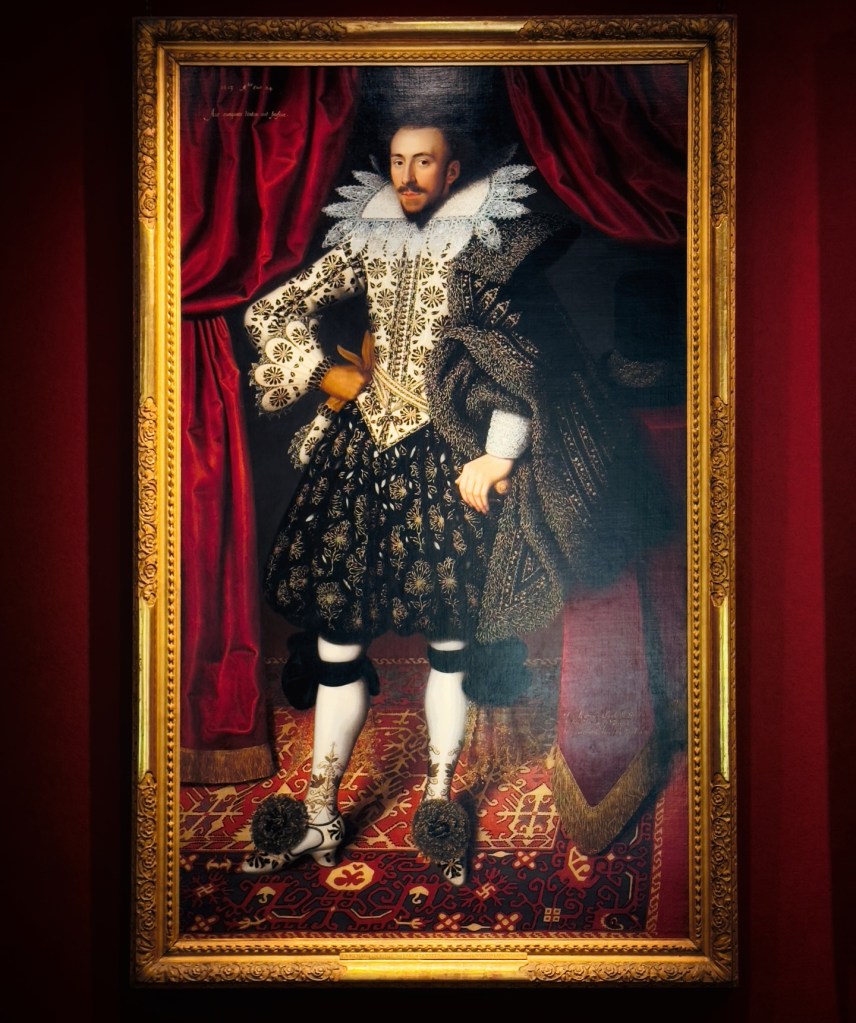
Attributed to William Larkin (c. 1580–1619) and his workshop, Portrait of Richard Sackville (1589–1624), 3rd Earl of Dorset, 1613, Oil on canvas, 206.4 x 122.3 cm, Kenwood House, London
Attributed to William Larkin (c. 1580–1619) and his workshop, Portrait of Richard Sackville (1589–1624), 3rd Earl of Dorset, 1613, Oil on canvas, 206.4 x 122.3 cm, Kenwood House, London
William Larkin was one of the last exponents of the Elizabethan and early Jacobean portrait tradition before Antoon van Dyck transformed the mainstream courtly portraiture. While Italian and Netherlandish artists were refining perspective and developing a more naturalistic treatment of the human form, Larkin remained rooted in the English preference for symbolic display over realism. His portraits are less concerned with capturing a sitter’s psychology than with asserting status, where every fold of fabric and decorative flourish becomes a cypher for wealth and lineage.
This portrait exists in a few versions of varying quality, possibly created in collaboration with assistants. Like all of Larkin’s sitters, Sackville is presented not as an individual but as an embodiment of power; his portrait is a carefully constructed performance of privilege at the height of Jacobean England. Sackville, an influential courtier under James I, is encased in a suit of black silk embroidered in gold, a direct assertion of rank. Black was the preferred colour of the Jacobean elite, expensive to dye and flattering under candlelight. At the same time, the elaborate embroidery, stitched with imported gold and silver thread, was the hallmark of courtly luxury. His ruff, a magnificent construction of delicate lace, frames his face with an almost sculptural rigidity, its complexity reinforcing his wealth—lace of this quality was among the most expensive garments, mainly sourced from Flanders.
Larkin stages his sitter against a backdrop of deep red drapery, symbolising power, while beneath his feet lies a richly woven Persian or Ottoman carpet. These elements were carefully chosen not as an accurate setting but as a stylised, theatrical environment designed to heighten the sense of aristocratic grandeur. The rigid posture, the detached gaze, and the impossibly pristine garments create an image that is less a portrait than a heraldic statement.
Attributed to William Larkin (c. 1580–1619) and his workshop, Portrait of Richard Sackville (1589–1624), 3rd Earl of Dorset, 1613, Oil on canvas, 206.4 x 122.3 cm, Kenwood House, London
Follower of Hans Holbein the Younger (1497/8 – 1543), Portrait of Sir Thomas Wyatt the Younger (c.1521-1544), circa 1600, Oil on oak panel, D x 35.5 cm, Christie’s, London, Old Masters Part II: Paintings, Sculpture, Drawings and Watercolours, 4 December 2024
Follower of Hans Holbein the Younger (1497/8 – 1543), Portrait of Sir Thomas Wyatt the Younger (c.1521-1544), circa 1600, Oil on oak panel, D x 35.5 cm, Christie’s, London, Old Masters Part II: Paintings, Sculpture, Drawings and Watercolours, 4 December 2024
This portrait is one of several copies produced around half a century after Hans Holbein the Younger’s original, created between 1540 and 1542. Sir Thomas Wyatt the Younger (c. 1521–1554), son of poet Sir Thomas Wyatt, is best remembered for leading the 1554 rebellion against Queen Mary I of England. The failed uprising aimed to overthrow Queen Mary I of England and prevent her marriage to Philip II of Spain, which was feared to undermine English sovereignty and strengthen Catholic influence. Captured after the rebellion’s collapse, Wyatt was tried for treason and executed by beheading.
Holbein’s original, painted during Wyatt’s lifetime, reflects the artist’s skill in capturing both physical likeness and psychological depth. The later copies preserve that intensity, portraying Wyatt with a calm yet resolute expression—a striking contrast to the violent events of his life. The portrait belongs to an era when portraiture reflected both personal identity and political power, symbolising Wyatt as a figure caught between ambition and tragedy.
Mary’s reign ended with her death in 1558, and her successor, Elizabeth I, re-established Protestantism, condemning Mary’s Catholic policies. Under Elizabeth, Wyatt’s legacy shifted. Once denounced as a traitor, some later viewed him as a Protestant martyr, embodying resistance to tyranny and the defence of English sovereignty.
The production of copies decades later highlights his enduring historical significance. During Elizabeth’s reign, Wyatt was celebrated for opposing Catholicism and foreign dominance. These portraits commemorated his defiance and made a political statement, securing his place in the Protestant narrative of resistance.
Thomas Gainsborough (1727–1788), Portrait of Gainsborough Dupont (1754–1797), 1773, Oil on canvas, 52 × 39 cm, Waddesdon Manor, on loan from the Rothschild Foundation
Thomas Gainsborough (1727–1788), Portrait of Gainsborough Dupont (1754–1797), 1773, Oil on canvas, 52 × 39 cm, Waddesdon Manor, on loan from the Rothschild Foundation
Though it is often recounted—though not definitively proven—that Gainsborough’s last words in 1788 were, ‘We are all going to Heaven, and Van Dyck is of the party,’ this anecdote underscores the profound influence van Dyck had on his work. This impact is particularly evident in the refined portrayal of his nephew, Gainsborough Dupont, where the gentle treatment of facial features, the elegant lace collar, and the overall aristocratic air of the portrait mirror van Dyck’s style.
Antoon Van Dyck, who served as Charles I’s court painter in the 1630s, introduced the ‘grand manner’ style, characterised by its elegance, aristocratic poise, and sophisticated use of colour and composition. This approach left an indelible mark on English art, a legacy Gainsborough sought to continue. His depiction of Dupont, a carpenter’s son who was Gainsborough’s nephew and sole studio assistant, was so imbued with nobility that the painting was mistakenly identified for generations as a likeness of the 2nd Viscount Bateman.
In this portrait, Gainsborough’s fluid brushwork, particularly depicting clothing, demonstrates his ability to adapt and modernise van Dyck’s techniques. This not only reflects his desire to align himself with the great masters but also ensures that van Dyck’s influence continued to resonate in English portraiture long after his time.
Thomas Gainsborough (1727–1788), Portrait of Gainsborough Dupont (1754–1797), 1773, Oil on canvas, 52 × 39 cm, Waddesdon Manor, on loan from the Rothschild Foundation