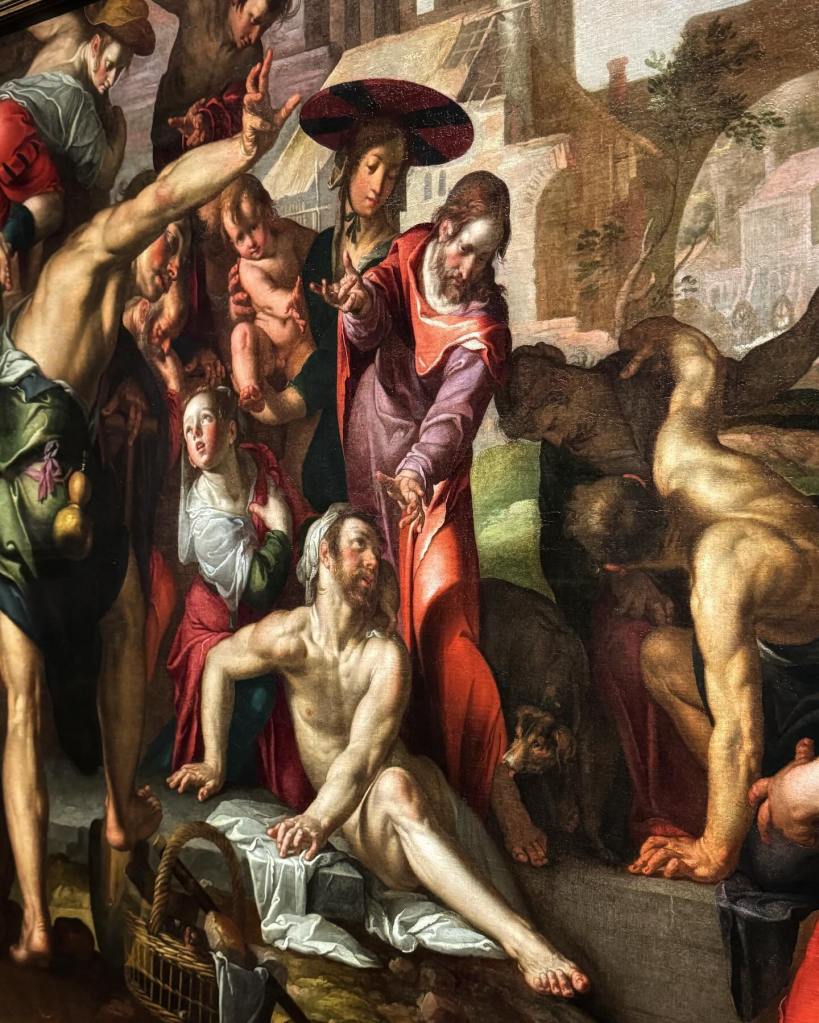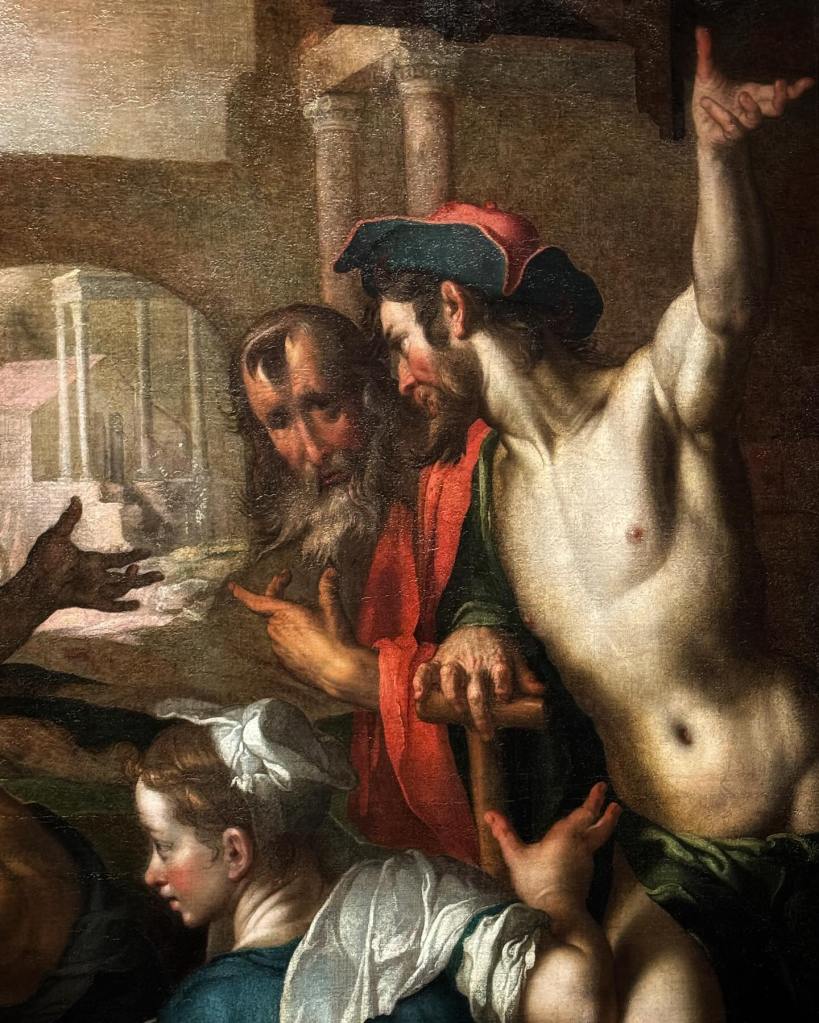

This painting is a masterful example of the Mannerist approach, blending inflated composition, dynamic forms, and vivid colouration to create a dramatic and emotional narrative. Recent conservation and cleaning have revealed new insights into the painting’s creation and affirmed its status as the artist’s original prototype.
Mannerism, as seen in this work, moves away from the balance and naturalism of the High Renaissance, embracing artifice, elegance, and complexity. Wtewael’s elongated figures, exaggerated gestures, and compressed, stage-like composition heighten the scene’s drama. The figures twist and lean into one another, drawing attention to the central miracle as Christ commands Lazarus to rise. The swirling drapery and precise anatomy, newly visible after cleaning, emphasise movement and tension, while their exaggerated elegance reflects Wtewael’s mastery of Mannerist aesthetics.
The painting’s palette is another hallmark of Mannerism. Wtewael employs jewel-like colours and stark contrasts, such as the glowing flesh tones against the dark tomb and the rich reds and blues of the clothing, to enhance the otherworldly nature of the event. Unlike the softer hues favoured by Italian Mannerists, Wtewael’s bold colours give the work a distinctly northern character, grounding the miracle in a tangible, physical world while maintaining its divine implications.
The painting, inspired partly by Abraham Bloemaert’s depiction of the same subject, demonstrates how Wtewael absorbed and reinterpreted influences.
In ‘The Resurrection of Lazarus’, Wtewael transforms a biblical miracle into a theatrical, almost operatic performance, using the Mannerist language of exaggeration and refinement. Recent studies illuminate the complexity of his technique and reaffirm his importance as a master innovator within Dutch Mannerism.