Wandering the World of the Old Masters: Notes from a Private Journey
  • Before the Time Ran Out: William Dobson in Oxford, 1642–1646

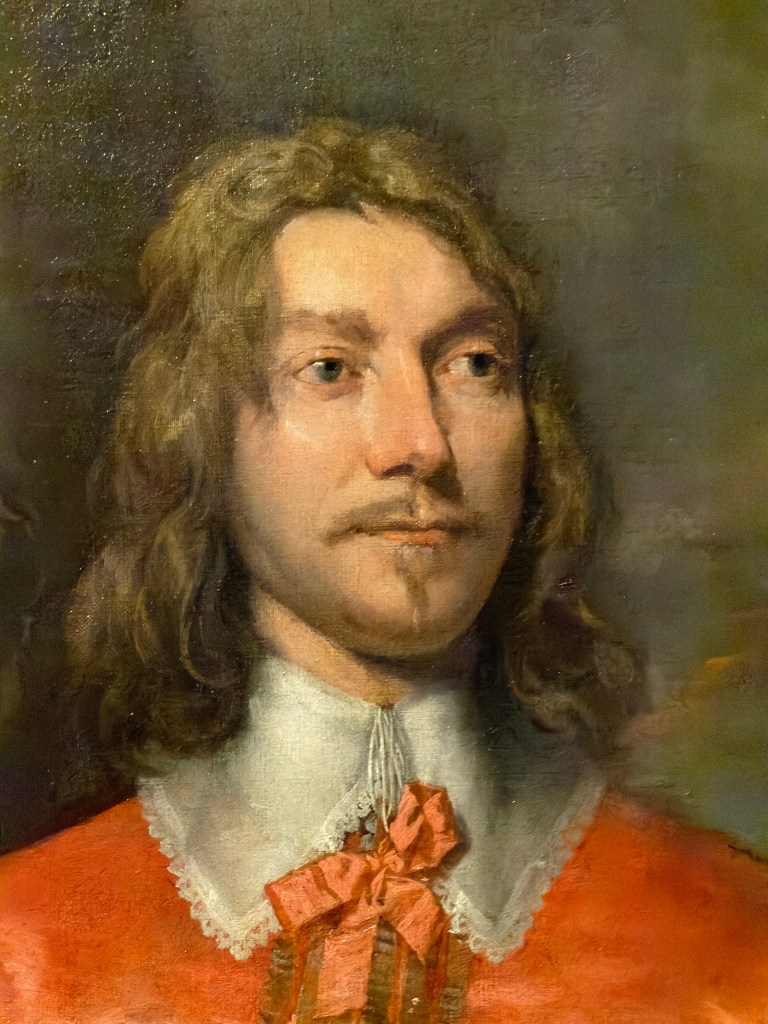
    William Dobson (1611–1646) Portrait of a Royalist, c.1643, Oil on canvas, 96.5  x 77.5 cm,  Queen’s  House, Royal Museums Greenwich, London 
    William Dobson (1611–1646) Portrait of a Royalist, c.1643, Oil on canvas, 96.5  x 77.5 cm,  Queen’s  House, Royal Museums Greenwich, London 

    Oxford in the autumn of 1642 had become the king’s last refuge: colleges requisitioned, streets full of soldiers and courtiers who had followed him from a capital that no longer wanted him. Charles I (1600–1649) held audiences in Christ Church. Guns confiscated from the townspeople were stored in the Bodleian. New College became a gunpowder store. The world that had seemed fixed, ordered, and heritable was coming apart faster than anyone could usefully document.

    Into this chaos William Dobson (1611–1646) arrived and began to paint, and what he produced over the following four years became an almost accidental record of English society on the eve of one of the most violent ruptures in the country’s history. He painted Charles I himself, the royal children, Prince Rupert of the Rhine (1619–1682) and Prince Maurice (1621–1652), as well as John Byron, 1st Baron Byron (c.1600–1652), along with a succession of soldiers, commanders and courtiers whose names range from well documented to entirely lost.Around sixty works survive, almost all half-length portraits, the sitters pressed close, caught quickly, rough with urgency. Van Dyck had died in London the previous December, and the elegance he had brought to English court portraiture, its ease and its confidence in the permanence of things, went with him. These were men in doublets and armour sitting for their likenesses in a garrison town, and Dobson painted them as such: not idealised, not flattered into permanence, but documented under pressure.

    Whether Dobson held any formal appointment as painter to the king is not documented; the case rests largely on his presence in Oxford and the royalist identity of almost every sitter he painted there. He worked alla prima, directly onto the canvas without preparatory drawings, his earlier Oxford portraits dense and rich in pigment. Towards the end of 1645 the paint begins to thin over visibly unprimed surfaces, not a change of temperament but a measure of how difficult it had become to obtain materials in a city whose cause had effectively collapsed at Naseby and was now waiting for the end.

    The man in this portrait has no name. He wears a salmon-pink doublet with braid on the front and sleeves, a blue drape over one arm perhaps evoking the sea, and holds the hilt of his sword in his right hand. In his left, a paper thought to be either a chart or his naval commission, added, it seems, after the left thumb was already painted. Behind him to the left, a sculptural relief of an allegorical female figure holds a globe and dividers, the attributes of geometry, one of the Seven Liberal Arts, from which the science of navigation derives. To the right, a ship sits faintly in the distance. He carries himself with the particular assurance of someone who has not yet understood what the ongoing crisis will cost him.

    These portraits are, in retrospect, a list of the men who lost. Dobson died at thirty-five in October 1646, three years before the king he had served was beheaded outside the Banqueting House in Whitehall on 30 January 1649. Before the end Dobson had spent time in prison for debt, and no money remained. Art history has not been especially generous to him since, keeping him permanently in van Dyck’s shadow. That seems a little unfair. He was not trying to be van Dyck. He was painting the people in the room before the time ran out, for a cause that was already losing.
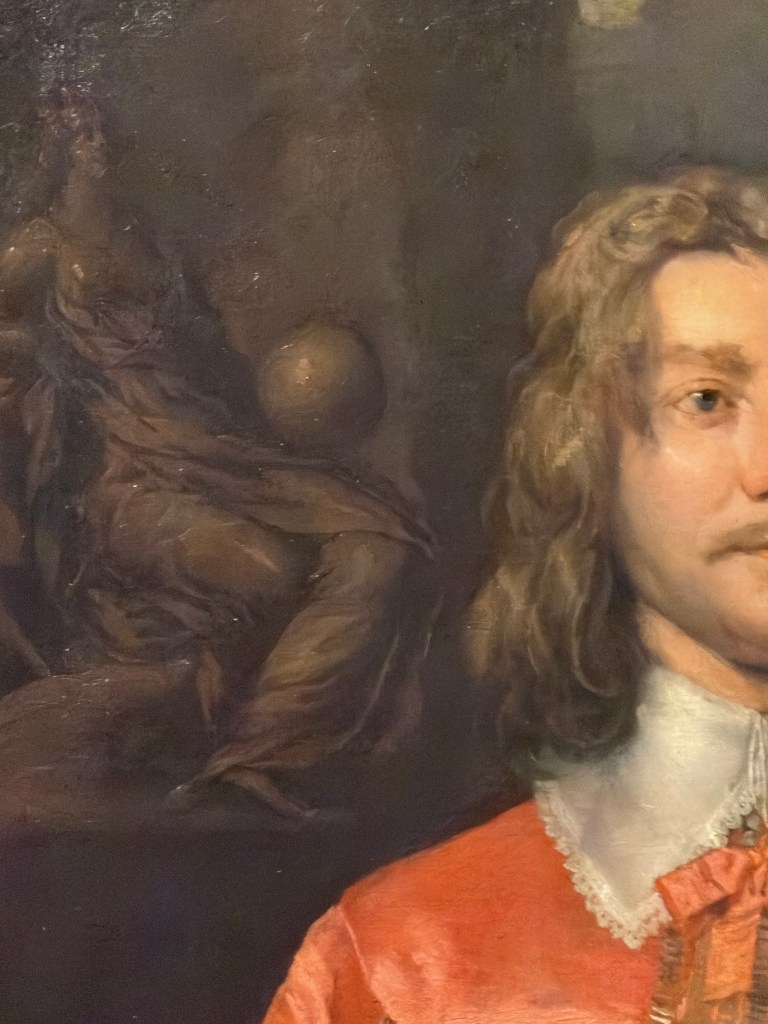
    William Dobson (1611–1646) Portrait of a Royalist, c.1643, Oil on canvas, 96.5  x 77.5 cm,  Queen’s  House, Royal Museums Greenwich, London 
    William Dobson (1611–1646) Portrait of a Royalist, c.1643, Oil on canvas, 96.5  x 77.5 cm,  Queen’s  House, Royal Museums Greenwich, London 
    William Dobson (1611–1646) Portrait of a Royalist, c.1643, Oil on canvas, 96.5  x 77.5 cm,  Queen’s  House, Royal Museums Greenwich, London 
    William Dobson (1611–1646) Portrait of a Royalist, c.1643, Oil on canvas, 96.5  x 77.5 cm,  Queen’s  House, Royal Museums Greenwich, London 

    References

    Aubrey, J. (c.1693) Brief Lives. Edited by O. L. Dick. London: Secker and Warburg, 1949. Available at: https://archive.org/details/in.ernet.dli.2015.76242/page/n310/mode/1up (Accessed 27 May 2026)

    Richards, M. (2019) ‘Who is this Royalist naval commander painted by William Dobson (1611–1646)?’, Art Detective, Art UK, 7 March. Available at: https://www.artuk.org/artdetective/discussions/discussions/who-is-this-royalist-naval-commander-painted-by-william-dobson-16111646 (Accessed: 27 May 2026).

    Rogers, M. (1983) William Dobson 1611–46. London: National Portrait Gallery

    Royal Museums Greenwich (n.d.) Portrait of a Royalist, BHC3133. Available at: https://www.rmg.co.uk/collections/objects/rmgc-object-14606 (Accessed: 27 May 2026).

    Waterhouse, E. (1994) Painting in Britain 1530–1790. 5th edn. New Haven and London: Yale University Press

  • Pinxi, Pinxit, Pingebat: The Signatures of Catharina van Hemessen
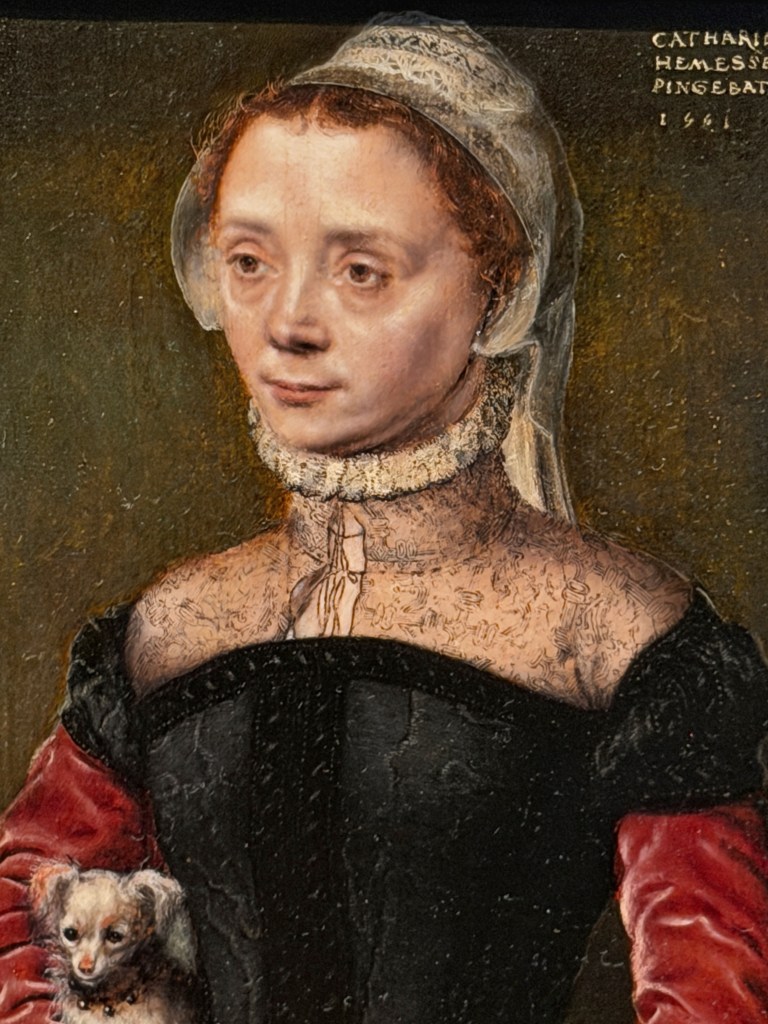
    Catharina van Hemessen (1527/8–after 1566), Portrait of a Woman, 1551, Oil on oak, 22.8 × 17.6 cm, National Gallery, London
    Catharina van Hemessen (1527/8–after 1566), Portrait of a Woman, 1551, Oil on oak, 22.8 × 17.6 cm, National Gallery, London

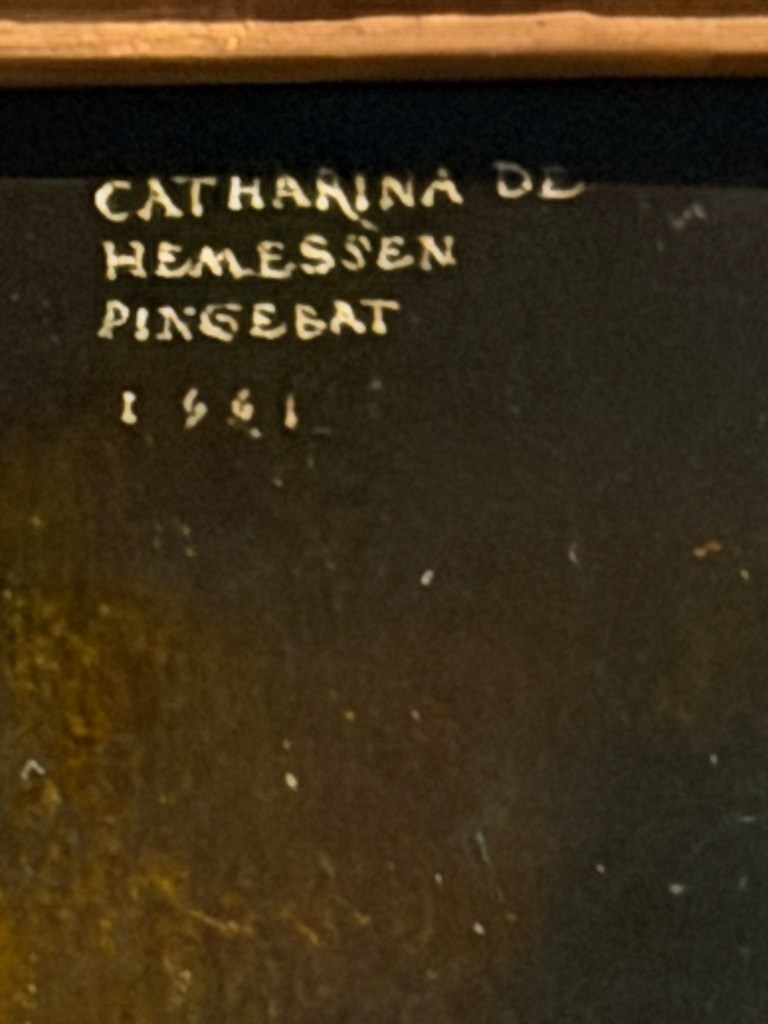
    At the time this portrait was made, van Hemessen was twenty-three years old and a registered master of the Antwerp Guild of Saint Luke. Across the top right corner she inscribed in pale yellow letters: CATHARINA DE / HEMESSEN / PINGEBAT / 1551, Catharina de Hemessen was painting this, 1551. In Latin, pingebat is the imperfect tense, used for an action still in progress, while pinxit is the perfect, denoting a completed act: she painted this, it is done.

    Three years earlier, on her self-portrait now in the Kunstmuseum Basel, she had signed differently: EGO CATERINA DE HEMESSEN ME PINXI 1548 ETATIS SVAE 20, I, Catharina van Hemessen, painted myself, 1548, at age twenty. That formula is first person, reflexive, and records her age. A second portrait from the same year, now in the Rijksmuseum, Amsterdam, already drops all three, reading simply Catherina de Hemessen pinxit 1548: third person, perfect, no ego, no me, no age. Within a single year, the assertive personal declaration of the self-portrait had given way to the more impersonal professional formula of the commissioned work.

    By 1551 the perfect has become the imperfect, and pingebat has replaced pinxit. The imperfect in artist signatures carried a specific resonance. In Book XXXV of his Natural History, Pliny the Elder (23–79 AD) praised the Greek painter Apelles of Kos (fl. 4th century BCE) for signing his works ‘Apelles faciebat’ — Apelles was making this — rather than the completed ‘fecit,’ a habit Pliny interpreted as a gesture of modesty, implying the work remained open to criticism and revision, the artist declining to declare it finished. The painter’s equivalent, pingebat over pinxit, drew on the same construction. Michelangelo (1475–1564) signed the Pietà in St Peter’s Basilica, Rome, MICHAEL ANGELUS BONAROTUS FLORENTINUS FACIEBAT, adapting the sculptor’s form of the same imperfect, and Albrecht Dürer (1471–1528) used effingebam in his 1500 Self-Portrait, signing Albertus Durerus Noricus ipsum me proprijs sic effingebam coloribus aetatis anno XXVIII, I, Albrecht Dürer of Nuremberg, was depicting myself in these my own colours, at age twenty-eight (Boffa 2013).

    Whether van Hemessen was conscious of that lineage when she moved from ego me pinxi to pingebat cannot be established. Antwerp in the mid-sixteenth century was sufficiently steeped in humanist scholarship (Pliny circulated in print editions from 1469 and was widely read in learned circles) for the resonance to have been available to a painter working within a cultivated workshop tradition, even if it cannot be proven to have been sought. That painters of the period moved between the two forms without apparent consistency makes it difficult to read intention into either choice, though for a woman operating professionally in a field with almost no precedent for her presence, the act of signing in full, on every securely attributed work, was already not a neutral gesture.

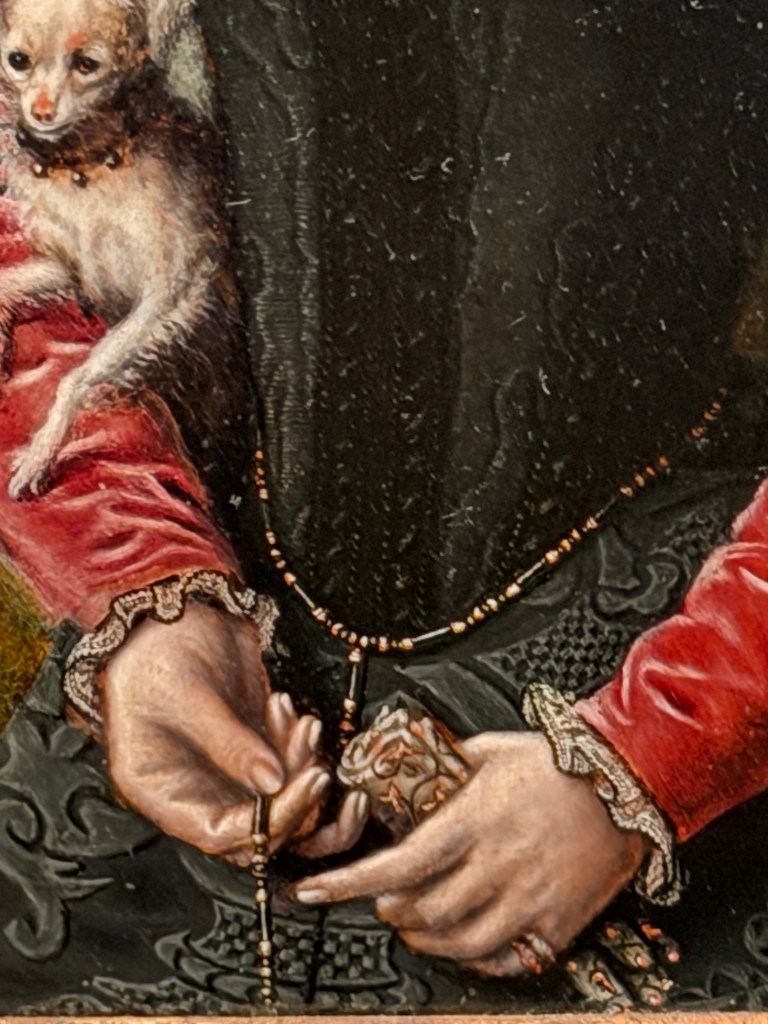
    The sitter, for all her evident wealth, has not survived the centuries with a name; the painter has.

    Catharina van Hemessen (1527/8–after 1566), Portrait of a Woman, 1551, Oil on oak, 22.8 × 17.6 cm, National Gallery, London
    Catharina van Hemessen (1527/8–after 1566), Portrait of a Woman, 1551, Oil on oak, 22.8 × 17.6 cm, National Gallery, London
    Catharina van Hemessen (1527/8–after 1566), Portrait of a Woman, 1551, Oil on oak, 22.8 × 17.6 cm, National Gallery, London
    Catharina van Hemessen (1527/8–after 1566), Portrait of a Woman, 1551, Oil on oak, 22.8 × 17.6 cm, National Gallery, London

    References

    De Clippel, K. (2004) Catharina van Hemessen (1528–na 1567). Een monografische studie [Catharina van Hemessen (1528–after 1567). A monographic study]. Brussels: Koninklijke Vlaamse Academie van België voor Wetenschappen en Kunsten

    Droz-Emmert, M. (2004) Catharina van Hemessen. Malerin der Renaissance [Catharina van Hemessen. Painter of the Renaissance]. Basel: Schwabe Verlag

    Boffa, D. (2013) ‘Sculptors’ signatures and the construction of identity in the Italian Renaissance’, in A Scarlet Renaissance: Essays in Honor of Sarah Blake McHam, pp. 35–56. Available at: https://www.academia.edu/2011416/Sculptors_Signatures_and_the_Construction_of_Identity_in_the_Italian_Renaissance (Accessed: 24 May 2026).

    National Gallery, London (n.d.) Portrait of a Woman, NG 4732. Available at: https://www.nationalgallery.org.uk/paintings/catharina-van-hemessen-portrait-of-a-woman (Accessed: 24 May 2026).

    National Gallery, London (n.d.) Portrait of a Man, NG 1042. Available at: https://www.nationalgallery.org.uk/paintings/catharina-van-hemessen-portrait-of-a-man (Accessed: 24 May 2026).

    Pliny the Elder (c. AD 77) Naturalis Historia [Natural History], Praefatio, 26. Translated by H. Rackham. Loeb Classical Library 330. Cambridge, MA: Harvard University Press, 1938

    RKD – Netherlands Institute for Art History (n.d.) Catharina van Hemessen, artist entry no. 37344. RKDartists. Available at: https://rkd.nl/en/explore/artists/37344 (Accessed: 24 May 2026).

    RKD – Netherlands Institute for Art History (n.d.) Catharina van Hemessen, Self-Portrait, 1548. RKDimages, image no. 41167. Available at: https://rkd.nl/en/explore/images/41167 (Accessed: 24 May 2026).

    Rijksmuseum, Amsterdam (n.d.) Catharina van Hemessen, Portrait of a Woman, 1548, SK-A-4256. Available at: https://www.rijksmuseum.nl/en/collection/SK-A-4256 (Accessed: 24 May 2026).

    Sutton, E. (ed.) (2019) Women Artists and Patrons in the Netherlands, 1500-1700. Amsterdam University Press

  • Mother-of-Pearl and Ebony: The Extraordinary Bass Viola da Gamba of Martin Voigt, 1726

    Martin Voigt (active Hamburg, early eighteenth century), Bass Viola da gamba, 1726. Ebony inlaid with engraved mother-of-pearl, ebony ribs with ivory stringing. Length 121 cm, body length 67 cm, string length 66.5 cm. Victoria and Albert Museum, London, on loan to the Horniman Museum, London
    Martin Voigt (active Hamburg, early eighteenth century), Bass Viola da gamba, 1726. Ebony inlaid with engraved mother-of-pearl, ebony ribs with ivory stringing. Length 121 cm, body length 67 cm, string length 66.5 cm. Victoria and Albert Museum, London, on loan to the Horniman Museum, London

    Nothing is known about Martin Voigt beyond a single exceptional quality viola da gamba and a single line of handwritten ink. No dates of birth or death, no guild records, no mention in any dictionary of makers. He exists entirely through a bass viola da gamba in the collection of the Victoria & Albert Museum , currently on loan to the Horniman Museum in Forest Hill, London. The label inside it reads :’Martin Voigt in Hamburg me fecit 1726′.

    Voigt worked within the tradition of famous Joachim Tielke (1641–1719), Hamburg’s most celebrated maker of bowed and plucked string instruments, whose workshop had produced viols, lutes, guitars, and violins over half a century, distinguished by lavish decorative programmes in ivory, tortoiseshell, and exotic hardwoods. None of Tielke’s children continued the business, and the workshop ceased with his death in 1719. The V&A’s assessment is that Voigt may have been his pupil. The chronology allows it, and the instrument supports it.

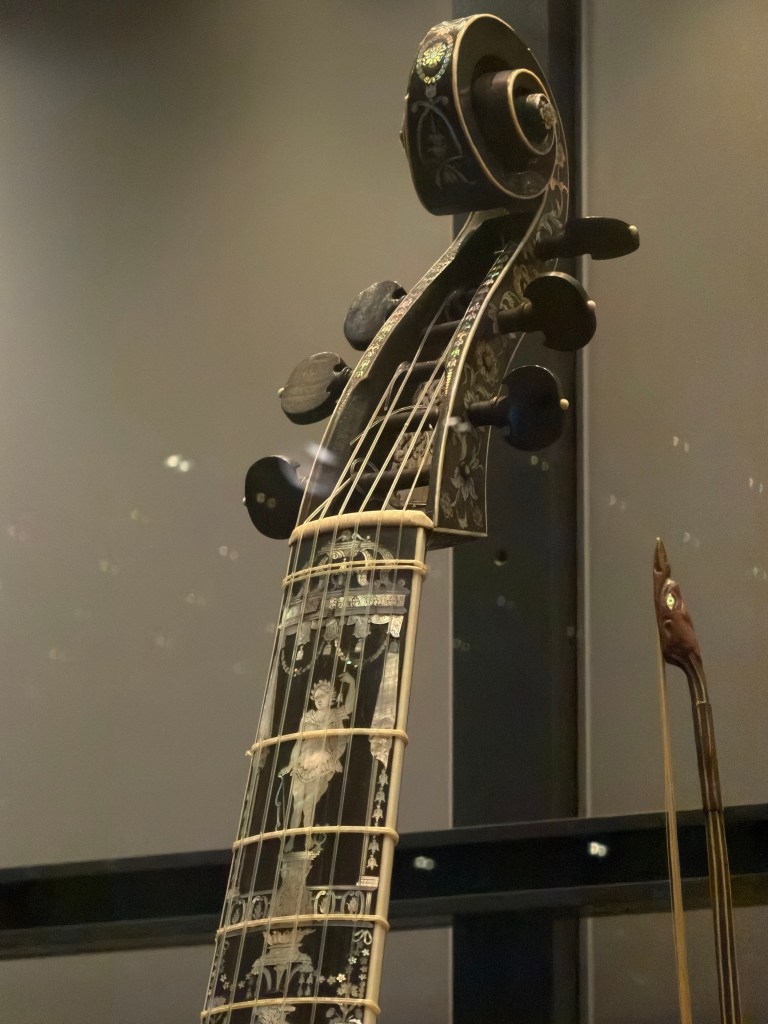
    The bass viola da gamba is constructed in ebony inlaid with engraved mother-of-pearl, with twenty-five alternating strips of ebony and ivory forming the back. This is work that permits no error. Mother-of-pearl is brittle, fractures unpredictably, and must be cut and engraved with a burin at a scale fine enough for pictorial detail while remaining strong enough to survive as part of a played instrument. A mistake at any stage destroys the material. An instrument of this complexity would have taken months to complete, required mastery across several distinct crafts, and cost a sum that placed it far beyond the reach of ordinary musicians. It was made for someone wealthy, and it was made to be seen.

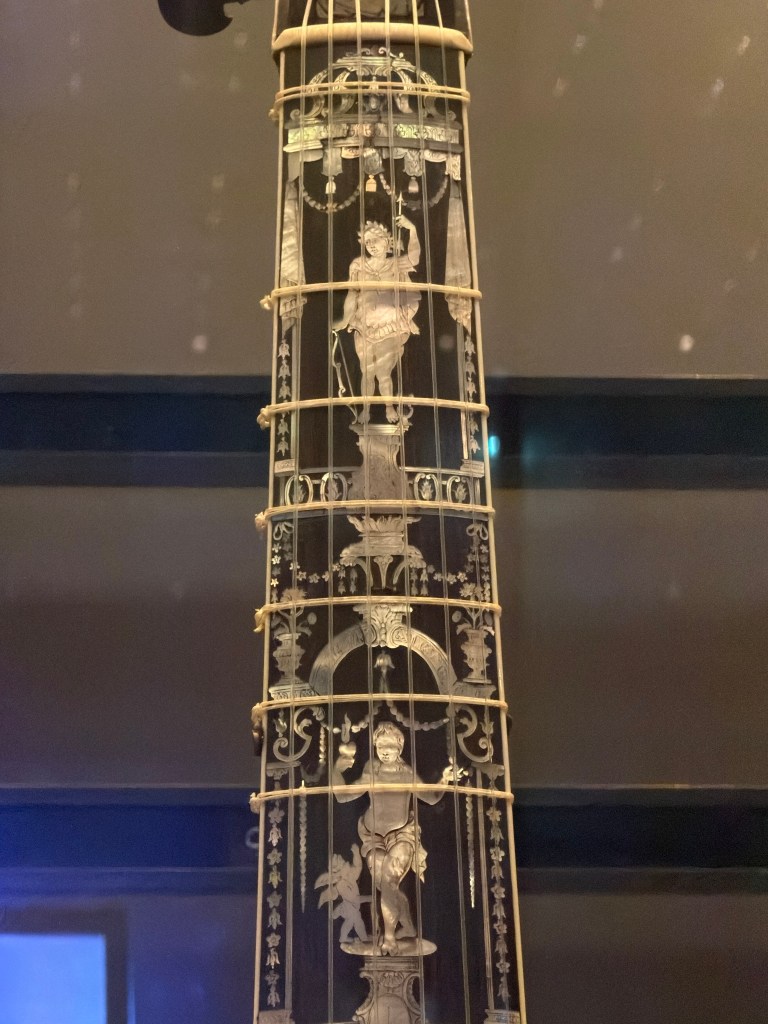
    The iconographic programme on the neck depicts four classical deities in mother-of-pearl: Apollo, Venus, Mercury, and Diana. The musical associations are deliberate. Mercury was credited in Greek tradition with inventing the lyre from a tortoiseshell, and Apollo with perfecting its use; early modern writers understood the lyre as the ancestor of viols and lutes, so the two figures declare the instrument’s lineage. The presence of Venus and Diana alongside them points to a more considered scheme, almost certainly drawn from one of the printed emblem books that served as pattern sources across the decorative trades of Europe. Tielke’s workshop had relied heavily on such compilations, particularly Daniel de la Feuille’s Devises et emblemes, anciennes et modernes [Devices and Emblems, Ancient and Modern] (Amsterdam, 1691) and Otto van Veen’s Amorum emblemata [Emblems of Love] (Antwerp, 1608). These volumes offered ready-made pictorial schemes with classical figures and moralising inscriptions, and were used as pattern sources by cabinet-makers, goldsmiths, and engravers as readily as by instrument makers. Whether Voigt drew on the same specific sources cannot be confirmed without direct comparison, but the sophistication of his programme places it firmly within the same visual culture.

    The V&A’s records note that the instrument was purchased in 1871 for sixty pounds and was said to have belonged to Joseph Haydn (1732–1809). The claim has no supporting evidence. Haydn was not a gambist, and by his maturity the instrument had been largely supplanted by the cello.

    What remains is the instrument itself: the sole surviving work of an otherwise unknown maker, produced in Hamburg seven years after the death of the great master whose tradition it continued.


    Martin Voigt (active Hamburg, early eighteenth century), Bass Viola da gamba, 1726. Ebony inlaid with engraved mother-of-pearl, ebony ribs with ivory stringing. Length 121 cm, body length 67 cm, string length 66.5 cm. Victoria and Albert Museum, London, on loan to the Horniman Museum, London
    Martin Voigt (active Hamburg, early eighteenth century), Bass Viola da gamba, 1726. Ebony inlaid with engraved mother-of-pearl, ebony ribs with ivory stringing. Length 121 cm, body length 67 cm, string length 66.5 cm. Victoria and Albert Museum, London, on loan to the Horniman Museum, London
    Martin Voigt (active Hamburg, early eighteenth century), Bass Viola da gamba, 1726. Ebony inlaid with engraved mother-of-pearl, ebony ribs with ivory stringing. Length 121 cm, body length 67 cm, string length 66.5 cm. Victoria and Albert Museum, London, on loan to the Horniman Museum, London
    Martin Voigt (active Hamburg, early eighteenth century), Bass Viola da gamba, 1726. Ebony inlaid with engraved mother-of-pearl, ebony ribs with ivory stringing. Length 121 cm, body length 67 cm, string length 66.5 cm. Victoria and Albert Museum, London, on loan to the Horniman Museum, London
    Martin Voigt (active Hamburg, early eighteenth century), Bass Viola da gamba, 1726. Ebony inlaid with engraved mother-of-pearl, ebony ribs with ivory stringing. Length 121 cm, body length 67 cm, string length 66.5 cm. Victoria and Albert Museum, London, on loan to the Horniman Museum, London
    Martin Voigt (active Hamburg, early eighteenth century), Bass Viola da gamba, 1726. Ebony inlaid with engraved mother-of-pearl, ebony ribs with ivory stringing. Length 121 cm, body length 67 cm, string length 66.5 cm. Victoria and Albert Museum, London, on loan to the Horniman Museum, London
    Martin Voigt (active Hamburg, early eighteenth century), Bass Viola da gamba, 1726. Ebony inlaid with engraved mother-of-pearl, ebony ribs with ivory stringing. Length 121 cm, body length 67 cm, string length 66.5 cm. Victoria and Albert Museum, London, on loan to the Horniman Museum, London
    Martin Voigt (active Hamburg, early eighteenth century), Bass Viola da gamba, 1726. Ebony inlaid with engraved mother-of-pearl, ebony ribs with ivory stringing. Length 121 cm, body length 67 cm, string length 66.5 cm. Victoria and Albert Museum, London, on loan to the Horniman Museum, London
    Martin Voigt (active Hamburg, early eighteenth century), Bass Viola da gamba, 1726. Ebony inlaid with engraved mother-of-pearl, ebony ribs with ivory stringing. Length 121 cm, body length 67 cm, string length 66.5 cm. Victoria and Albert Museum, London, on loan to the Horniman Museum, London
    Martin Voigt (active Hamburg, early eighteenth century), Bass Viola da gamba, 1726. Ebony inlaid with engraved mother-of-pearl, ebony ribs with ivory stringing. Length 121 cm, body length 67 cm, string length 66.5 cm. Victoria and Albert Museum, London, on loan to the Horniman Museum, London
    Martin Voigt (active Hamburg, early eighteenth century), Bass Viola da gamba, 1726. Ebony inlaid with engraved mother-of-pearl, ebony ribs with ivory stringing. Length 121 cm, body length 67 cm, string length 66.5 cm. Victoria and Albert Museum, London, on loan to the Horniman Museum, London
    Martin Voigt (active Hamburg, early eighteenth century), Bass Viola da gamba, 1726. Ebony inlaid with engraved mother-of-pearl, ebony ribs with ivory stringing. Length 121 cm, body length 67 cm, string length 66.5 cm. Victoria and Albert Museum, London, on loan to the Horniman Museum, London


    References

    Baines, A. (1998) Catalogue of Musical Instruments in the Victoria and Albert Museum, Part II: Non-Keyboard Instruments. London: V&A Publications

    Hellwig, F. and Hellwig, B. (2011) Joachim Tielke: Kunstvolle Musikinstrumente des Barock [Joachim Tielke: Ornate Musical Instruments of the Baroque]. Berlin and Munich: Deutscher Kunstverlag

    Victoria & Albert Museum (n.d.) Bass Viol, Martin Voigt, 1726. Accession number 1298 to B-1871. Available at: https://collections.vam.ac.uk/item/O58919/bass-viol-voigt-martin/ (Accessed: 10 May 2026)

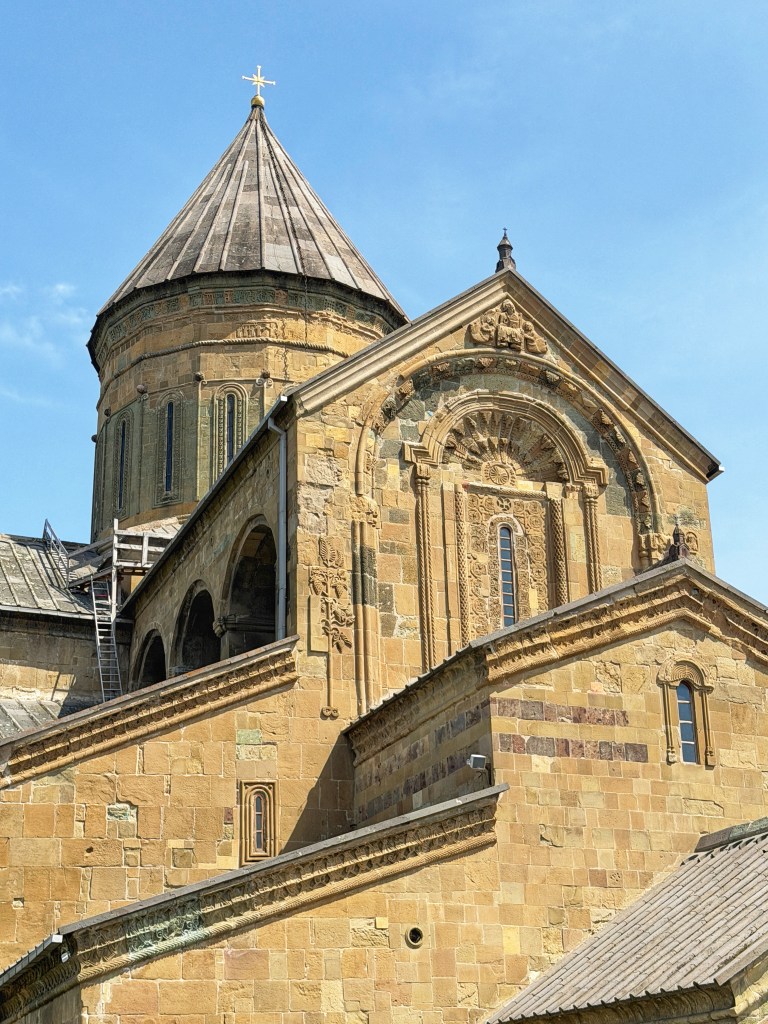
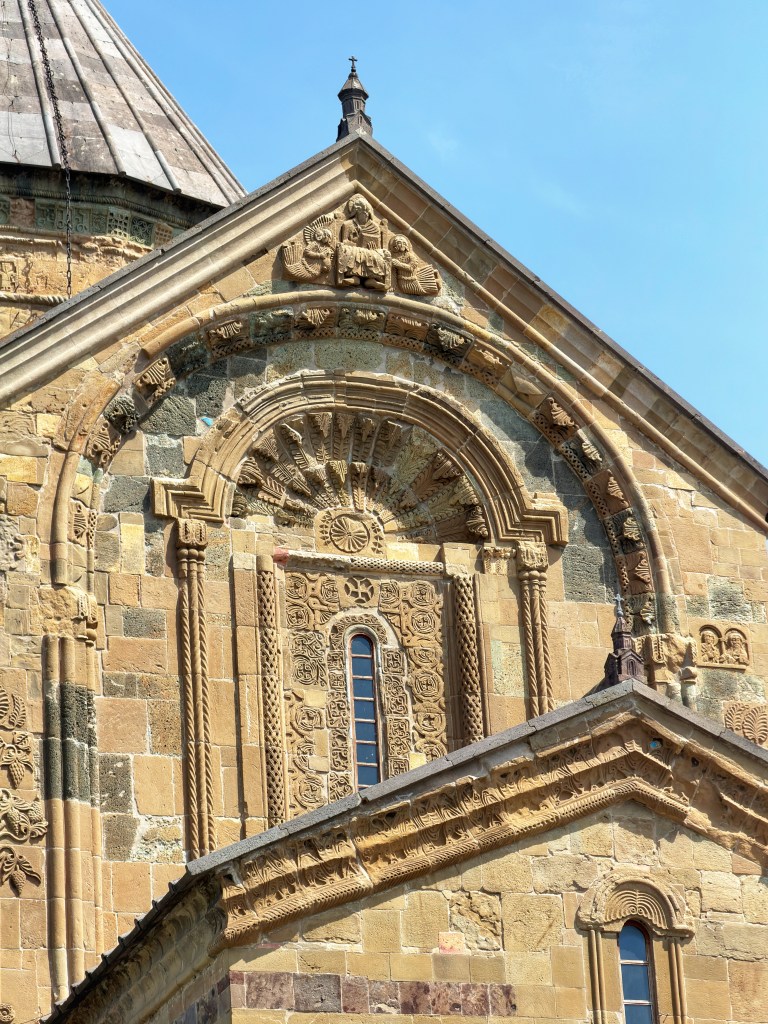
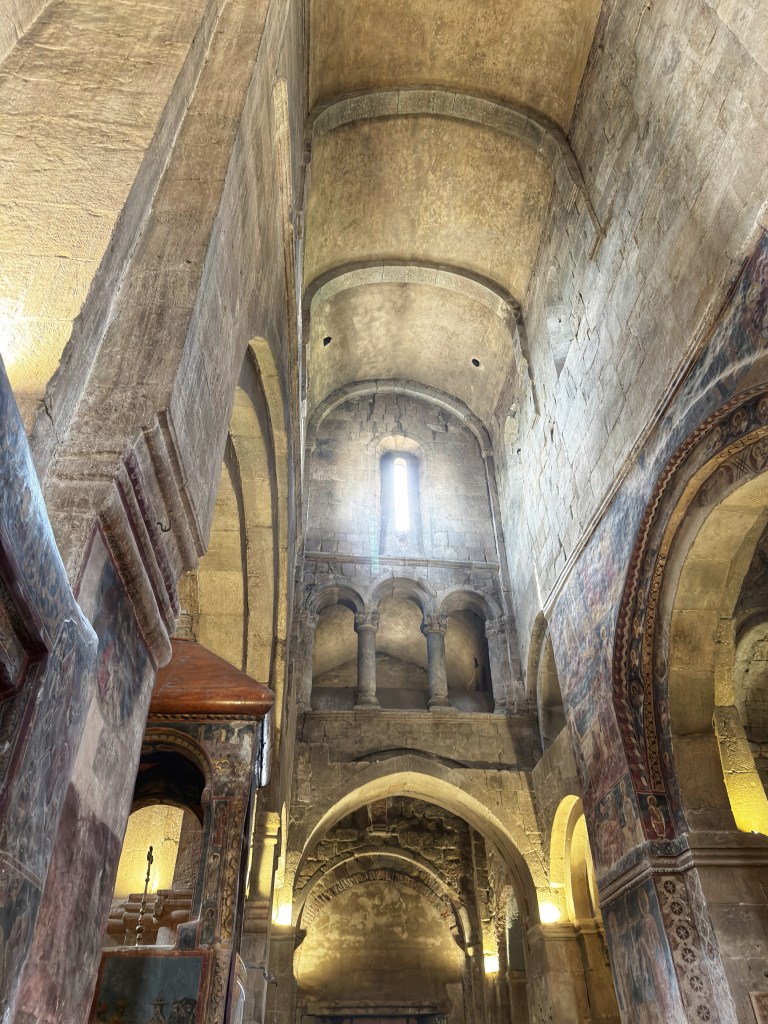
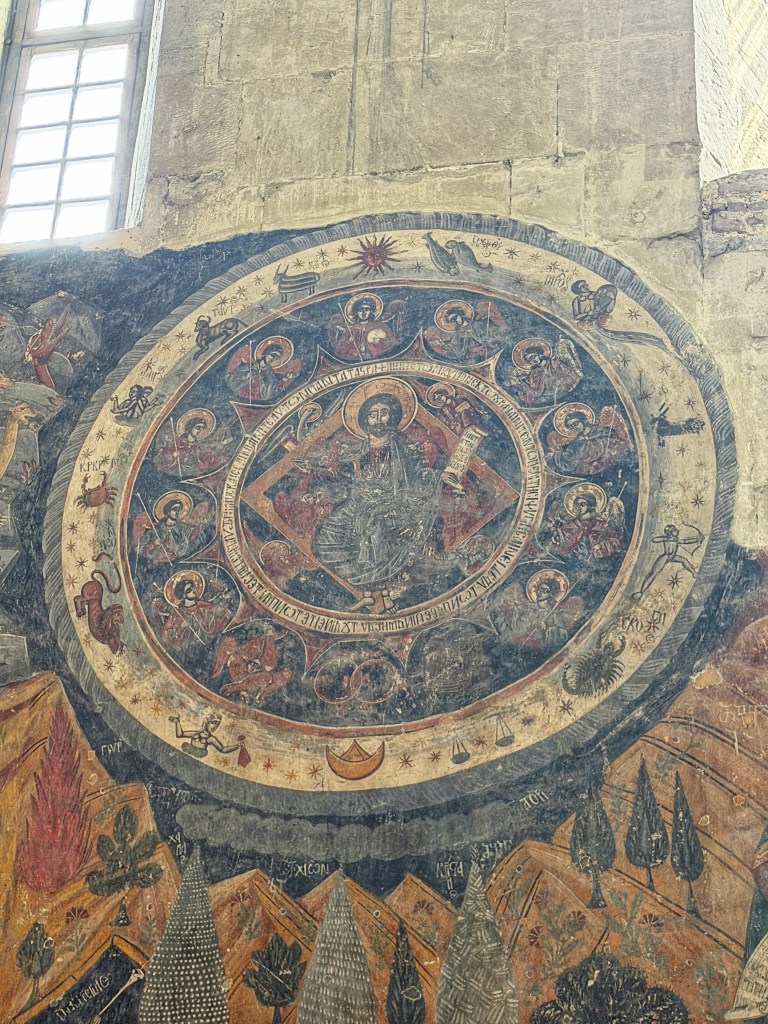
  • Svetitskhoveli Cathedral, Mtskheta, Georgia

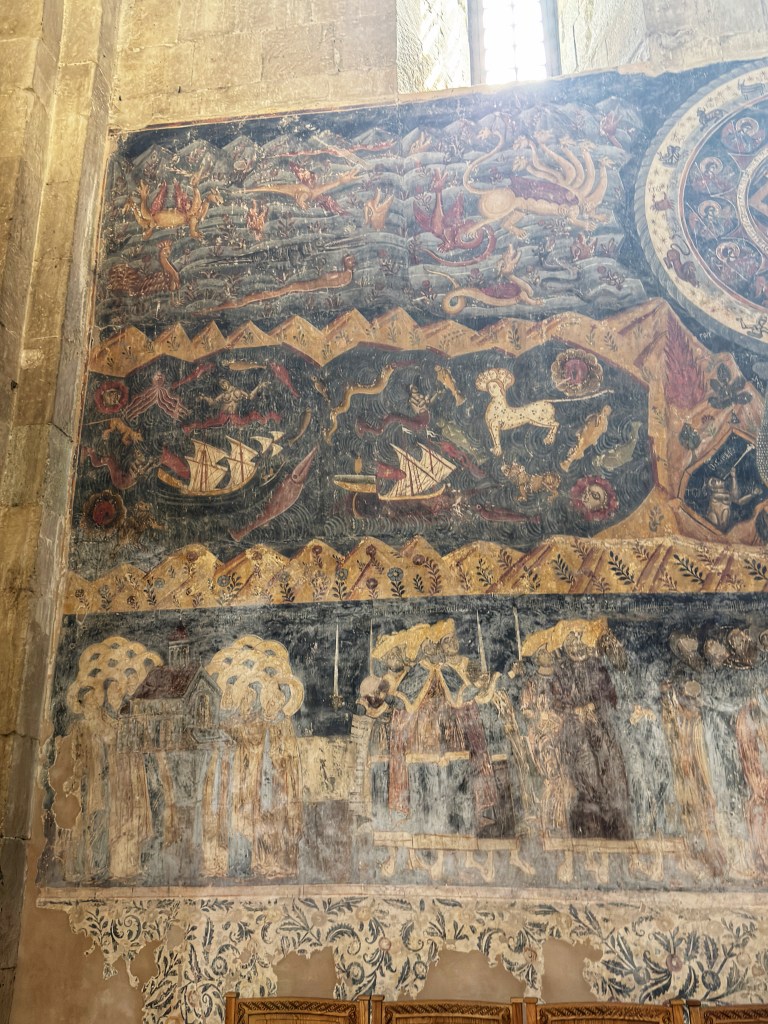
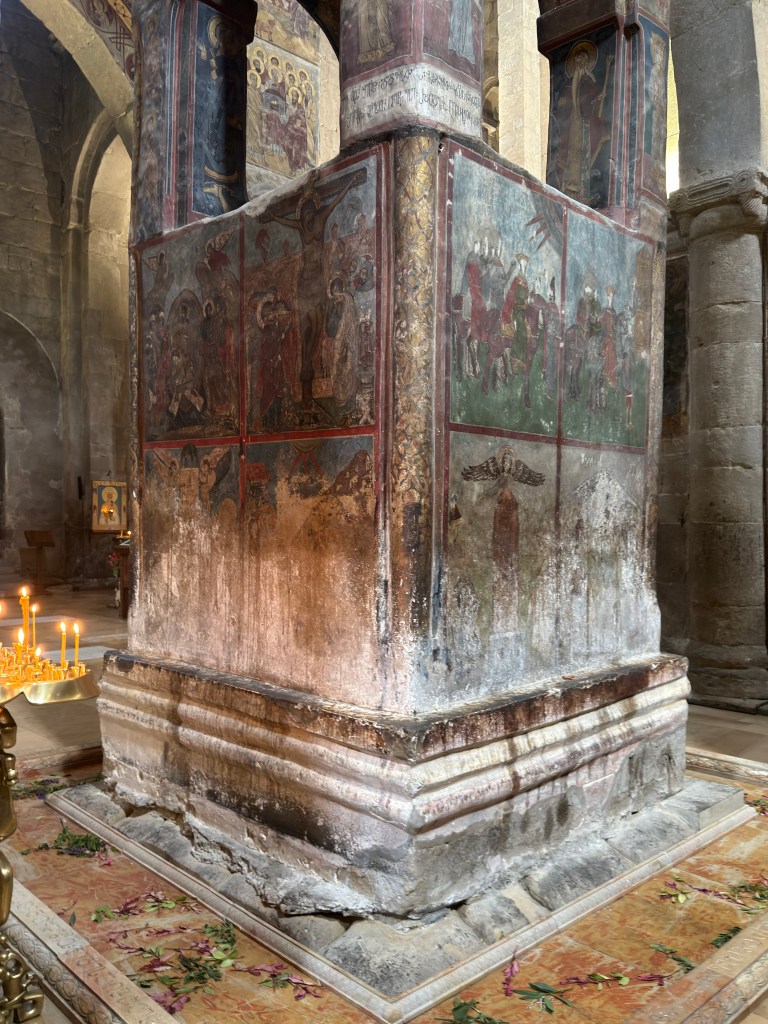
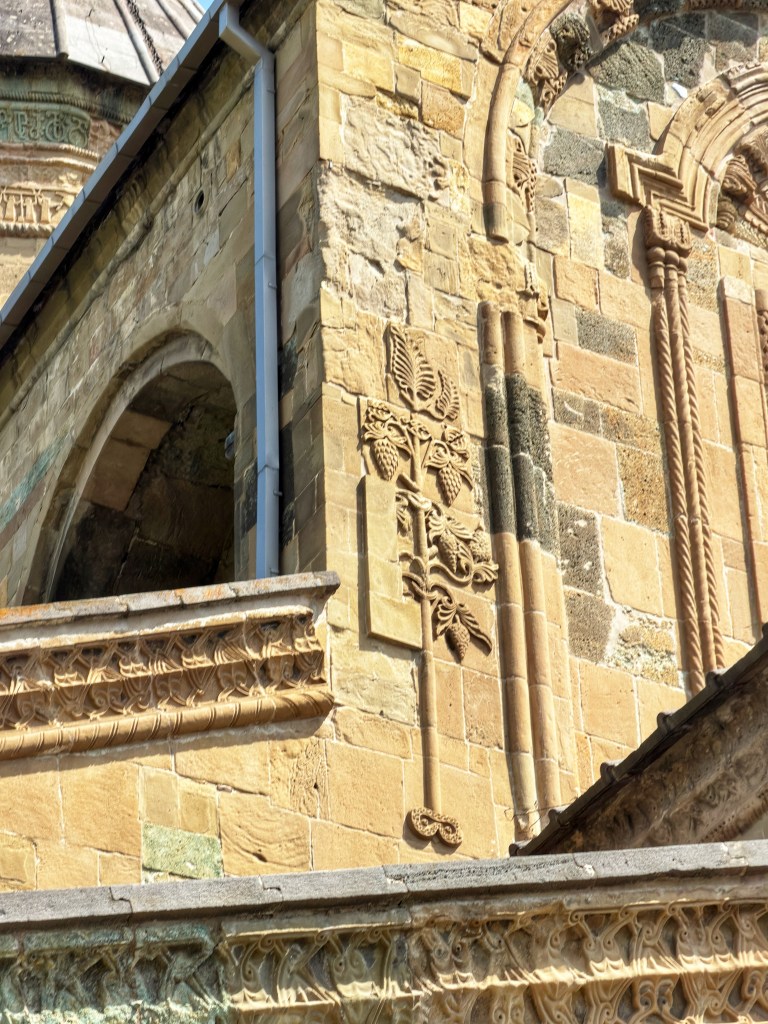
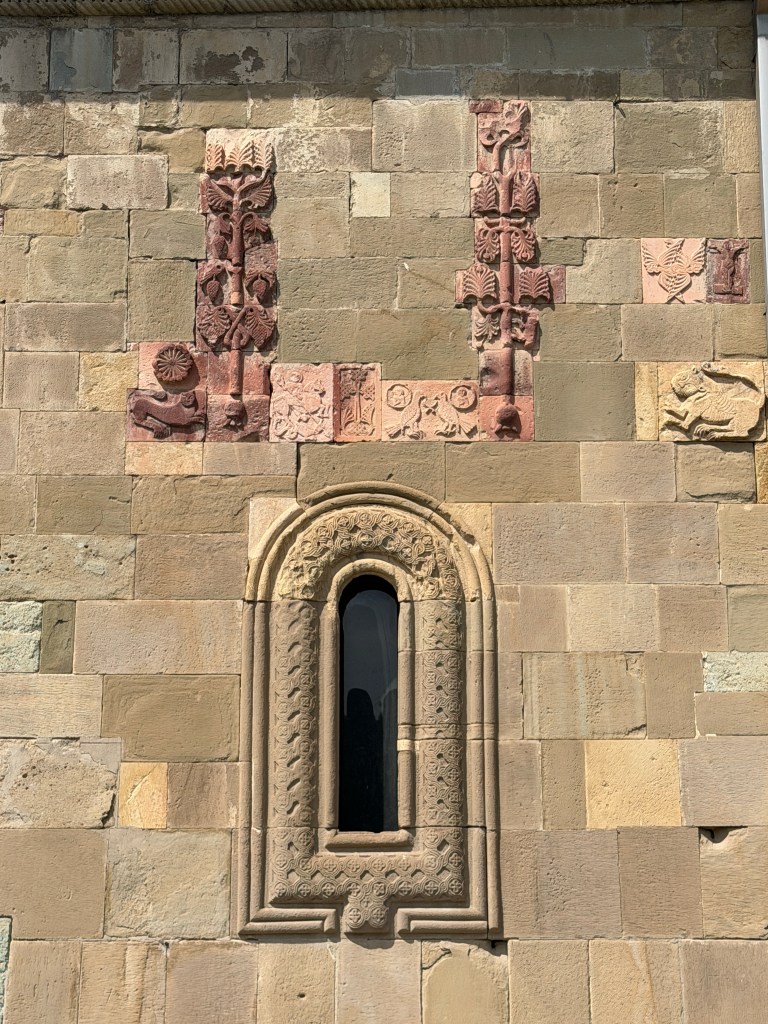
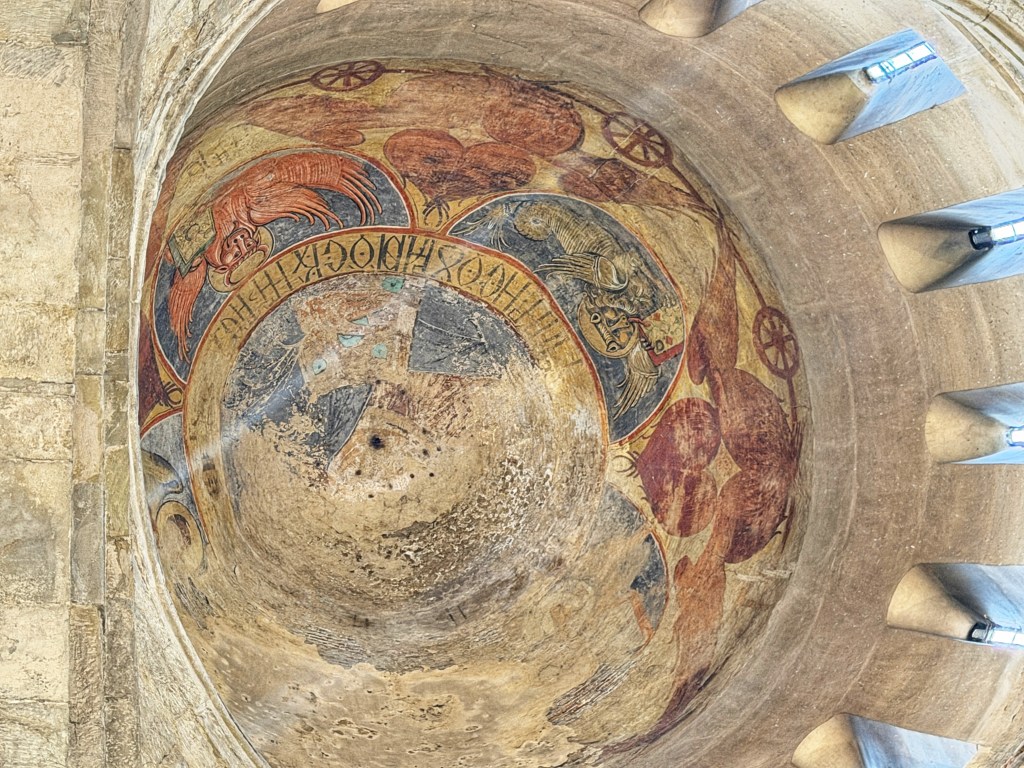
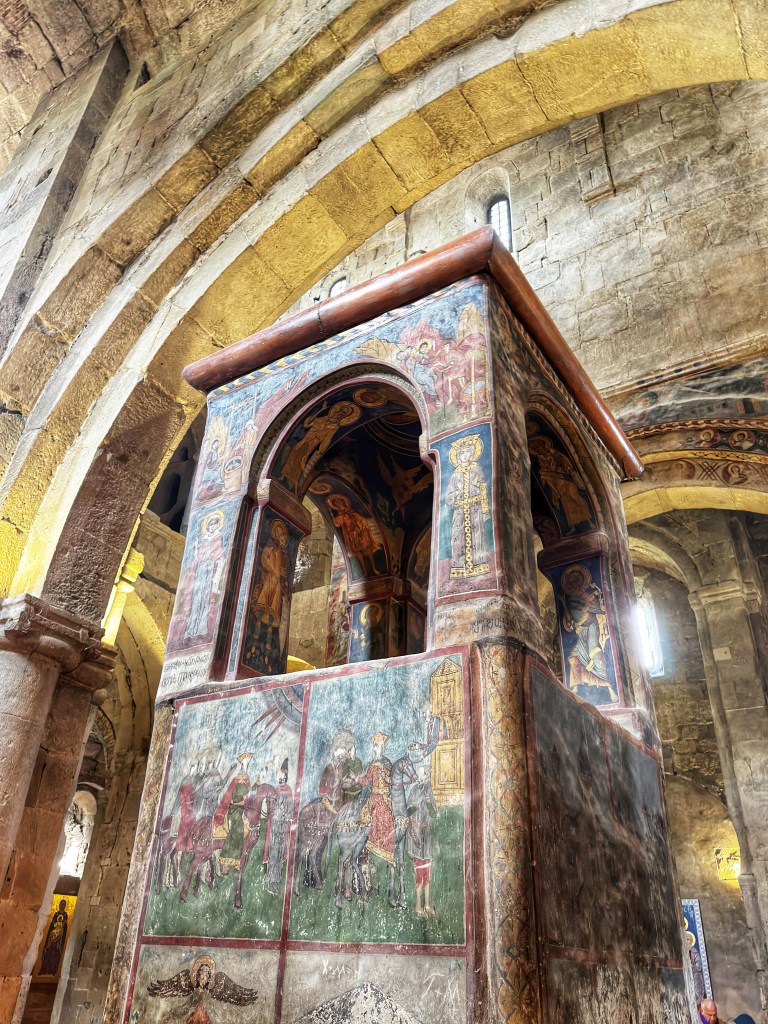
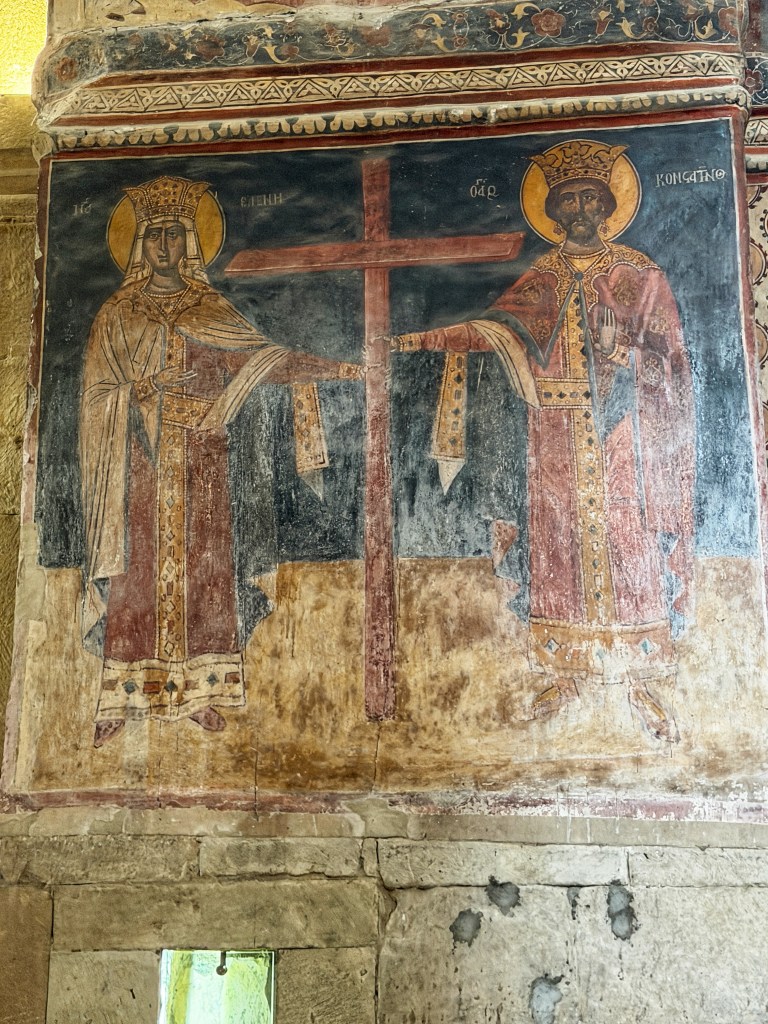
    Svetitskhoveli Cathedral, Mtskheta, Georgia
    Svetitskhoveli Cathedral, Mtskheta, Georgia

    Mtskheta sits where two rivers meet, the Mtkvari and the Aragvi, and it was here, in the first royal capital of Kartli, which the Romans knew as Iberia, that a haunting legend of a particular kind took root, one that precedes the Christianisation of the kingdom by some three centuries and bypasses its logic entirely, with no apostle arriving with a mission. The story, preserved in the Kartlis Tskhovreba, the medieval Georgian chronicles, begins instead with a Jewish man from this city, present at the Crucifixion, who bought Christ’s seamless tunic, the Chiton, from a Roman soldier and carried it home. When his sister Sidonia took the garment in her arms she died, for no reason the chronicle troubles to explain, and was buried where she fell with the tunic still held to her body, and a cedar grew in time from the earth above her grave.

    When St Nino brought Christianity to Kartli in the early fourth century and King Mirian commissioned a church on that ground, the cedar was felled for a pillar that nothing and no one could raise until Nino prayed through the night, an angel descended, and the column settled blazing into its place. The site, and eventually the present cathedral built under Catholicos-Patriarch Melkisedek between 1010 and 1029, took its name from this: Svetitskhoveli, the Life-Giving Pillar.

    Svetitskhoveli Cathedral, Mtskheta, Georgia
    Svetitskhoveli Cathedral, Mtskheta, Georgia
    Svetitskhoveli Cathedral, Mtskheta, Georgia
    Svetitskhoveli Cathedral, Mtskheta, Georgia
    Svetitskhoveli Cathedral, Mtskheta, Georgia
    Svetitskhoveli Cathedral, Mtskheta, Georgia
    Svetitskhoveli Cathedral, Mtskheta, Georgia
    Svetitskhoveli Cathedral, Mtskheta, Georgia
    Svetitskhoveli Cathedral, Mtskheta, Georgia
    Svetitskhoveli Cathedral, Mtskheta, Georgia
    Svetitskhoveli Cathedral, Mtskheta, Georgia
    Svetitskhoveli Cathedral, Mtskheta, Georgia
    Svetitskhoveli Cathedral, Mtskheta, Georgia
    Svetitskhoveli Cathedral, Mtskheta, Georgia
    Svetitskhoveli Cathedral, Mtskheta, Georgia
    Svetitskhoveli Cathedral, Mtskheta, Georgia
    Svetitskhoveli Cathedral, Mtskheta, Georgia
    Svetitskhoveli Cathedral, Mtskheta, Georgia
    Svetitskhoveli Cathedral, Mtskheta, Georgia
    Svetitskhoveli Cathedral, Mtskheta, Georgia
    Svetitskhoveli Cathedral, Mtskheta, Georgia
    Svetitskhoveli Cathedral, Mtskheta, Georgia
    Svetitskhoveli Cathedral, Mtskheta, Georgia
    Svetitskhoveli Cathedral, Mtskheta, Georgia
    Svetitskhoveli Cathedral, Mtskheta, Georgia
    Svetitskhoveli Cathedral, Mtskheta, Georgia
    Svetitskhoveli Cathedral, Mtskheta, Georgia
    Svetitskhoveli Cathedral, Mtskheta, Georgia
    Svetitskhoveli Cathedral, Mtskheta, Georgia
    Svetitskhoveli Cathedral, Mtskheta, Georgia
    Svetitskhoveli Cathedral, Mtskheta, Georgia
    Svetitskhoveli Cathedral, Mtskheta, Georgia
    Svetitskhoveli Cathedral, Mtskheta, Georgia
    Svetitskhoveli Cathedral, Mtskheta, Georgia
    Svetitskhoveli Cathedral, Mtskheta, Georgia
    Svetitskhoveli Cathedral, Mtskheta, Georgia

    References

    Eastmond, A. (1998) Royal Imagery in Medieval Georgia. University Park, PA: Penn State University Press
    Foletti, I. and Thunø, E. (eds.) (2016) The Medieval South Caucasus: Artistic Cultures of Albania, Armenia and Georgia. Brno: Convivium Supplementum

    Frankopan, P. (2018) The New Silk Roads: The Present and Future of the World. London: Bloomsbury Publishing

    Khoshtaria, D. (2023) Medieval Georgian Churches: A Concise Overview of Architecture. Available at: https://www.academia.edu/103250488/Medieval_Georgian_Churches_A_Concise_Overview_of_Architecture (Accessed: 1 May 2026)

    Khoshtaria, D. (2023) Medieval Georgian Churches: A Concise Overview of Architecture. Tbilisi: Artanuji Publishing

    Mepisashvili, R. and Tsintsadze, V. (1979) The Arts of Ancient Georgia. London: Thames and Hudson

    MacCulloch, D. (2009) A History of Christianity: The First Three Thousand Years. London: Allen Lane

  • Shio-Mgvime: a Sixth-Century Monastery
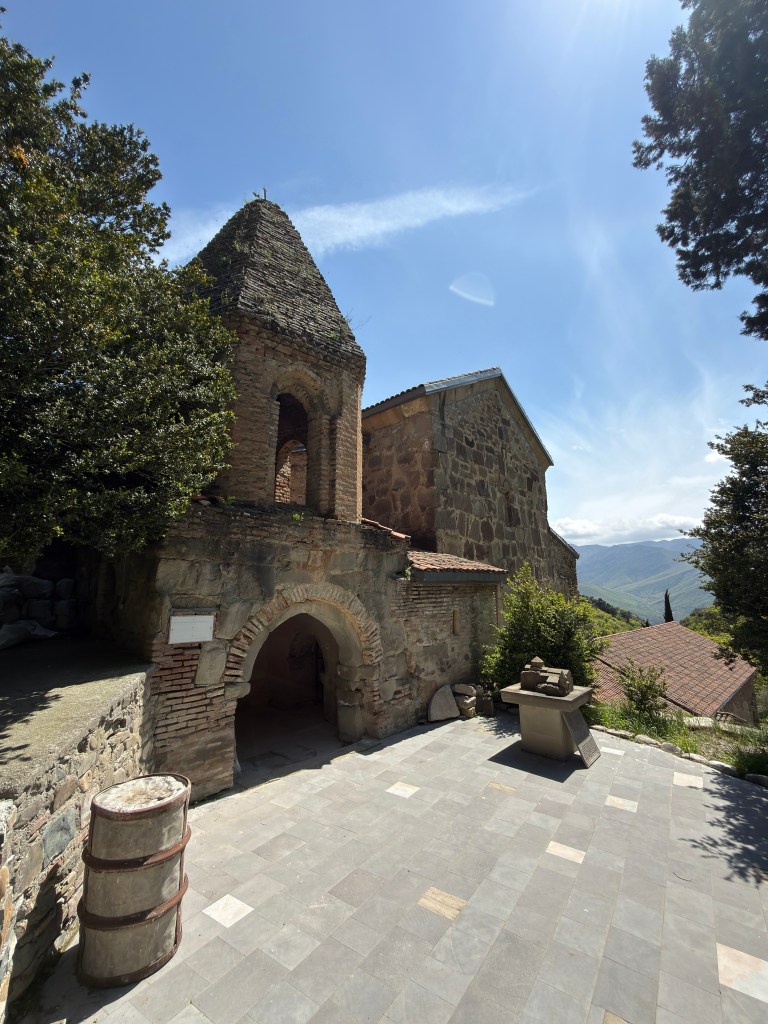
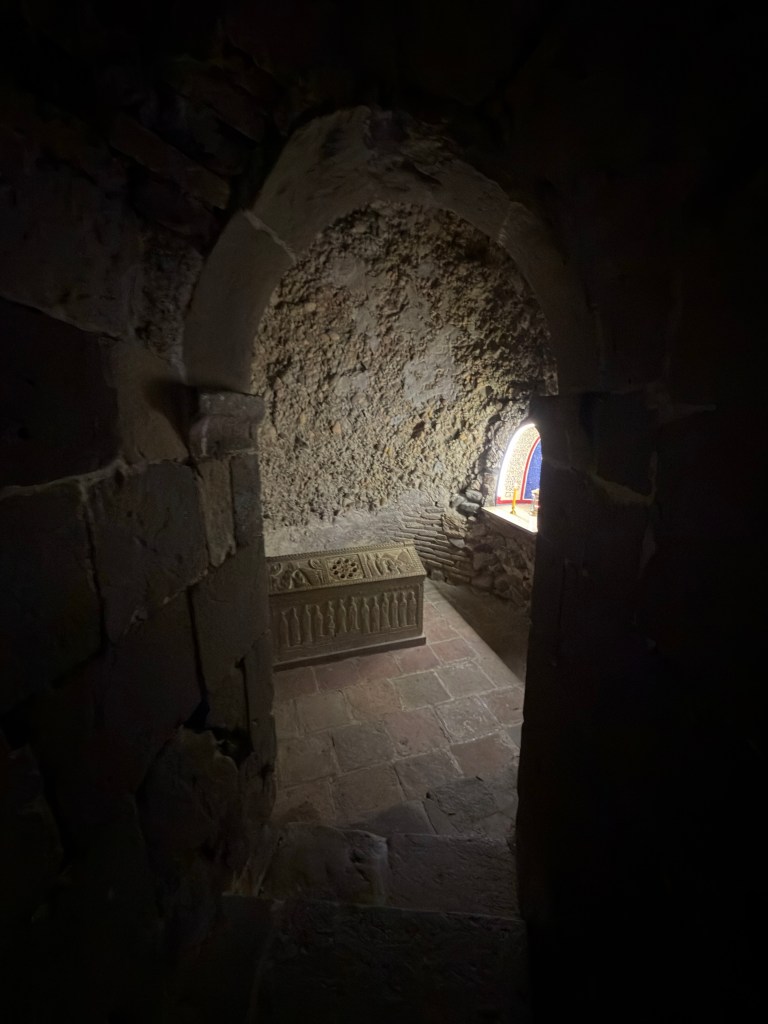
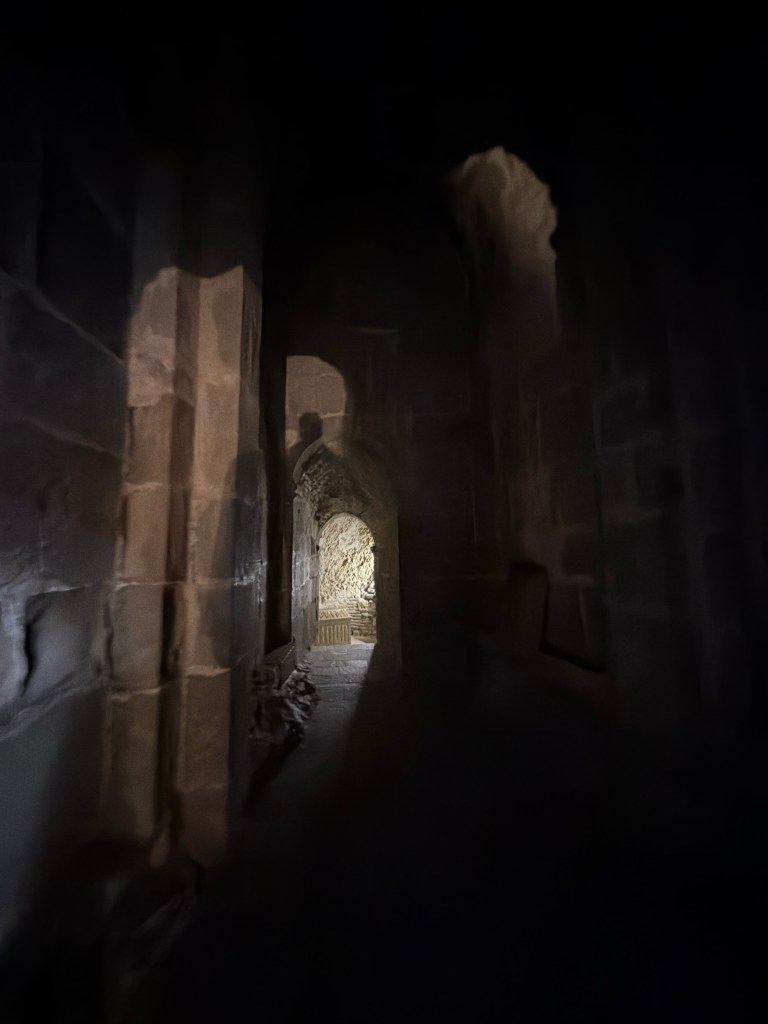
    Shio-Mgvime monastery near Mtskheta, Georgia
    Shio-Mgvime monastery near Mtskheta, Georgia

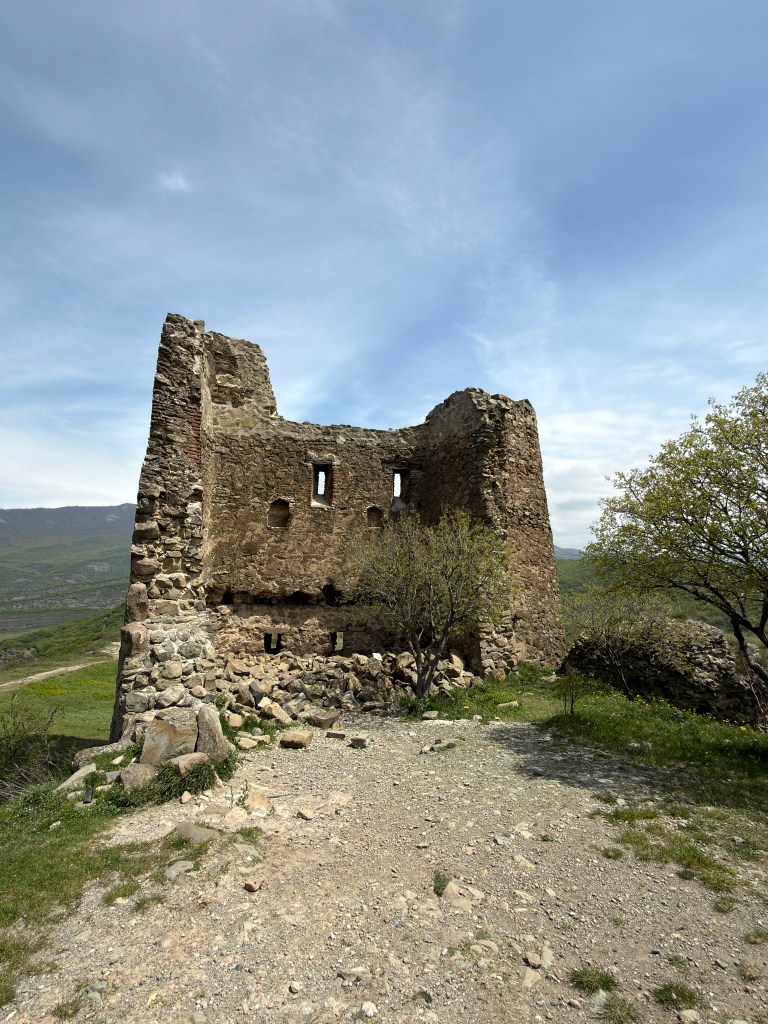
    Shio-Mgvime, a monastic complex near Mtskheta, the ancient capital of the Kingdom of Iberia, dates to the 560s, when the monk Shio, one of a group of Syrian missionaries trained in the great schools at Edessa and Antioch, settled here, built the Church of St John the Baptist beside the cave he had chosen as his dwelling, and founded a community that would survive, in various states of ruin and restoration, Persian sackings, Ottoman occupation, and Soviet closure. The church is still standing, a cruciform plan with an octagonal dome that Georgian builders of the period developed from Byzantine and Persian Sassanian precedents into something distinctly their own, as is the cave, though the carved stone iconostasis that once decorated the interior is now in the Georgian Museum of Fine Arts in Tbilisi. Around 1100, David the Builder (1073–1125) added the Upper Church of the Virgin and made Shio-Mgvime a royal domain.

    Peter Frankopan’s The Silk Roads and Diarmaid MacCulloch’s Christianity were good companions for the journey.

    Shio-Mgvime monastery near Mtskheta, Georgia
    Shio-Mgvime monastery near Mtskheta, Georgia
    Shio-Mgvime monastery near Mtskheta, Georgia
    Shio-Mgvime monastery near Mtskheta, Georgia
    Shio-Mgvime monastery near Mtskheta, Georgia
    Shio-Mgvime monastery near Mtskheta, Georgia
    Shio-Mgvime monastery near Mtskheta, Georgia
    Shio-Mgvime monastery near Mtskheta, Georgia
    Shio-Mgvime monastery near Mtskheta, Georgia
    Shio-Mgvime monastery near Mtskheta, Georgia


    References

    Eastmond, A. (1998) Royal Imagery in Medieval Georgia. University Park, PA: Penn State University Press
    Foletti, I. and Thunø, E. (eds.) (2016) The Medieval South Caucasus: Artistic Cultures of Albania, Armenia and Georgia. Brno: Convivium Supplementum

    Frankopan, P. (2018) The New Silk Roads: The Present and Future of the World. London: Bloomsbury Publishing

    Khoshtaria, D. (2023) Medieval Georgian Churches: A Concise Overview of Architecture. Available at: https://www.academia.edu/103250488/Medieval_Georgian_Churches_A_Concise_Overview_of_Architecture (Accessed: 1 May 2026)

    Khoshtaria, D. (2023) Medieval Georgian Churches: A Concise Overview of Architecture. Tbilisi: Artanuji Publishing

    Mepisashvili, R. and Tsintsadze, V. (1979) The Arts of Ancient Georgia. London: Thames and Hudson

    MacCulloch, D. (2009) A History of Christianity: The First Three Thousand Years. London: Allen Lane

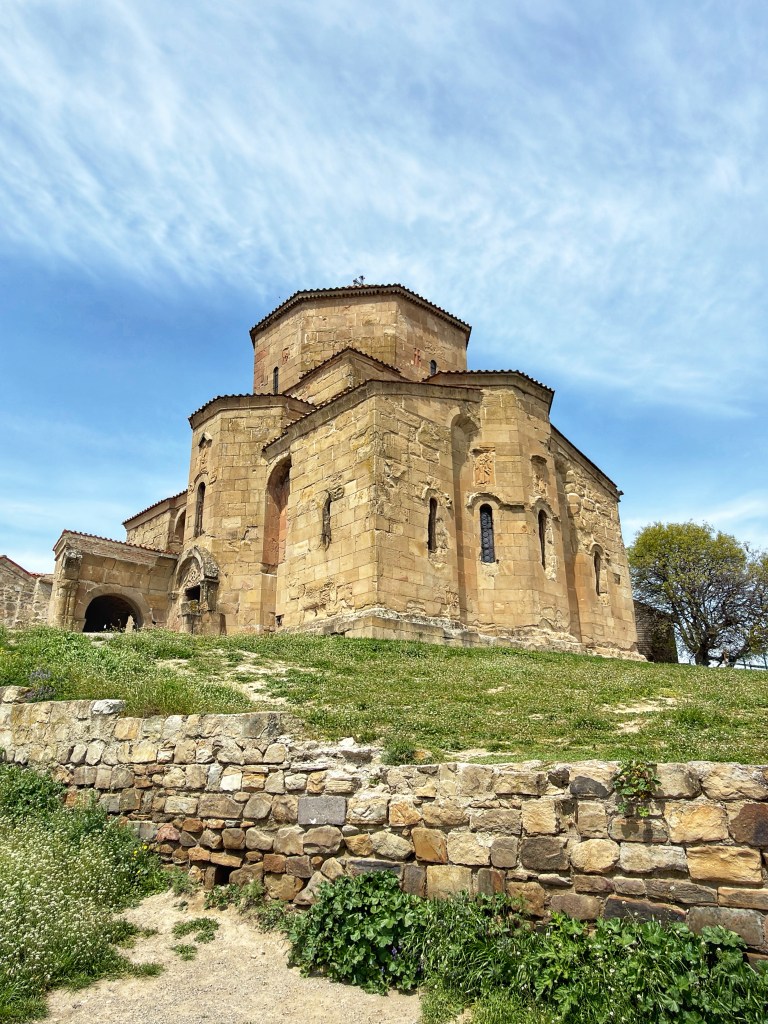
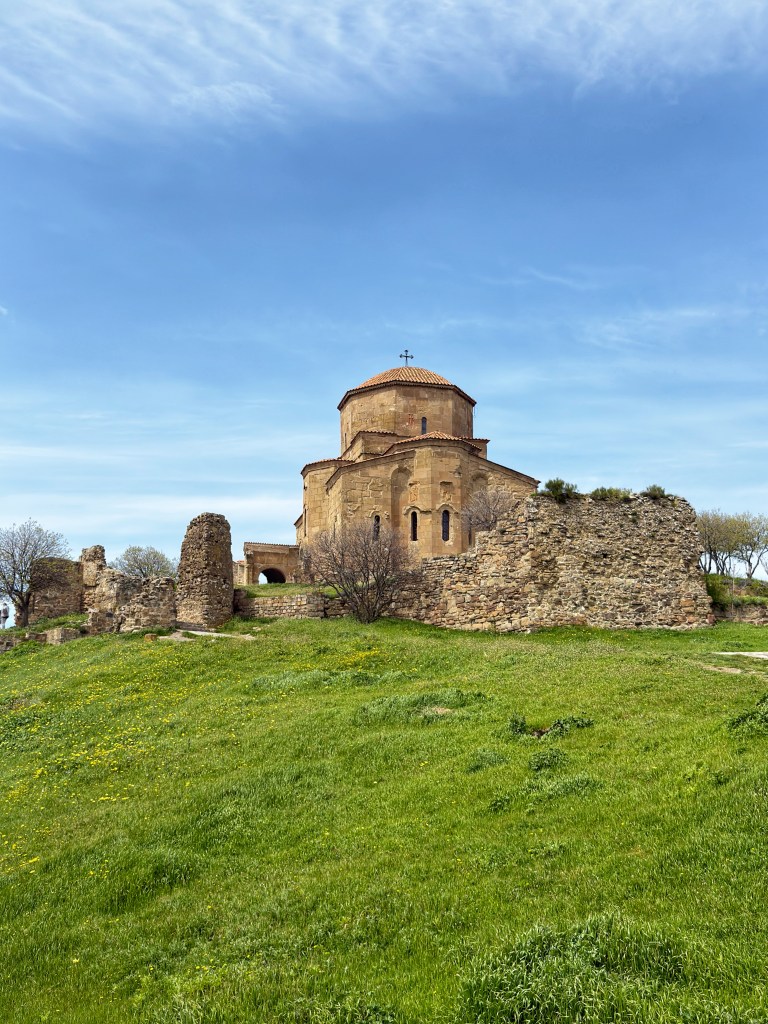
  • Jvari, Church of the Holy Cross, Mtskheta, c.586–605

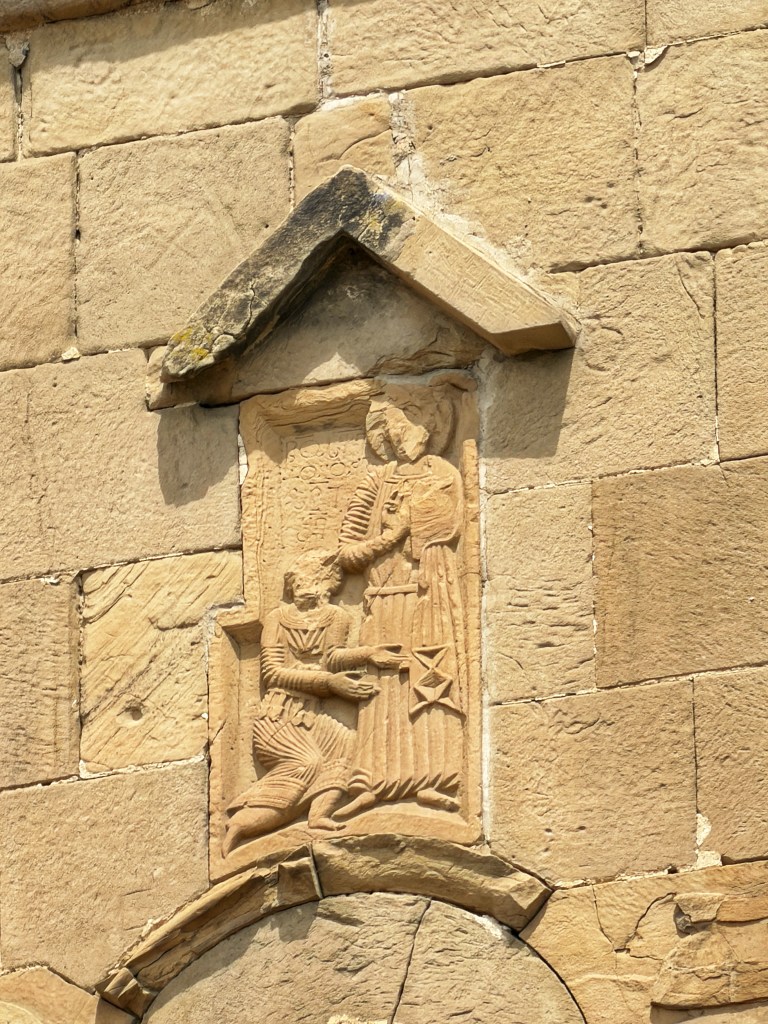
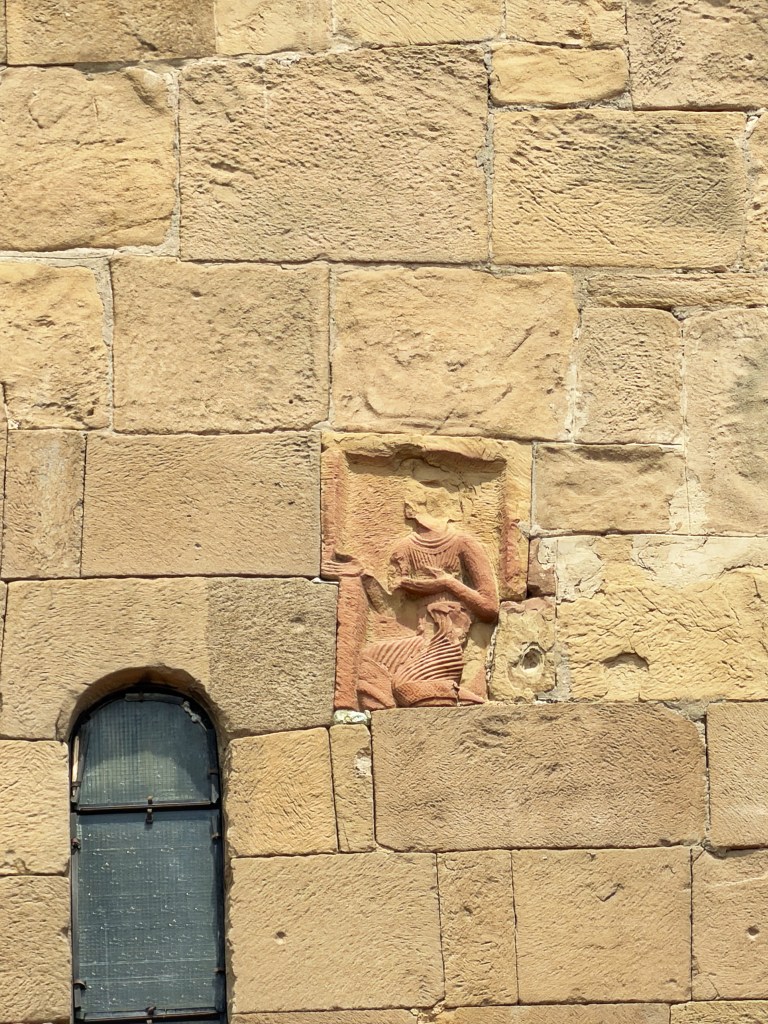
    Perched above the ancient capital of Mtskheta, the Church of the Holy Cross was built between approximately 586 and 605, at a moment when the kingdom it stood in had ceased to exist. In 580 the Sasanian Persian Empire had abolished the Iberian monarchy, placing the territory under direct imperial control and actively promoting Zoroastrianism in an effort to displace Christianity. Those efforts failed. Construction began around 586, in a kingdom without a king, completing only after a treaty in 591 between the emperor Maurice and Khusrau II divided the territory, Mtskheta passing to Byzantium and Tbilisi remaining under Persian control. The patrons who inscribed their names on the exterior walls saw all of this.

    What followed changed the shape of Christianity permanently. The war between the two empires, which broke out in 602 and lasted 26 years, left the Sasanian state destroyed and Byzantium gravely weakened. Into that exhaustion came the Arab conquests of the 630s and 640s, sweeping through western Asia and the Middle East. Jvari was completed just before any of that was foreseeable. Byzantine court titles, patricius and hypatos, appear in the dedicatory inscriptions. Sasanian and Byzantine artistic currents run together in the bas-reliefs. Whatever the patrons understood themselves to be doing, they left a building that sits at one of the hinges of Christian history.

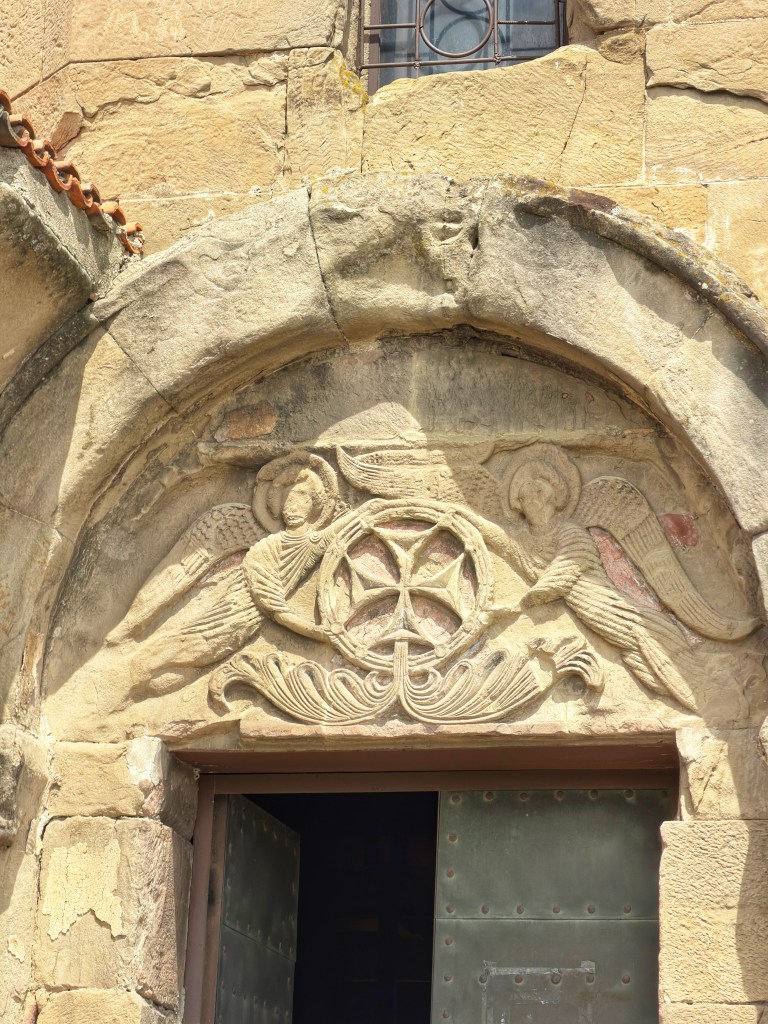
    The plan is tetraconchal, four apses radiating from a central domed bay, cut in precisely jointed dressed stone. On the east facade, portrait reliefs of the donor princes face outward. On the south, a Glorification of the Cross and an Ascension of Christ occupy the tympanum above the entrance, carved with a fluency that places this among the finest relief work surviving from the early medieval Caucasus.

    Jvari, Church of the Holy Cross, Mtskheta, c.586–605
    Jvari, Church of the Holy Cross, Mtskheta, c.586–605
    Jvari, Church of the Holy Cross, Mtskheta, c.586–605
    Jvari, Church of the Holy Cross, Mtskheta, c.586–605
    Jvari, Church of the Holy Cross, Mtskheta, c.586–605
    Jvari, Church of the Holy Cross, Mtskheta, c.586–605
    Jvari, Church of the Holy Cross, Mtskheta, c.586–605
    Jvari, Church of the Holy Cross, Mtskheta, c.586–605
    Jvari, Church of the Holy Cross, Mtskheta, c.586–605
    Jvari, Church of the Holy Cross, Mtskheta, c.586–605
    Jvari, Church of the Holy Cross, Mtskheta, c.586–605
    Jvari, Church of the Holy Cross, Mtskheta, c.586–605
    Jvari, Church of the Holy Cross, Mtskheta, c.586–605
    Jvari, Church of the Holy Cross, Mtskheta, c.586–605
    Jvari, Church of the Holy Cross, Mtskheta, c.586–605
    Jvari, Church of the Holy Cross, Mtskheta, c.586–605
    Jvari, Mtskheta, c.586–605
    Jvari, Mtskheta, c.586–605

    References

    Eastmond, A. (1998) Royal Imagery in Medieval Georgia. University Park, PA: Penn State University Press
    Foletti, I. and Thunø, E. (eds.) (2016) The Medieval South Caucasus: Artistic Cultures of Albania, Armenia and Georgia. Brno: Convivium Supplementum

    Frankopan, P. (2018) The New Silk Roads: The Present and Future of the World. London: Bloomsbury Publishing

    Khoshtaria, D. (2023) Medieval Georgian Churches: A Concise Overview of Architecture. Available at: https://www.academia.edu/103250488/Medieval_Georgian_Churches_A_Concise_Overview_of_Architecture (Accessed: 1 May 2026)

    Khoshtaria, D. (2023) Medieval Georgian Churches: A Concise Overview of Architecture. Tbilisi: Artanuji Publishing

    Mepisashvili, R. and Tsintsadze, V. (1979) The Arts of Ancient Georgia. London: Thames and Hudson

    MacCulloch, D. (2009) A History of Christianity: The First Three Thousand Years. London: Allen Lane

  • An Antonine Portrait Bust and the Enduring Language of Greek Paideia

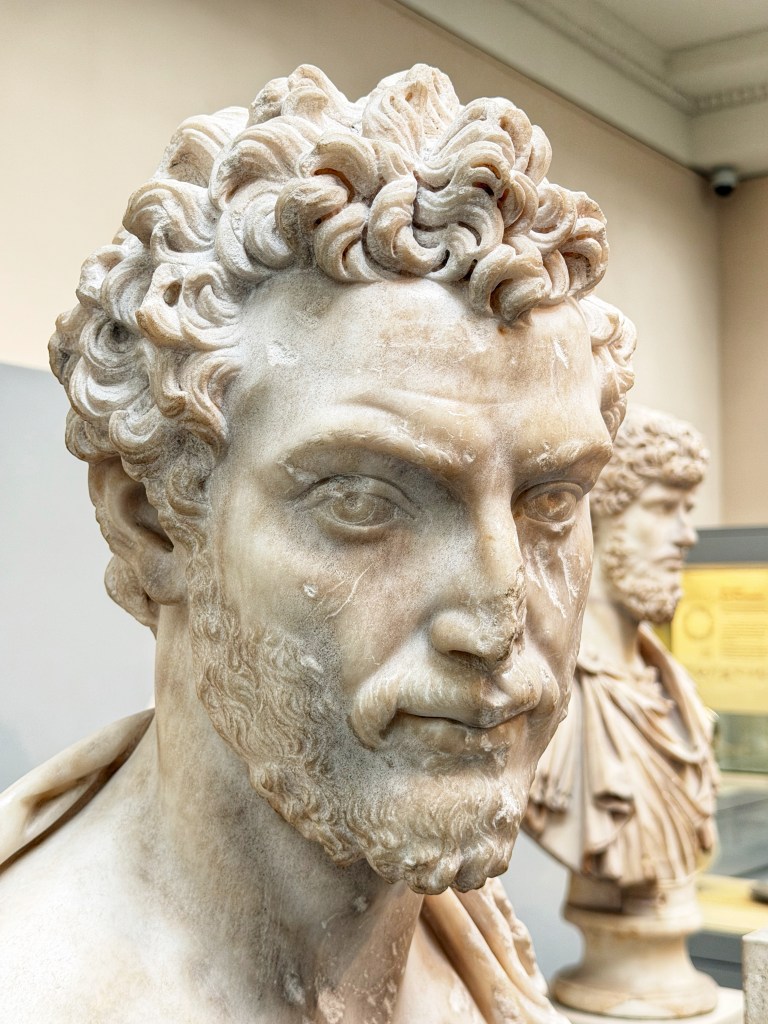
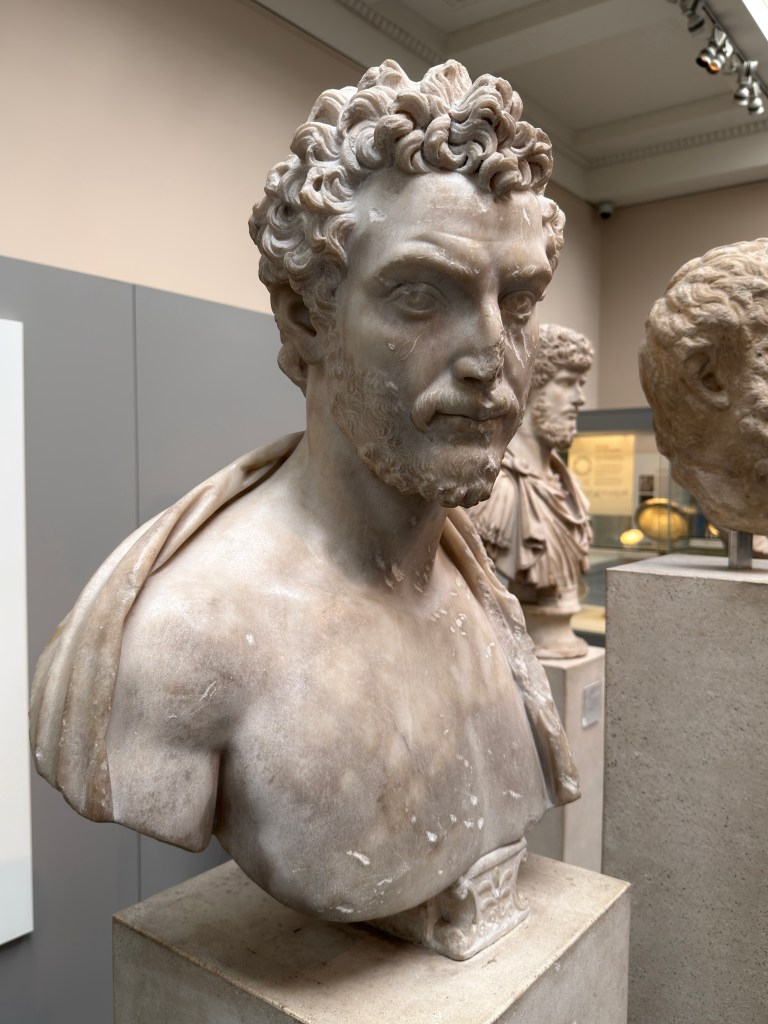
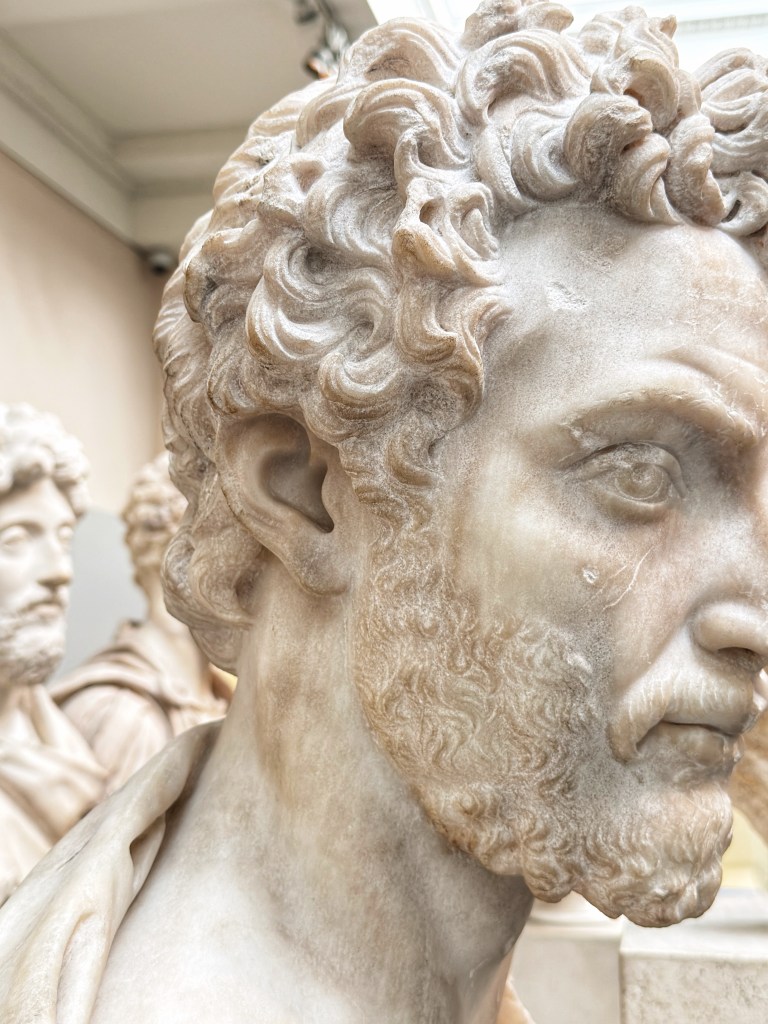
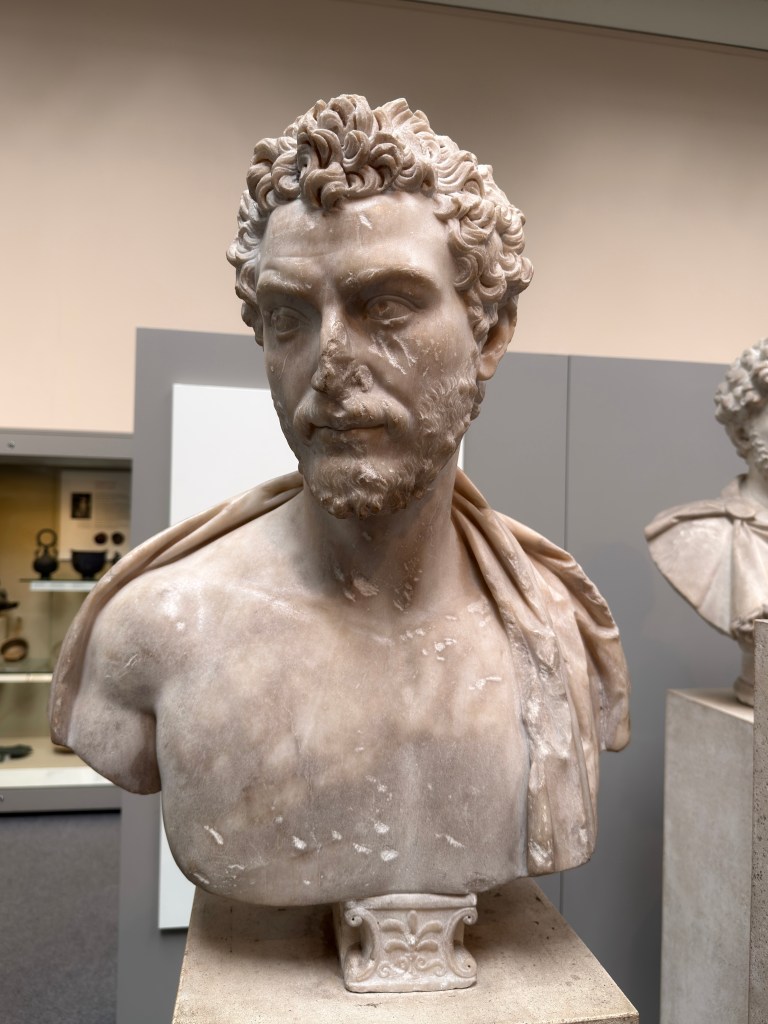
    Roman Antonine period,circa 130–150 CE, Portrait bust of a bearded man dressed as a Greek orator,  Marble, H. 66.04 cm., Created in Greece (Athens ?), the British Museum, Room 70

    Roman Antonine period,circa 130–150 CE, Portrait bust of a bearded man dressed as a Greek orator,  Marble, H. 66.04 cm., Created in Greece (Athens ?), the British Museum, Room 70
    Roman Antonine period,circa 130–150 CE, Portrait bust of a bearded man dressed as a Greek orator,  Marble, H. 66.04 cm., Created in Greece (Athens ?), the British Museum, Room 70

    By the time this bust was carved, Greece had been under Roman rule for over three centuries. Absorbed in 146 BCE, yet never relegated to the periphery. Athens remained one of the great centres of learning for the Roman elite, and its workshops produced sculpture that travelled throughout the empire.

    The workshops that made portraits like this one stood at a remove of 5 or 6 centuries from the great classical achievement, from Phidias and Polykleitos in the fifth century BCE, from Praxiteles in the fourth. Six hundred years on, Greek sculptors were not copying, they worked within a sophisticated artistic language, drawing on their Classical models for a clientele fully aware of the historical reference. Modern scholars describe this manner of working as Neo-Attic: a style rooted in the Athenian workshops that returned repeatedly to Classical prototypes, not out of inability to innovate, but because that backward glance was precisely what Roman patrons were paying for.

    The bare chest and heavy mantle are not what anyone actually wore by 150 CE. They are a deliberate historical citation. The costume is the Greek himation draped over a bare torso, the dress of classical Athens five centuries earlier, and on portraits of learned men it carried a specific meaning: a claim to paideia, the Greek tradition of intellectual formation.

    The curls and the beard belong to a different register altogether. Pure Antonine, following the fashion Roman emperor Hadrian (76-138 CE) had established as imperial norm. The two layers sit on the same face without contradiction. A man under Roman rule, portrayed by a Greek workshop, shown as a man of Greek Classical learning.

    Roman Antonine period,circa 130–150 CE, Portrait bust of a bearded man dressed as a Greek orator,  Marble, H. 66.04 cm., Created in Greece (Athens ?), the British Museum, Room 70
    Roman Antonine period,circa 130–150 CE, Portrait bust of a bearded man dressed as a Greek orator,  Marble, H. 66.04 cm., Created in Greece (Athens ?), the British Museum, Room70

    Roman Antonine period,circa 130–150 CE, Portrait bust of a bearded man dressed as a Greek orator,  Marble, H. 66.04 cm., Created in Greece (Athens ?), the British Museum, Room 70
    Roman Antonine period,circa 130–150 CE, Portrait bust of a bearded man dressed as a Greek orator,  Marble, H. 66.04 cm., Created in Greece (Athens ?), the British Museum, Room 70
    Roman Antonine period,circa 130–150 CE, Portrait bust of a bearded man dressed as a Greek orator,  Marble, H. 66.04 cm., Created in Greece (Athens ?), the British Museum, Room 70
    Roman Antonine period,circa 130–150 CE, Portrait bust of a bearded man dressed as a Greek orator,  Marble, H. 66.04 cm., Created in Greece (Athens ?), the British Museum, Room 70

    References

    British Museum (n.d.) Portrait bust of a bearded man dressed as a Greek orator, Museum no. 2007,5005.1. Available at: https://www.britishmuseum.org/collection/object/G_2007-5005-1 (Accessed: 18 April 2026).

    Dillon, S. (2006) Ancient Greek Portrait Sculpture: Contexts, Subjects, and Styles. Cambridge: Cambridge University Press

    Zanker, P. (1995) The Mask of Socrates: The Image of the Intellectual in Antiquity. Berkeley: University of California Press

  • Hendrick Goltzius (1558–1617), Self-Portrait, c. 1588–1590

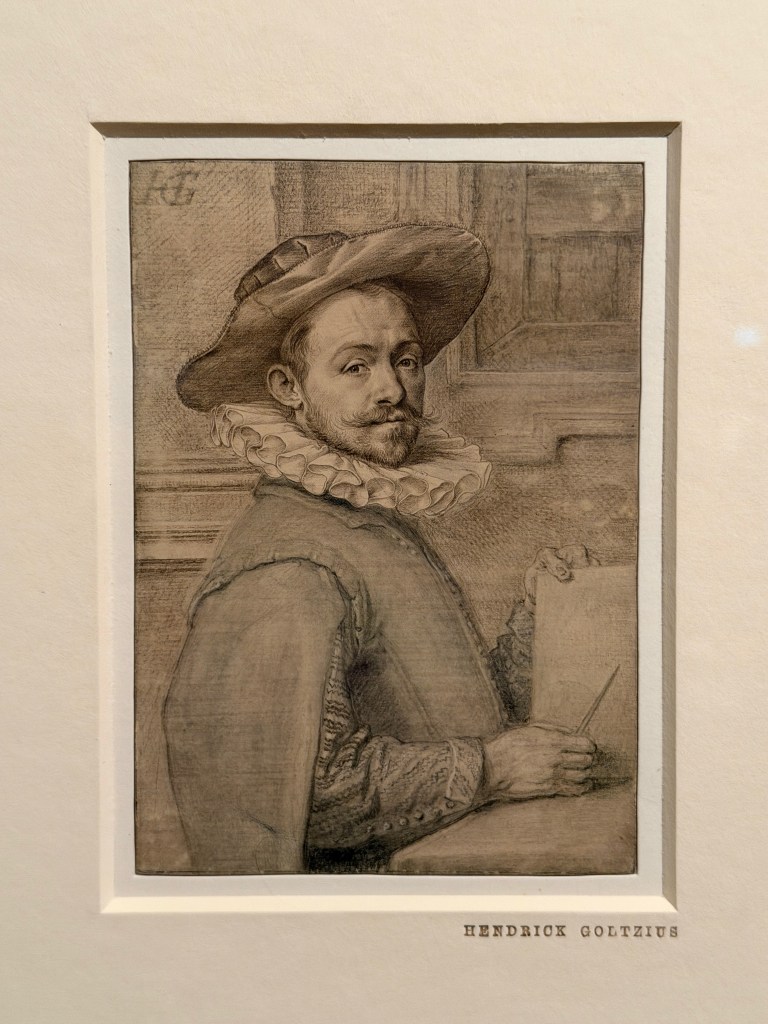
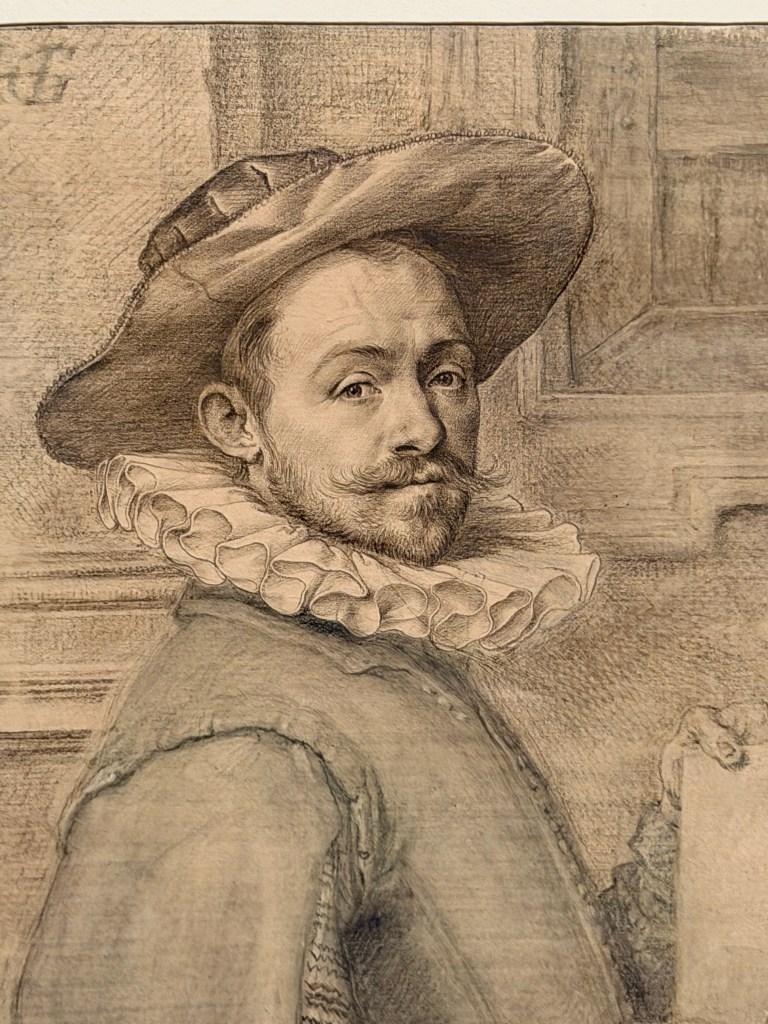
    Hendrick Goltzius (1558–1617), Self-Portrait, c. 1588–1590, Black chalk on vellum, 146 × 104 mm, The British Museum

    Hendrick Goltzius (1558–1617), Self-Portrait, c. 1588–1590, Black chalk on vellum, 146 × 104 mm, The British Museum
    Hendrick Goltzius (1558–1617), Self-Portrait, c. 1588–1590, Black chalk on vellum, 146 × 104 mm, The British Museum

    Around 1588 to 1590, when this self-portrait was made, Goltzius was approximately thirty. He had run his own publishing workshop in Haarlem since 1582 — breaking the Antwerp monopoly on Northern European print publishing.

    Painting entered his practice only in 1600, at the age of forty-two. In the late 1580s there was no need to look elsewhere: line carried, for Goltzius, the full expressive ambition that other artists distributed across multiple media.

    Building on the innovations of the Netherlandish engraver Cornelis Cort (c. 1533–1578), who worked largely in Italy, Goltzius pushes the engraved stroke to an extreme: it thickens, narrows, shifts weight along its length, describing form without recourse to tonal modelling. Volume emerges from incision alone.

    The physical condition of his right hand sits quietly behind all of this. Scarred in childhood and never fully mobile, it has often been treated as an explanation for the character of his line. More recent accounts are cautious on the point, yet the fact remains that this was his working hand, and that contemporaries regarded his command of the burin as exceptional.

    Seen in these terms, the drawing becomes more precise in what it declares. He presents himself holding a copper-plate and, a burin — the tools of engraving — yet what he has made is a drawing in chalk. He did not reach for the instrument that defined his reputation. The line does not move onward into another process; it stops here.

    Hendrick Goltzius (1558–1617), Self-Portrait, c. 1588–1590, Black chalk on vellum, 146 × 104 mm, The British Museum
    Hendrick Goltzius (1558–1617), Self-Portrait, c. 1588–1590, Black chalk on vellum, 146 × 104 mm, The British Museum
    Hendrick Goltzius (1558–1617), Self-Portrait, c. 1588–1590, Black chalk on vellum, 146 × 104 mm, The British Museum
    Hendrick Goltzius (1558–1617), Self-Portrait, c. 1588–1590, Black chalk on vellum, 146 × 104 mm, The British Museum

    References

    British Museum (n.d.), Hendrik Goltzius (1558–1617), Self-portrait, c. 1589. Silverpoint with graphite and wash on vellum, 146 × 104 mm. Available at: https://www.britishmuseum.org/collection/object/P_1895-0915-1020 (Accessed: 17 April 2026).

    RKD – Netherlands Institute for Art History (n.d.), Hendrick Goltzius (1558–1617), Self-portrait, c. 1589. RKDimages database entry no. 141791. Available at: https://rkd.nl/images/141791 (Accessed: 17 April 2026).

    RKD (n.d.), Hendrick Goltzius (1558–1617), Self-portrait, c. 1580–1585. RKDimages database entry no. 231405. Available at: https://rkd.nl/images/231405 (Accessed: 17 April 2026).

    RKD  (n.d.), Hendrick Goltzius (1558–1617), Self-portrait, c. 1589. RKDimages database entry no. 141791. Available at: https://rkd.nl/images/141791 (Accessed: 17 April 2026).

    RKD  (n.d.), Hendrick Goltzius (1558–1617), Right hand, 1588. RKDimages database entry no. 304736. Available at: https://rkd.nl/images/304736 (Accessed: 17 April 2026).

    RKD (n.d.), Hendrick Goltzius (1558–1617), Self-portrait, c. 1600. RKDimages database entry no. 21528. Available at: https://rkd.nl/images/21528 (Accessed: 17 April 2026).

    RKD (n.d.), Hendrick Goltzius (1558–1617), Self-portrait, c. 1600. RKDimages database entry no. 21528. Available at: https://rkd.nl/images/21528 (Accessed: 17 April 2026).

    RKD (n.d.), Hendrick Goltzius (1558–1617), The artist’s right hand, c. 1588. RKDimages database entry no. 259907. Available at: https://rkd.nl/images/259907 (Accessed: 17 April 2026).

    RKD  (n.d.), Hendrick Goltzius (1558–1617), Self-portrait, c. 1605. RKDimages database entry no. 109424. Available at: https://rkd.nl/images/109424 (Accessed: 17 April 2026).

  • Michiel Coxie (1499–1592?) in Rome (c. 1532–c. 1539): Designs for the Loves of Jupiter

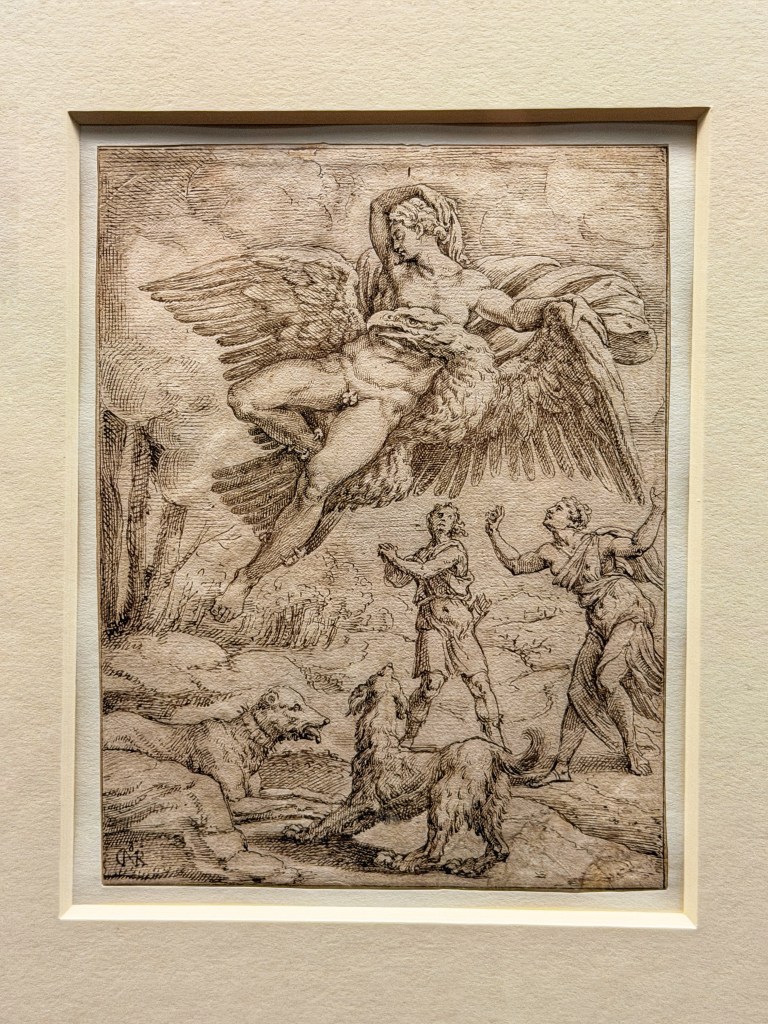
    Michiel Coxie I (1499–1592?), The Abduction of Ganymede, early 1530s, Pen and brown ink on paper, 176 × 136 mm, the British Museum

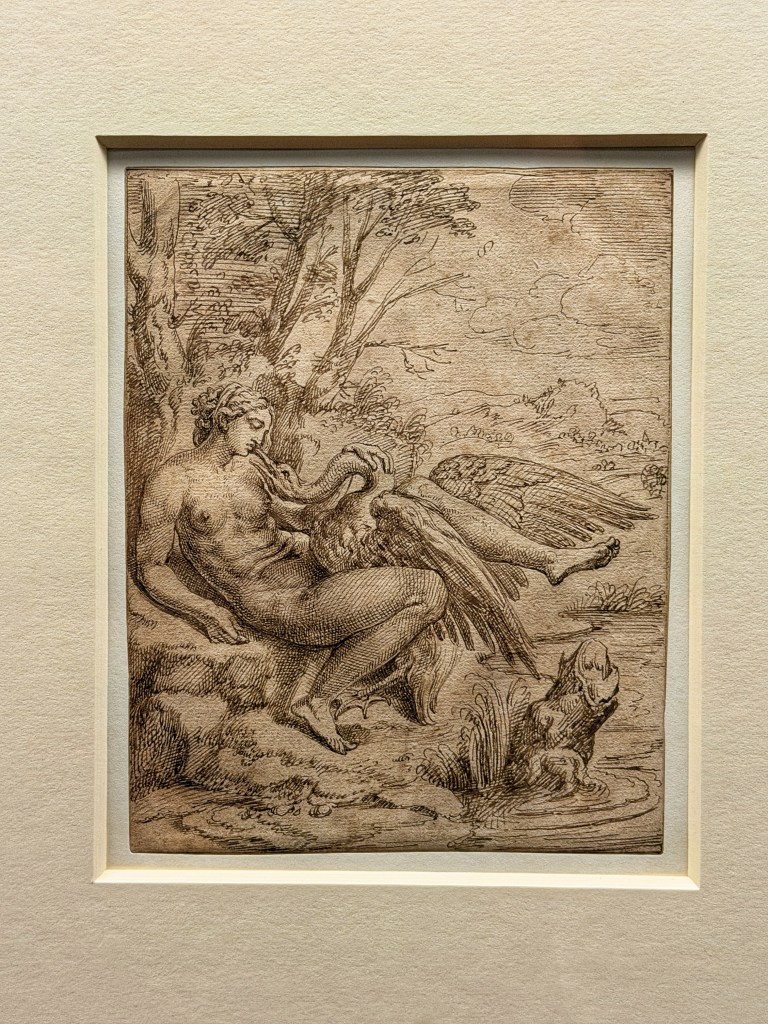
    Michiel Coxie I (1499–1592?), Jupiter and Leda, early 1530s, Pen and brown ink on paper, 172 × 134 mm, the British Museum

    Michiel Coxie I (1499–1592?), The Abduction of Ganymede, early 1530s, Pen and brown ink on paper, 176 × 136 mm, the British Museum
    Michiel Coxie I (1499–1592?), Jupiter and Leda, early 1530s, Pen and brown ink on paper, 172 × 134 mm, the British Museum

    Michiel Coxie I (1499–1592?), The Abduction of Ganymede, early 1530s, Pen and brown ink on paper, 176 × 136 mm, the British Museum
    Michiel Coxie I (1499–1592?), The Abduction of Ganymede, early 1530s, Pen and brown ink on paper, 176 × 136 mm, the British Museum

    Coxie arrived in Rome around 1532, in his early thirties, at a moment when the city was still absorbing the shock of the Sack of 1527. He stayed seven years, long enough to take in what the Renaissance had accumulated, the principles of classical antiquity, Raphael’s compositional clarity, and direct access to Michelangelo’s drawings, from which he borrowed the figure of Ganymede here almost without disguise.

    These two sheets belong to a series of ten print designs on the loves of Jupiter, drawn from Ovid’s Metamorphoses. They were made to be transferred, as the indented lines confirm. Coxie used small cross-hatchings to build volume on the torsos and parallel strokes to indicate space. The method is Italian. So is the confidence with the nude, a fluency with the naked body that the northern tradition had not yet made its own, and that Coxie had acquired through direct study of classical sculpture and the work around him in Rome.

    It was those Roman years that earned him the nickname the Flemish Raphael, a measure of how highly his contemporaries rated him, and of how completely he had made the Italian Renaissance tradition his own.​​​​​​​​​​​​​​​​

    References

    The British Museum (n.d.) Michiel Coxie I (1499–1592), The Abduction of Ganymede by Jupiter, early 1530s, museum no. 1861,0112.1. Available at: https://www.britishmuseum.org/collection/object/P_1861-0112-1 (Accessed: 16 April 2026).

    The British Museum (n.d.) Michiel Coxie I (1499–1592), Jupiter, in the form of a swan, making love to Leda, early 1530s, museum no. 1861,0112.8. Available at: https://www.britishmuseum.org/collection/object/P_1861-0112-8 (Accessed: 16 April 2026).

    The British Museum (n.d.) Virgil Solis, after Michiel Coxie I (1499–1592), Leda and the swan, from ‘The Loves of Jupiter’, 1530–1562, museum no. 1837,0616.28. Available at: https://www.britishmuseum.org/collection/object/P_1837-0616-28 (Accessed: 16 April 2026).

    Jonckheere, K. (ed.) (2013) Michiel Coxcie (1499–1592) and the giants of his age. Turnhout: Harvey Miller.

    Jonckheere, K. (ed.) (2013) Michiel Coxcie and the giants of his age. Available at: https://www.academia.edu/12896271/Michiel_Coxcie_and_the_Giants_of_his_Age_Selection (Accessed: 17 April 2026).

  • A Silverpoint in Question: Rogier van der Weyden and Jan van Eyck

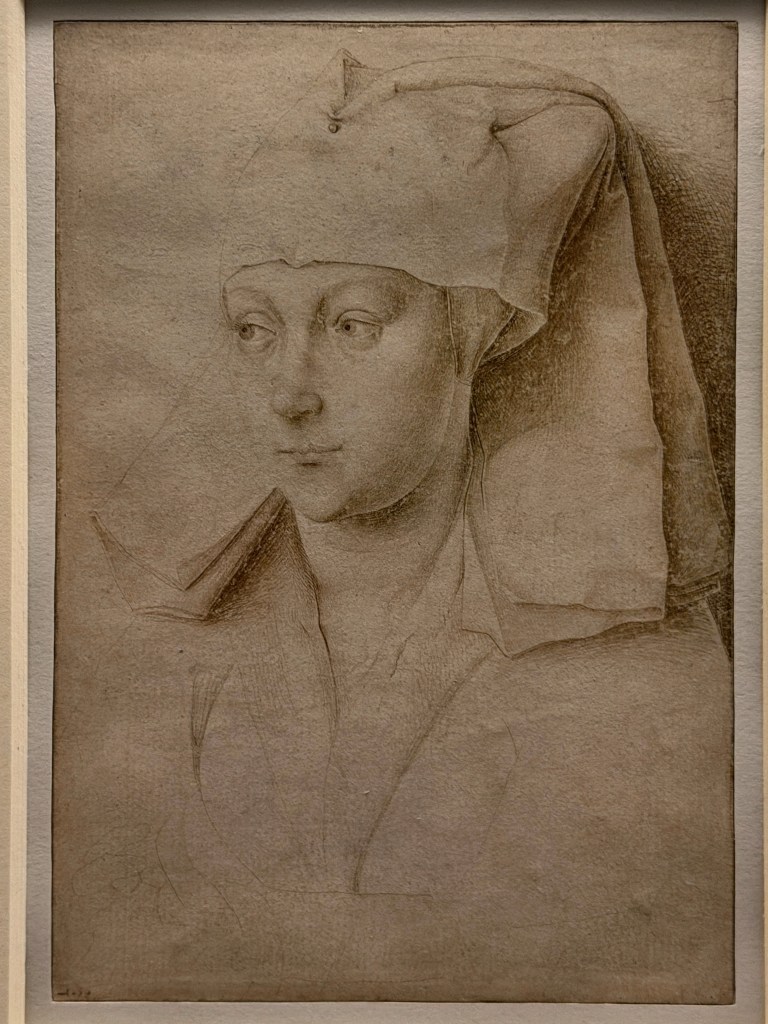
    Rogier van der Weyden (c. 1399–1464), Portrait of a Young Woman, c. 1435–40, Silverpoint on paper,166 × 116 mm, the British Museum, London
    Rogier van der Weyden (c. 1399–1464), Portrait of a Young Woman, c. 1435–40, Silverpoint on paper,166 × 116 mm, the British Museum, London


    This drawing is among the most discussed in the history of early Netherlandish art on account of its association with the two painters who, according to modern scholarship, played the most significant role in the development of northern European painting in the fifteenth century.​​​​​​​​​​​​​​​​

    The attribution to Rogier van der Weyden is accepted by the majority of modern scholarship, though not universally, and no related painting based on this design is known. The British Museum notes its stylistic proximity to Jan van Eyck (c. 1390–1441), visible in the handling of line and form as seen in the underdrawing technique of the Arnolfini Portrait, now in the National Gallery, London, and scholars have raised the possibility that the drawing engages directly with a lost Van Eyck prototype. If that reading holds, it is the only surviving proof  in which the working methods of both great artists meet on a single sheet, one thinking through the visual language of the other.

    The subject is an unknown young woman in three-quarter view wearing a linen headdress. The linen veil (doek) is recorded with particular care: the pull of cloth across the crown, the turns at the temple, the small pins that secure the arrangement reflect the practical reality of how such veil was worn and assembled in the fifteenth century. The contour of the brow, the recession of the far side of the face, and the exact fall of linen were all fixed on first contact, since silverpoint  cannot be erased or altered. Every line is the line as it was first made.

    Modern scholarship treats Van Eyck and Van der Weyden as the two figures who together established the foundations of northern European painting in the fifteenth century. Van Eyck developed oil painting to a point where it could render the specific weight of cloth, the translucency of skin, and the behaviour of light across different surfaces. Van der Weyden took the same observational precision and directed it toward the emotional state of the figure — the tension around a mouth, the quality of attention in a pair of eyes. 

    The generation that followed — Petrus Christus (c. 1410–1475/76), Dieric Bouts (c. 1415–1475), Hugo van der Goes (c. 1440–1482), Hans Memling (c. 1430–1494) and others — absorbed both inheritances and could not be understood without either.​​​​​​​​​​​​​​​​

    Van der Weyden’s compositional formulations reached painters across Europe through workshop transmission and, from the 1470s onward, through the engravings of Martin Schongauer (1448-1491), whose prints carried Netherlandish figure types and compositional structures across Europe with a speed no painted original could match. Dürer, who travelled to the Netherlands in 1520 to study this tradition at its source, is perhaps the most telling measure of how seriously that legacy continued to be regarded.

    References

    Ainsworth, M.W. (2017) Early Netherlandish Painting at the Crossroads: A Critical Look at Current Methodologies. New York: Metropolitan Museum of Art. Available at: https://www.metmuseum.org/art/metpublications/Early_Netherlandish_Painting_at_the_Crossroads (Accessed: 17 April 2026)

    British Museum (n.d.) Portrait of an unknown young woman. Available at: https://www.britishmuseum.org/collection/object/P_1874-0808-2266 (Accessed: 16 April 2026)

    National Gallery (n.d.) Jan van Eyck, The Arnolfini Portrait. Available at: https://www.nationalgallery.org.uk/paintings/jan-van-eyck-the-arnolfini-portrait (Accessed: 16 April 2026)

    Panofsky, E. (1953) Early Netherlandish Painting: Its Origins and Character. 2 vols. Cambridge, MA: Harvard University Press

    Pächt, O. (1994) Van Eyck and the Founders of Early Netherlandish Painting. London: Harvey Miller