2nd century AD Antonine period, Roman marble interpretation after a 200 BC Hellenistic bronze original attributed to Doidalses of Bithynia, Crouching Venus, Marble sculpture, Museo Archeologico Nazionale, Naples
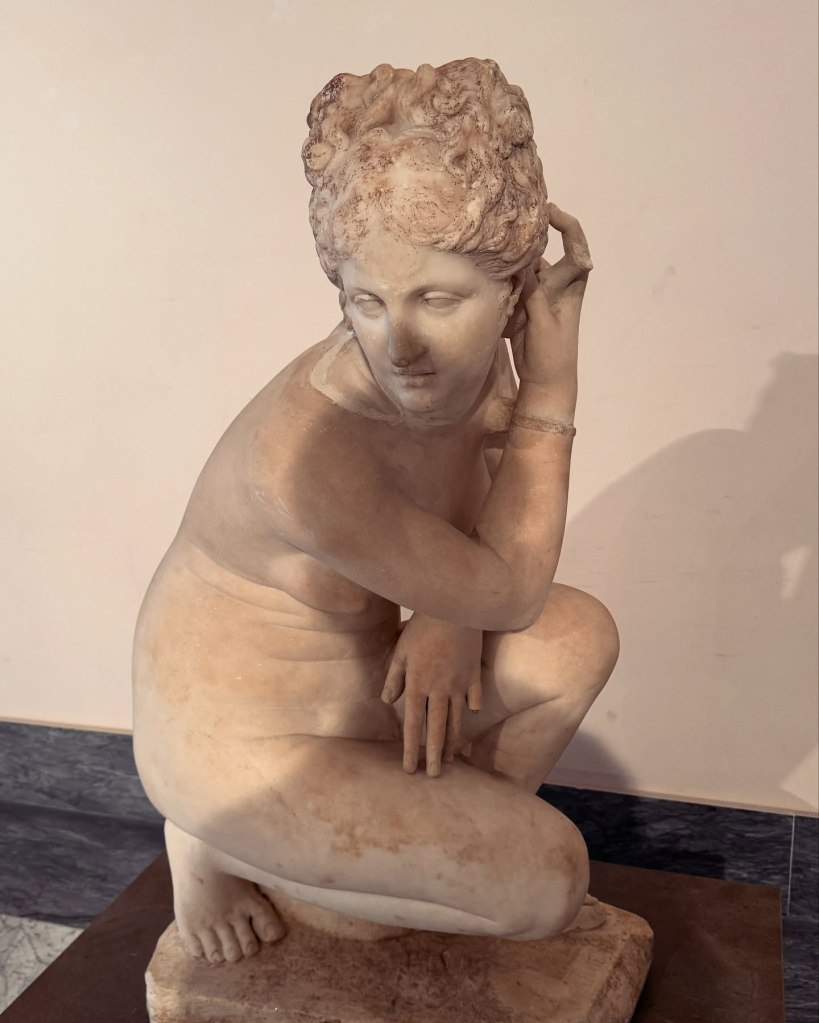
The ‘Crouching Venus’ is a striking representation of the Roman goddess of love and beauty, Venus, captured in a moment of vulnerability and surprise. In this exquisite sculpture, Venus is shown crouching; her head turned as though unexpectedly disturbed, blending divine grace with human emotion. This artistic approach, portraying gods and goddesses in relatable, emotive actions, was a hallmark of classical sculpture. It highlights Venus’s divine beauty and her vulnerability—a poignant reminder that even among the gods, fragility and humanity can exist. This composition starkly contrasts the more familiar portrayals of Venus reclining or standing, showcasing a different, more introspective side of her divine persona.
The ‘Crouching Venus’ type originates in a bronze Hellenistic original created around 200 BC by Doidalses of Bithynia. This Greek masterpiece became highly influential, producing numerous Roman marble replicas during the Imperial Era. The copies were made for villas, temples, and palaces, as they epitomised the classical ideals of beauty, divinity, and human-like vulnerability. The widespread replication of this motif speaks to its enduring appeal in Greek antiquity.
The influence of the ‘Crouching Venus’ on the art of the Renaissance and Baroque periods cannot be overstated. Its combination of classical composition and emotive vulnerability inspired numerous artists who drew on its themes of beauty and humanity. The widespread admiration for this motif also ensured its presence in important European collections, where variations of the ‘Crouching Venus’ were adapted to fit different artistic styles and tastes.
This enduring composition celebrates the beauty of Venus and reflects the timeless human fascination with capturing the divine in moments of relatable emotion, gracefully bridging the gap between gods and mortals.