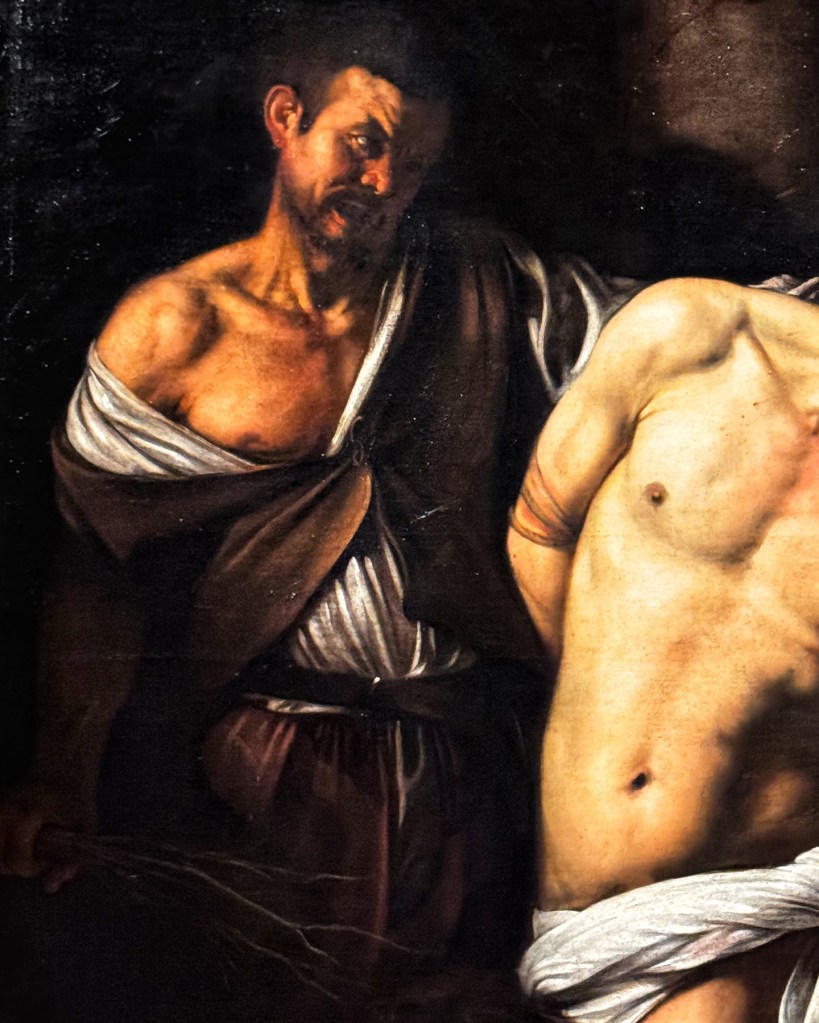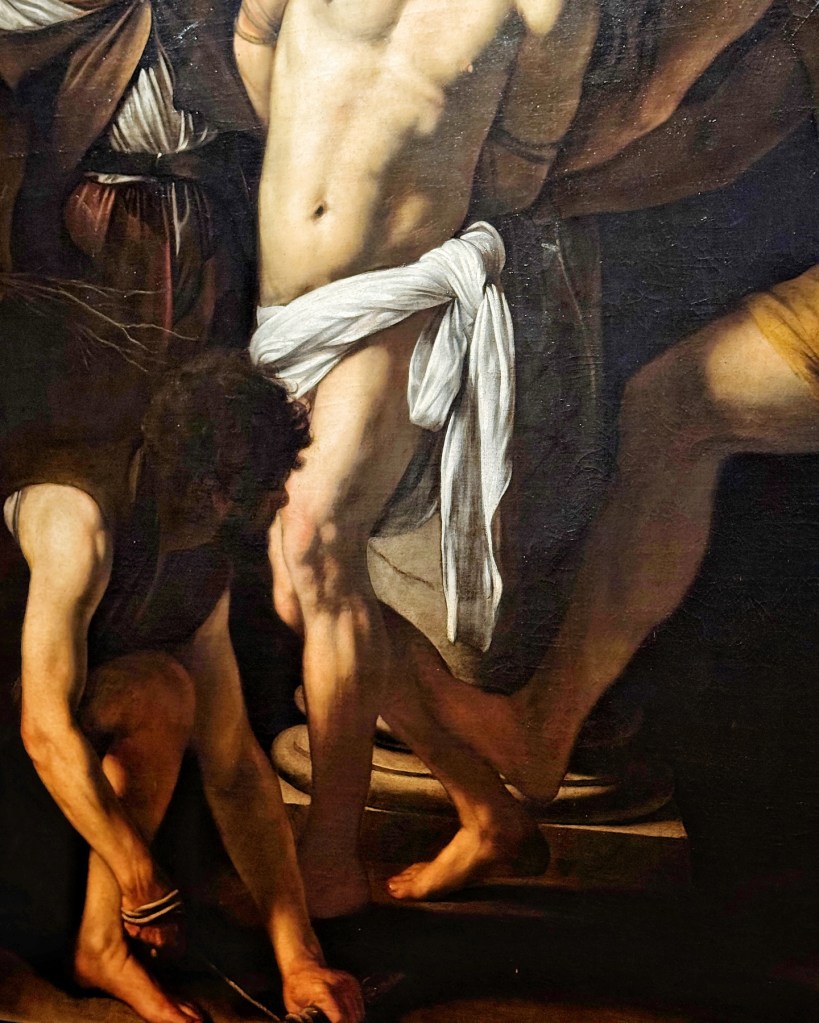
Michelangelo Merisi da Caravaggio (1571–1610) ( 1671-1610), The Flagellation of Christ, 1607-1608, Oil on canvas, 286×213 cm, Museo di Capodimonte, Naples
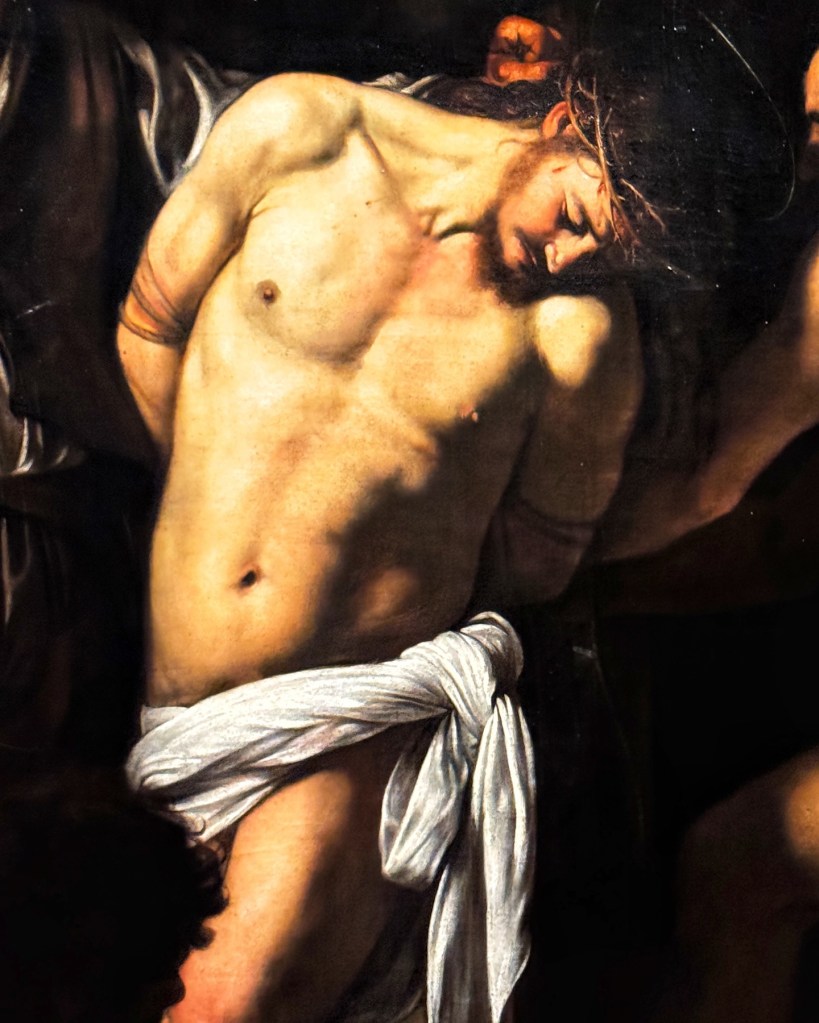
Michelangelo Merisi da Caravaggio (1571–1610) ( 1671-1610), The Flagellation of Christ, 1607-1608, Oil on canvas, 286×213 cm, Museo di Capodimonte, Naples
This masterpiece is one of the defining works of Caravaggio’s Neapolitan period, a phase of his career marked by profound personal and artistic transformation. The painting was commissioned by Tommaso de’ Franchis, a Genoese aristocrat residing in Naples, for his family chapel in the church of San Domenico Maggiore. It was likely created after ‘Seven Works of Mercy’ for the Pio Monte della Misericordia, another masterpiece completed shortly after he arrived in Naples. Both paintings remain in Naples to this day.
‘The Flagellation of Christ ‘ depicts the brutal moment when Christ is bound to a column and whipped by three tormentors. Caravaggio’s attention to the anatomy of the human form is extraordinary. Christ is shown with a muscular yet vulnerable physique; his torso is bathed in a harsh, focused light that highlights the violence of the scene. His twisted, bound pose conveys both physical agony and spiritual endurance.
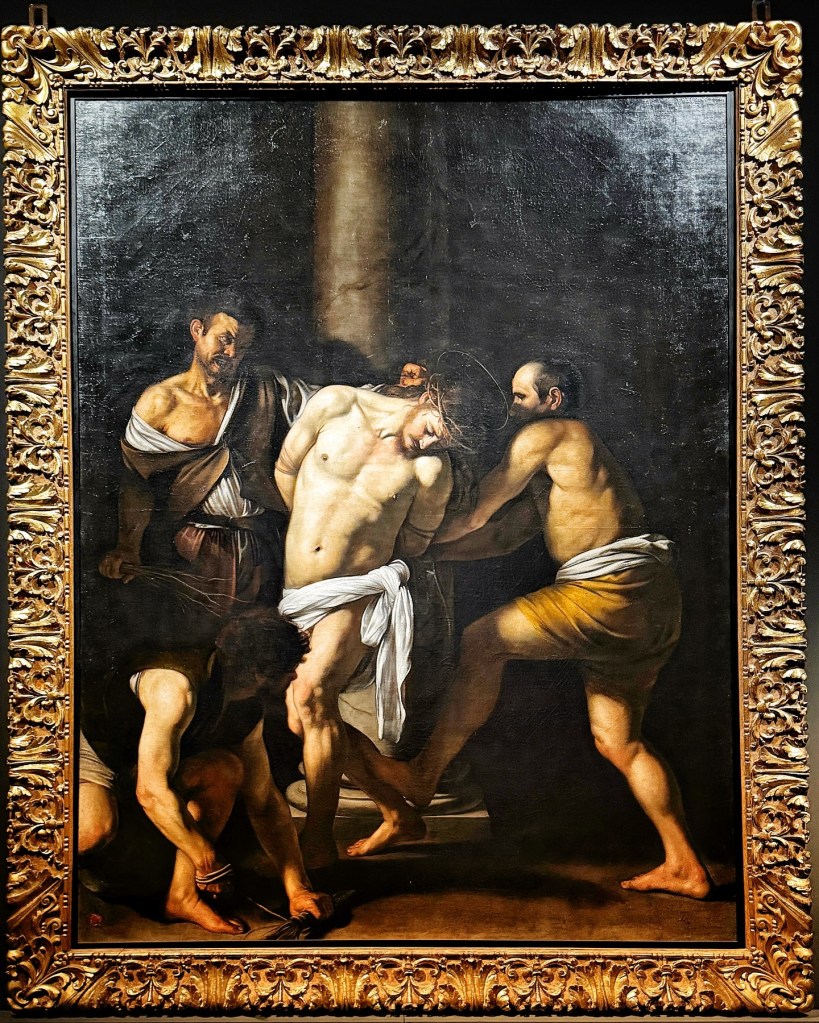
A particularly striking feature of the painting is the depiction of the figures’ legs. Caravaggio positions them at dynamic angles, creating a palpable sense of movement and interaction. The placement of Christ’s bare feet, planted humbly and submissively in contrast to the aggressive stances of the tormentors, symbolises the tension between divinity and human cruelty. The hands, especially Christ’s bound wrists, are rendered with meticulous realism, capturing the strain and suffering of the moment.
The tormentors are depicted with equal anatomical precision, their muscular arms and brutish expressions standing in stark contrast to Christ’s stillness. Caravaggio’s masterful use of tenebrism—where figures emerge dramatically from an almost void-like darkness—further isolates the scene, intensifying its emotional power and drawing the viewer’s focus to the interplay of light, shadow, and human form.