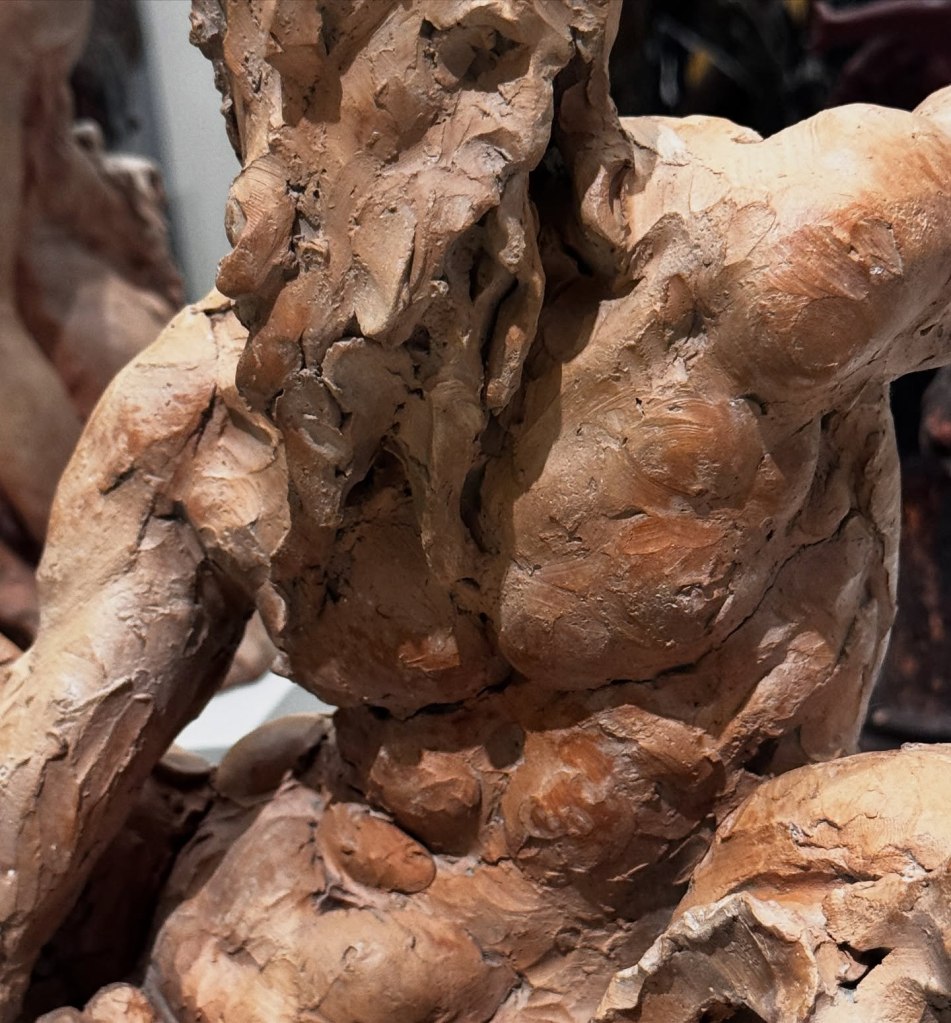
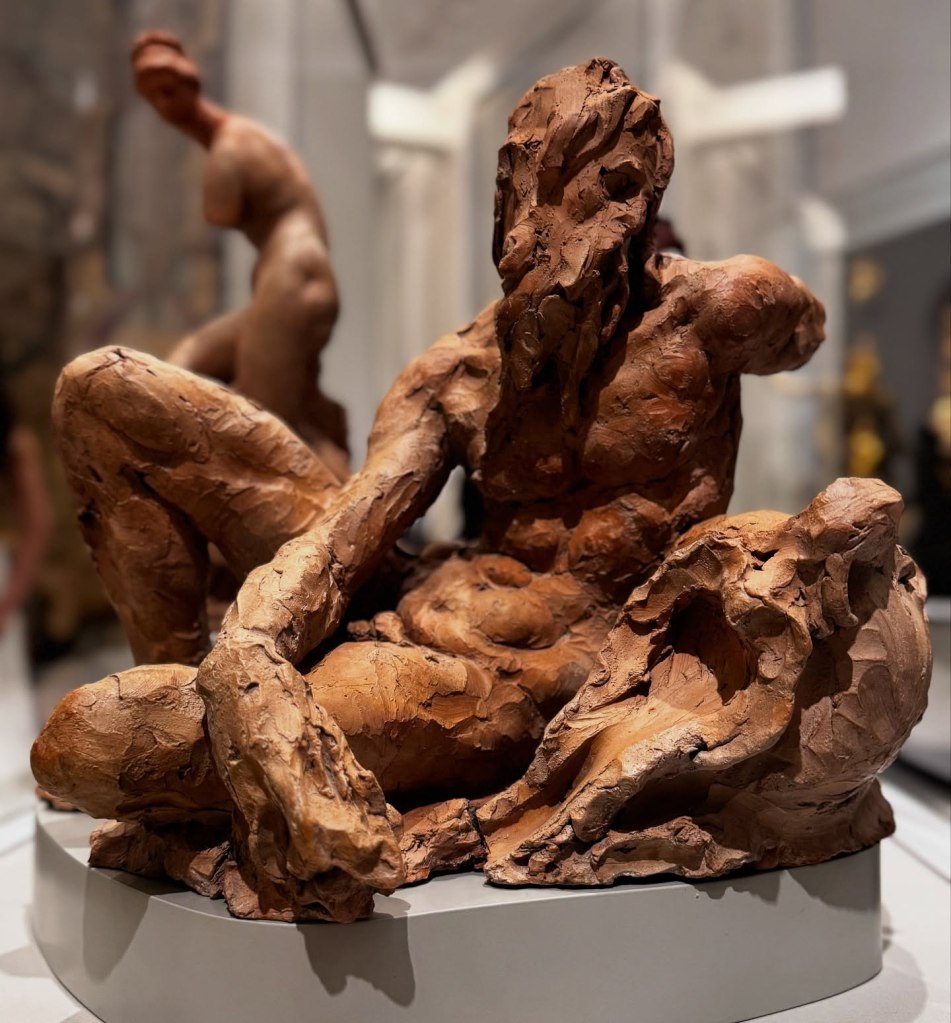
Giambologna (1529–1608), River God, c. 1580, Terracotta bozzetto, 31 × 39.4 × 25 cm, Victoria & Albert Museum, London
Giambologna, born Jean de Boulogne in 1529 in Flemish Douai, was one of the defining sculptors of the late 16th century. His work epitomises the sophistication of Mannerism, moving beyond the balanced harmony of the High Renaissance towards compositions charged with movement and complexity. After settling in Florence, he became closely tied to the Medici court, where his innovative approach to form and gesture left a lasting impact on European art. His sculptures, often infused with a sense of controlled dynamism, influenced generations of sculptors and paved the way for the expressive drama of the Baroque period.
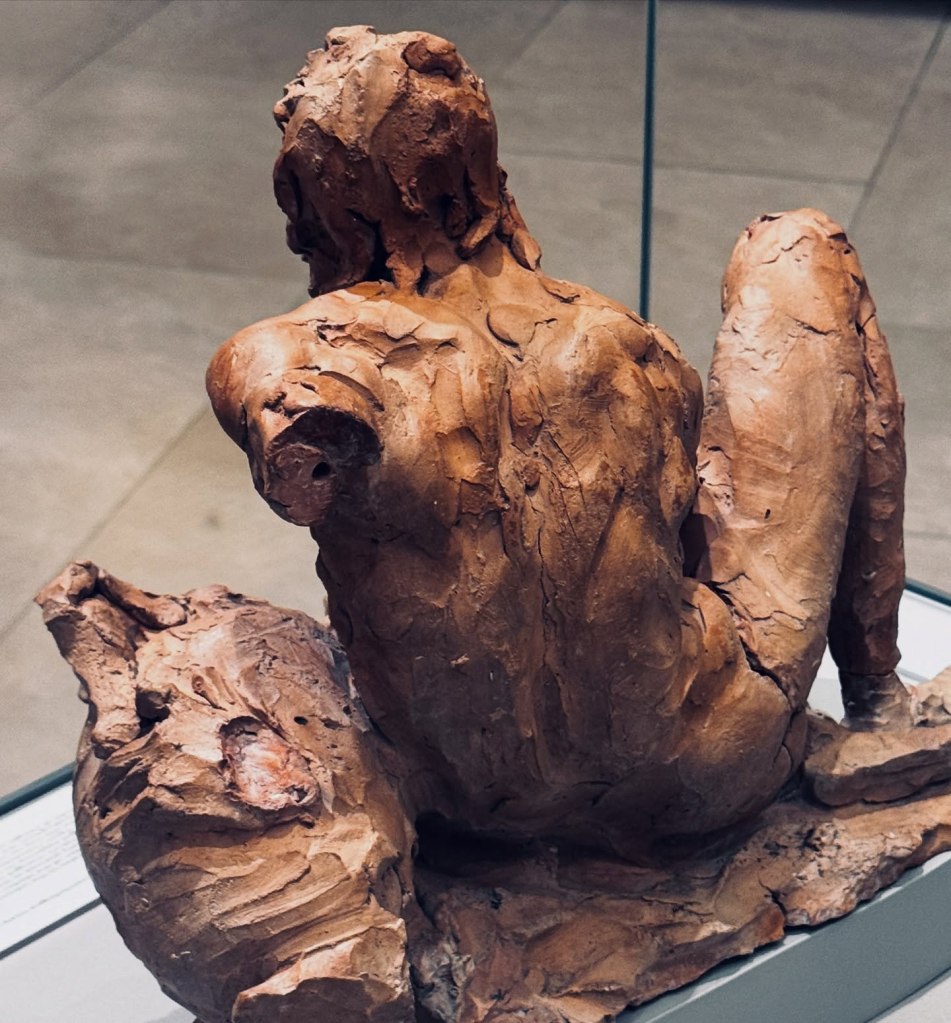
This study sculpture, made around 1580, captures Giambologna’s mastery of movement and offers a glimpse into his working process. Created in terracotta as a bozzetto or sketch model, it was likely an exploratory piece linked to an unrealised plan for a colossal figure of the River Nile at Francesco de’ Medici’s villa at Pratolino. Rather than lying passively, the figure seems to push itself upwards, its head twisting away from the torso in a dramatic interplay of diagonals. The right arm folds across the body, creating a tension that heightens the impression of movement. Giambologna’s handling of this transition from repose to action demonstrates his skill in manipulating the human form to suggest physical energy held in suspension.

His method of sculpting in clay was spontaneous and instinctive, revealing his technical fluency and artistic confidence. Working with wet clay, he rapidly blocked out the figure’s major masses, shaping the muscles and limbs with his fingers rather than relying heavily on tools. The muscular structure is built up in rounded forms—almost like fused spheres—while details such as facial features and fingers are incised with quick, decisive strokes of a pointed instrument. The rough, tactile surface suggests that the piece was not made for public display but as part of his creative process, allowing him to refine ideas before executing them in a more permanent material.