St Andrew’s Holborn Church, 5 St Andrew Street, London

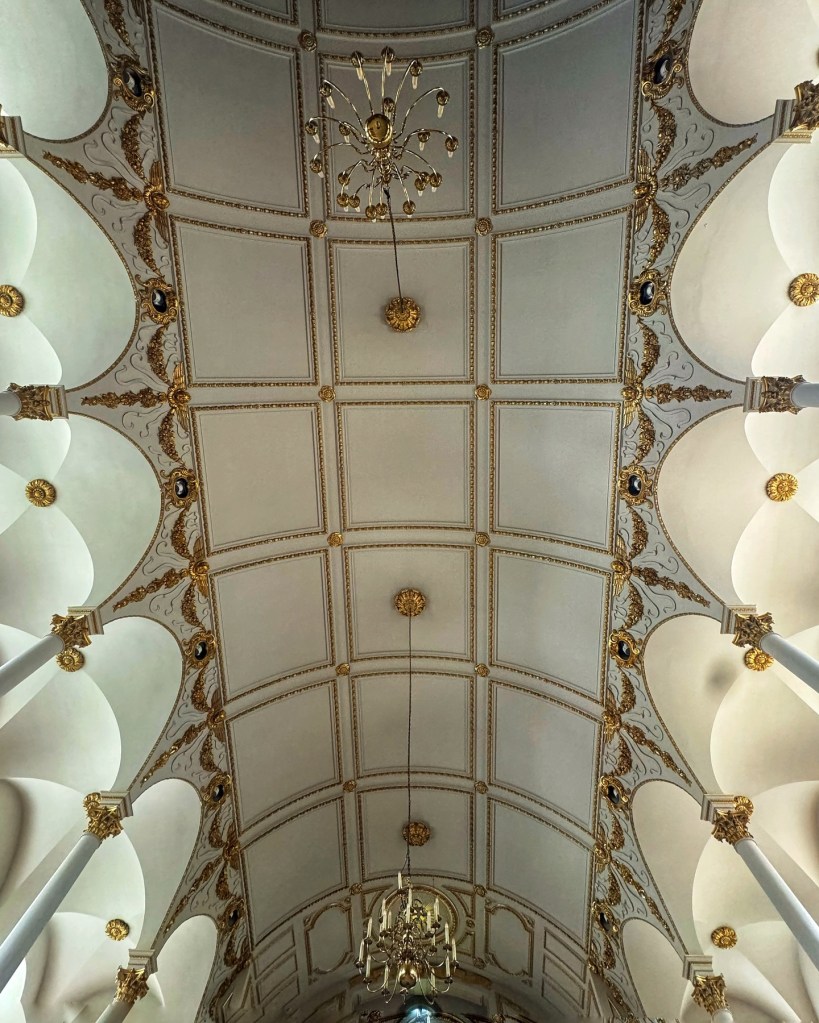
St Andrew Holborn’s origins date back to the 10th century as a wooden structure. By the 13th century, it had been rebuilt in stone and underwent several significant transformations over the centuries. Although it survived the Great Fire of 1666, the church fell into disrepair, prompting its reconstruction by Christopher Wren (1632–1723) between 1684 and 1690. Wren’s design incorporated a restrained Baroque façade, a 150-foot tower, and symmetrical interiors. The medieval tower was retained, but Wren refaced it in marble. The top of the tower was completed in 1703, likely under the supervision of Wren’s assistant, Nicholas Hawksmoor (c. 1661–1736). The remainder of the building, internally and externally, typifies Wren’s architectural approach.
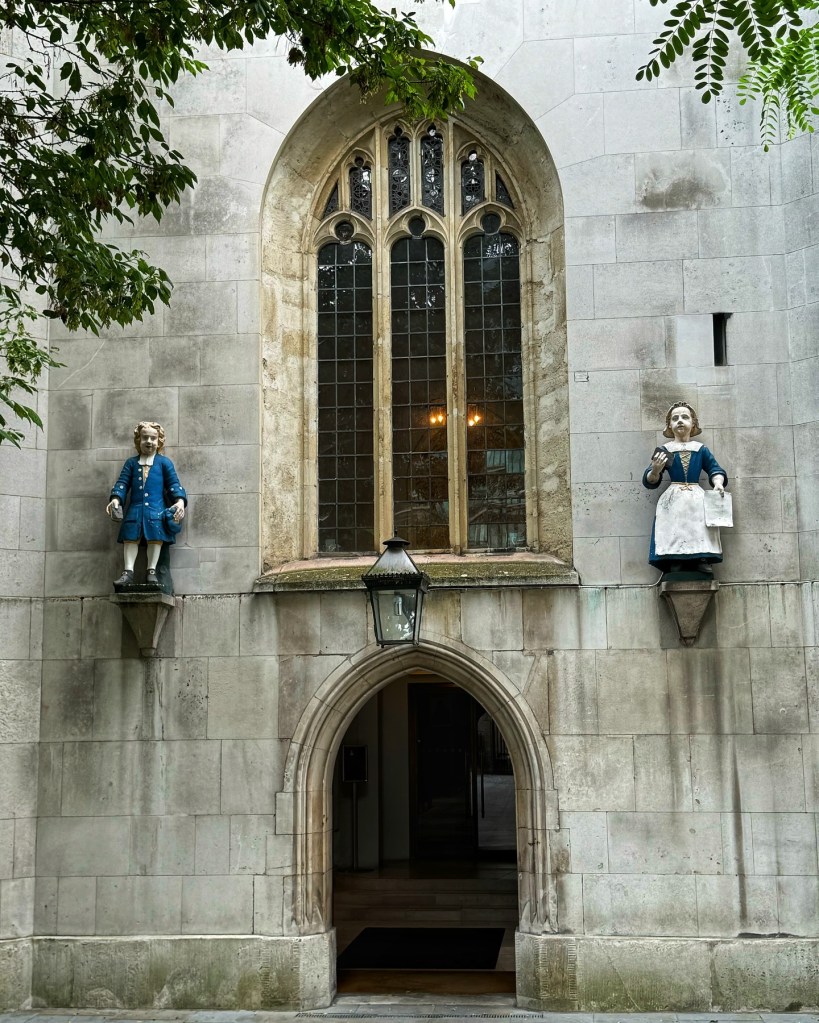
In 1960-61, architects John Seely, 2nd Baron Mottistone (1899–1963), and Paul Edward Paget (1901–1985) undertook a major reconstruction of the ruined church after the war, with a focus on rebuilding Wren’s original baroque layout. Significant historical elements were introduced, including the organ case from the Foundling Hospital chapel in Bloomsbury, designed in the 1750s under composer George Frideric Handel. Other items from the Foundling Hospital, such as the pulpit and font, were also relocated, further integrating the church into London’s charitable history. This philanthropic association was also reflected in the relocation of the ‘Bluecoat’ statues, now positioned at the west tower entrance. These statues, depicting poor children attending St Andrew’s Parochial School, were installed at Hatton Garden, founded in 1696. They were moved to the church during its post-war restoration.