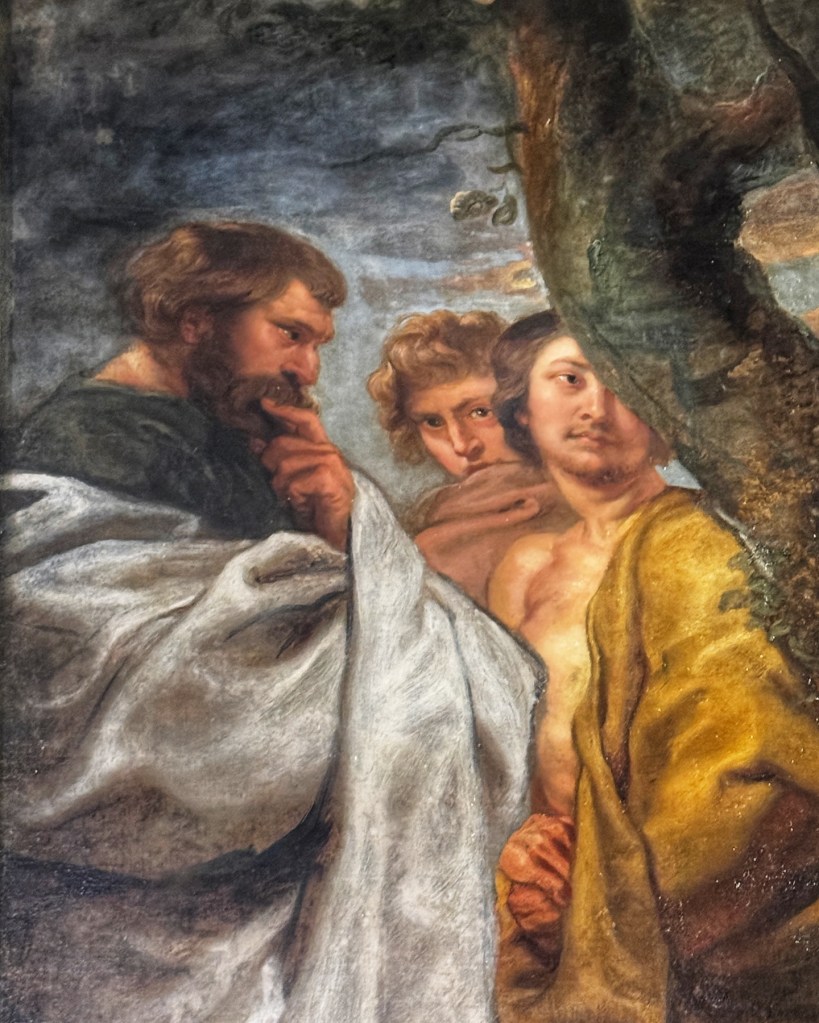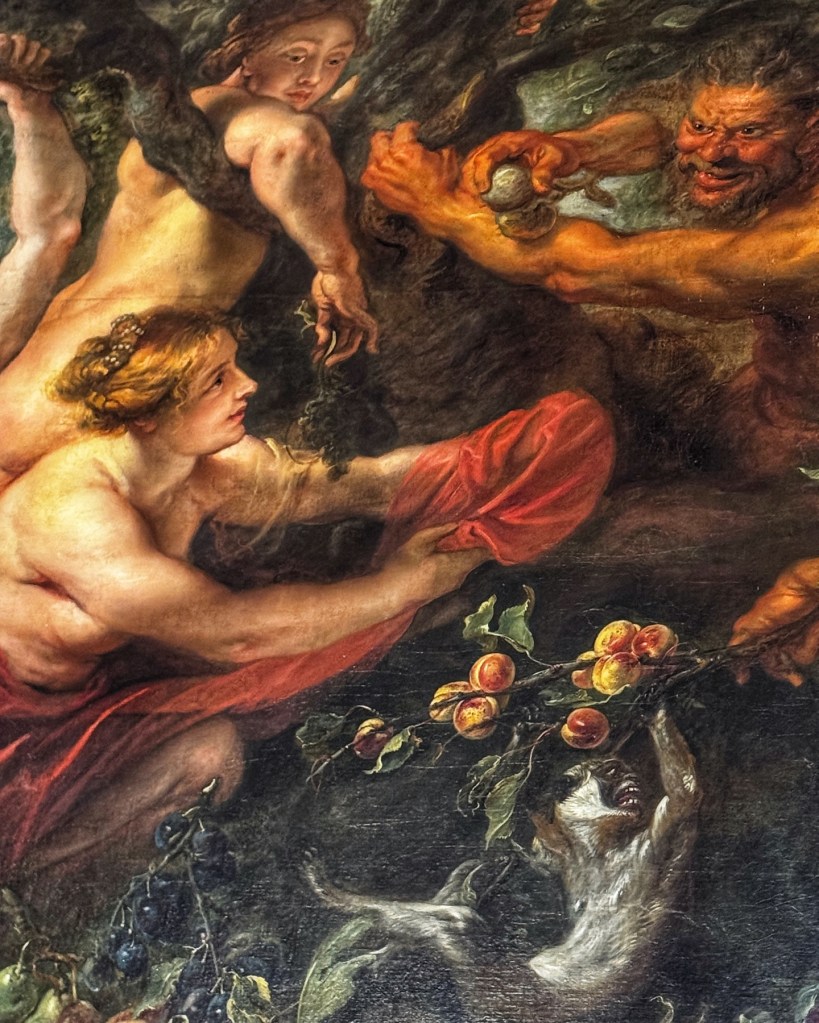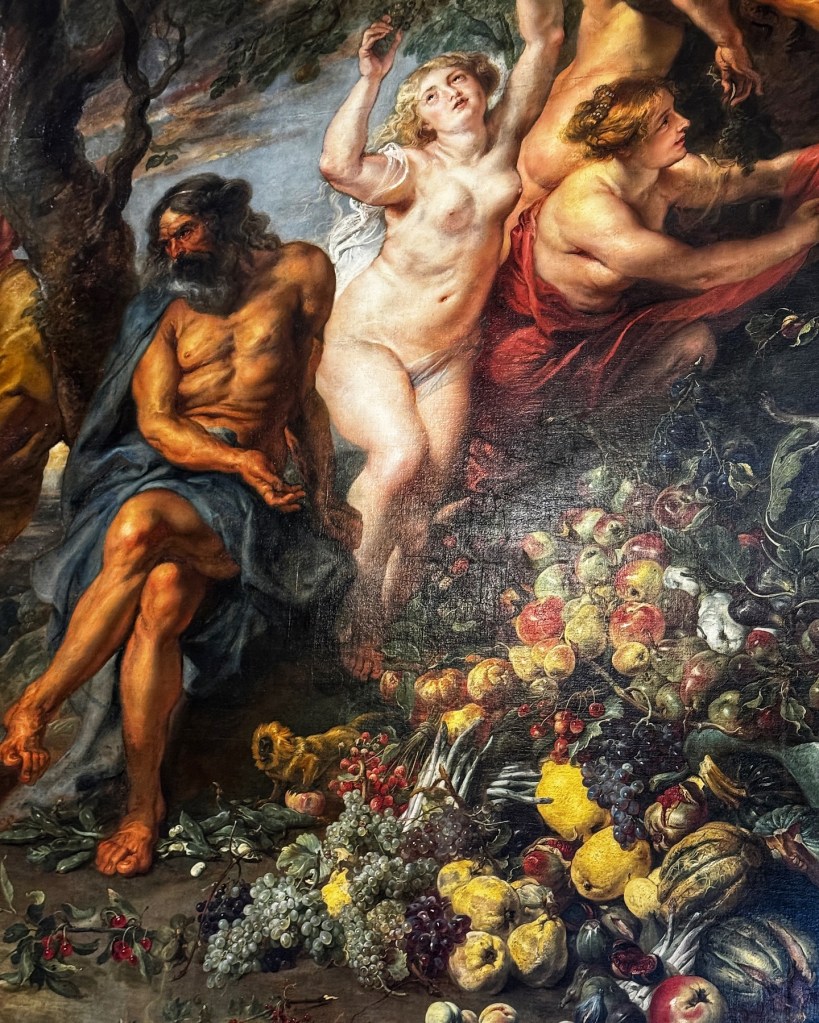
Peter Paul Rubens (1577-1640) and Frans Snyders (1579-1657), Pythagoras Advocating Vegetarianism, 1618-20, Oil on canvas, 262 x 378 cm, Hampton Court, Richmond upon Thames, Greater London
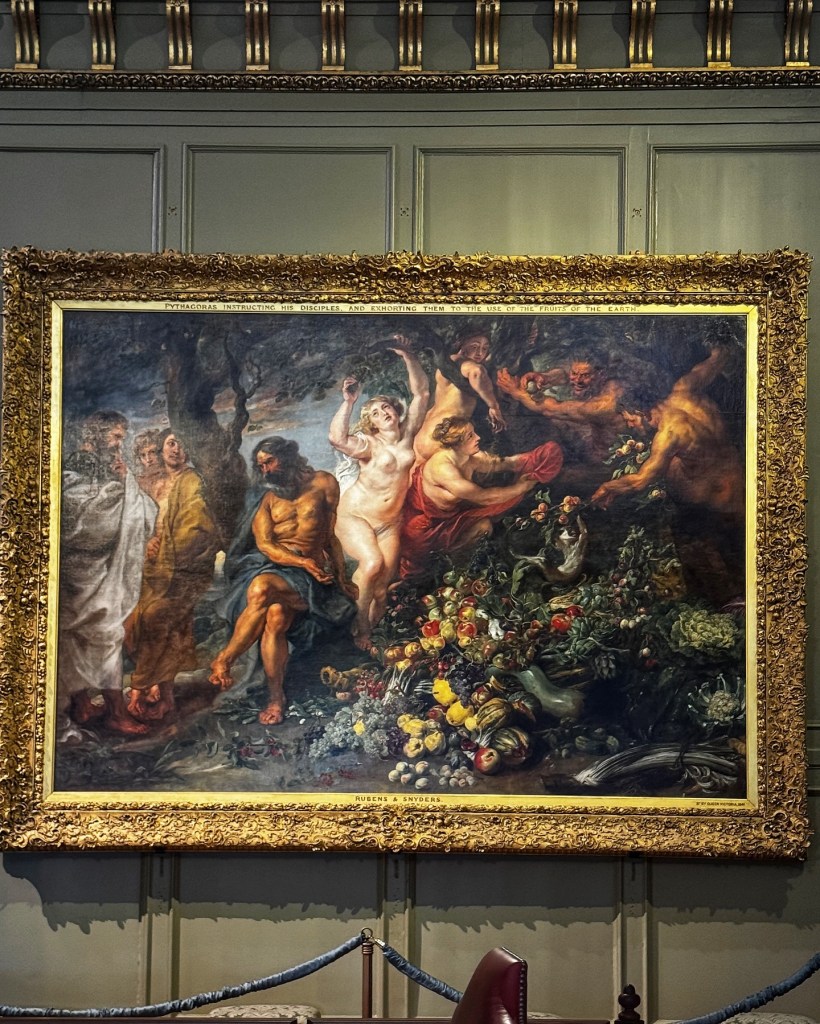
The painting anchors itself in juxtaposing Pythagoras, the Greek philosopher, and Numa Pompilius, the legendary second king of Rome. Pythagoras (6th century BC) is known for his teachings on the interconnectedness of life, the transmigration of souls, and nonviolence, symbolised through his advocacy of vegetarianism. His philosophical disdain for meat-eating—further emphasised by his trampling on a bean, an object considered impure by his sect—directly critiques human indulgence and cruelty. Fauns and nymphs—often symbols of primal indulgence—are ironically depicted as carefree vegetarians, further contrasting with the savage cruelty of mankind consuming flesh.
Though separated by centuries from Pythagoras, Numa Pompilius (753–672 BC) is iconographically linked to him through his reputation as a peace-bringer and moral reformer. Inspired by Ovidius, the supposed dialogue between Pythagoras and Numa symbolises a meeting of philosophical and political ideals: peace, temperance, and governance rooted in moral law.
The connection between Pythagoras and Numa is not accidental. By drawing parallels between the two figures, Rubens reflects Baroque Europe’s fascination with synthesising classical ideals and Christian morality. The dialogue between the founders of Royal Rome (Numa) and philosophical Rome (Pythagoras) mirrors the union of temporal and spiritual power, akin to the relationship between the Catholic Church and monarchy in Rubens’ time. This is further emphasised by the allegorical allusion to Christ’s instruction to St Peter to ‘feed my sheep’, reinforcing the notion of moral stewardship.
Moreover, the painting’s emphasis on nonviolence and harmony speaks to the political climate of early 17th-century Europe. As the painting hung in the royal palace in Madrid, it served as a subtle reflection on the virtues of temperance and ethical governance, perhaps even an idealised projection of how rulers should govern with moral clarity and restraint.