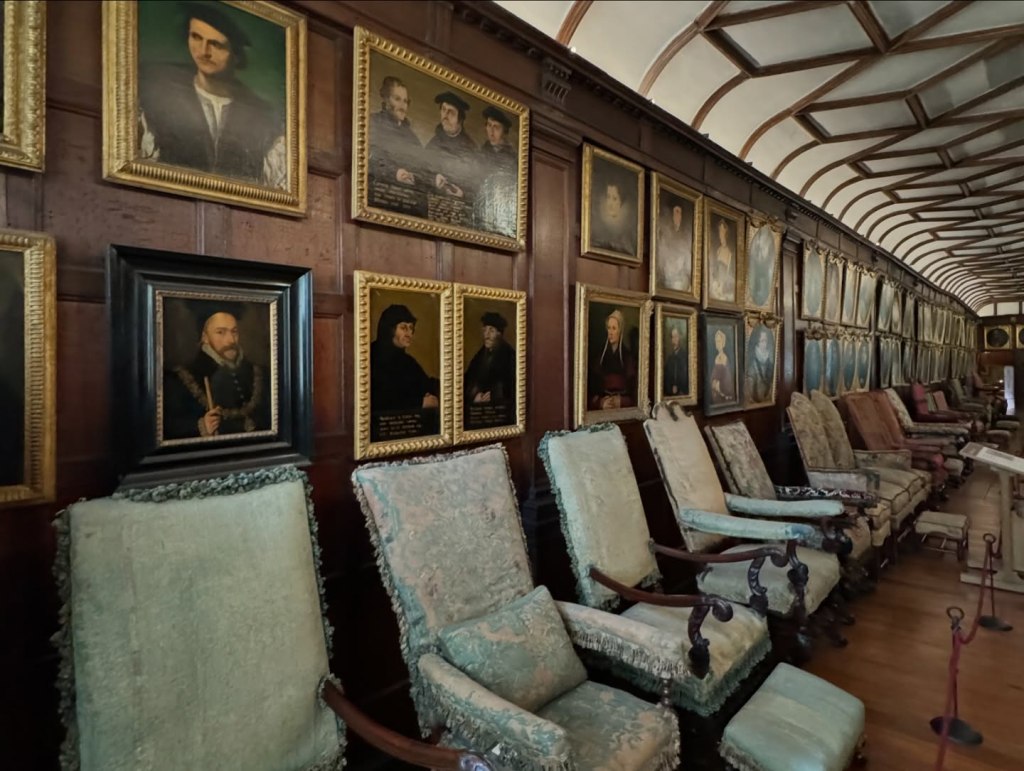
Knole House in Kent, a historic estate dating back to the 15th century, features one of Britain’s earliest surviving portrait galleries, the Brown Gallery, established around 1608 by Thomas Sackville, 1st Earl of Dorset (1536–1608). The gallery showcases over 40 portraits from the 16th and 17th centuries, depicting English royalty, nobility, and important European figures. These portraits, mostly painted from earlier copies rather than life, reflect the widespread practice of replicating established patterns to meet the demand for images of notable figures.
Creating such portrait galleries in England became fashionable during the Tudor and Stuart periods, reflecting a desire to display loyalty, lineage, and learning. By the late 16th century, demand for portraits of notable figures, including members of Henry VIII’s court, led to widespread duplication, often by different workshops. Some copies, dating back to the same period as the originals, were nearly indistinguishable. The mass production of such portraits usually challenges historians to distinguish originals from contemporary copies.