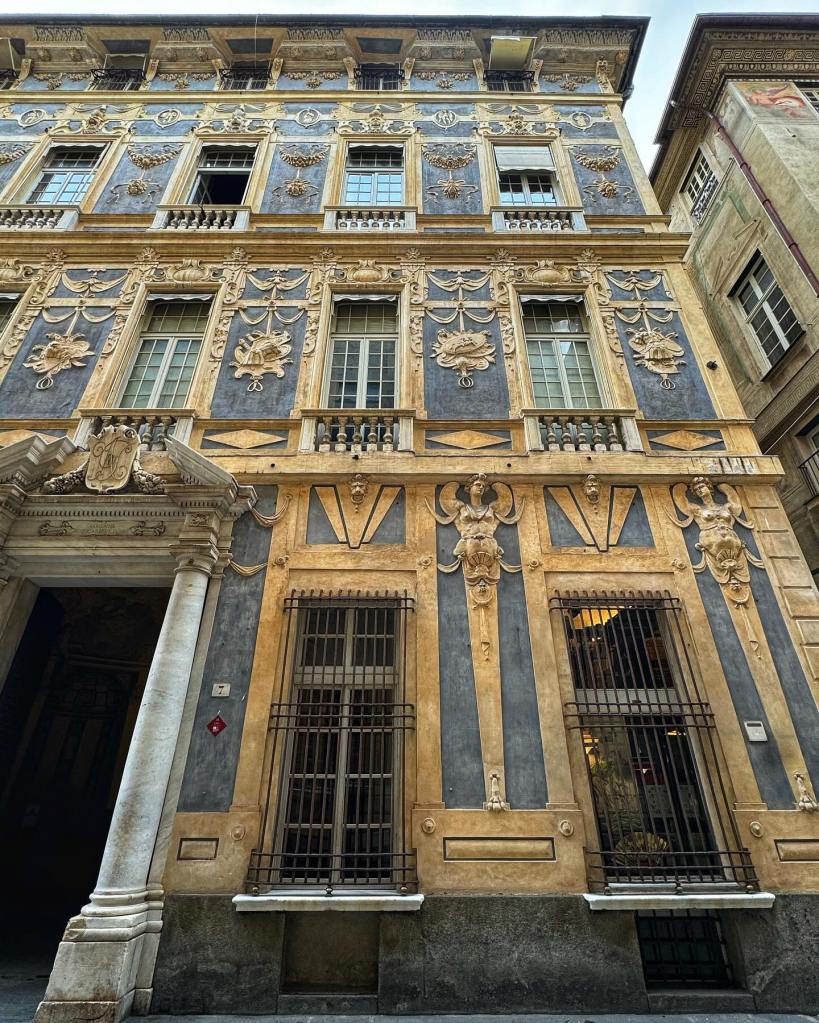
Palazzo Nicolosio Lomellino is a distinguished example of Genoese Renaissance architecture, constructed between 1559 and 1565. Commissioned by Nicolosio Lomellino (1510–1570), a notable figure in Genoa’s aristocracy, the palace reflects the taste and influence of its owner.
The architectural design was entrusted to Giovan Battista Castello, known as “Il Bergamasco” (c. 1509–1569), along with Bernardo Cantone. The façade is particularly remarkable for its extensive stucco decorations, a technique quite unusual in Genoa at the time. This ornamental approach, featuring winged female herms, garlands, and classical figures within oval medallions, is thought to have been inspired by Raphael’s work in the Vatican Loggias, introduced to Genoa by his pupil Perin del Vaga (1501–1547). The intricate stucco work is attributed to Marcello Sparzo, who completed these complex designs under Castello’s guidance.
The interior of the entry continues this decorative richness, with an oval atrium adorned with stucco reliefs depicting triumphal scenes and allegorical figures leading into a picturesque courtyard.
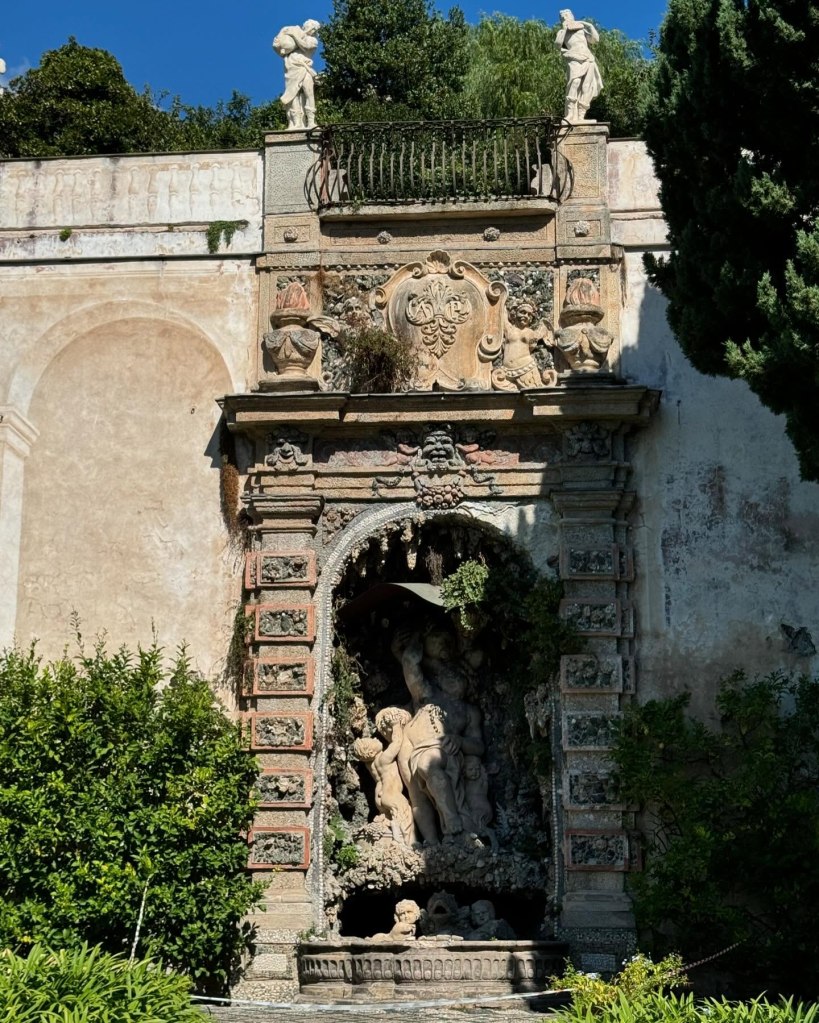
One of the Palazzo Lomellino’s most significant features is its garden grotto, designed in the 18th century by Domenico Parodi (1672–1742). This grotto reflects the Renaissance-inspired pursuit of creating spaces that merge natural beauty with artistic expression, embodying the aesthetic and philosophical values of the period.