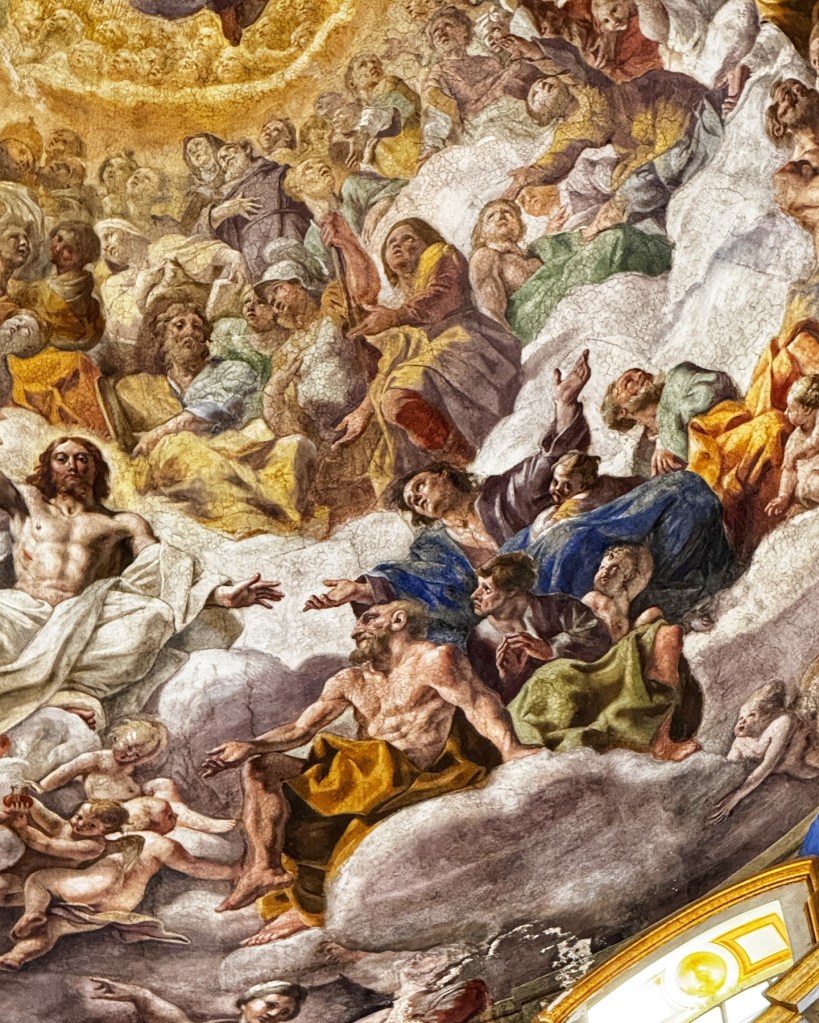
The ‘Paradise’ fresco in the Royal Chapel of the Treasure of San Gennaro in Naples Cathedral, painted by Giovanni Lanfranco (1582–1647), is a masterpiece of Baroque art. Completed in 1643, it presents a breathtaking vision of saints and angels ascending towards God. Yet, its creation was anything but serene, plagued by conflict, scandal, and fierce competition.

The chapel, commissioned in 1608, became a battleground for major artistic commissions. Domenico Zampieri, known as Domenichino (1581–1641), was invited from Rome in 1631 to undertake the project but encountered fierce opposition from the Cabal of Naples—a group of artists, including Jusepe de Ribera (1591–1652), Battistello Caracciolo (c. 1578–1635), and Belisario Corenzio (c. 1558–1646). These artists sought to dominate Naples’ art market through sabotage and intimidation. Domenichino faced the defacement of his work, harassment, and death threats. In 1641, he died under suspicious circumstances, with many suspecting poisoning at the hands of his rivals.
Lanfranco, Domenichino’s long-standing rival, managed to secure his safety and position in Naples, possibly through strategic negotiations or sharing parts of the work or profits. He took over the project, erasing Domenichino’s designs and asserting his own artistic vision. Completing the dome fresco cemented his reputation while rewriting the chapel’s artistic narrative.
This rivalry illustrates the darker side of Italy’s libertarian 17th-century art market. Unlike the highly regulated guild systems in the Netherlands, which imposed strict rules, taxes, and barriers to entry, Italy’s more open market allowed for artistic mobility and opportunities. Local and foreign artists could travel, settle, exchange ideas, and secure commissions from various patrons. However, this freedom also bred unchecked competition, sabotage, and exploitation, creating a volatile environment for ambitious artists.
Lanfranco’s ‘Paradise’ exemplifies this duality. While the lack of regulation encouraged bitter rivalries and conflicts, it also fostered creativity and collaboration that defined the Neapolitan Baroque.