Category: Viola da Gamba

  • Mother-of-Pearl and Ebony: The Extraordinary Bass Viola da Gamba of Martin Voigt, 1726

    Mother-of-Pearl and Ebony: The Extraordinary Bass Viola da Gamba of Martin Voigt, 1726

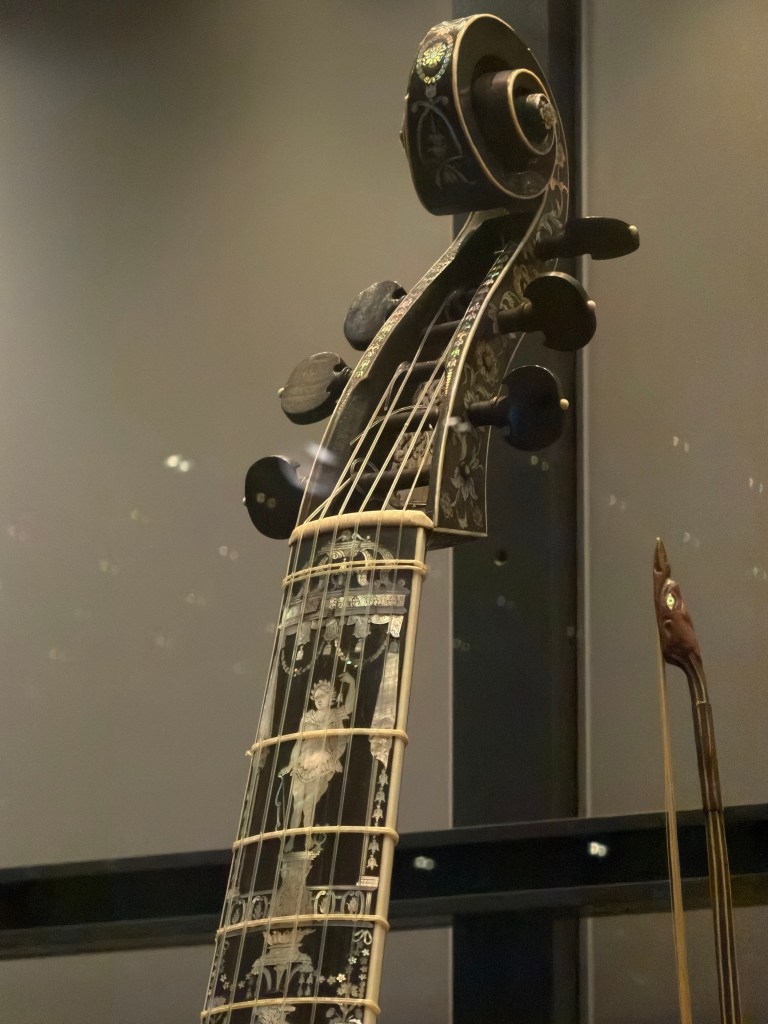
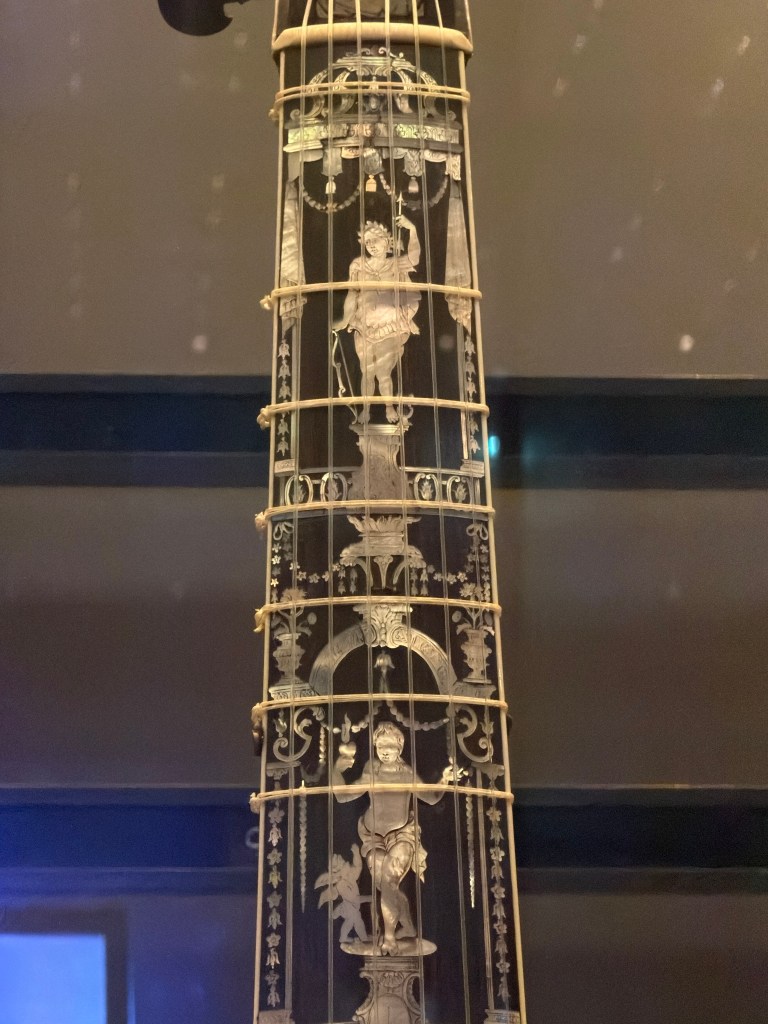
    Martin Voigt (active Hamburg, early eighteenth century), Bass Viola da gamba, 1726. Ebony inlaid with engraved mother-of-pearl, ebony ribs with ivory stringing. Length 121 cm, body length 67 cm, string length 66.5 cm. Victoria and Albert Museum, London, on loan to the Horniman Museum, London
    Martin Voigt (active Hamburg, early eighteenth century), Bass Viola da gamba, 1726. Ebony inlaid with engraved mother-of-pearl, ebony ribs with ivory stringing. Length 121 cm, body length 67 cm, string length 66.5 cm. Victoria and Albert Museum, London, on loan to the Horniman Museum, London

    Nothing is known about Martin Voigt beyond a single exceptional quality viola da gamba and a single line of handwritten ink. No dates of birth or death, no guild records, no mention in any dictionary of makers. He exists entirely through a bass viola da gamba in the collection of the Victoria & Albert Museum , currently on loan to the Horniman Museum in Forest Hill, London. The label inside it reads :’Martin Voigt in Hamburg me fecit 1726′.

    Voigt worked within the tradition of famous Joachim Tielke (1641–1719), Hamburg’s most celebrated maker of bowed and plucked string instruments, whose workshop had produced viols, lutes, guitars, and violins over half a century, distinguished by lavish decorative programmes in ivory, tortoiseshell, and exotic hardwoods. None of Tielke’s children continued the business, and the workshop ceased with his death in 1719. The V&A’s assessment is that Voigt may have been his pupil. The chronology allows it, and the instrument supports it.

    The bass viola da gamba is constructed in ebony inlaid with engraved mother-of-pearl, with twenty-five alternating strips of ebony and ivory forming the back. This is work that permits no error. Mother-of-pearl is brittle, fractures unpredictably, and must be cut and engraved with a burin at a scale fine enough for pictorial detail while remaining strong enough to survive as part of a played instrument. A mistake at any stage destroys the material. An instrument of this complexity would have taken months to complete, required mastery across several distinct crafts, and cost a sum that placed it far beyond the reach of ordinary musicians. It was made for someone wealthy, and it was made to be seen.

    The iconographic programme on the neck depicts four classical deities in mother-of-pearl: Apollo, Venus, Mercury, and Diana. The musical associations are deliberate. Mercury was credited in Greek tradition with inventing the lyre from a tortoiseshell, and Apollo with perfecting its use; early modern writers understood the lyre as the ancestor of viols and lutes, so the two figures declare the instrument’s lineage. The presence of Venus and Diana alongside them points to a more considered scheme, almost certainly drawn from one of the printed emblem books that served as pattern sources across the decorative trades of Europe. Tielke’s workshop had relied heavily on such compilations, particularly Daniel de la Feuille’s Devises et emblemes, anciennes et modernes [Devices and Emblems, Ancient and Modern] (Amsterdam, 1691) and Otto van Veen’s Amorum emblemata [Emblems of Love] (Antwerp, 1608). These volumes offered ready-made pictorial schemes with classical figures and moralising inscriptions, and were used as pattern sources by cabinet-makers, goldsmiths, and engravers as readily as by instrument makers. Whether Voigt drew on the same specific sources cannot be confirmed without direct comparison, but the sophistication of his programme places it firmly within the same visual culture.

    The V&A’s records note that the instrument was purchased in 1871 for sixty pounds and was said to have belonged to Joseph Haydn (1732–1809). The claim has no supporting evidence. Haydn was not a gambist, and by his maturity the instrument had been largely supplanted by the cello.

    What remains is the instrument itself: the sole surviving work of an otherwise unknown maker, produced in Hamburg seven years after the death of the great master whose tradition it continued.


    Martin Voigt (active Hamburg, early eighteenth century), Bass Viola da gamba, 1726. Ebony inlaid with engraved mother-of-pearl, ebony ribs with ivory stringing. Length 121 cm, body length 67 cm, string length 66.5 cm. Victoria and Albert Museum, London, on loan to the Horniman Museum, London
    Martin Voigt (active Hamburg, early eighteenth century), Bass Viola da gamba, 1726. Ebony inlaid with engraved mother-of-pearl, ebony ribs with ivory stringing. Length 121 cm, body length 67 cm, string length 66.5 cm. Victoria and Albert Museum, London, on loan to the Horniman Museum, London
    Martin Voigt (active Hamburg, early eighteenth century), Bass Viola da gamba, 1726. Ebony inlaid with engraved mother-of-pearl, ebony ribs with ivory stringing. Length 121 cm, body length 67 cm, string length 66.5 cm. Victoria and Albert Museum, London, on loan to the Horniman Museum, London
    Martin Voigt (active Hamburg, early eighteenth century), Bass Viola da gamba, 1726. Ebony inlaid with engraved mother-of-pearl, ebony ribs with ivory stringing. Length 121 cm, body length 67 cm, string length 66.5 cm. Victoria and Albert Museum, London, on loan to the Horniman Museum, London
    Martin Voigt (active Hamburg, early eighteenth century), Bass Viola da gamba, 1726. Ebony inlaid with engraved mother-of-pearl, ebony ribs with ivory stringing. Length 121 cm, body length 67 cm, string length 66.5 cm. Victoria and Albert Museum, London, on loan to the Horniman Museum, London
    Martin Voigt (active Hamburg, early eighteenth century), Bass Viola da gamba, 1726. Ebony inlaid with engraved mother-of-pearl, ebony ribs with ivory stringing. Length 121 cm, body length 67 cm, string length 66.5 cm. Victoria and Albert Museum, London, on loan to the Horniman Museum, London
    Martin Voigt (active Hamburg, early eighteenth century), Bass Viola da gamba, 1726. Ebony inlaid with engraved mother-of-pearl, ebony ribs with ivory stringing. Length 121 cm, body length 67 cm, string length 66.5 cm. Victoria and Albert Museum, London, on loan to the Horniman Museum, London
    Martin Voigt (active Hamburg, early eighteenth century), Bass Viola da gamba, 1726. Ebony inlaid with engraved mother-of-pearl, ebony ribs with ivory stringing. Length 121 cm, body length 67 cm, string length 66.5 cm. Victoria and Albert Museum, London, on loan to the Horniman Museum, London
    Martin Voigt (active Hamburg, early eighteenth century), Bass Viola da gamba, 1726. Ebony inlaid with engraved mother-of-pearl, ebony ribs with ivory stringing. Length 121 cm, body length 67 cm, string length 66.5 cm. Victoria and Albert Museum, London, on loan to the Horniman Museum, London
    Martin Voigt (active Hamburg, early eighteenth century), Bass Viola da gamba, 1726. Ebony inlaid with engraved mother-of-pearl, ebony ribs with ivory stringing. Length 121 cm, body length 67 cm, string length 66.5 cm. Victoria and Albert Museum, London, on loan to the Horniman Museum, London
    Martin Voigt (active Hamburg, early eighteenth century), Bass Viola da gamba, 1726. Ebony inlaid with engraved mother-of-pearl, ebony ribs with ivory stringing. Length 121 cm, body length 67 cm, string length 66.5 cm. Victoria and Albert Museum, London, on loan to the Horniman Museum, London
    Martin Voigt (active Hamburg, early eighteenth century), Bass Viola da gamba, 1726. Ebony inlaid with engraved mother-of-pearl, ebony ribs with ivory stringing. Length 121 cm, body length 67 cm, string length 66.5 cm. Victoria and Albert Museum, London, on loan to the Horniman Museum, London


    References

    Baines, A. (1998) Catalogue of Musical Instruments in the Victoria and Albert Museum, Part II: Non-Keyboard Instruments. London: V&A Publications

    Hellwig, F. and Hellwig, B. (2011) Joachim Tielke: Kunstvolle Musikinstrumente des Barock [Joachim Tielke: Ornate Musical Instruments of the Baroque]. Berlin and Munich: Deutscher Kunstverlag

    Victoria & Albert Museum (n.d.) Bass Viol, Martin Voigt, 1726. Accession number 1298 to B-1871. Available at: https://collections.vam.ac.uk/item/O58919/bass-viol-voigt-martin/ (Accessed: 10 May 2026)

  • Carel Fabritius and the Surviving Window onto Delft in the 1650s

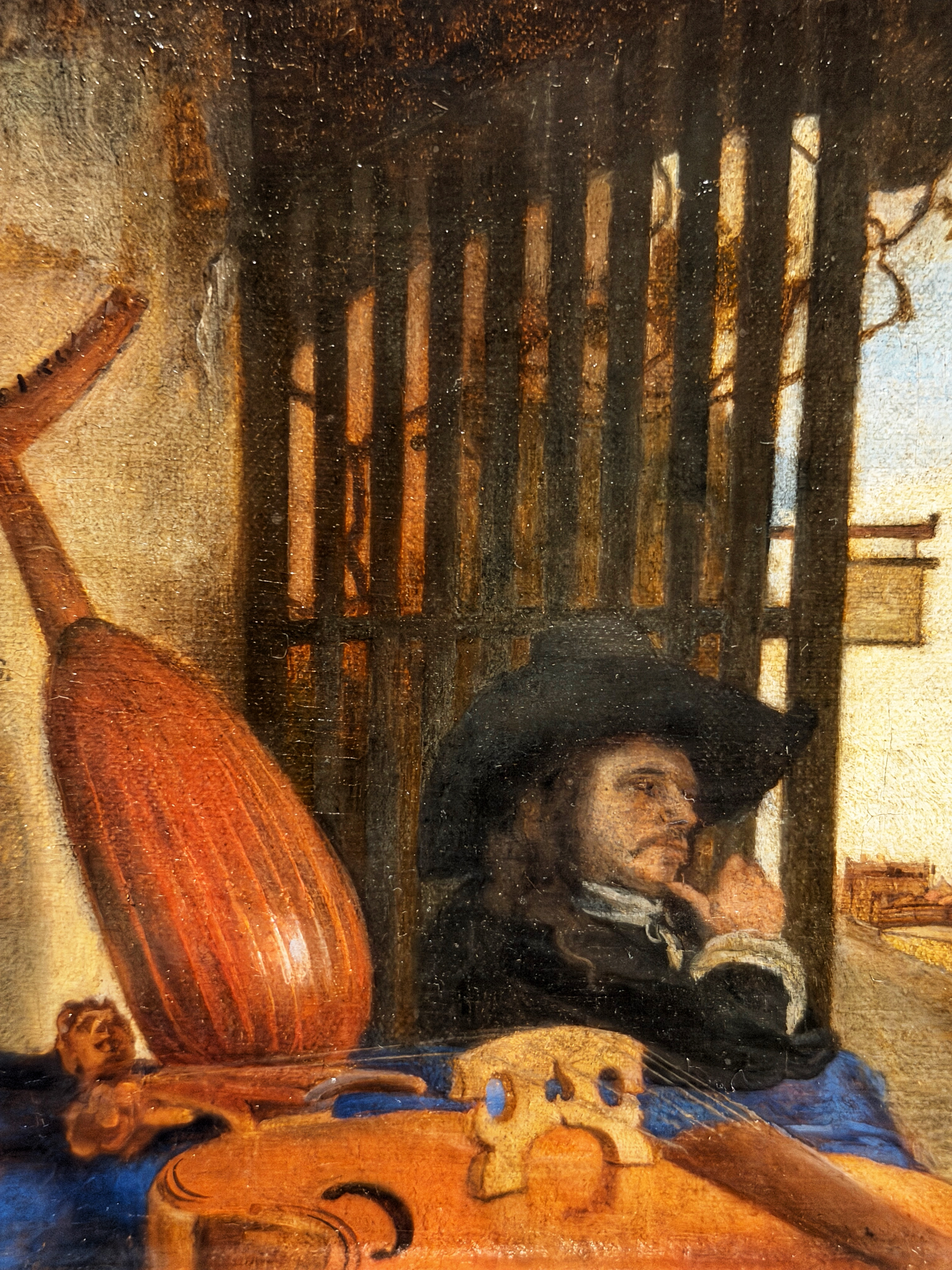
    Carel Fabritius (1622–1654), A View of Delft, with a Musical Instrument Seller’s Stall, 1652, Oil on canvas, 15.5 × 31.7 cm, The National Gallery, London
    Carel Fabritius (1622–1654), A View of Delft, with a Musical Instrument Seller’s Stall, 1652, Oil on canvas, 15.5 × 31.7 cm, The National Gallery, London
    Carel Fabritius (1622–1654), A View of Delft, with a Musical Instrument Seller’s Stall, 1652, Oil on canvas, 15.5 × 31.7 cm, The National Gallery, London
    Carel Fabritius (1622–1654), A View of Delft, with a Musical Instrument Seller’s Stall, 1652, Oil on canvas, 15.5 × 31.7 cm, The National Gallery, London
    Carel Fabritius (1622–1654), A View of Delft, with a Musical Instrument Seller’s Stall, 1652, Oil on canvas, 15.5 × 31.7 cm, The National Gallery, London

    This small painting raises difficult questions about how we assess quality in Old Master works. What does ‘quality’ mean when an artwork has passed through centuries, bearing abrasion, significant pigment loss, structural interventions and other changes? The condition in which a work survives is not separate from its history; it is part of it. Once an artwork leaves the artist’s studio, it begins another life in which it continues to change.

    Only around twelve paintings are securely attributed to Carel Fabritius. When set against estimates that roughly 98–99 per cent of Dutch Golden Age paintings have been lost, that number alters the meaning of the period itself. ‘Golden Age’ describes prosperity and output; it does not describe survival. What remains is a narrow and uneven selection shaped by accident, taste and decay.

    Conceived for a perspective box and activated from a fixed peephole, the painting was designed as a controlled optical installation. The extreme recession of the Nieuwe Kerk and the radical foreshortening of the viola da gamba cohere only when the viewer’s eye occupies a particular point; outside that position, the image becomes unstable, as it does now. The original perspective box has been lost. What remains is a small painted surface — fragile, yet ethically preserved in the condition in which it survives — a small window into Delft in the 1650s: a well-dressed merchant seated at the turn of the street, his viola da gamba and lute displayed at the stall, the Nieuwe Kerk beyond.

    In its present state, it asks whether we are prepared to recognise the quality of the masterpiece within the limits that time and condition have imposed upon it.


    References

    Suchtelen, A. van and Seelig, G. (2004) ‘Carel Fabritius 1622–1654’, Historians of Netherlandish Art Reviews. Available at: https://hnanews.org/hnar/reviews/carel-fabritius-1622-1654/ (Accessed: 27 February 2026)

    The Leiden Collection (n.d.) Carel Fabritius: Biography. Available at:https://www.theleidencollection.com/artists/carel-fabritius  (Accessed: 27 February 2026)

  • The Viola da Gamba Collection of the Musikinstrumenten-Museum, Berlin

    The Viola da Gamba Collection of the Musikinstrumenten-Museum, Berlin

    The original instrument collection of the Musikinstrumenten-Museum in Berlin was largely destroyed during the Second World War, and the museum rebuilt its holdings after 1945 through systematic acquisitions.

    The viola da gamba section includes a small number of seventeenth- and early eighteenth-century instruments connected with a range of historical making centres: Königsberg (Gregorius Karpp, active late 17th century), Hamburg (Joachim Tielke, 1641–1719), Berlin (Jacob Meinertzen, c. 1665–after 1732), Nuremberg (Jeremias Würfel, c. 1655–after 1720), London (Barak Norman, c. 1651–c. 1724; Robert Cotton, fl. late 17th century), and Absam in Tyrol (Jacob Stainer, c. 1619–1683).

    As Old Master paintings preserve the visible world of their time, these instruments preserve its sound; each endures as a work of rare beauty in its own right, formed by exceptional craftsmanship and the cultivated taste of its age.

  • Broken Bass Viola da Gamba: An Emblem of Failed Discipline

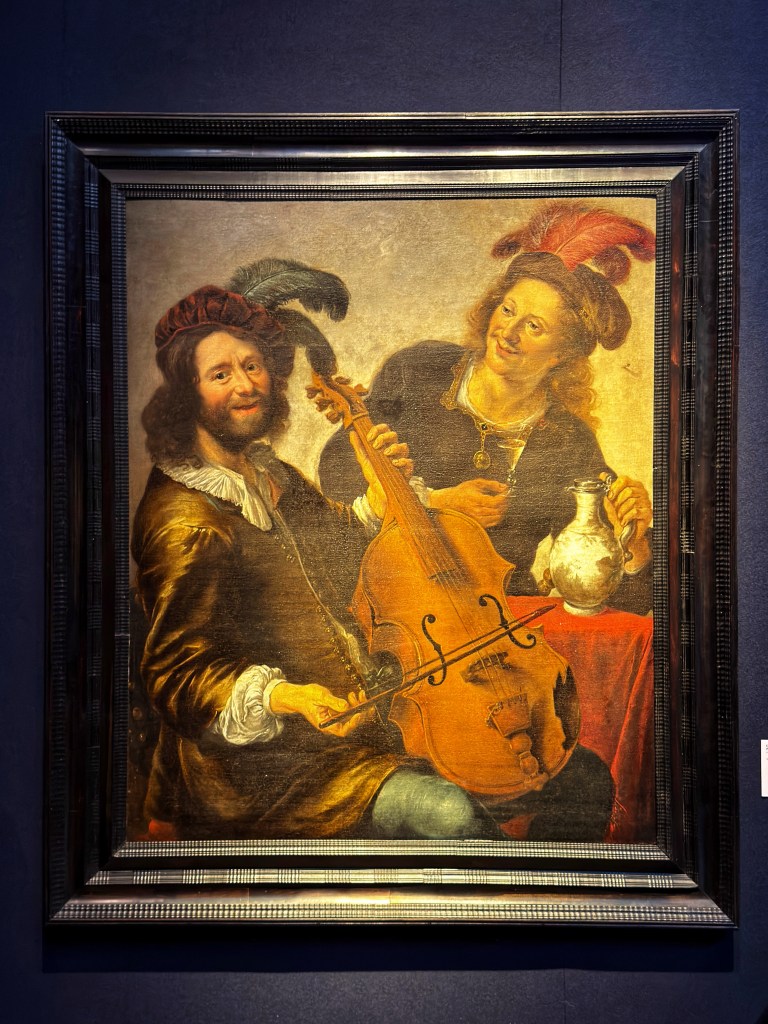
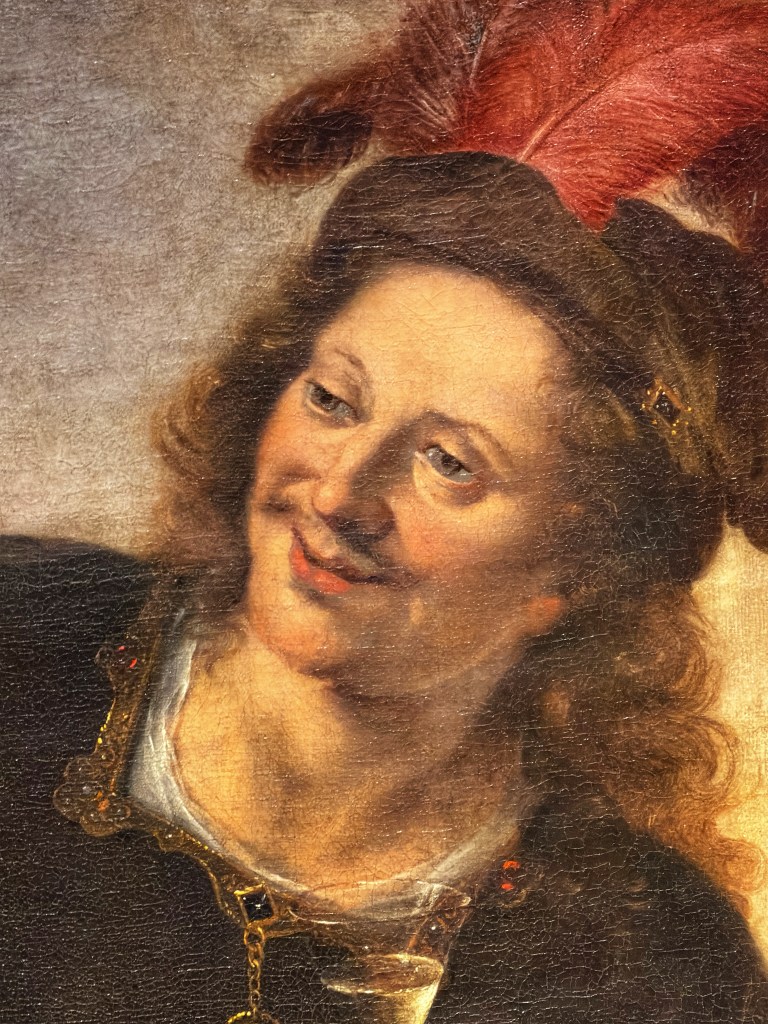
    Cornelis Stangerus (1616-1667), A man playing a viola da gamba being offered a glass of wine by a young man, Oil on canvas, 122.5 x 102.2 cm, Old Masters to Modern Day Sale, 3 December , Christie’s, London
    Cornelis Stangerus (1616-1667), A man playing a viola da gamba being offered a glass of wine by a young man, Oil on canvas, 122.5 x 102.2 cm, Old Masters to Modern Day Sale, 3 December , Christie’s, London
    Cornelis Stangerus (1616-1667), A man playing a viola da gamba being offered a glass of wine by a young man, Oil on canvas, 122.5 x 102.2 cm, Old Masters to Modern Day Sale, 3 December , Christie’s, London
    Cornelis Stangerus (1616-1667), A man playing a viola da gamba being offered a glass of wine by a young man, Oil on canvas, 122.5 x 102.2 cm, Old Masters to Modern Day Sale, 3 December , Christie’s, London

    Paintings of musicians from the mid-seventeenth century often linger at the threshold between sound and silence. Figures pause as if caught before a note can form, and the instrument becomes a register of temperament rather than performance.

    In this period the viola da gamba carried a distinctive cultural charge as the most cultivated of the bowed instruments, associated with private study, intellectual refinement and a quiet, often melancholic composure. Its rich tone, unlike the violin’s brightness or the rustic character of village instruments, made it the favoured companion of scholars and the well-educated. Dutch inventories and contemporary poetry cast it as an emblem of inward discipline and reflective attention, an object whose physical integrity was tied to the steadiness of its player. Emblematic writing often used broken instruments to mark a lapse of judgement or a gift allowed to decay, and in still-life contexts the motif could allude more gently to fragility rather than to outright moral failure.

    The viola da gamba in this painting stands at the intersection of these meanings. It is not worn down by time but torn apart by conduct: its upper bass string snapped, its soundboard gashed, its noble voice extinguished. Its owner, already drunk and offered more wine, holds it with the careless indifference of someone already turned away from his own capacities. For a seventeenth-century viewer the meaning would have settled quickly. An instrument associated with learning, discipline and interior balance appears in the hands of a man who has abandoned those qualities. The silence or bad sound it now holds becomes an image of that surrender: the noble voice is gone, and the shattered instrument forms the centre of the scene, a reminder of how swiftly inner steadiness and harmony can falter when judgement is lost and the violence of drink breaks the instrument apart.

    Cornelis Stangerus (1616-1667), A man playing a viola da gamba being offered a glass of wine by a young man, Oil on canvas, 122.5 x 102.2 cm, Old Masters to Modern Day Sale, 3 December , Christie’s, London
    Cornelis Stangerus (1616-1667), A man playing a viola da gamba being offered a glass of wine by a young man, Oil on canvas, 122.5 x 102.2 cm, Old Masters to Modern Day Sale, 3 December , Christie’s, London
    Cornelis Stangerus (1616-1667), A man playing a viola da gamba being offered a glass of wine by a young man, Oil on canvas, 122.5 x 102.2 cm, Old Masters to Modern Day Sale, 3 December , Christie’s, London
    Cornelis Stangerus (1616-1667), A man playing a viola da gamba being offered a glass of wine by a young man, Oil on canvas, 122.5 x 102.2 cm, Old Masters to Modern Day Sale, 3 December , Christie’s, London
    Cornelis Stangerus (1616-1667), A man playing a viola da gamba being offered a glass of wine by a young man, Oil on canvas, 122.5 x 102.2 cm, Old Masters to Modern Day Sale, 3 December , Christie’s, London
    Cornelis Stangerus (1616-1667), A man playing a viola da gamba being offered a glass of wine by a young man, Oil on canvas, 122.5 x 102.2 cm, Old Masters to Modern Day Sale, 3 December , Christie’s, London
    Cornelis Stangerus (1616-1667), A man playing a viola da gamba being offered a glass of wine by a young man, Oil on canvas, 122.5 x 102.2 cm, Old Masters to Modern Day Sale, 3 December , Christie’s, London
    Cornelis Stangerus (1616-1667), A man playing a viola da gamba being offered a glass of wine by a young man, Oil on canvas, 122.5 x 102.2 cm, Old Masters to Modern Day Sale, 3 December , Christie’s, London

    References

    Christie’s (2025) Cornelis Stangerus (Delft 1616–1667 Middelburg). A man playing a viola da gamba being offered a glass of wine by a young man, Lot 182, Old Masters to Modern Day Sale: Paintings, Drawings, Sculpture, Live auction 23862, 3 December. Available at: https://www.christies.com/en/lot/lot-6562609 (Accessed: 2 December 2025).