Wandering the World of the Old Masters: Notes from a Private Journey
Travelling in the company of Old Masters in shifting roles as observer, listener or sometime companion, this page is kept as a quiet pastime. It is part notebook, part informal journal, a collection of phone images and reflections drawn from encounters with old artworks and places where the past still lingers. All pictures are taken by me, and all thoughts written during slow travels and unhurried visits, where time allows for second looks and quiet returns.The works and spaces gathered here were made in a world different from ours, yet they continue to ask things of us—not answers, but attention; not certainty, but time. These pages offer no final word, only a shared space in which looking, questioning, and returning might still matter. Yvo Reinsalu
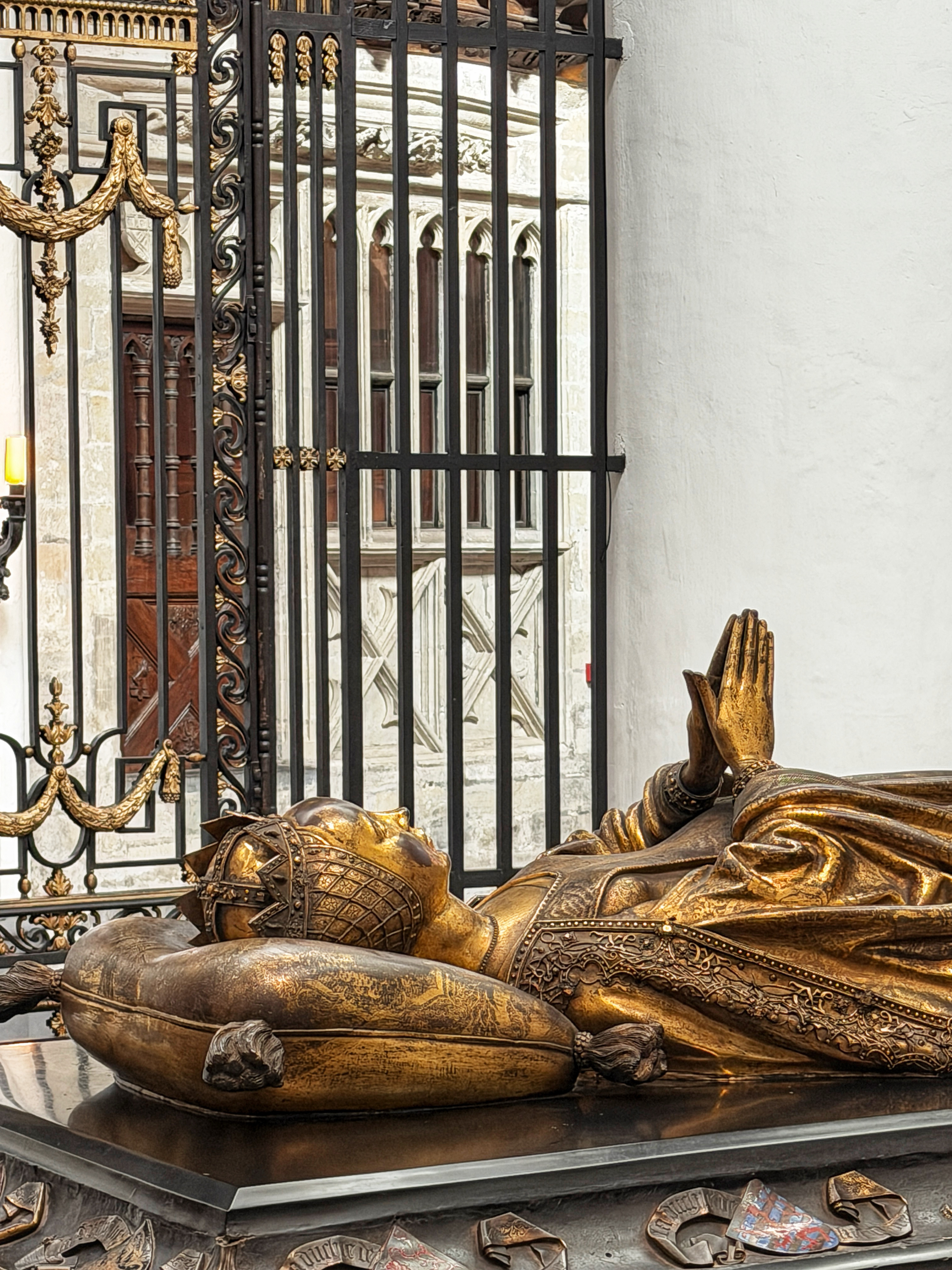
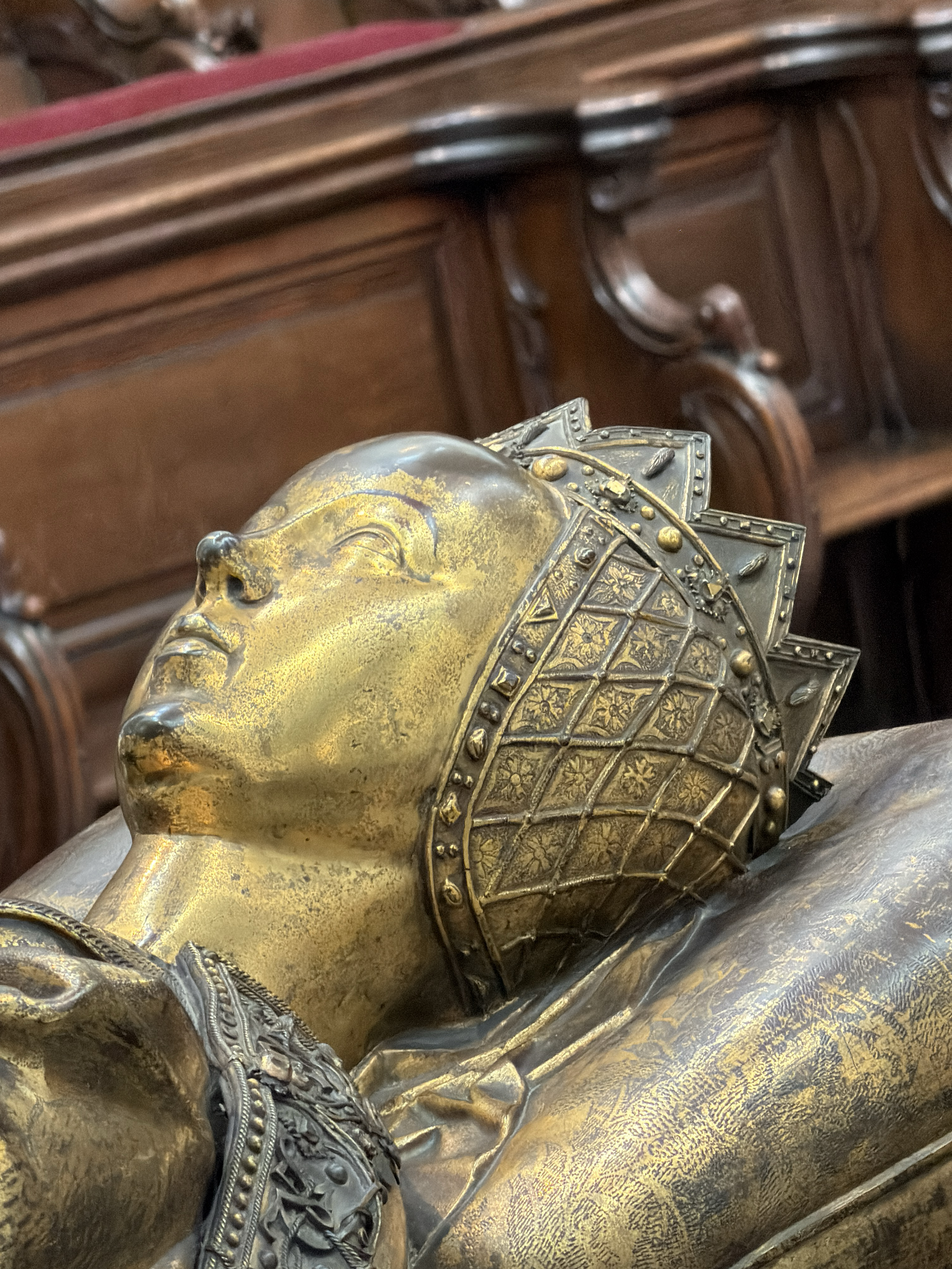
Renier van Thienen (active c.1470–1495), Jan Borman II (c.1460–1520), Pieter de Backere (active late fifteenth century) and Jehan Hervy (active late fifteenth century), Tomb of Mary of Burgundy, c.1488–1502, Brass, copper, bronze and enamel effigy on black stone sarcophagus, 260 × 135 × 135 cm, Church of Our Lady, Bruges
Renier van Thienen (active c.1470–1495), Jan Borman II (c.1460–1520), Pieter de Backere (active late fifteenth century) and Jehan Hervy (active late fifteenth century), Tomb of Mary of Burgundy, c.1488–1502, Brass, copper, bronze and enamel effigy on black stone sarcophagus, 260 × 135 × 135 cm, Church of Our Lady, BrugesRenier van Thienen (active c.1470–1495), Jan Borman II (c.1460–1520), Pieter de Backere (active late fifteenth century) and Jehan Hervy (active late fifteenth century), Tomb of Mary of Burgundy, c.1488–1502, Brass, copper, bronze and enamel effigy on black stone sarcophagus, 260 × 135 × 135 cm, Church of Our Lady, Bruges
A young ruler lies in still metal, surrounded by the heraldry of a vanished political world.
The tomb erected in Bruges some years after Mary of Burgundy’s death gathers into sculptural form the inheritance that had briefly converged in her person. The gilded effigy shows the duchess resting in composed stillness, crowned and wrapped in the mantle of Burgundian sovereignty. Along the sides of the sarcophagus a dense sequence of heraldic shields borne by lions unfolds in measured succession.
These arms evoke dynastic lineage and the territories of the Burgundian house, so that the monument begins to resemble a visual genealogy as much as a funerary image, metal and stone quietly assembling the web of lands and claims once held together under Burgundian rule.
That political configuration had taken shape during the long reign of Philip the Good (1396–1467), whose government consolidated the territories of the Low Countries into one of the most powerful princely formations of late medieval Europe. When his son Charles the Bold (1433–1477) was killed at Nancy in 1477, the inheritance passed to his only child, Mary of Burgundy.
Her short rule unfolded at a fragile historical threshold between the Burgundian structure fashioned under Philip and the Habsburg order that would soon emerge. After 1477 the French king Louis XI (1423–1483) sought to dismantle Burgundian power, while the cities of the Low Countries compelled the young ruler to confirm their liberties in the Great Privilege of 1477.
Her marriage that same year to Maximilian I (1459–1519) brought military support but also drew the Burgundian inheritance into the orbit of the Habsburg dynasty. Through their son Philip the Handsome (1478–1506) and grandson Charles V (1500–1558), these territories would become the political core of the Habsburg Netherlands.
Renier van Thienen (active c.1470–1495), Jan Borman II (c.1460–1520), Pieter de Backere (active late fifteenth century) and Jehan Hervy (active late fifteenth century), Tomb of Mary of Burgundy, c.1488–1502, Brass, copper, bronze and enamel effigy on black stone sarcophagus, 260 × 135 × 135 cm, Church of Our Lady, BrugesRenier van Thienen (active c.1470–1495), Jan Borman II (c.1460–1520), Pieter de Backere (active late fifteenth century) and Jehan Hervy (active late fifteenth century), Tomb of Mary of Burgundy, c.1488–1502, Brass, copper, bronze and enamel effigy on black stone sarcophagus, 260 × 135 × 135 cm, Church of Our Lady, BrugesRenier van Thienen (active c.1470–1495), Jan Borman II (c.1460–1520), Pieter de Backere (active late fifteenth century) and Jehan Hervy (active late fifteenth century), Tomb of Mary of Burgundy, c.1488–1502, Brass, copper, bronze and enamel effigy on black stone sarcophagus, 260 × 135 × 135 cm, Church of Our Lady, BrugesRenier van Thienen (active c.1470–1495), Jan Borman II (c.1460–1520), Pieter de Backere (active late fifteenth century) and Jehan Hervy (active late fifteenth century), Tomb of Mary of Burgundy, c.1488–1502, Brass, copper, bronze and enamel effigy on black stone sarcophagus, 260 × 135 × 135 cm, Church of Our Lady, BrugesRenier van Thienen (active c.1470–1495), Jan Borman II (c.1460–1520), Pieter de Backere (active late fifteenth century) and Jehan Hervy (active late fifteenth century), Tomb of Mary of Burgundy, c.1488–1502, Brass, copper, bronze and enamel effigy on black stone sarcophagus, 260 × 135 × 135 cm, Church of Our Lady, Bruges
References
Van Loo, B. (2021) The Burgundians: A Vanished Empire: A History of 1111 Years and One Day. Translated by N. Forest-Flier. London: Head of Zeus.
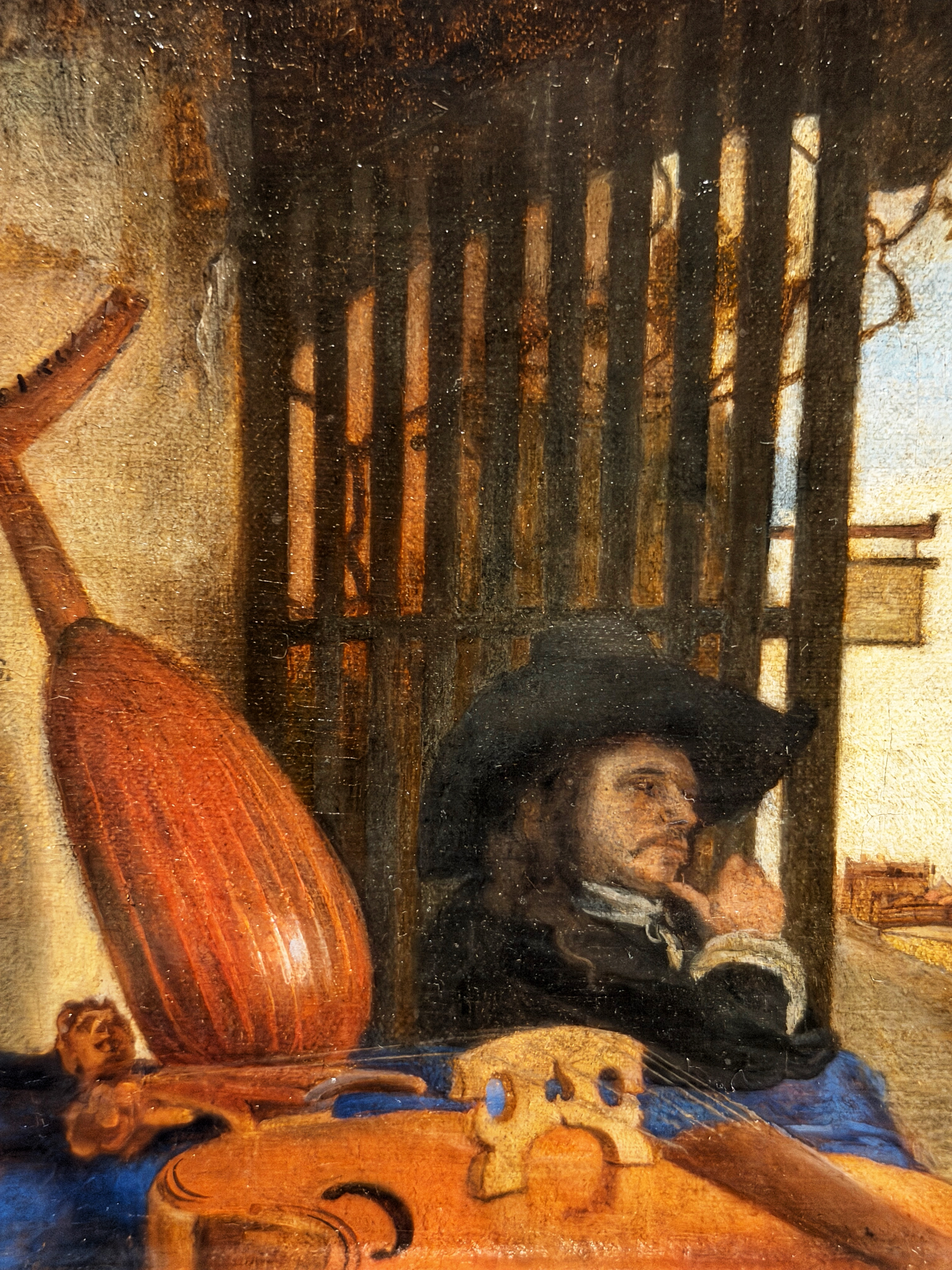
Carel Fabritius (1622–1654), A View of Delft, with a Musical Instrument Seller’s Stall, 1652, Oil on canvas, 15.5 × 31.7 cm, The National Gallery, LondonCarel Fabritius (1622–1654), A View of Delft, with a Musical Instrument Seller’s Stall, 1652, Oil on canvas, 15.5 × 31.7 cm, The National Gallery, LondonCarel Fabritius (1622–1654), A View of Delft, with a Musical Instrument Seller’s Stall, 1652, Oil on canvas, 15.5 × 31.7 cm, The National Gallery, London
This small painting raises difficult questions about how we assess quality in Old Master works. What does ‘quality’ mean when an artwork has passed through centuries, bearing abrasion, significant pigment loss, structural interventions and other changes? The condition in which a work survives is not separate from its history; it is part of it. Once an artwork leaves the artist’s studio, it begins another life in which it continues to change.
Only around twelve paintings are securely attributed to Carel Fabritius. When set against estimates that roughly 98–99 per cent of Dutch Golden Age paintings have been lost, that number alters the meaning of the period itself. ‘Golden Age’ describes prosperity and output; it does not describe survival. What remains is a narrow and uneven selection shaped by accident, taste and decay.
Conceived for a perspective box and activated from a fixed peephole, the painting was designed as a controlled optical installation. The extreme recession of the Nieuwe Kerk and the radical foreshortening of the viola da gamba cohere only when the viewer’s eye occupies a particular point; outside that position, the image becomes unstable, as it does now. The original perspective box has been lost. What remains is a small painted surface — fragile, yet ethically preserved in the condition in which it survives — a small window into Delft in the 1650s: a well-dressed merchant seated at the turn of the street, his viola da gamba and lute displayed at the stall, the Nieuwe Kerk beyond.
In its present state, it asks whether we are prepared to recognise the quality of the masterpiece within the limits that time and condition have imposed upon it.
Michelangelo Merisi da Caravaggio (1571–1610), Amor Vincit Omnia (Love Conquers All), c. 1601–1602, Oil on canvas, 156.5 × 113.3 cm, Gemäldegalerie, Berlin, on short-term loan to The Wallace Collection, London
The collection that Vincenzo Giustiniani (1564–1637) assembled in his Roman palazzo by the early seventeenth century was among the most ambitious in the city: paintings, ancient sculptures, and works of every kind arranged as a cumulative demonstration of a cultivated man’s reach. Giustiniani was not born into Roman elite. His Genoese family had ruled the Aegean island of Chios until the Ottomans seized it in 1566, when he was two years old, and the fortune that funded the collection had been rebuilt through banking.
Joachim von Sandrart (1606–1688), who catalogued the collection in the 1630s and knew itwell, singled out one painting above all others in his Teutsche Academie [The German Academy of the Noble Arts of Architecture, Sculpture and Painting] (1675): a naked laughing boy standing over the scattered instruments of every serious human pursuit.Armour, a crown, a sceptre, a lute, a violin, a sheet of written music, a compass, an astronomical globe, books. On the sheet of music, scholars have noted, a large letter V is visible — whether a reference to Vincenzo or simply a coincidence the patron chose not to correct. The whole project of ordered human endeavour lay at the boy’s feet, and he was grinning.
The painting was not always called what we call it now. Poets in Giustiniani’s circle responded to it immediately: one wrote three madrigals, another a Latin epigram coupling the work with the Virgilian phrase Omnia vincit Amor, but it was the critic Giovanni Pietro Bellori (1613–1696), writing in his Le vite de’ pittori, scultori et architetti moderni (Lives of the Modern Painters, Sculptors and Architects, 1672), who fixed the title in the form that has held ever since.
The phrase comes from the tenth Eclogue of Virgil (70–19 BC), a lament by the poet Gallus, abandoned by his lover, who concludes in resignation: love conquers all, and there is nothing to be done about it. It is a line of defeat, not celebration. By 1600 it had been absorbed into European learned culture through Andrea Alciato’s (1492–1550) Emblematum liber (Book of Emblems))of 1531, the founding text of the emblem book tradition, which paired Latin epigrams with woodcut images to create a shared symbolic vocabulary across educated European elite, and through Petrarch’s (1304–1374) Trionfi (Triumphs), a sequence of allegorical poems in which Cupid triumphs first over all mortals before being defeated in turn by Chastity, Death, and Time. What Caravaggio does with this inheritance is precise: he takes Virgil’s resignation and makes it a spectacle. The boy is not defeated. He is delighted.
The modern eye often mistrusts the nude, approaching it in expectation of confession or rupture, as though flesh must reveal a private drama. An eye trained to expect provocation will usually find it. But Caravaggio’s Rome around 1600 looked very differently. In a culture that believed images shaped belief and conduct, clarity was essential and meaning had to be visible. Counter-Reformation sensibility did not fear the body as such. It feared confusion. A naked figure was acceptable when its function was clear and its idea firm. Within such a culture the eye was trained to read before it reacted.
Allegorical nudity, grounded in the legacy of the classical world and sustained by the emblematic tradition running from Alciato through to Cesare Ripa’s (c.1560–c.1622) Iconologia of 1593, was not excess but a precise visual language. Ripa’s Iconologia was a handbook for artists and patrons that catalogued hundreds of abstract concepts, from virtues to the liberal arts, specifying how each should be dressed, posed, and equipped to be immediately legible; it went through multiple editions in the decades around 1600 and was, in effect, the period’s dictionary of visual ideas. Within that tradition, clothes mark rank, profession, and time, and their absence removes every distinction they establish. The boy stepping over the defeated objects has no allegiance to the categories they represent, because the force he embodies precedes every category.
Caravaggio does not so much invent a new Cupid as intensify an established concept, and he does so with conspicuous physical particularity. The figure is often identified with Cecco Boneri, Caravaggio’s young studio assistant, though this rests on later sources and stylistic inference rather than documentation, and the tendency to attach names and backstories to every face in Caravaggio’s work has a long history of producing narratives that tell us more about the interpreter’s appetite for biography than about the painting itself. Whatever the model’s identity, the pose is in clear conversation with a recognisable Michelangelesque type: the standing figure, one leg raised, dominating a defeated form below, familiar from the Victory (c.1532–1534, Palazzo Vecchio, Florence) and from the broader currency of Michelangelo’s compositional ideas in Roman artistic culture. Whether Caravaggio had seen the sculpture directly is not documented; what his Roman audience would have recognised is the formula, and the recognition is part of the point. Stripped of rank and circumstance, the figure becomes the clearest possible sign of a force that exceeds every human order, and one that finds the whole arrangement, frankly, rather amusing.
In 1602, Giovanni Baglione (c. 1566–1643) painted a Divine Love Conquering Earthly Love for Cardinal Benedetto Giustiniani (1554–1621), Vincenzo’s brother and a close partner in building the family collection.That the two brothers between them owned both the original claim and its theological correction tells us the painting had been read clearly enough to require a response. Baglione, stung by what he saw as Caravaggio’s influence over his own composition, went further in a second version and gave the devil Caravaggio’s face. The quarrel that followed was long and vicious, and its afterlife was stranger still: Baglione became Caravaggio’s first biographer, which is perhaps the most elaborate act of revenge the period has to offer. Vincenzo kept both paintings for the rest of his life. The collection he built survived him by nearly two centuries before the wider world caught up with it. When Napoleon’s forces occupied Rome in 1807, the paintings were removed to Paris and broken up. In 1815, Frederick William III of Prussia purchased around 170 of what remained, and they were transferred to Berlin, eventually forming the nucleus of the Gemäldegalerie.
References
Danesi Squarzina, S. (2003) La collezione Giustiniani. 2 vols. Turin: Einaudi
Schütze, S. (2009) Caravaggio: The Complete Works. Cologne: Taschen
Graham-Dixon, A. (2010)Caravaggio: A Life Sacred and Profane. London: Allen Lane
Kingsley-Smith, J. (2013) Cupid in Early Modern Literature and Culture. Cambridge: Cambridge University Press Langdon, H. (1998)Caravaggio: A Life. London: Chatto & Windus
Posèq, A.W.G. (1993) ‘Caravaggio’s “Amor Vincitore” and the supremacy of painting’, Notes in the History of Art, 12(4). Available at: https://www.jstor.org/stable/23203376 (Accessed: 23 February 2025)
Virgil (37 BC) Eclogues, X.69, translated by Lee, G. (1984). Liverpool: Francis Cairns
The Viola da Gamba Collection of the Musikinstrumenten-Museum, Berlin
The original instrument collection of the Musikinstrumenten-Museum in Berlin was largely destroyed during the Second World War, and the museum rebuilt its holdings after 1945 through systematic acquisitions.
The viola da gamba section includes a small number of seventeenth- and early eighteenth-century instruments connected with a range of historical making centres: Königsberg (Gregorius Karpp, active late 17th century), Hamburg (Joachim Tielke, 1641–1719), Berlin (Jacob Meinertzen, c. 1665–after 1732), Nuremberg (Jeremias Würfel, c. 1655–after 1720), London (Barak Norman, c. 1651–c. 1724; Robert Cotton, fl. late 17th century), and Absam in Tyrol (Jacob Stainer, c. 1619–1683).
As Old Master paintings preserve the visible world of their time, these instruments preserve its sound; each endures as a work of rare beauty in its own right, formed by exceptional craftsmanship and the cultivated taste of its age.
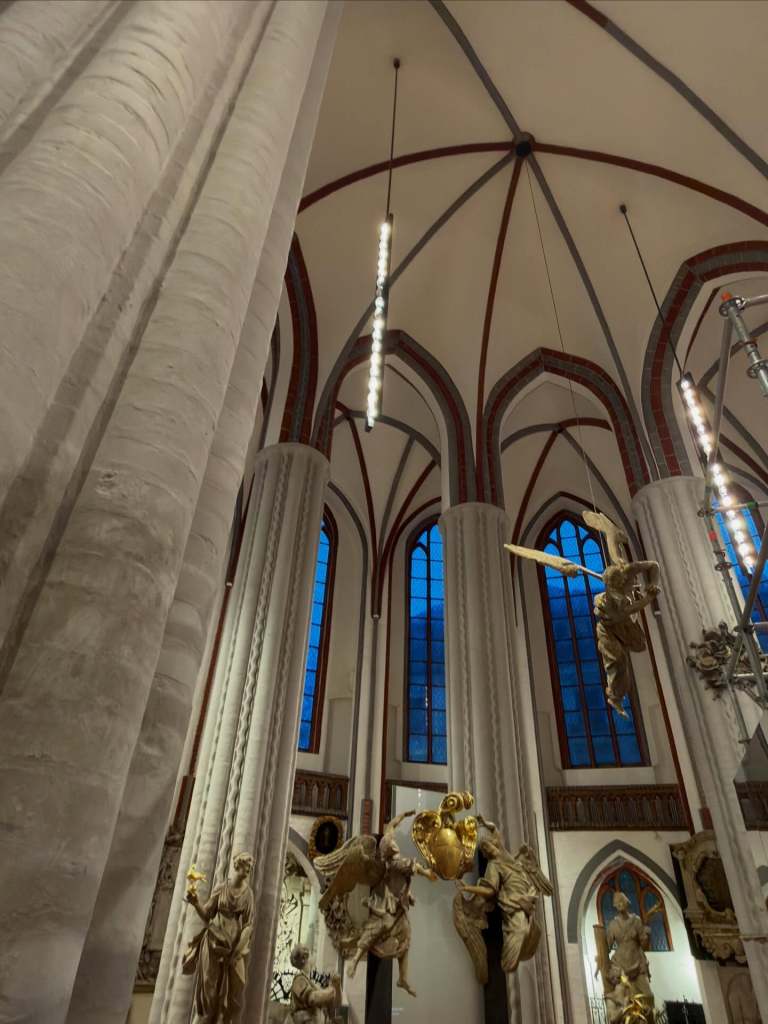
The oldest surviving church in Berlin, St. Nicholas Church preserves in its masonry an interesting dialogue between two formative eras of northern German architecture: the 13th century fieldstone Romanesque that emerged during the period of German eastward settlement in the Margraviate of Brandenburg and the later Brick Gothic that developed within the Baltic and Hanseatic sphere.
Around 1220–1230 a stone basilica was established on this site, and substantial portions of its lower fabric remain visible in the base of the westwork and towers. The irregular glacial fieldstones and granite blocks, laid in thick mortar beds, produce broad joints and uneven surfaces that still determine the building’s weight and proportion.
Following the destructive fire of 1380, rebuilding campaigns extending through the late 14th and 15th centuries transformed the building into a three-aisled late Gothic hall church in brick. This typological shift aligned the building with the Brick Gothic architecture widespread across northern Germany. Ribbed vaults reorganised the interior into a coherent structural system; the aisles rose nearly to the height of the nave, reducing the hierarchical separation typical of earlier basilican plans. Pointed window openings, articulated brick buttresses, and stepped gables introduced sharper profiles and a more regular exterior order made possible by standardised brick construction.
The cohesion of this layered architectural ensemble here rests on structural continuity: the Romanesque stone substratum was retained and integrated into the Gothic rebuilding, so that the dialogue between early regional fieldstone construction and later Hanseatic Brick Gothic remains visible within a single architectural body, even acknowledging the significant nineteenth-century neo-Gothic restoration and post-war reconstruction that shaped the church’s present appearance.
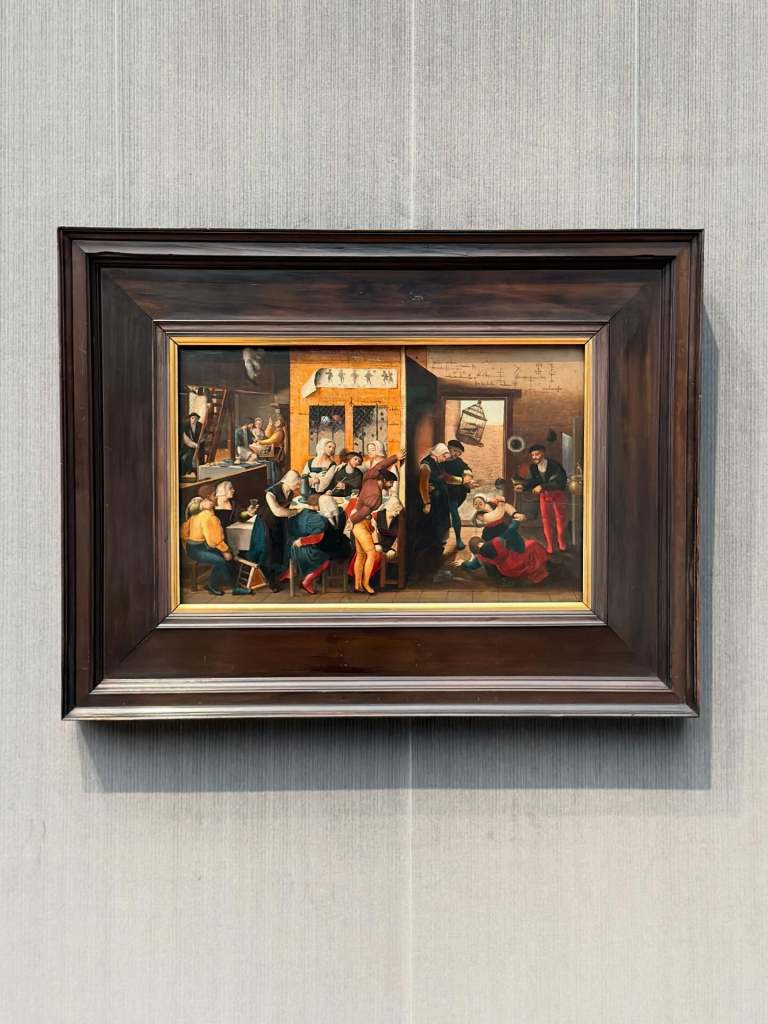
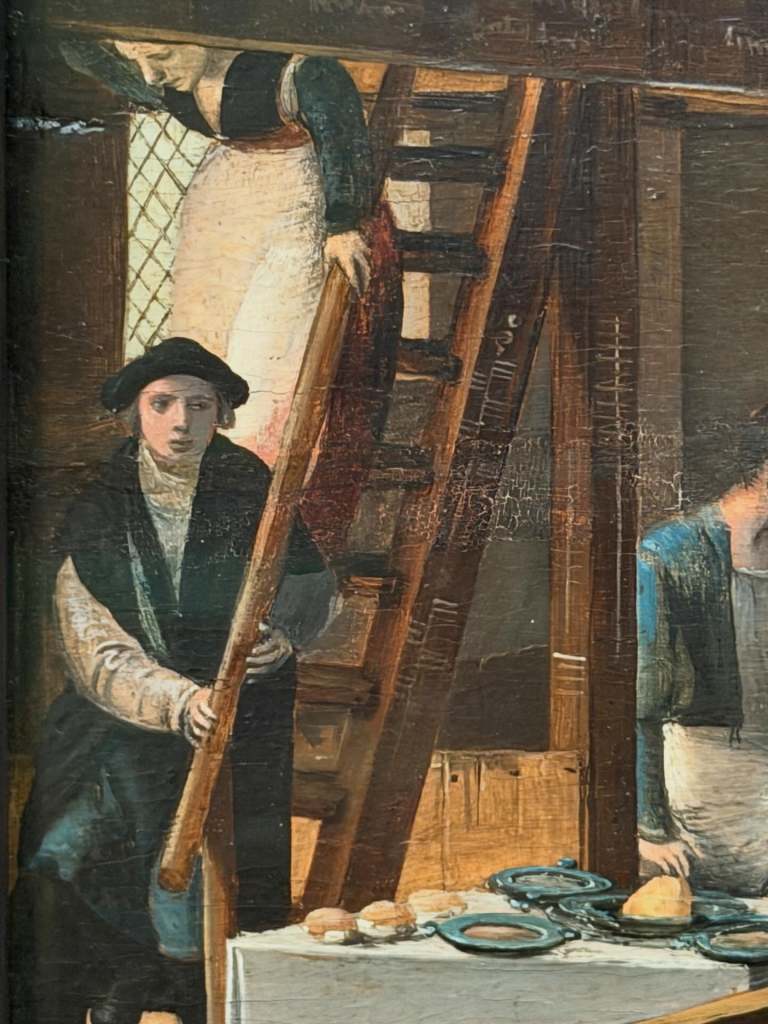
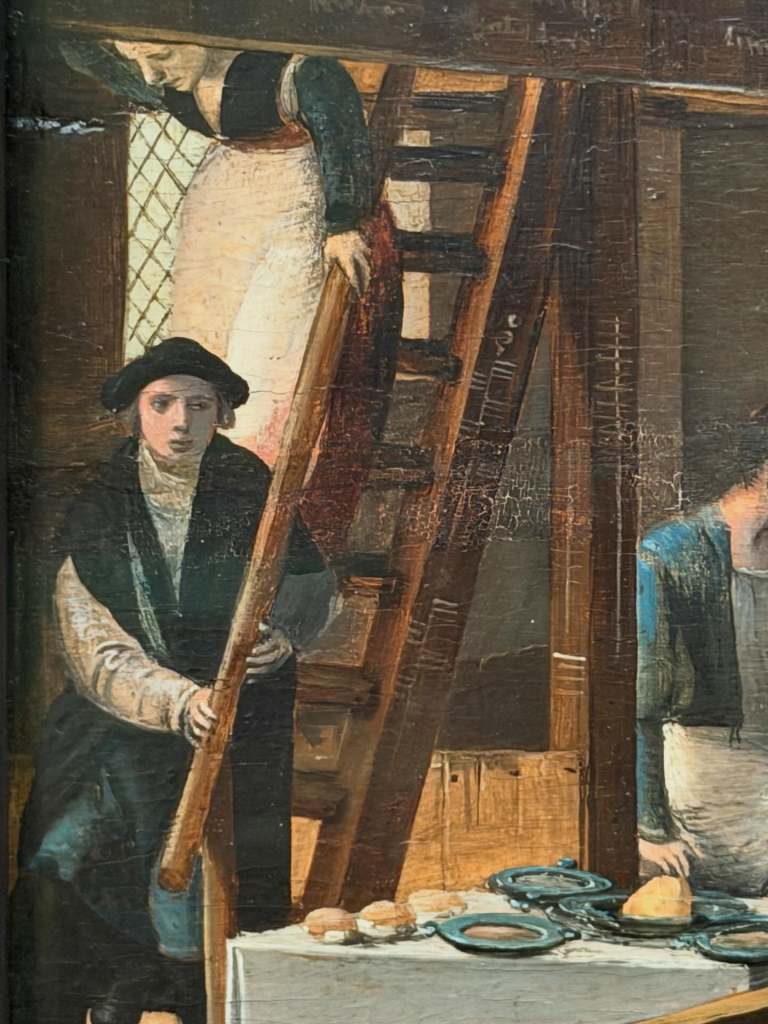
Braunschweiger Monogrammist (fl. in Antwerp c. 1525–1545), The Loose Society, c. 1535–1540, Oil on oak, 30,1 x 46,5 cm, Gemäldegalerie
B
Braunschweiger Monogrammist (fl. in Antwerp c. 1525–1545), The Loose Society, c. 1535–1540, Oil on oak, 30,1 x 46,5 cm, Gemäldegalerie
Elusive in identity and known from only a small number of surviving works, the Braunschweiger Monogrammist produced several carefully staged interior scenes. Within this corpus, the Berlin painting is the most complex in its organisation of space and action.
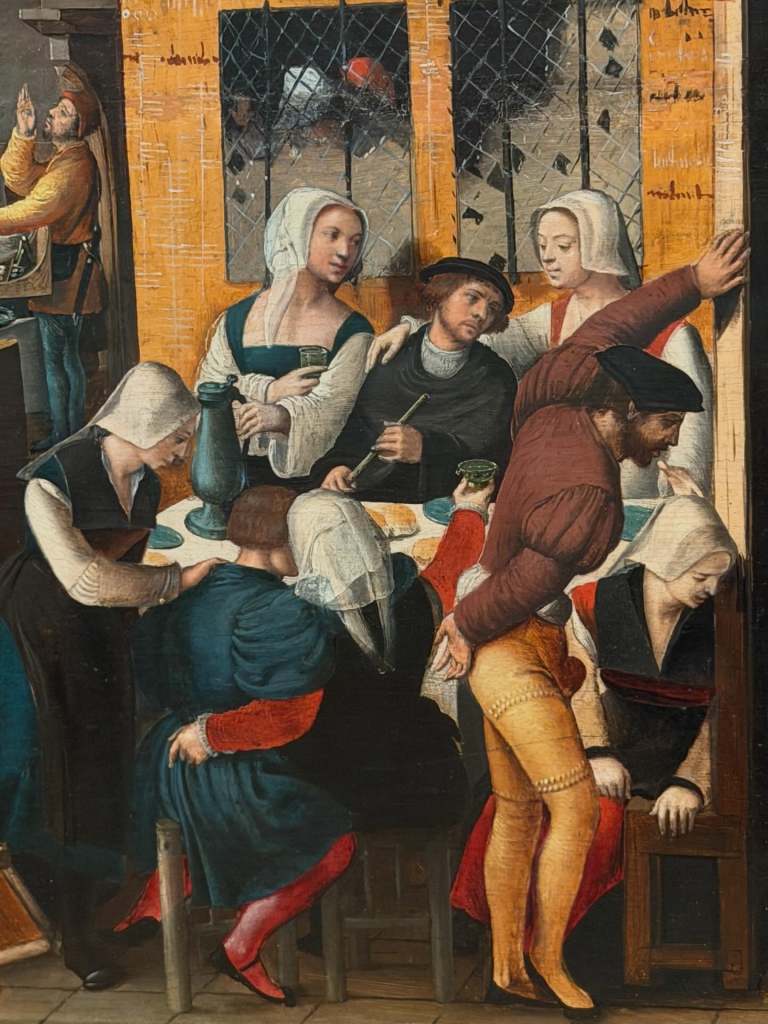
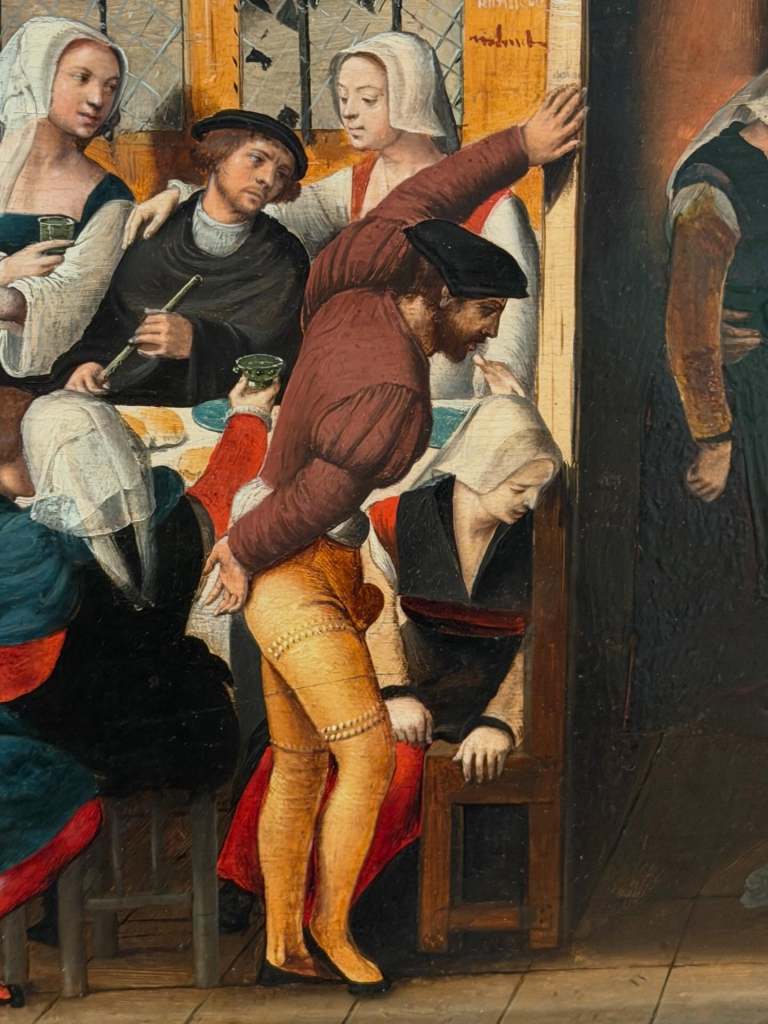
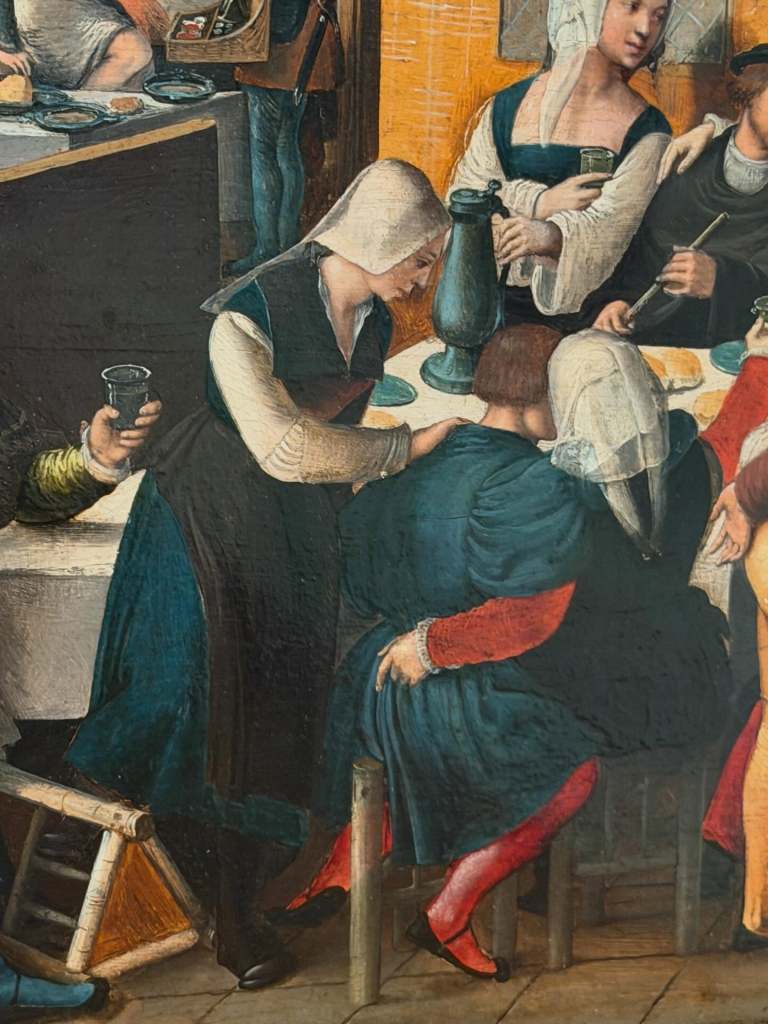
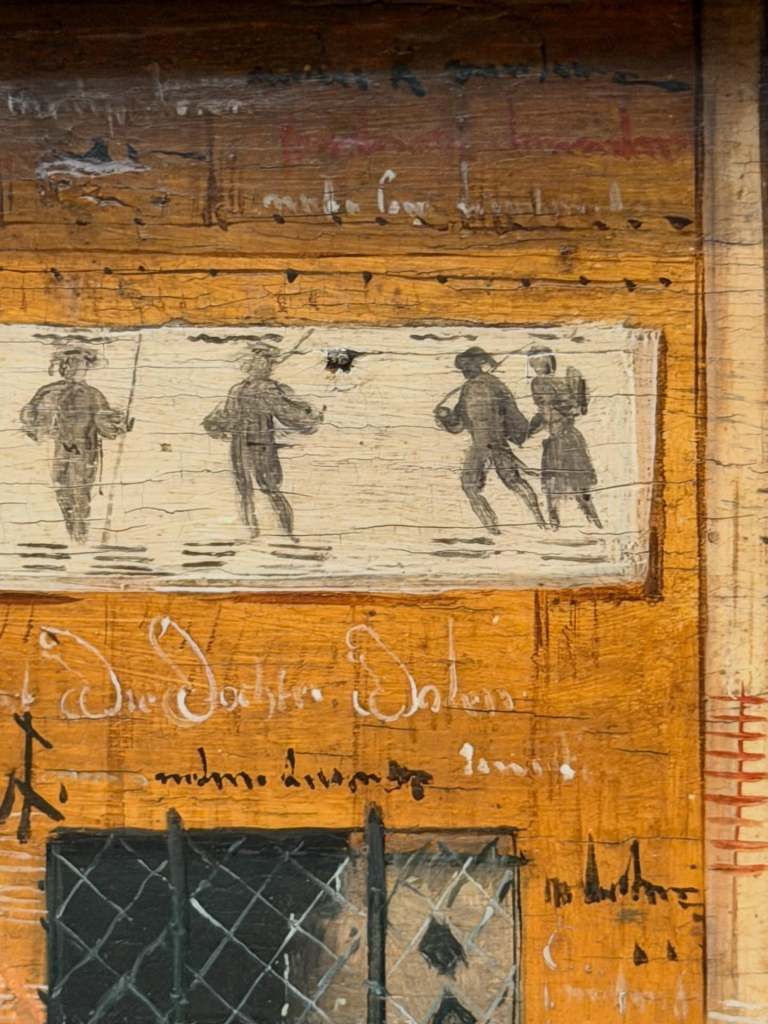
On the left, a long table anchors a compact group of figures: women sit on men’s knees, couples lean into tactile negotiation, glasses are raised, and bodies press together. The barred openings and markings on the wall suggest a commercial rather than a domestic environment.
The right side shifts the tone dramatically. On the floor, two women fight, one forcing the other down. A man bends forward to pour water over them in an attempt to break up the fight, while nearby a woman extends her arm to restrain another man from intervening. Numerous smaller details, charged with coded meaning, are embedded in the setting, so that the brothel interior emerges as a closely observed theatre in which seduction, calculation, possession, and disorder unfold within a single continuous space.
Such ambivalence reflects historical reality. In sixteenth-century Netherlandish cities brothels were condemned in principle yet regulated in practice. Commercial centres such as Antwerp drew merchants, labourers, sailors, and foreign mercenaries. From the time of the Burgundian dukes, and later under the Habsburg crown, pragmatic containment frequently prevailed over prohibition. Brothels functioned as managed outlets within a volatile urban environment.
The painting captures precisely this fragile equilibrium. It moralises, yet it also observes; it entertains, yet it dissects. In doing so, it occupies an interesting position between didactic imagery and the emerging Netherlandish genre painting — a compact genre scene in which moral framing and social observation operate in deliberate tension.
References
RKD – Netherlands Institute for Art History (n.d.), Braunschweiger Monogrammist (fl. in Antwerp c. 1525–1545), The Loose Society, c. 1535–1540, RKDimages database entry no. 51439 , Available at: https://rkd.nl/images/51439 (February 16 2026)
Other versions
RKD – Netherlands Institute for Art History (n.d.), after Master of Brunswick (fl. in Antwerp c. 1525–1545), Brothel Scene with Card Players, c. 1540, RKDimages database entry no. 56035, Available at: https://rkd.nl/images/56035(February 16 2026)
RKD – Netherlands Institute for Art History (n.d.), Braunschweiger Monogrammist (fl. in Antwerp c. 1525–1545), The Loose Society, c. 1535–1540, RKDimages database entry no. 213411 Available at: https://rkd.nl/images/213411 ( February 16 2026)
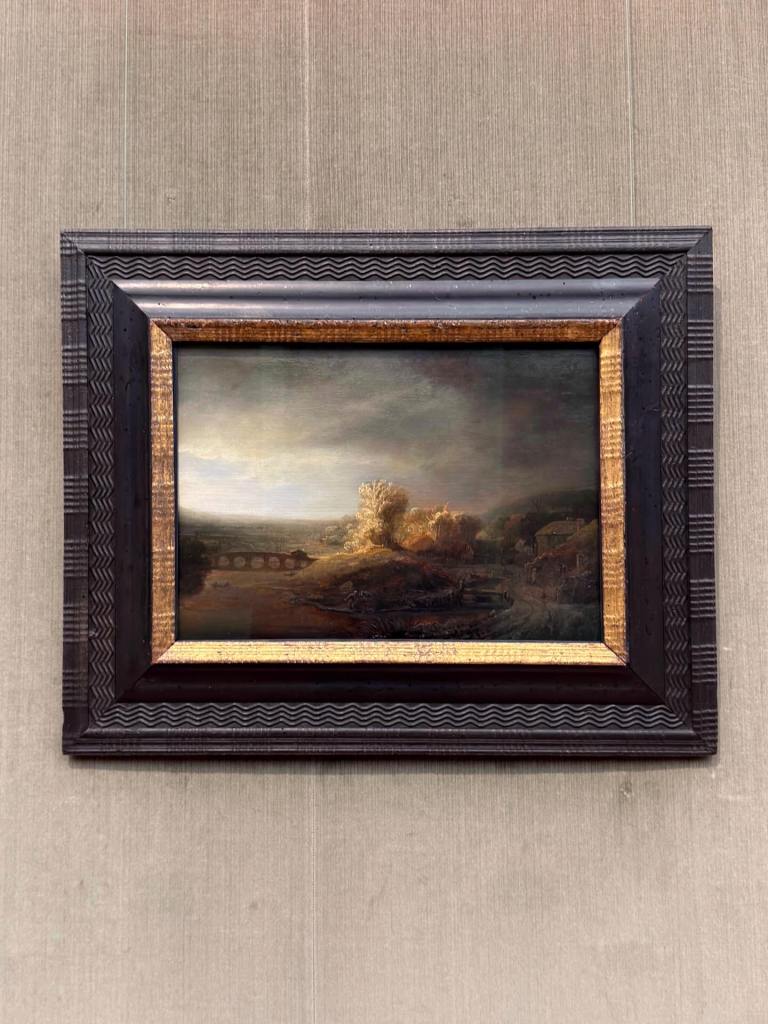
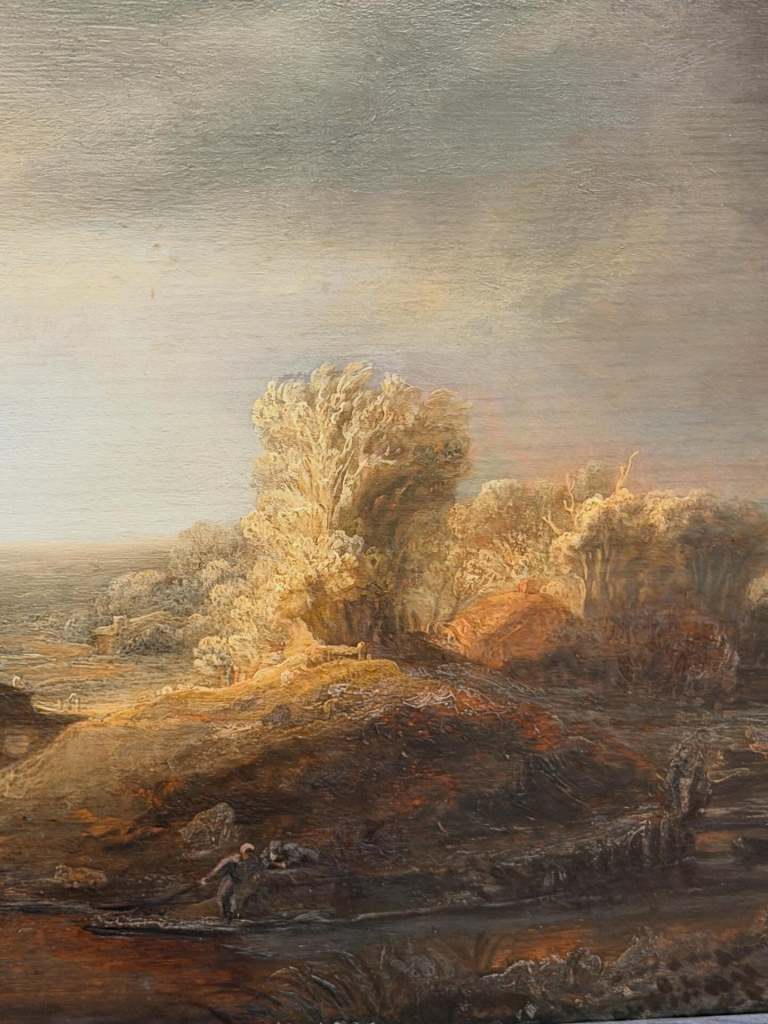
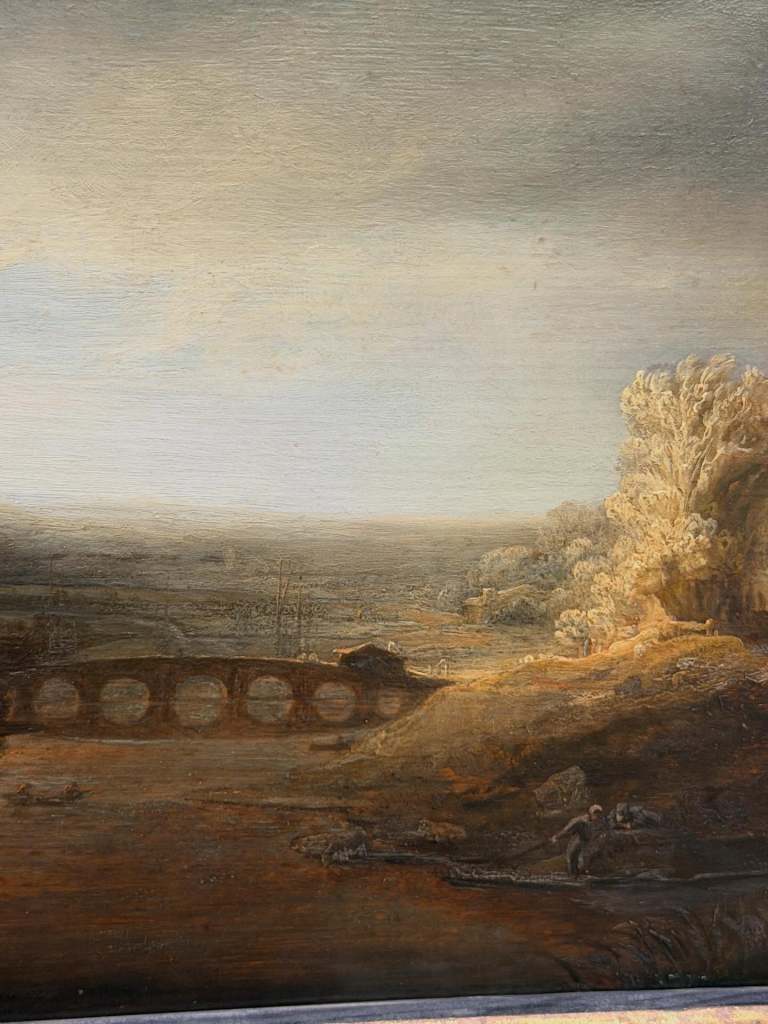
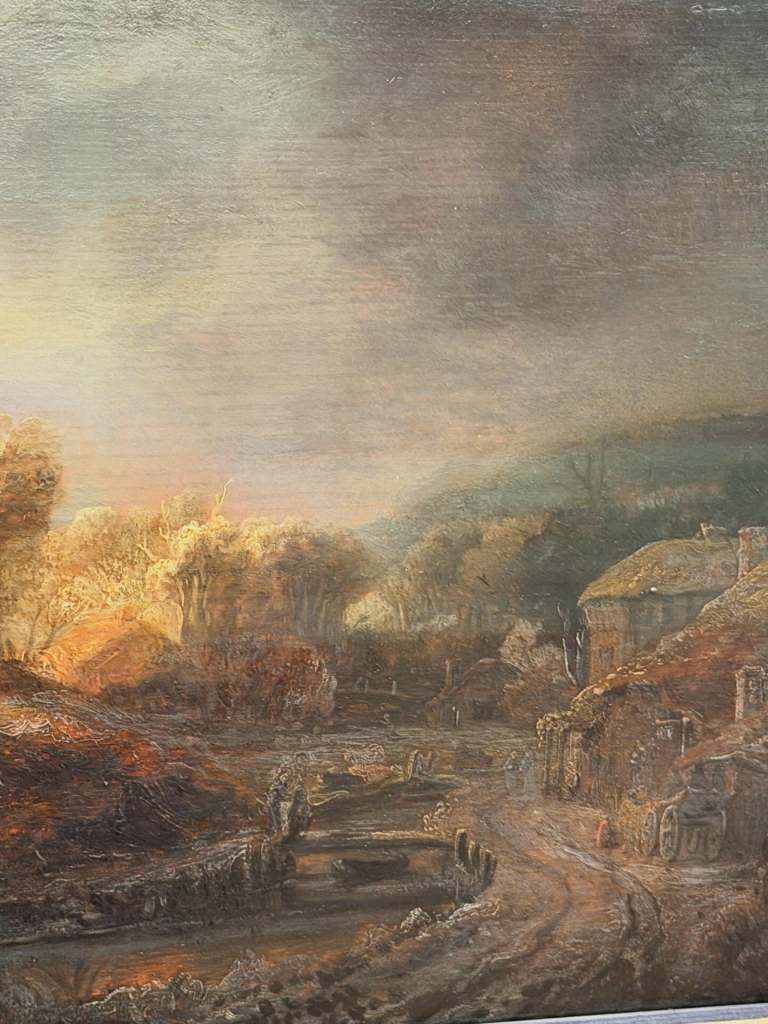
Rembrandt van Rijn (1606–1669), Landscape with an Arch Bridge, c. 1638, Oil on panel, 29.5 × 42.5 cm, Gemäldegalerie, BerlinRembrandt van Rijn (1606–1669), Landscape with an Arch Bridge, c. 1638, Oil on panel, 29.5 × 42.5 cm, Gemäldegalerie, BerlinRembrandt van Rijn (1606–1669), Landscape with an Arch Bridge, c. 1638, Oil on panel, 29.5 × 42.5 cm, Gemäldegalerie, BerlinRembrandt van Rijn (1606–1669), Landscape with an Arch Bridge, c. 1638, Oil on panel, 29.5 × 42.5 cm, Gemäldegalerie, BerlinRembrandt van Rijn (1606–1669), Landscape with an Arch Bridge, c. 1638, Oil on panel, 29.5 × 42.5 cm, Gemäldegalerie, Berlin
More than 350 years have passed since the death of Rembrandt, yet few artists remain so vividly present in scholarly debate, in the quiet obsessions of connoisseurs, and in the private reveries of those who stand before his paintings and feel that strange, inward tremor. His legacy is not a fixed monument but a restless field of questions.
His career was a lifelong inquiry. He tested formulas, revised compositions, returned to motifs, corrected himself, contradicted himself. Each artwork feels like an argument conducted in paint. Each carries the trace of preparation and doubt, of experiment and self-evaluation. Only a handful of landscape paintings survive from his hand: with the reattribution of this panel in 2022, the accepted number rose to eight, a figure that conveys how rarely he turned to the genre and how deliberate each attempt must have been.
This small, melancholic landscape with a bridge was for more than thirty years thought to derive from the Rijksmuseum’s closely related Landscape with a Stone Bridge (c. 1638, oil on panel, 29.5 × 42.5 cm) and was accordingly attributed to his gifted pupil Govert Flinck (1615–1660). The painting had entered the Berlin collections in 1924 from the dispersed holdings of Grand Duke Friedrich August von Oldenburg (1852–1931), acquired through the dealers Paul Cassirer and Julius Böhler in exchange for three works from the museum’s own collection, since the Gemäldegalerie no longer had funds for outright purchase. For Wilhelm von Bode (1845–1929), then Director-General of the Royal Museums and one of the foremost Rembrandt scholars of his generation, the acquisition fulfilled a long-standing ambition: it closed a gap in Berlin’s landscape holdings and rounded out what was already one of the most important Rembrandt collections in the world.
The panel was accepted as autograph until 1989, when the Rembrandt Research Project, in the course of preparing the third volume of A Corpus of Rembrandt Paintings (published 1989), reassigned it to Flinck. The grounds were stylistic and thematic: the RRP pointed to what it called the ‘astonishingly far-reaching’ similarities between the Berlin picture and the Amsterdam Stone Bridge, and concluded that the former was a derivative work by a pupil.
Yet Rembrandt resists such tidy narratives. Recent research by the Gemäldegalerie’s scholars, drawing on neutron autoradiographic images made at the Helmholtz-Zentrum Berlin in 1995 and evaluated systematically for the first time, has established that the Berlin panel predates the Rijksmuseum painting long regarded as the prototype. Dendrochronological analysis of the oak support confirmed a later date of origin for the Amsterdam panel, and therefore the Berlin picture cannot be a later interpretation by Flinck. It is most likely the earliest treatment of this rare motif within Rembrandt’s oeuvre. The autoradiographs revealed extensive pentimenti: Rembrandt shifted the storm clouds from left to right, flattened the hill at the right edge, reduced the scale of the trees, and repainted passages thickly, working the composition into its final state through a process of sustained revision. The Amsterdam version, by contrast, shows far fewer alterations, its surface more resolved, its handling more translucent and precise. The chronology turns quietly, and what once seemed obvious dissolves.
Such reversals are not exceptions in the case of Rembrandt; they are almost the rule. Paintings once doubted return to him. Others once embraced drift away. Dates shift by decades. Surfaces reveal earlier intentions beneath later interventions. The scholar who approaches him with certainty often leaves with questions. In Rembrandt’s world, clarity and contradiction pretty much coexist.
Bruyn, J., Haak, B., Levie, S.H., van Thiel, P.J.J. and van de Wetering, E. (1989) A Corpus of Rembrandt Paintings, vol. III: 1635–1642. Dordrecht, Boston and London: Martinus Nijhoff
Scallen, C.B. (2004) Rembrandt, Reputation, and the Practice of Connoisseurship. Amsterdam: Amsterdam University Press
Van de Wetering, E. (2014) A Corpus of Rembrandt Paintings, vol. VI: Rembrandt’s Paintings Revisited – A Complete Survey. Dordrecht: Springer
RKD – Netherlands Institute for Art History (n.d.), Landscape with a seven arched bridge, c. 1638 RKDimages database entry no. 203522 (not updated) . Available at: https://rkd.nl/images/203522 (11 Febrauary 2026)
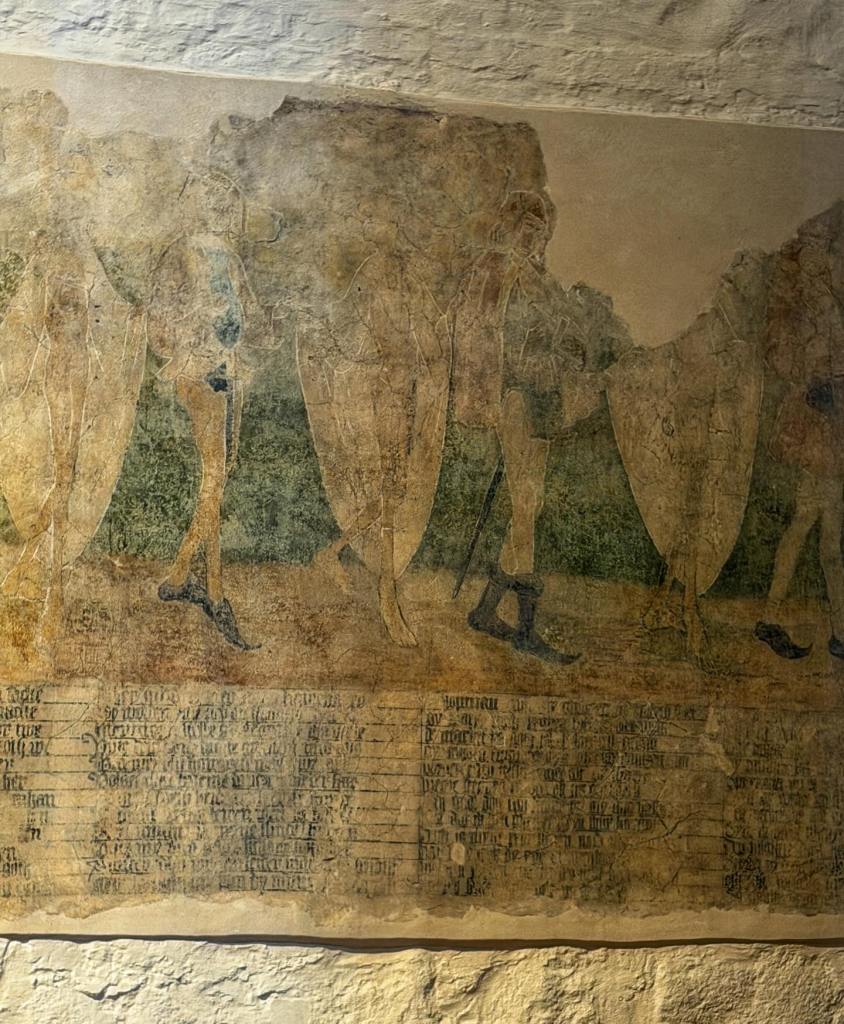
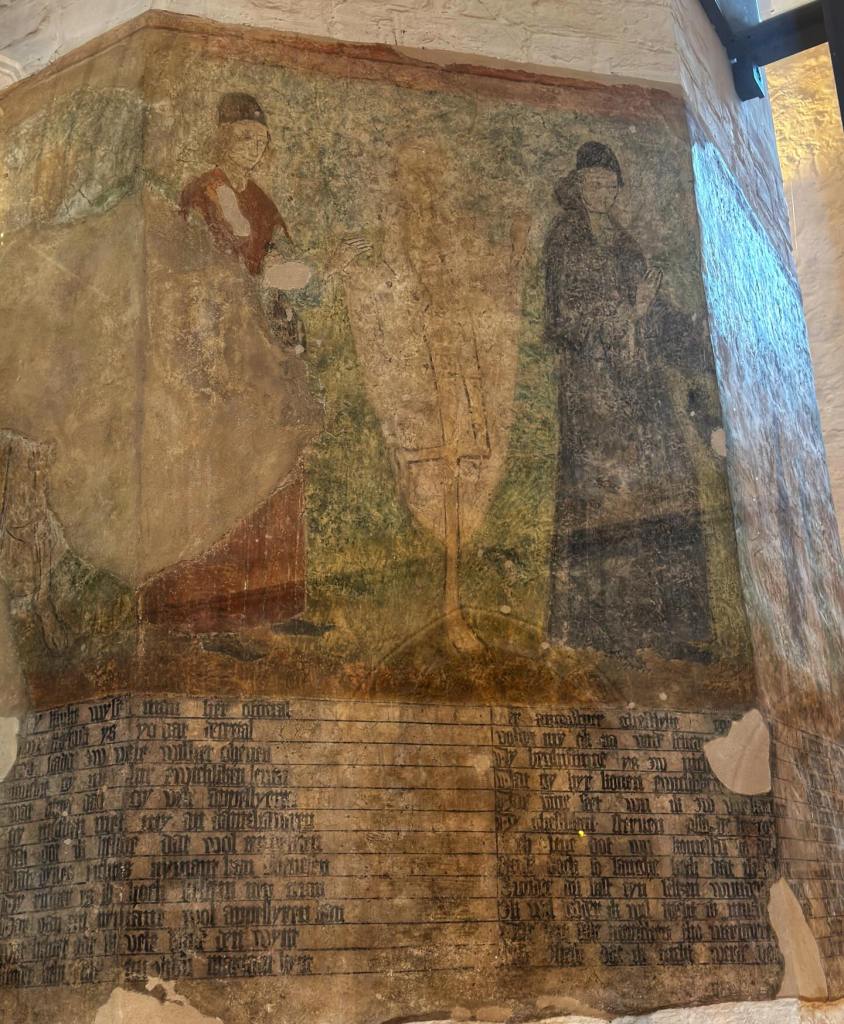
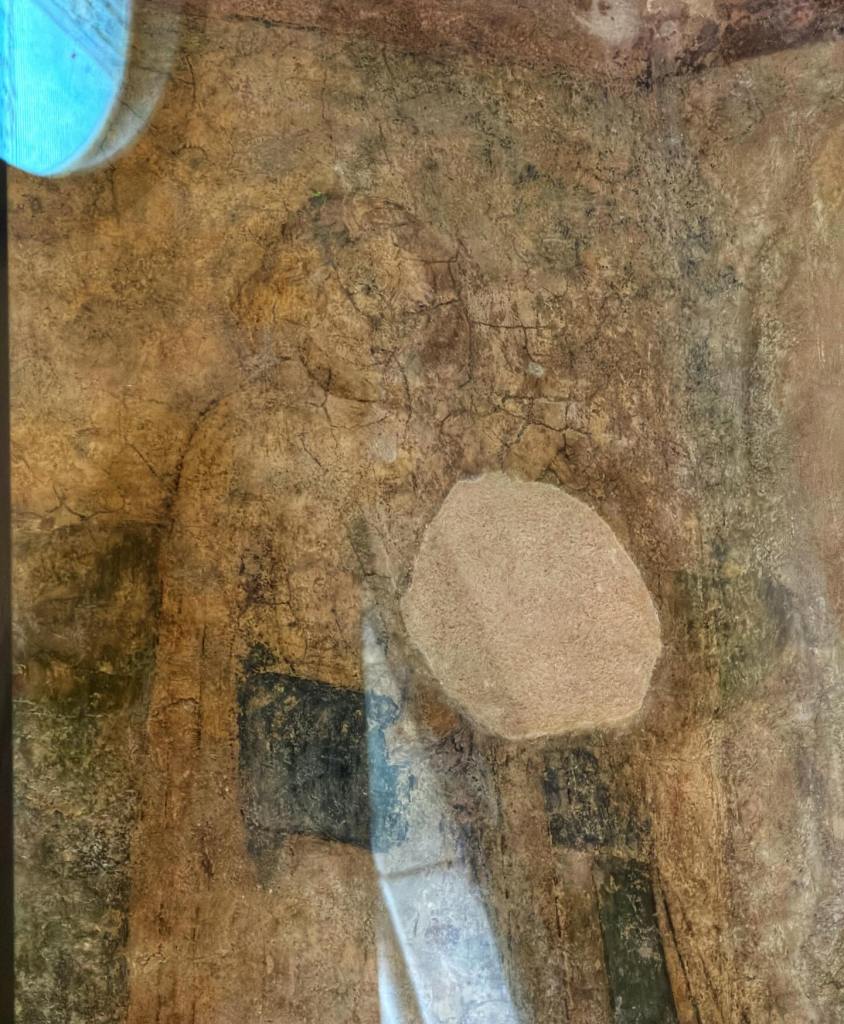
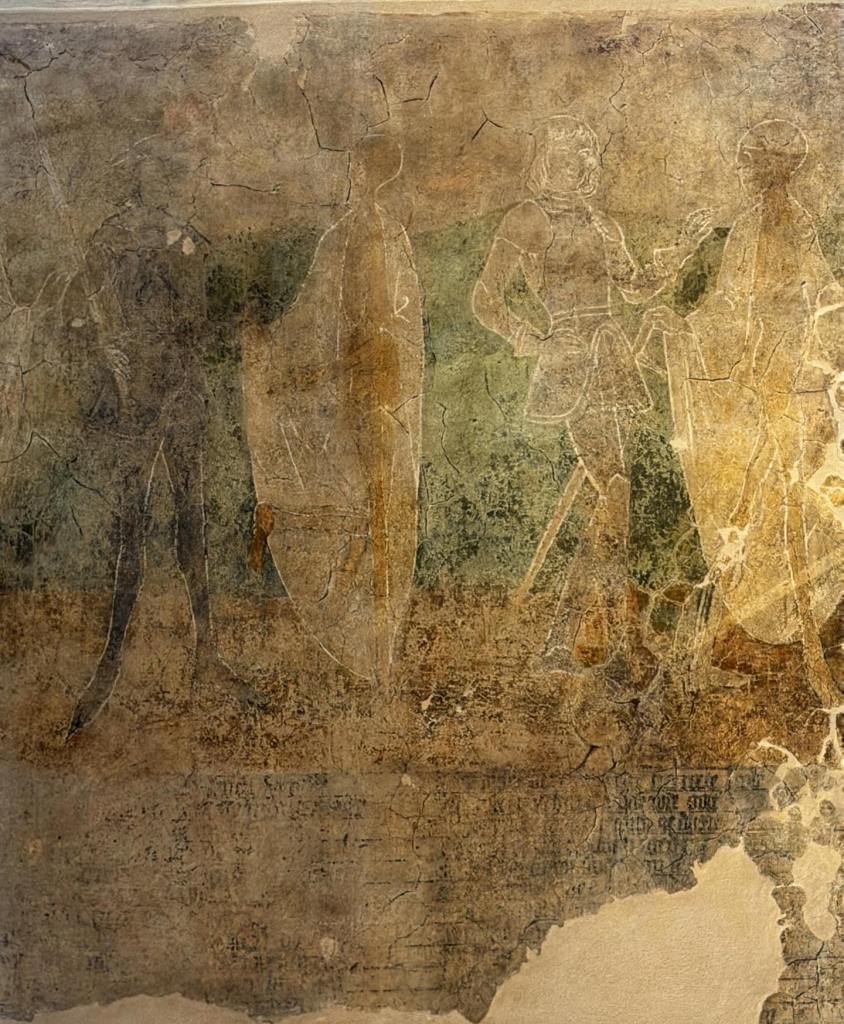
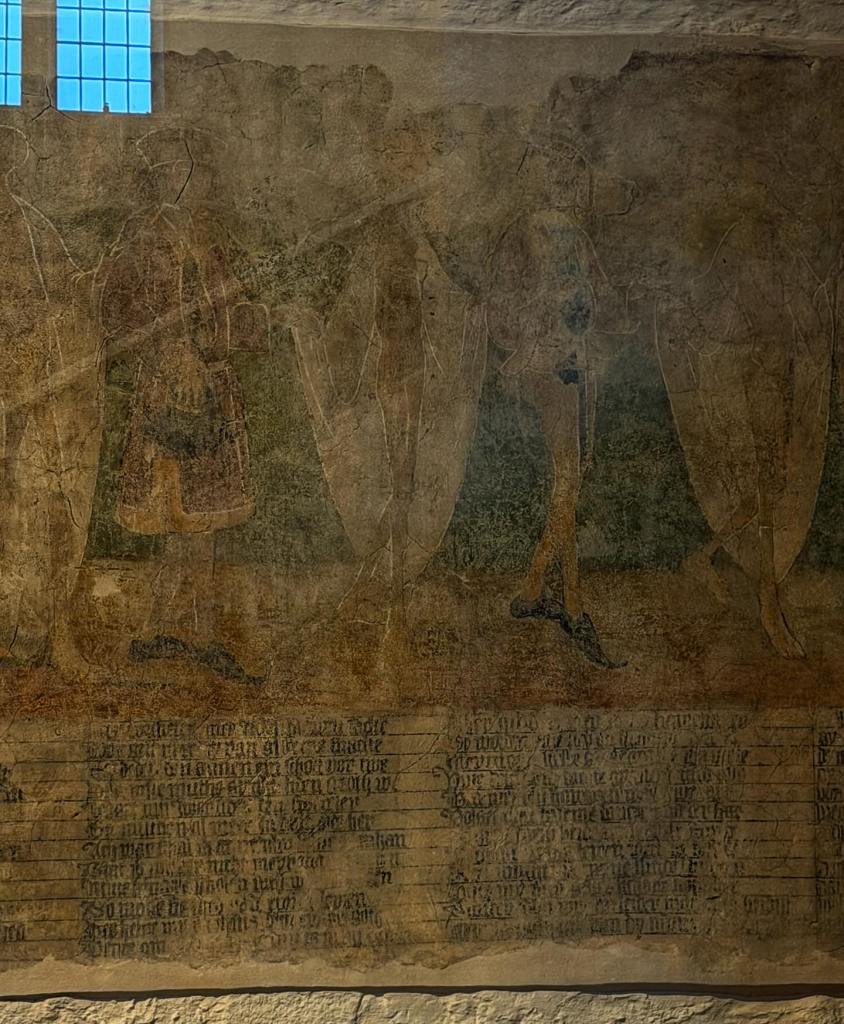
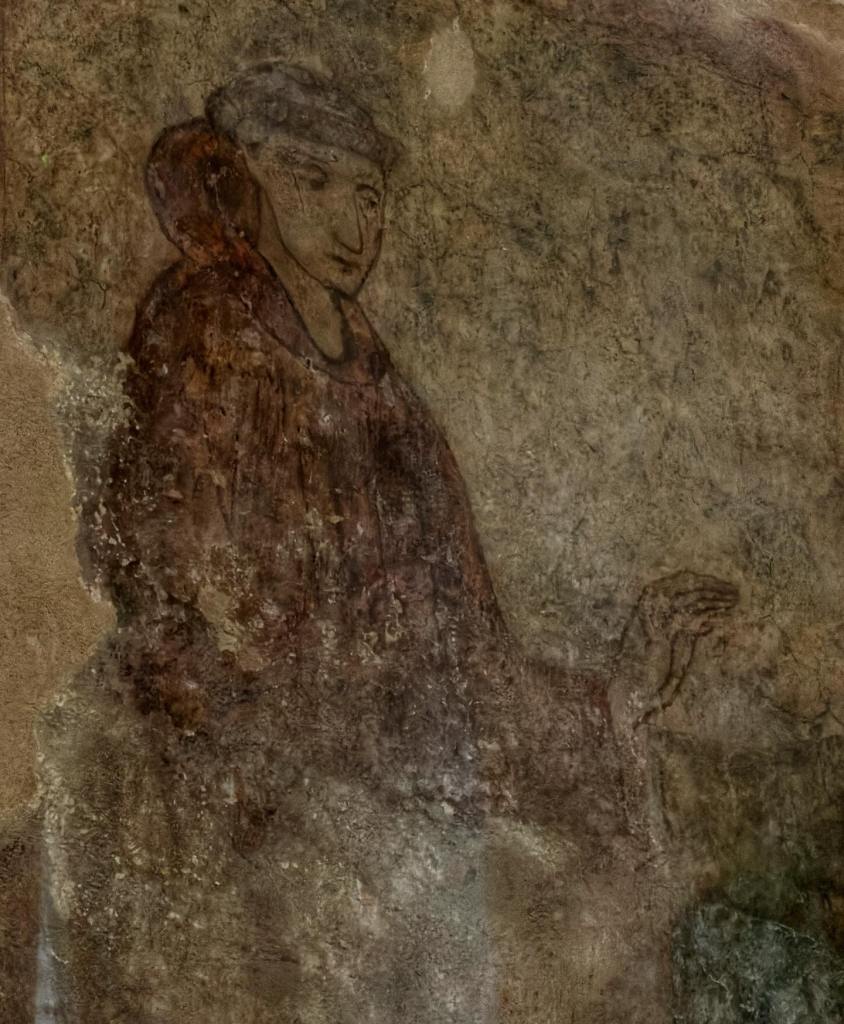
Marienkirche, Alexanderplatz, BerlinMarienkirche, Alexanderplatz, Berlin The Dance of Death Fresco in the Marienkirche, BerlinThe Dance of Death Fresco in the Marienkirche, BerlinThe Dance of Death Fresco in the Marienkirche, BerlinThe Dance of Death Fresco in the Marienkirche, BerlinThe Dance of Death Fresco in the Marienkirche, BerlinThe Dance of Death Fresco in the Marienkirche, BerlinThe Dance of Death Fresco in the Marienkirche, Berlin
The Marienkirche stands slightly apart from the cleared openness of Alexanderplatz. The fragments of the medieval city remain embedded within a former socialist utopia, where ideology once sought to redefine the past, belief, and even the future itself. The church emerged in the mid thirteenth century, shortly after Berlin received its town privileges, and its Gothic hall church reflects the sober pragmatism of an urban parish rather than the symbolic ambition of a cathedral.
Its famous Dance of Death fresco, painted around 1484, consists of a long painted frieze on the tower wall showing skeletal Death figures paired sequentially with clerical and lay figures of different social standing, identified through conventional dress and arranged at broadly equal scale. Sequence takes precedence over individuality. Pope, merchant, noble, cleric, child: none are granted visual privilege, none are spared interruption. What collapses here is not simply life, but hierarchy.
The Reformation did not erupt suddenly in 1517; it emerged from a long period of searching already inscribed on church walls. The Dance of Death belongs to that threshold moment, when belief becomes something lived under pressure rather than dogma. Seen from the centre of Berlin, a city repeatedly rebuilt on ideological promises, the fresco feels less like a reminder: systems that claim permanence are always more fragile than they admit.
References
Gertsman, E. (2010) The Dance of Death in the Middle Ages: Image, Text, Performance. Turnhout: Brepols
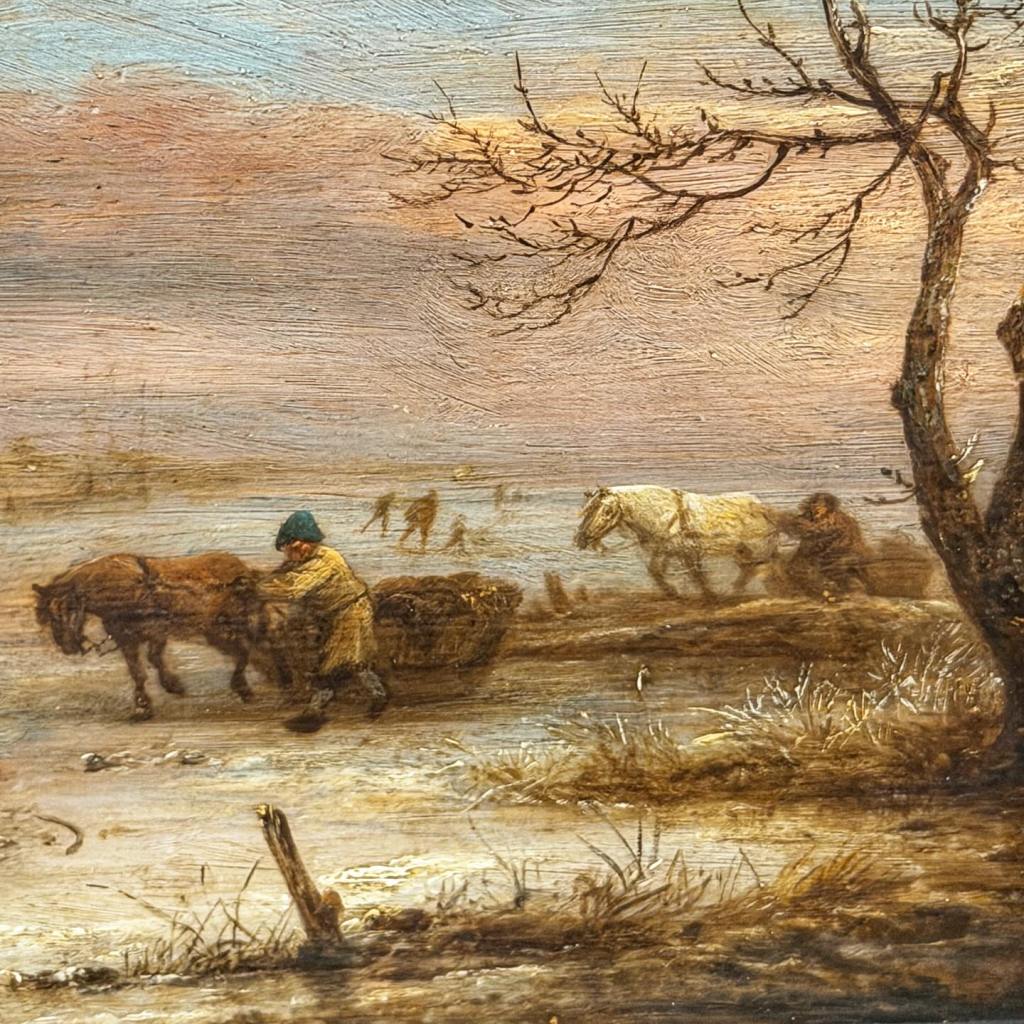
Isaac van Ostade (1621–1649), Winter Landscape with Sleigh and Frozen Boats, c. 1645, Oil on panel, 21.4 × 25.7 cm, Gemäldegalerie, BerlinIsaac van Ostade (1621–1649), Winter Landscape with Sleigh and Frozen Boats, c. 1645, Oil on panel, 21.4 × 25.7 cm, Gemäldegalerie, BerlinIsaac van Ostade (1621–1649), Winter Landscape with Sleigh and Frozen Boats, c. 1645, Oil on panel, 21.4 × 25.7 cm, Gemäldegalerie, Berlin
Isaac van Ostade belongs to the generation of painters active in Haarlem during the 1640s. Later historians have often remarked that, had he not died at the age of only twenty-eight, he might well have rivalled or even surpassed his famous elder brother Adriaen van Ostade (1610- 1685) in productivity and range. His surviving paintings, produced within a remarkably short span, do not suggest imitation or dependence but a sustained effort to rethink established models. Rather than repeating familiar compositional formulas, he experimented with new spatial arrangements, reduced figure hierarchies, and alternative balances between genre and landscape, indicating an artist intent on extending the possibilities of the medium.
Winter scenes offered a particularly fertile ground for these explorations. By the 1640s winter genre was well known to Dutch audiences, yet Isaac van Ostade approached it without reliance on stock compositions or anecdotal crowding. In this small painting, movement is present—peasants, horses, dog, and sledges cross the ice—but it is absorbed into the broader spatial scheme rather than staged as narrative incident. Attention shifts toward the organisation of the surface, the articulation of snow, ice, and vegetation, and the measured distribution of light across the scene. Human activity is neither suppressed nor celebrated; it is integrated into a landscape governed by seasonal condition.
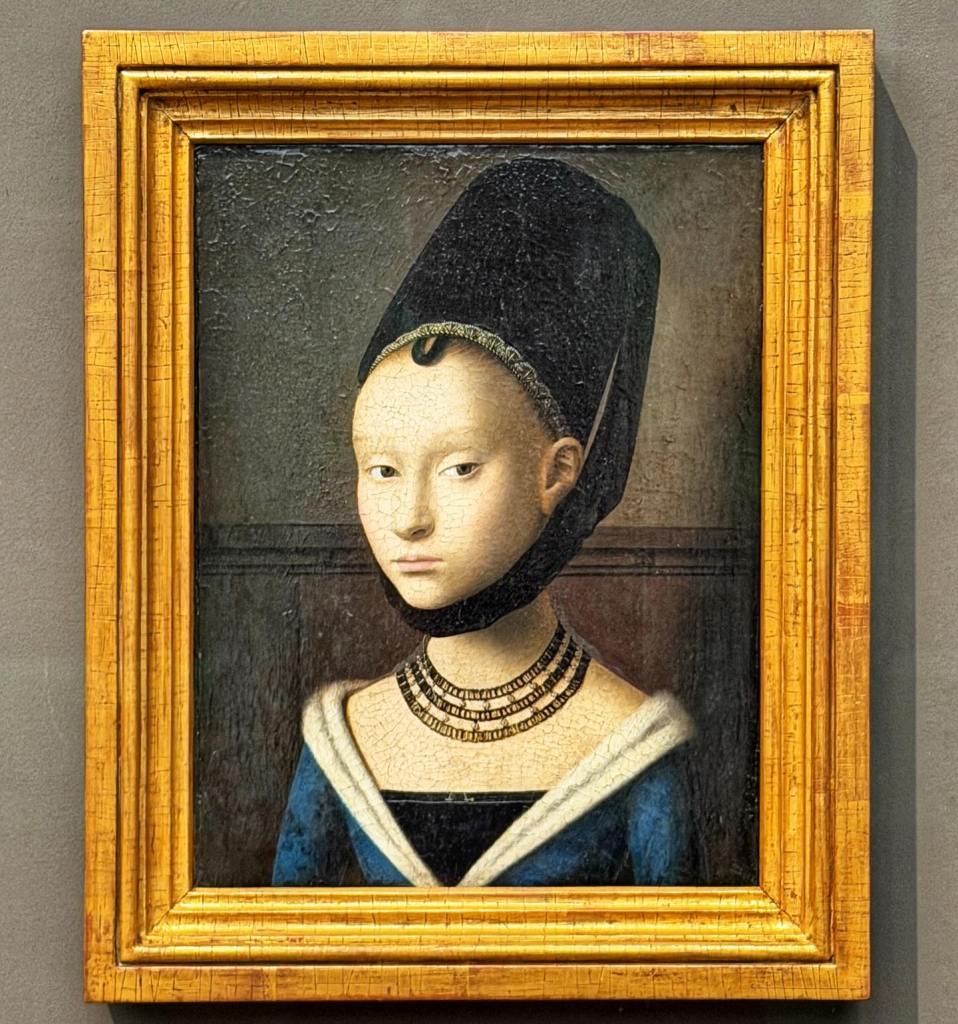
Petrus Christus (active c. 1444–1476), Portrait of a Young Woman, c.1470, Oil on oak panel, 29 x 22.5 cm, Gemäldegalerie, Berlin
The sitter appears composed within the frame, her presence stabilised through dress, posture, and the tight limits of the composition. Everything required for recognition is present — and yet we know neither who she is nor why the portrait was made.
That sense of completion sits oddly beside a long history of misattribution. For centuries the portrait was attributed to Jan van Eyck(1390-1441). Petrus Christus was recovered as an independent Bruges master only in the nineteenth century through the work of Gustav Friedrich Waagen (1794-1868) and later Max J. Friedländer (1867-1958), who reconstructed a small, unusually coherent oeuvre. That the painting sat so long under Van Eyck’s name is itself a measure of its quality: precise and authoritative enough to bear the greater reputation.
The sitter’s appearance conforms to the most exacting Burgundian ideals of beauty in the later fifteenth century, particularly the preference for a conspicuously high forehead. This effect was carefully produced. Hair is tightly bound and drawn back to heighten the forehead; the neck is lengthened through posture and dress; the body is compressed into a narrow vertical silhouette. The tall black headdress is a variant of the truncated, or bee-hive, hennin fashionable at the Burgundian court, reinforcing height and linearity.
Johan Huizinga (1872–1945), in The Autumn of the Middle Ages, described a Burgundian court culture in which ceremony had become increasingly rigid and elaborate — a response, he argued, to the violence and instability of the wider world. The fixed forms of dress, precedence, and display that governed courtly life were, in his account, compensatory rather than confident: the more brittle the social order, the more exacting the performance required to sustain it. Christus’ portrait belongs to that moment. The high forehead, the stiff verticality of the hennin, the compression of the body into a narrow silhouette — all conform to a code of appearance that left little room for accident or individuality. And yet the sitter’s gaze complicates the reading. She looks out at the viewer directly, with an alertness that many art historians have found unsettling. Something personal — watchful, self-possessed, faintly resistant — survives within the form.
References
Dyballa, K. and Kemperdick, S. (eds.) (2024) Netherlandish and French Paintings 1400–1480: Critical Catalogue for the Gemäldegalerie – Petersberg: Michael Imhof Verlag
Huizinga, J. (1996) The Autumn of the Middle Ages. Chicago: University of Chicago Press