
Sebastiano del Piombo (1485-1547), Judith (or Salome?), 1510, Oil on poplar, 54.9 × 44.5 cm, The National Gallery, London
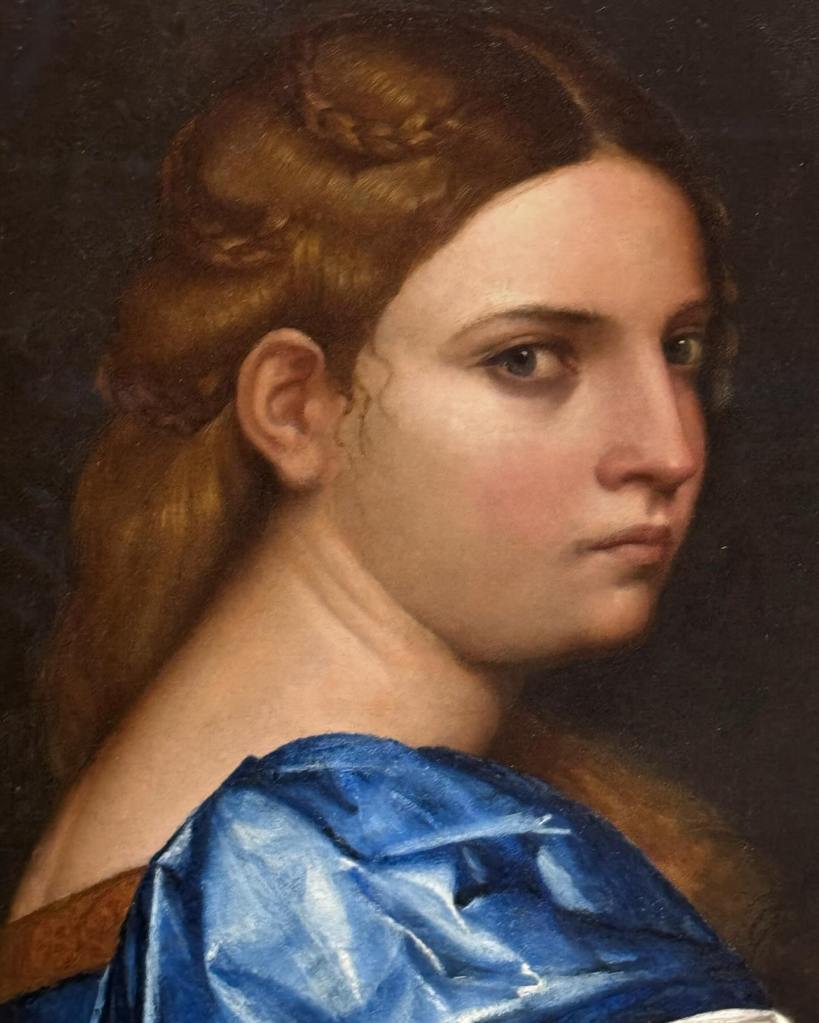
This artwork from 1510, from the artist’s early Venetian period, underscores his interest in the psychological drama of historical and biblical figures. The identity of the subject is ambiguous, potentially depicting either Salome with John the Baptist’s head or Judith with Holofernes’ head. This reflects the Venetian elite’s interest in exploring complex biblical and ancient themes in a vivid and explicit manner. According to art historians, the latter subject was a more popular choice at that time.
Such dramatic paintings of powerful women were particularly popular in Venice due to the city’s intricate political landscape and the societal fascination with strong, influential female figures who could symbolise the city’s resilience and its complex engagement with themes of power and morality.
Sebastiano’s artistic journey began in an unexpected realm: music. According to Vasari, who is not always reliable, Sebastiano, originally named Sebastiano Luciani, initially pursued a music career as a lute player and singer. His transition to the visual arts led him to study first under Giovanni Bellini and later possibly under Giorgione. In 1511, Sebastiano moved to Rome, where he collaborated with Raphael and developed a close relationship with Michelangelo. His friendship with Michelangelo, who was the godfather of his child and provided preparatory drawings for his various artworks, was an essential aspect of his career until their friendship ended in 1534.
After the Sack of Rome in 1527, Sebastiano moved back to Venice before returning to Rome in 1529. In 1531, he became the papal ‘plombatore,’ or Keeper of the Seal, acquiring his nickname “del Piombo” (“of the Lead”) from this role, which involved using a lead seal to stamp official documents for the Pope. This prestigious appointment led to a decline in his artistic output. However, he remained respected in artistic circles, even though great masters of his era, including Michelangelo, considered his artistic abilities somewhat inferior.

