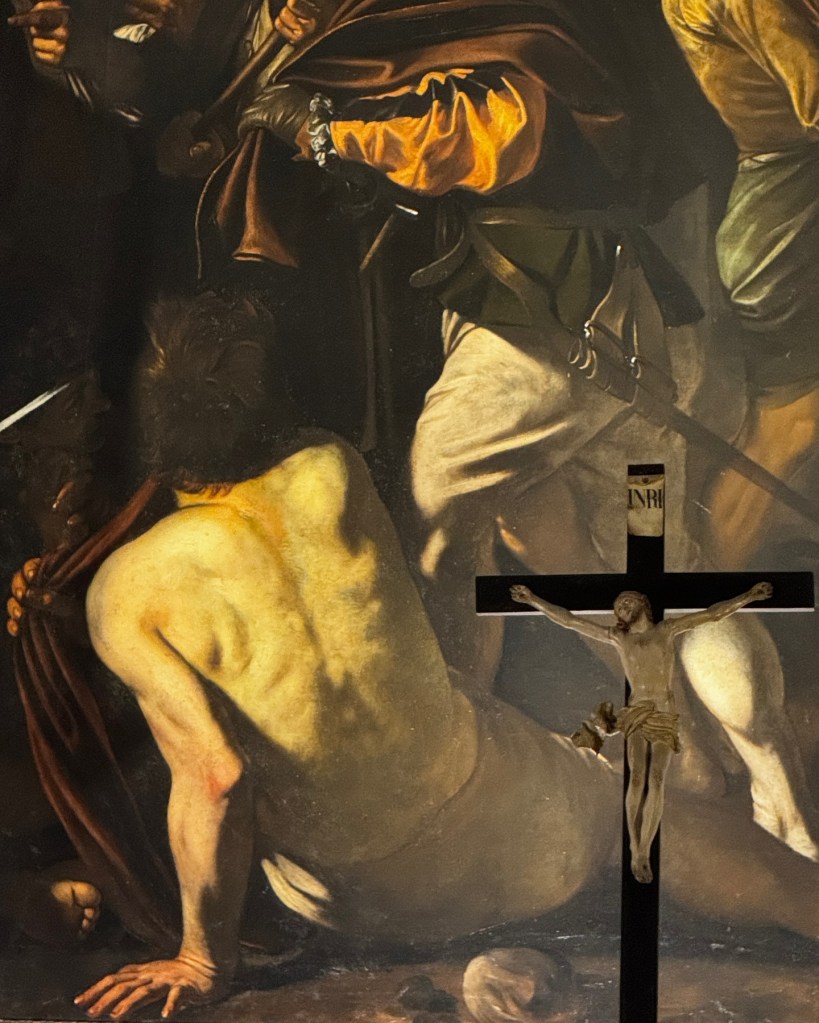
Caravaggio (1571-1610), The Seven Works of Mercy, 1607, Oil on canvas, 390 cm × 260 cm, Pio Monte della Misericordia, Naples

Caravaggio (1571–1610) transformed European painting at the turn of the seventeenth century with his uncompromising naturalism, psychological intensity, and radical use of chiaroscuro. His works broke decisively with the idealised norms of late Mannerism and gave visual form to the urgent spiritual and doctrinal aims of the Counter-Reformation. In Rome and in the cities where he later worked, his paintings reshaped religious imagery by fusing direct observation of life with a theatrical immediacy that compelled viewers to confront sacred history as lived reality. His legacy was immediate and enduring, influencing artists across Europe, where his dramatic realism and moral gravity became defining features of emerging Baroque art.
Among his most ambitious works is The Seven Works of Mercy, painted in Naples in 1607 for the Pio Monte della Misericordia, a lay confraternity devoted to charitable works. Conceived for their chapel, the painting provided a monumental visual programme of the corporal acts of mercy and gave these Christian duties a new force within the civic and devotional life of Naples. The city, marked by overpopulation and poverty, disease, and social disparity, is transfigured in Caravaggio’s canvas into a stage where biblical narrative, hagiographic tradition, and contemporary reality merge. The work stands as both a theological statement and a profound response to the Neapolitan context, leaving a decisive mark on local art that endured for decades after his death and shaping the emergence of the city’s flourishing Caravaggesque school.
The painting’s iconography is a sophisticated fusion of biblical text, theology, medieval legends, and Catholic hagiography. Caravaggio assigns each act a distinct visual representation.
‘Feed the hungry’ and ‘visit the imprisoned’ are depicted through the Roman legend of Caritas Romana. The woman breastfeeding an elderly prisoner recalls the story of Pero and her father, Cimon. This act of sacrifice and compassion is transformed in Caravaggio’s composition to reflect individual charity and the nurturing care of the Catholic Church. The Church, like Pero, sustains its flock—those imprisoned by sin or suffering—through its spiritual and material acts of mercy. This reinterpretation aligns with the Counter-Reformation’s emphasis on the Church’s role as a motherly and salvific institution.
‘Refresh the thirsty’ is represented by Samson drinking water provided by God from the jawbone of an ass (Judges 15:18–19). This biblical story underscores the idea of divine providence and miraculous intervention in times of need. ‘Clothe the naked’ is portrayed through St. Martin of Tours, who is shown cutting his cloak to share it with a beggar. This iconic act of charity, drawn from hagiographic tradition, symbolises the Christian imperative to provide for the less fortunate. ‘Shelter the homeless’ is illustrated by a pilgrim with a shell on his hat, referencing the Camino de Santiago, which aligns with the Church’s role as a refuge for travellers and the vulnerable. ‘Visit the sick’ is intertwined with the figure of the beggar aided by St. Martin, emphasising compassion for the infirm. ‘Bury the dead’ appears in the background, where two men carry the feet of a deceased person, evoking the ancient Christian duty of ensuring dignity in death.
This complex intellectual work powerfully expresses the Counter-Reformation agenda of the first decades of the 17th century. The composition is unified by the figure of an angel above, who gestures heavenward, symbolising divine grace and the ultimate purpose of these acts: the salvation of souls.