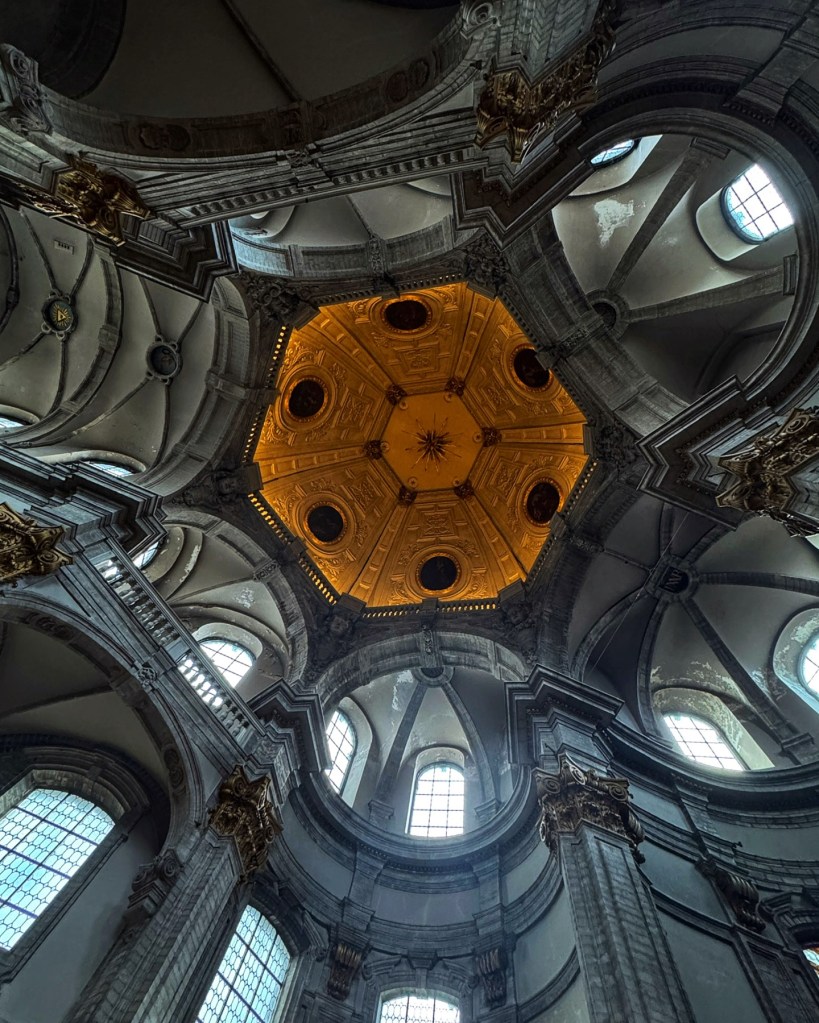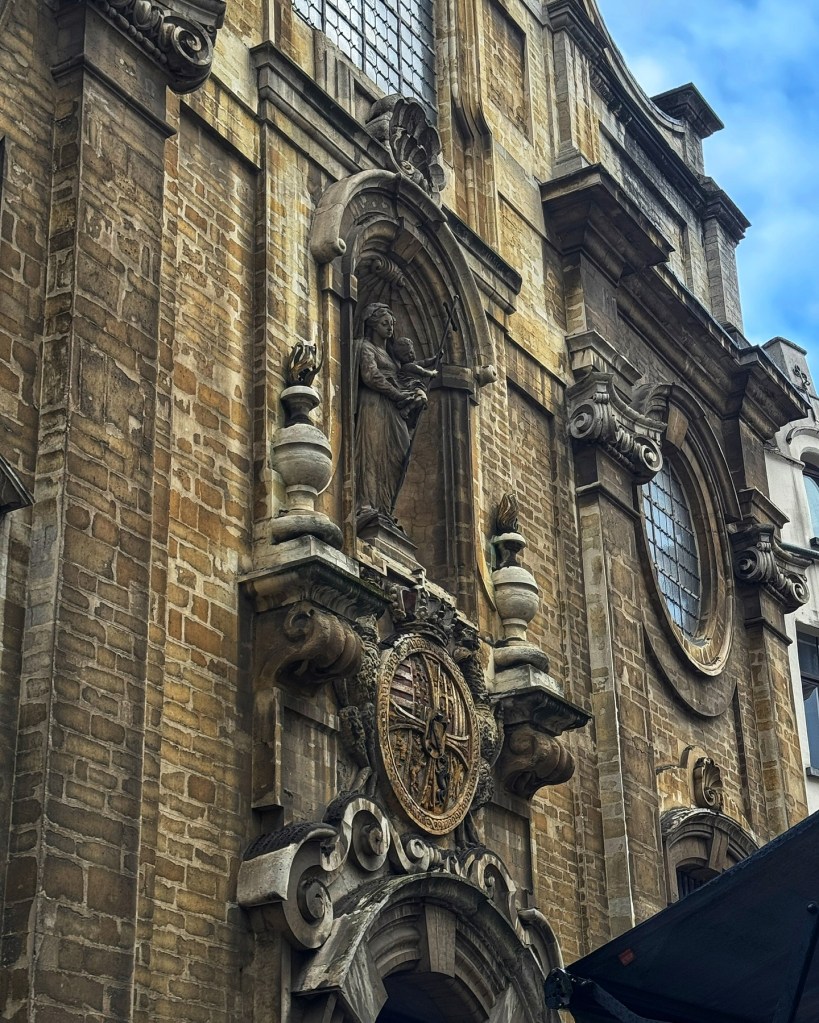
Église Notre-Dame de Bon Secours in Brussels is a remarkable example of Flemish-Italian Baroque, blending Italian architecture’s grandeur and dynamism with the Southern Netherlands’ refined elegance. Constructed between 1664 and 1694, the church replaced an earlier chapel that had become an important pilgrimage site after 1625. This new structure embodied the artistic and spiritual ideals of the Counter-Reformation, emphasising more immersive experience.

The church was designed by Jean Cortvriendt (1630–1700), a Flemish architect and sculptor who incorporated elements of Italian Baroque, drawing inspiration from the work of Gian Lorenzo Bernini (1598–1680) and Francesco Borromini (1599–1667). The influence of Roman churches such as Il Gesù (1568–1584), designed by Giacomo Barozzi da Vignola (1507–1573), and Santa Susanna (1597–1603), by Carlo Maderno (1556–1629), is evident in the church’s dynamic façade and centralised spatial arrangement. Instead of following the typical Latin cross plan seen in earlier Flemish churches, Cortvriendt opted for a centralised layout, which enhances the sense of unity and movement within the space. His solution was the creation of a hexagonal choir, a rare and innovative feature in Flemish ecclesiastical architecture, allowing for a more expansive and visually immersive interior. This structural choice also directs the viewer’s gaze upwards toward the domed ceiling, which was designed to amplify the effect of natural light, reinforcing the spiritual and theatrical qualities of the space.
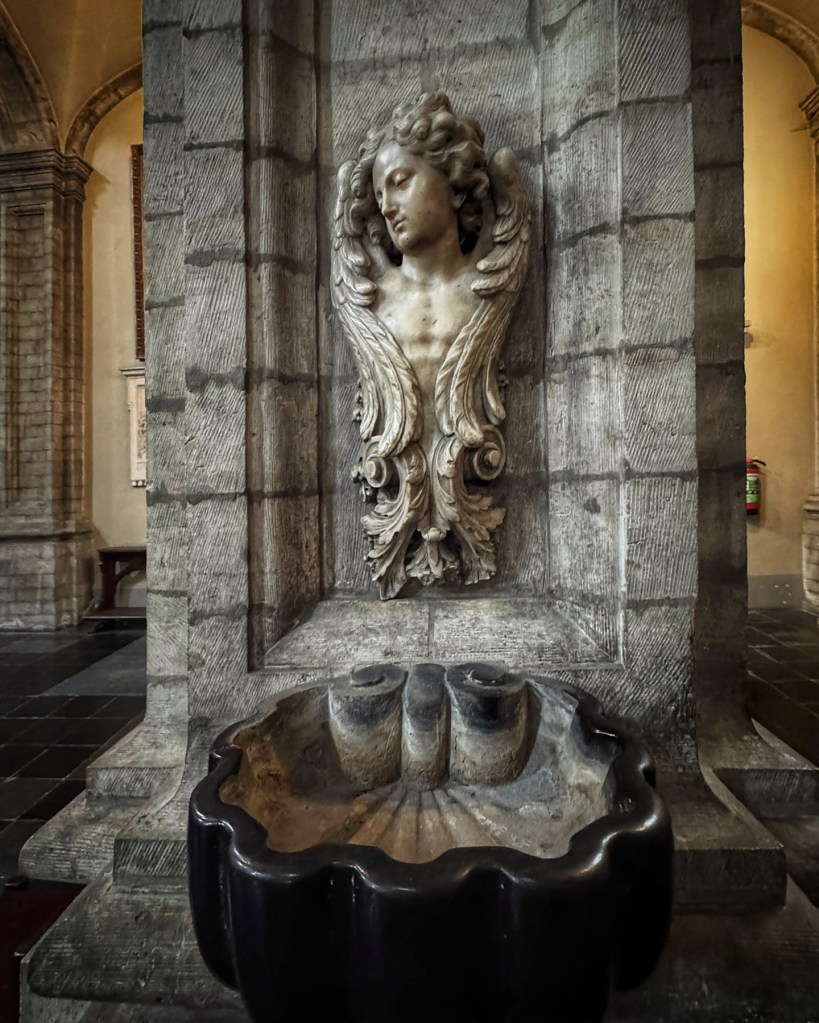
The bénitiers (holy water fonts), decorated with sculpted angelic heads, were created by Gabriel Grupello (1644–1730), one of the leading sculptors of the late Baroque period in the Southern Netherlands.