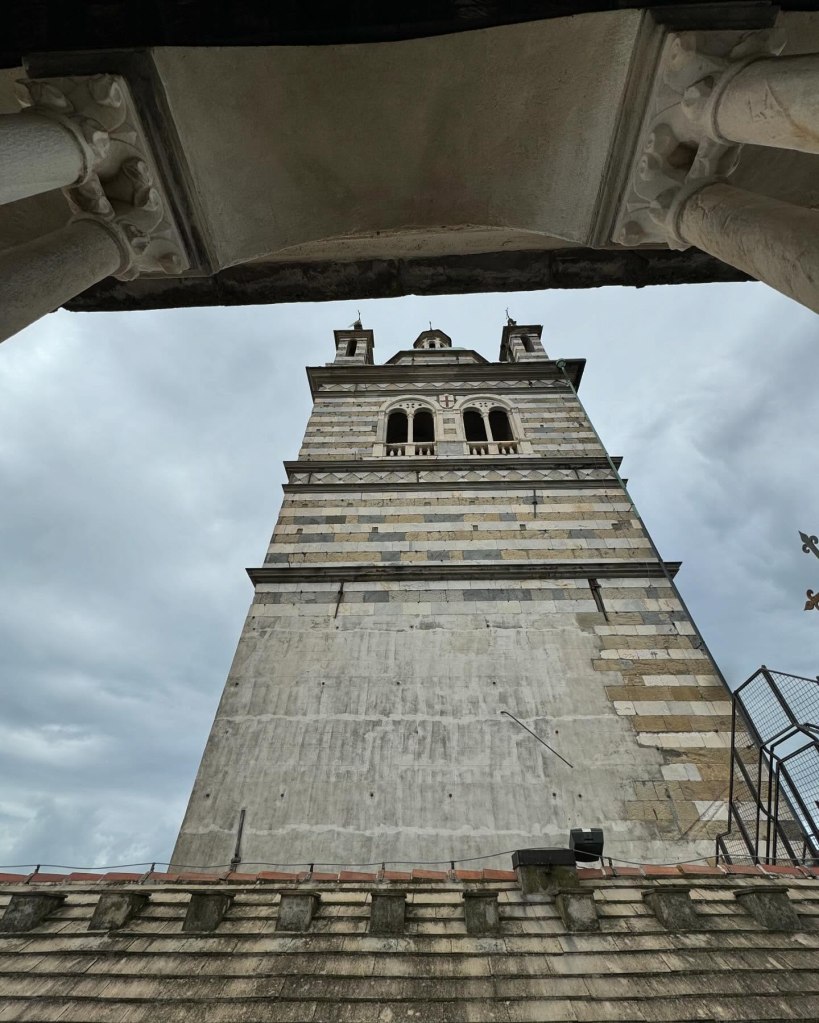
Cathedral of San Lorenzo in Genoa embodies more than nine centuries of architectural change, each phase bearing the imprint of shifting artistic traditions and the city’s own fortunes. Construction began in the early twelfth century under the direction of the Magistri Antelami, master builders, sculptors, and stonemasons from the Valle d’Intelvi near Como, who endowed the original Romanesque structure with robust masonry, rounded arches, and sculpted portals characteristic of Lombard craftsmanship.
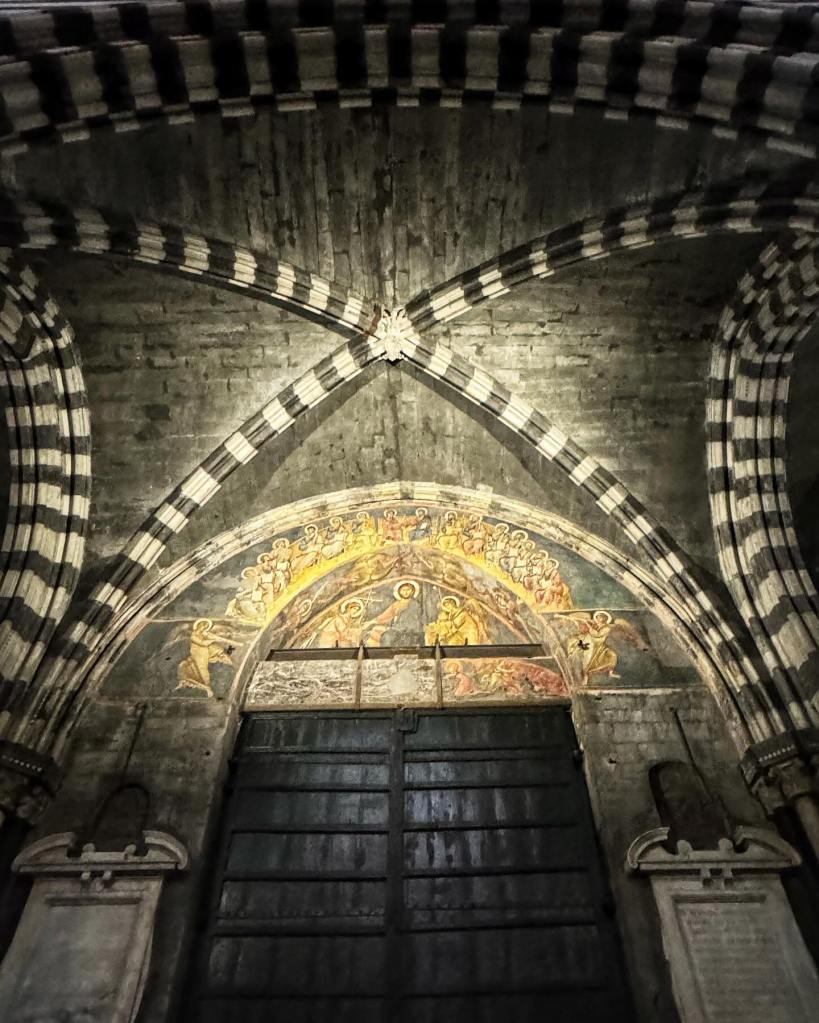
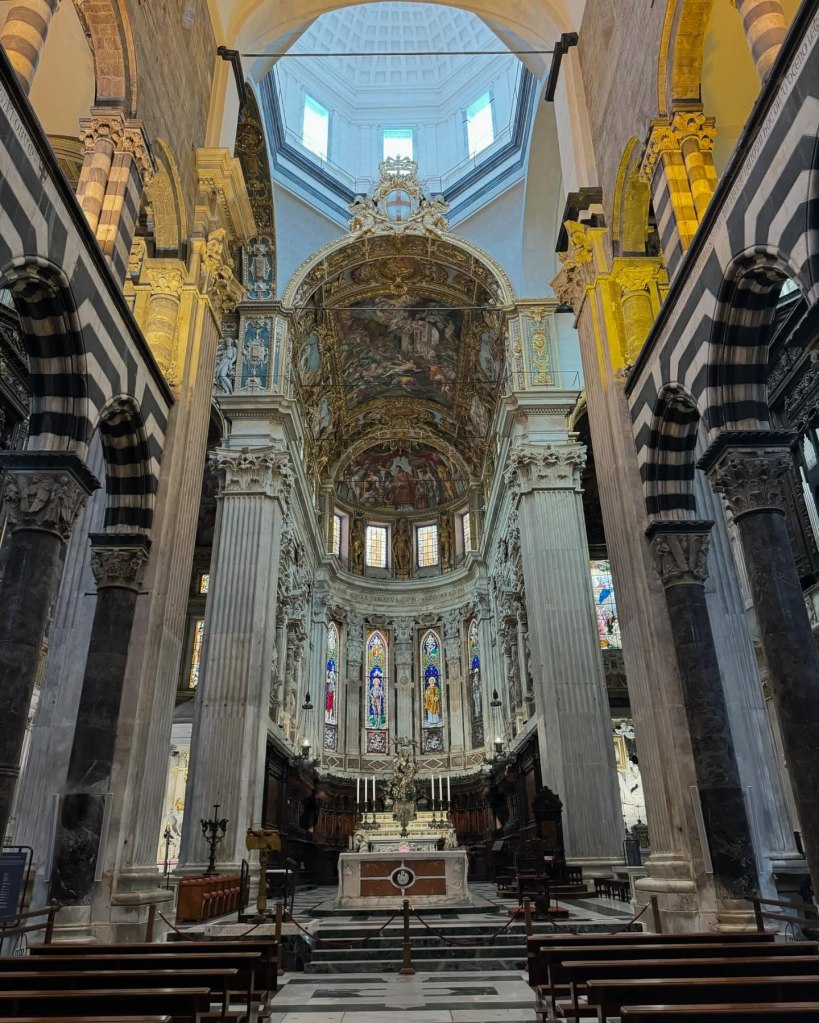
The earthquake of 1222 brought both damage and opportunity. In its aftermath, French-Norman craftsmen oversaw a comprehensive Gothic remodelling, introducing ribbed vaulting, pointed arches, and the black-and-white marble striping that would become emblematic of Genoese Gothic. Between 1307 and 1312 the façade reached completion, its alternating bands of marble creating a rhythm of light and shadow, while the interior saw the frescoing of the counter-façade, the reworking of the colonnades with new capitals, and the construction of false matronea—galleries built for structural reinforcement but also to heighten the visual complexity of the nave.
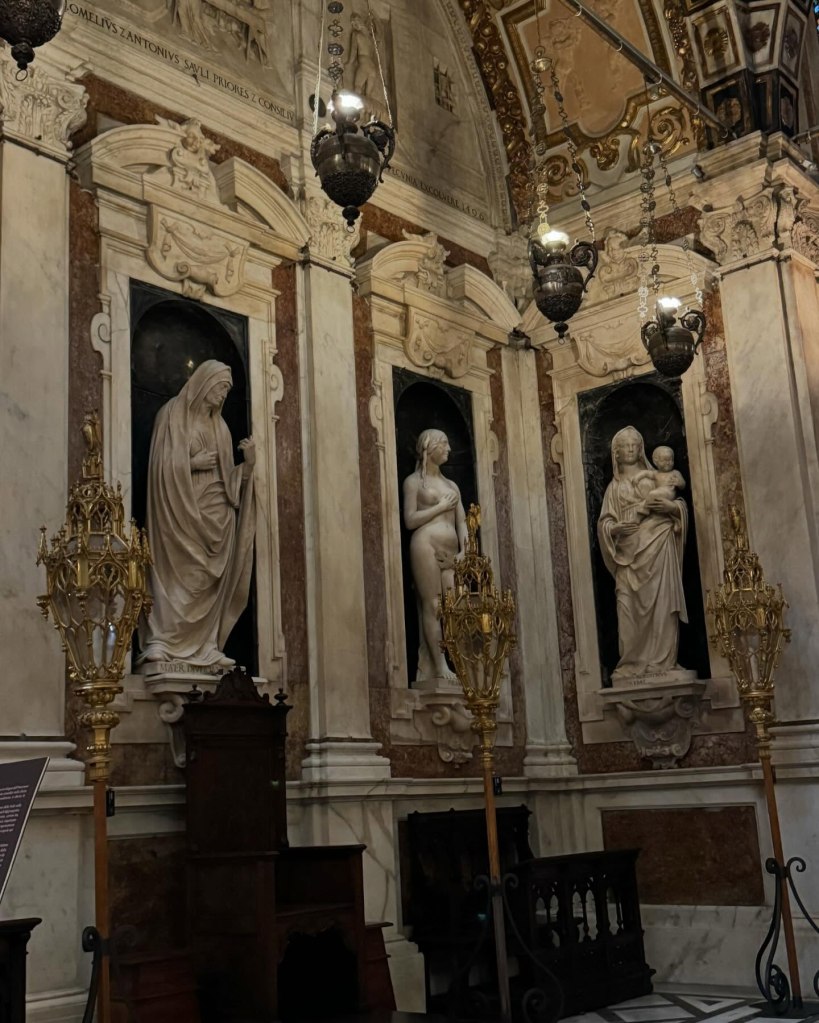
In 1448 the Cappella di San Giovanni Battista was added to enshrine the relics of St John the Baptist, brought to Genoa from the Holy Land after the First Crusade. The cathedral’s treasury grew to include other celebrated relics: the Sacro Catino, long venerated as the vessel of the Last Supper; the Piatto di San Giovanni, traditionally said to have held the head of the Baptist; and the Croce degli Zaccaria, a Byzantine reliquary containing a fragment of the True Cross.
The sixteenth century brought Renaissance order to parts of the building under the hand of Galeazzo Alessi (1512–1572), who reworked the nave, floor, and dome to reflect a measured symmetry. In the seventeenth century Lazzaro Tavarone (1556–1641) enriched the apse with the Stories of San Lorenzo, frescoes framed by gilded Baroque stuccoes that intensified both colour and narrative drama.
By 1840, Carlo Rubatto (1803–1875) had completed the pair of marble lions that flank the entrance steps, a neoclassical gesture that, while distinct from the medieval and Baroque fabric, concluded the major external works and fixed the façade’s present appearance.


Sacro Catino (Sacred Basin), 3rd–7th century CE, mould-blown green glass, diameter c. 40 cm, possibly produced in Mesopotamia or north-western Iran. Long believed to be made of emerald and identified in medieval tradition as the Holy Grail, either the dish of the Last Supper or the vessel in which Nicodemus collected the blood of Christ. According to tradition, it was brought to Genoa in 1101 by Guglielmo Embriaco after the conquest of Caesarea during the First Crusade, the Treasury of the Cathedral of San Lorenzo , Genoa.


Piatto di San Giovanni Battista (Plate of Saint John the Baptist, the so-called ‘white plate’), Roman workmanship, 1st century CE, with a later Parisian goldsmith’s mount, early 15th century; chalcedony with gold sheet, polychrome enamels and gems; diameter 38 cm; traditionally associated with Saint John the Baptist; Treasury of the Cathedral of San Lorenzo, Genoa.

References
Whitfield, P. (2020) Historic Churches of Genoa: A Brief Guide. Genoa: Peter Whitfield