Wandering the World of the Old Masters: Notes from a Private Journey
Travelling in the company of Old Masters in shifting roles as observer, listener or sometime companion, this page is kept as a quiet pastime. It is part notebook, part informal journal, a collection of phone images and reflections drawn from encounters with old artworks and places where the past still lingers. All pictures are taken by me, and all thoughts written during slow travels and unhurried visits, where time allows for second looks and quiet returns.The works and spaces gathered here were made in a world different from ours, yet they continue to ask things of us—not answers, but attention; not certainty, but time. These pages offer no final word, only a shared space in which looking, questioning, and returning might still matter. Yvo Reinsalu
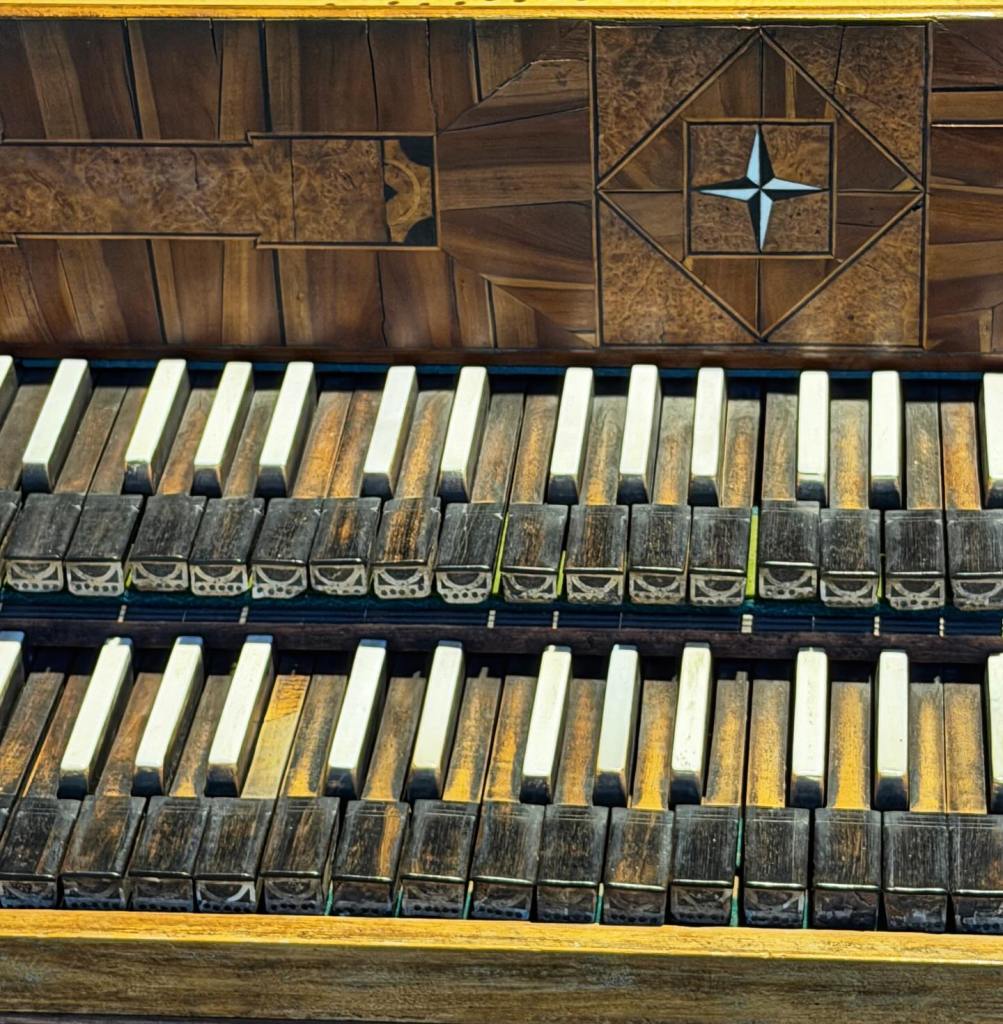
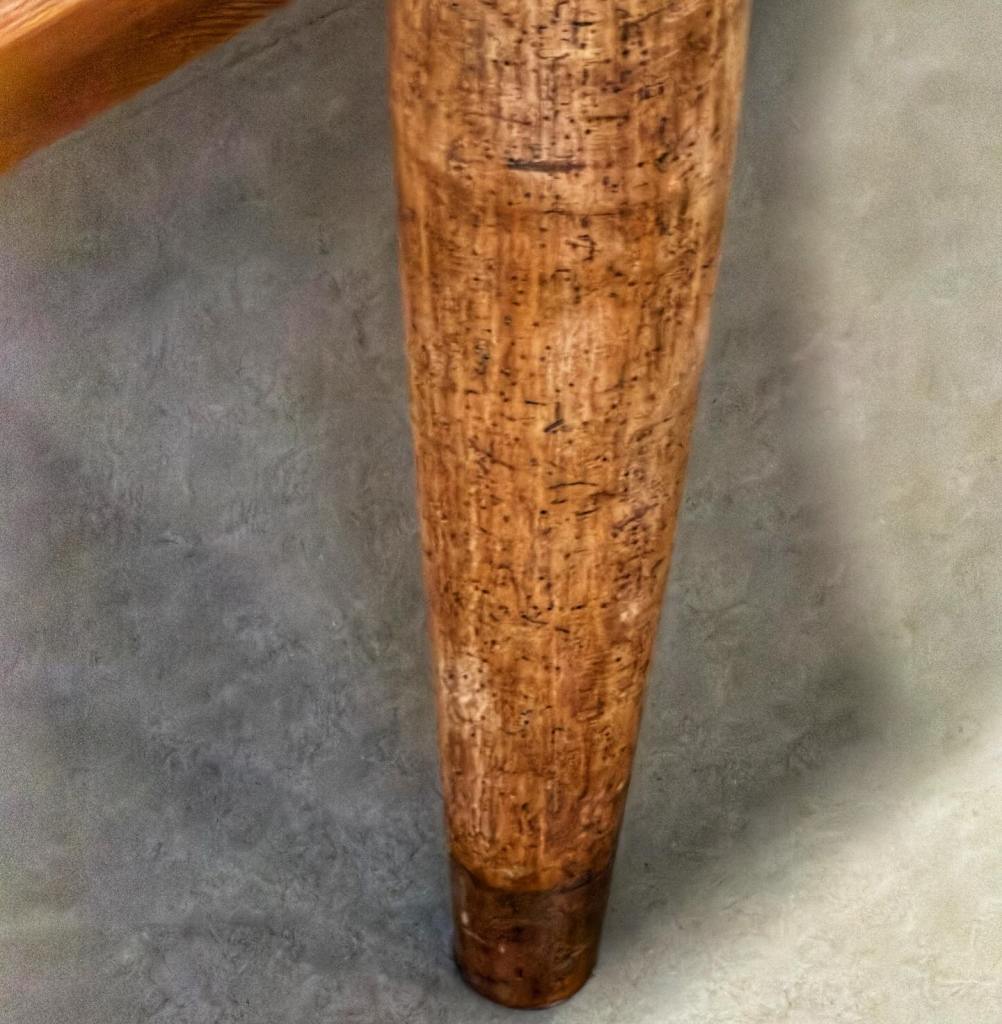
Attributed to the workshop of Johann Heinrich Harrass (1665–1714), circa 1700, Berlin Cembalo (two‑manual cembalo with 16′, 8′ and 4′ registers, inventory no. 316, Musikinstrumenten‑Museum, Staatliches Institut für Musikforschung, BerlinAttributed to the workshop of Johann Heinrich Harrass (1665–1714), circa 1700, Berlin Cembalo (two‑manual cembalo with 16′, 8′ and 4′ registers, inventory no. 316, Musikinstrumenten‑Museum, Staatliches Institut für Musikforschung, BerlinAttributed to the workshop of Johann Heinrich Harrass (1665–1714), circa 1700, Berlin Cembalo (two‑manual cembalo with 16′, 8′ and 4′ registers, inventory no. 316, Musikinstrumenten‑Museum, Staatliches Institut für Musikforschung, Berlin
Discovered in 1890 amid claims — never proven — that it once belonged to Johann Sebastian Bach (1685–1750), the cembalo is notably plain. There is no painted lid, no gilded moulding, no mythological scene of the kind that ornaments so many Flemish, Italian, and French instruments of the period.
Whether or not Bach ever touched it, the instrument belongs to a world in which he would have been at home. Lutheran worship treated music not as embellishment but as a form of theological work — a means by which the word of God was made audible and intelligible to a congregation. Bach himself wrote that the aim of music should be the glory of God and the recreation of the mind, and he composed accordingly: with immense rigour, and with a seriousness of purpose that admitted very little that was gratuitous, however elaborate the result. A cembalo built to that conviction would look very much like this one — restrained, serious, and concerned entirely with what it sounds like rather than what it looks like.
References
Wolff, C. (2000) Johann Sebastian Bach: the learned musician. New York: W.W. Norton
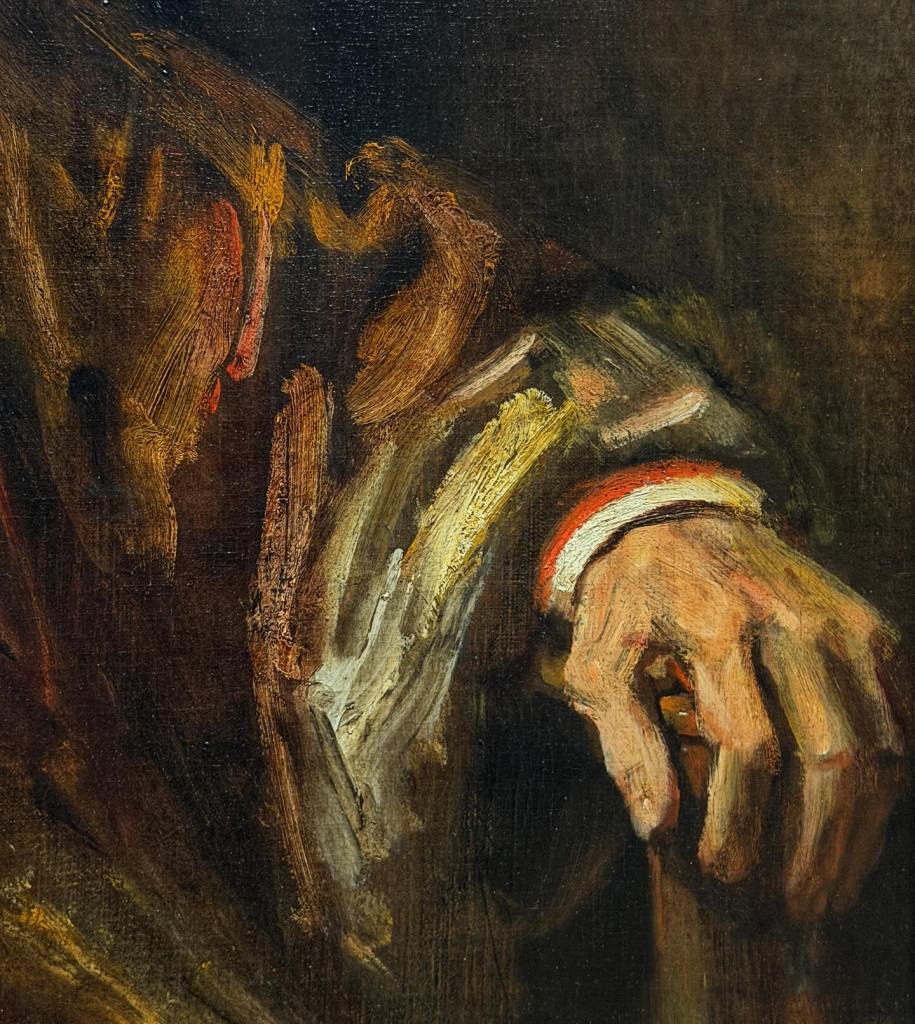
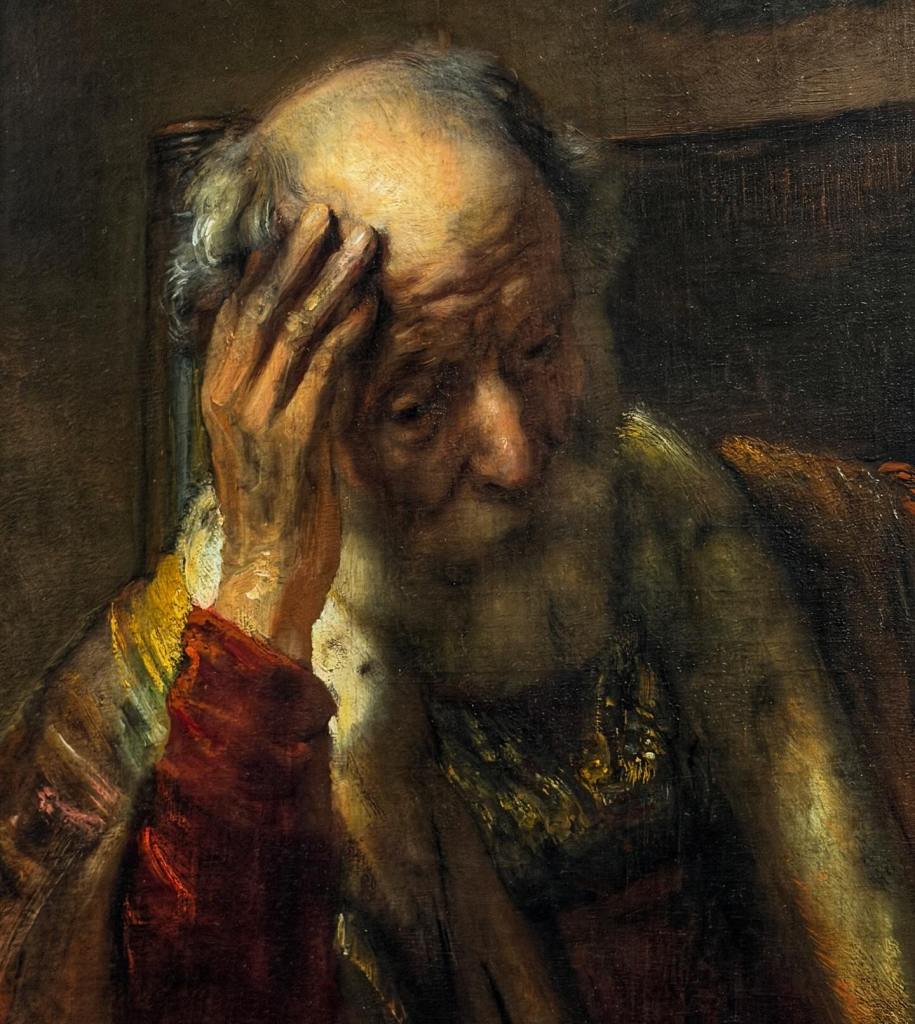
Probably by Rembrandt van Rijn (1606–1669),? An Old Man in an Armchair, c. 1652, oil on canvas, 111 × 88 cm, The National Gallery, London (NG6274)Probably by Rembrandt van Rijn (1606–1669)?, An Old Man in an Armchair, c. 1652, oil on canvas, 111 × 88 cm, The National Gallery, London (NG6274)Probably by Rembrandt van Rijn (1606–1669) ?, An Old Man in an Armchair, c. 1652, oil on canvas, 111 × 88 cm, The National Gallery, London (NG6274)
By the early twentieth century, more than six hundred paintings bore Rembrandt’s name. By the end of it, that number had been cut by nearly half, and some of the most admired works in major collections had been reassigned to pupils, followers, and anonymous imitators. The Rembrandt Research Project, founded in 1968 by a team of Dutch art historians led by Josua Bruyn (1923–2011), set out to discipline a corpus that had swollen over three centuries of enthusiastic, and often careless, attribution. The results were severe. In the first three volumes of A Corpus of Rembrandt Paintings (1982, 1986, 1989), covering the period up to 1642, the RRP catalogued 286 paintings from the roughly 330 accepted by Abraham Bredius (1855–1946) in his 1935 catalogue raisonné. Of these, 146 were accepted, 122 rejected outright, and just twelve left in a category of acknowledged doubt. Horst Gerson (1907–1978), revising Bredius in 1969, had already reduced the total oeuvre to approximately 420 paintings; the RRP drove it below 250. The number of signed self-portraits alone was halved. Museums across Europe and America found themselves staring at paintings whose labels had become, almost overnight, institutional embarrassments.
The problem, though, was structural, and it did not begin with modern scholarship. Rembrandt ran a large and commercially productive workshop in Amsterdam from the mid-1630s onward, training pupils who were themselves already competent painters. Some fifty artists are now associated with his studio, of whom about twenty can be documented by name. Joachim von Sandrart (1606–1688), a near contemporary, recorded that Rembrandt earned between 2,000 and 2,500 guilders annually from tuition fees and the sale of student work alone, on top of income from his own paintings and prints. Pupils paid him one hundred guilders a year for instruction and were set to work copying the master’s compositions, painting from the same models, and working through shared pictorial problems, often in partitioned spaces separated by paper or linen walls. This was not a factory in the Rubens mould, where assistants executed sections of the master’s compositions under direct supervision. It was something harder to categorise: a teaching environment in which the boundaries between master and pupil were porous by design, where pupils absorbed the master’s idiom so thoroughly that their independent productions could, and did, pass for his work, sometimes within his own lifetime.
The RRP’s original methodology rested on an assumption that Rembrandt executed his paintings without workshop assistance, treating collaboration as the exception rather than the rule. Its classificatory system, dividing works into A (accepted), B (uncertain), and C (rejected), had no framework for collaborative production. That assumption, as Ernst van de Wetering (1938–2021) later acknowledged, did not accord with what documentary evidence actually suggested about workshop practice in the seventeenth century. Van de Wetering, who had joined the RRP in 1968 as a junior assistant and became its chairman in 1993 after a deep ideological dispute led to the withdrawal of the three other surviving members, quietly abandoned the A/B/C system from volume four onward. His approach was processual rather than stylistic: where Bruyn and his colleagues had described images and compared surfaces, Van de Wetering described processes, asking whether a painting’s genesis indicated that the maker was also the person who had conceived the composition. The question sounds simple. In practice, it proved enormously difficult to answer, and it led Van de Wetering in a direction his former colleagues would not have taken.
In A Corpus of Rembrandt Paintings VI: Rembrandt’s Paintings Revisited (2014), the final and most controversial volume of the project, Van de Wetering reinstated forty-four paintings rejected in the first three volumes and added approximately twenty more that had not previously been catalogued, arriving at a total oeuvre of some 336 works. This was a staggering reversal. It was also the work of a single scholar, carried out after the collective authority of the original team had collapsed. What does it mean when one person’s eye undoes the considered judgement of four?
An Old Man in an Armchair belongs squarely to this contested territory. The painting was almost certainly among the pictures at Chiswick House collected by the 3rd Earl of Burlington (d. 1753), passing by inheritance to the Dukes of Devonshire. The National Gallery acquired it in August 1957 from the 11th Duke under the Finance Act of 1956, and it was praised on arrival as a powerful example of Rembrandt’s work of the 1650s. Kenneth Clark (1903–1983), in Rembrandt and the Italian Renaissance (1966), remarked on its pronounced Venetian quality, citing the saturated colours and the use of glazes to create depth of tone, and compared it to Tintoretto, though whether Rembrandt would have known the Venetian master’s work at first hand remains uncertain. Gregory Martin, writing in Apollo in 1969 under the pointed title ‘The Death of a Myth’, was among the first to question the attribution, and by the late 1960s a more systematic comparison with securely attributed works, combined with technical analysis of materials, led scholars to recatalogue the painting as the work of a contemporary follower.
The technical evidence assembled in subsequent decades appeared to support this conclusion. The National Gallery’s own research, presented in the 2010 exhibition Close Examination: Fakes, Mistakes and Discoveries, drew attention to the painter’s use of comparatively pure pigments: the bright red on the sitter’s left cuff consists of pure vermilion, the orange-yellow streaks in his robe are natural earth pigment laid unmixed, and the deep purplish glazes on the gown and hand are composed solely of red lake pigments. This handling of red lake glazes would be unusual in securely attributed Rembrandts of this period. Neil MacLaren’s National Gallery catalogue, revised and expanded by Christopher Brown in 1991, listed the painting as ‘follower of Rembrandt’, and the technical study by David Bomford, Jo Kirby, Ashok Roy, Axel Rüger, and Raymond White (2006) maintained this position. Christian Tümpel (1937–2009), in Rembrandt: All Paintings in Colour (1993), offered a slightly different formulation, cataloguing it as the work of an unknown collaborator in Rembrandt’s studio. For the better part of three decades, the painting hung under a label that politely withdrew a claim the Gallery had paid for.
Then came Corpus VI. Van de Wetering, cataloguing the painting as no. 221 and dating it to c. 1652, argued that its bold and innovative brushwork was too experimental, too searching, to be the product of a follower imitating a known style. A follower, by definition, follows: he works from an established model and adapts it to his own, usually lesser, capacities. But the handling of An Old Man in an Armchair does not follow. It anticipates. The loose, suggestive treatment of the left sleeve, achieved with half a dozen very broad strokes, and the way light is used to dissolve form rather than to define it, represent, in Van de Wetering’s reading, an early and significant step in Rembrandt’s development toward the rough manner of his later works. The question Van de Wetering posed is a fair one: is it really plausible that a pupil or follower, working within the orbit of the studio, would have pushed the painterly idiom in a direction the master himself had not yet fully explored?
The National Gallery’s response was measured. A spokesperson, quoted at the time of the Corpus VI publication, noted that ‘An Old Man in an Armchair is a picture that has generated much debate over the years, as many Rembrandts do, and we look forward to further discussions concerning its attribution.’ The Gallery has since amended its label to ‘Probably by Rembrandt’, a formulation that holds the question open without committing the institution to a definitive answer. It is worth pausing on that word, ‘probably’. It is not ‘yes’ and it is not ‘no’. It is a label designed to manage institutional uncertainty in public, and it says more about the limits of connoisseurship than it does about the painting.
Nor was the reception of Corpus VI uniformly approving. The art historian Michael Savage, reviewing the volume in detail, noted that while lengthy argument was presented for the reattribution, he remained unconvinced. The Burlington Magazine, in an editorial assessing the project’s final phase, observed that Van de Wetering was ‘never more impressive than when using every weapon in his armoury’ to rescue rejected paintings, but also noted that the volume, unlike its predecessors, almost entirely ignored rejected works, offering no consistent assessment of condition or provenance for many of the most contentious entries. The implied certainty of a catalogue that gives precisely 336 paintings to Rembrandt’s own hand sat uneasily with a methodology that claimed to embrace probability and acknowledge doubt. And there was a more uncomfortable observation: Van de Wetering had invoked Bayesian reasoning as the theoretical underpinning of his approach, but the catalogue itself was, as Savage noted, profoundly frequentist in its conclusions. Paintings either were or were not by Rembrandt. No probabilities were assigned, no grey areas acknowledged.
The broader problem remains unsettled. Signing practices in the seventeenth century offer no secure ground. Rembrandt signed his paintings far more frequently than Rubens (1577–1640), who signed only about five works in his entire career, but this frequency has not made authentication easier. Contemporary sources cannot confirm whether pupil works sold from the studio also carried the master’s signature. Bruyn himself conceded, in volume three of the Corpus, that while it was ‘conceivable that Rembrandt signatures were appended in the workshop by his studio assistants, as a kind of trademark’, there was no direct evidence for the reverse situation either: the master putting his own name on a pupil’s work. The theory of studio signing was, in effect, developed to explain away paintings that bore signatures but failed stylistic tests. Once those stylistic tests themselves were called into question, the theory lost its anchor.
Paintings dismissed as workshop productions for decades have, in several recent cases, been confirmed as autograph after renewed examination, sometimes overturning judgements that had relied largely on photographic reproductions rather than direct study of the work itself. The pattern has repeated often enough to constitute its own kind of evidence: the same apparatus that once expelled paintings from Rembrandt’s oeuvre is now being used to readmit them. On what, then, does authority finally rest? On the eye, which the RRP was founded to discipline? On scientific analysis, which can identify materials but cannot say who held the brush? On the institutional weight of whoever speaks last?
An Old Man in an Armchair sits at the centre of these questions, and it is unlikely to leave them any time soon. The painting’s ambition is visible in its handling: the rough, suggestive strokes of the left sleeve, the dissolved contours where the figure meets the chair, the saturated warmth of the red lake glazes. These are the marks of a painter testing the limits of an idiom, pressing paint toward something it has not yet been asked to do. Whether that painter was Rembrandt, working his way toward a new pictorial language, or someone close enough to him to anticipate where that language might go, is a question the evidence cannot conclusively settle. Perhaps the more useful question is what it tells us about the nature of the line itself: the line between master and pupil, between invention and imitation, between the hand that conceives and the hand that executes. The Rembrandt Research Project spent nearly half a century trying to draw that line with precision, and the result, as often as not, was to demonstrate that precision is the one thing the evidence will not support.
References
Bomford, D., Kirby, J., Roy, A., Rüger, A. and White, R. (2006) Rembrandt. London: National Gallery Company
Clark, K. (1966) Rembrandt and the Italian Renaissance. London: John Murray
MacLaren, N., revised by Brown, C. (1991) National Gallery Catalogues: The Dutch School, 1600–1900. 2nd edn. 2 vols. London: National Gallery Publications
Martin, G. (1969) ‘The Death of a Myth’, Apollo, XC, pp. 266–267
RKD – Netherlands Institute for Art History (n.d.), Follower of Rembrandt van Rijn (1606–1669) ?, An Old Man in an Armchair, m RKDimages database entry no. 286285 . Available at: https://rkd.nl/images/286285 (Accessed 28 December 2025)
Schwartz, G. (1985) Rembrandt: His Life, His Paintings. Harmondsworth: Penguin
Tümpel, C. (1993) Rembrandt: All Paintings in Colour. Antwerp: Fonds Mercator
Van de Wetering, E. (2014) A Corpus of Rembrandt Paintings VI: Rembrandt’s Paintings Revisited, A Complete Survey. Dordrecht: Springer
Van de Wetering, E. (2016) Rembrandt: The Painter Thinking. Amsterdam: Amsterdam University Press
Van de Wetering, E. (2014) ‘A reattribution to Rembrandt of Old man in an armchair (1652) in the National Gallery, London’, The Burlington Magazine, 156, no. 1335 (June 2024), pp. 394–404.Available at:https://www.burlington.org.uk/archive/back-issues/201406 (Accessed 26 December 2025)
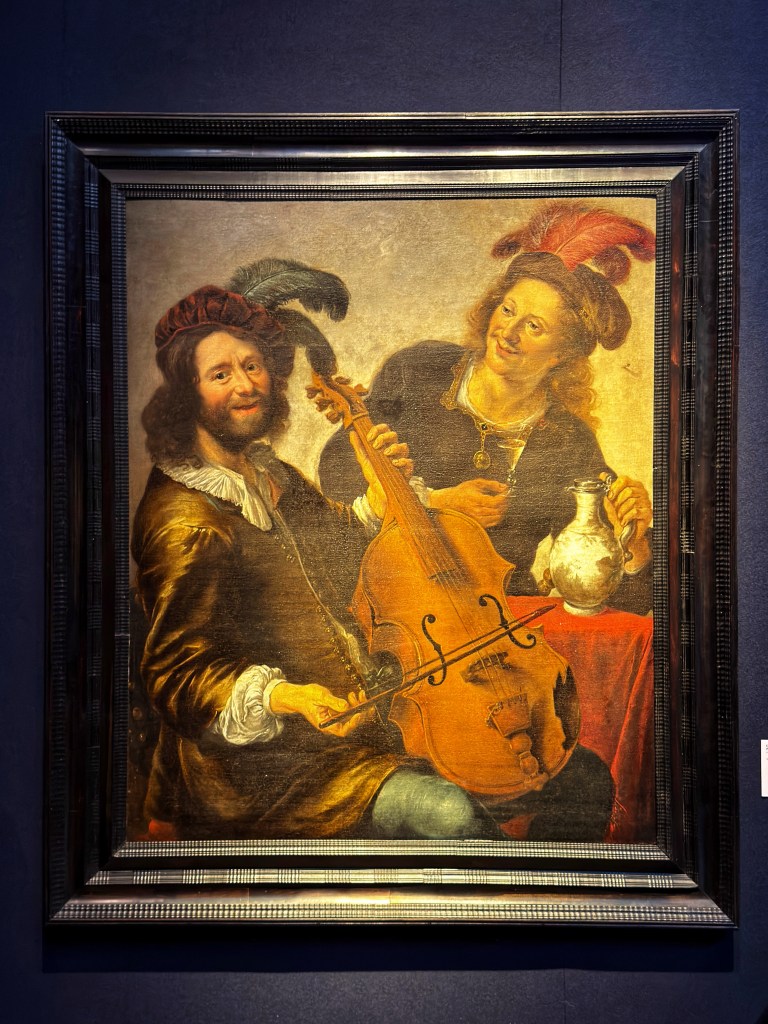
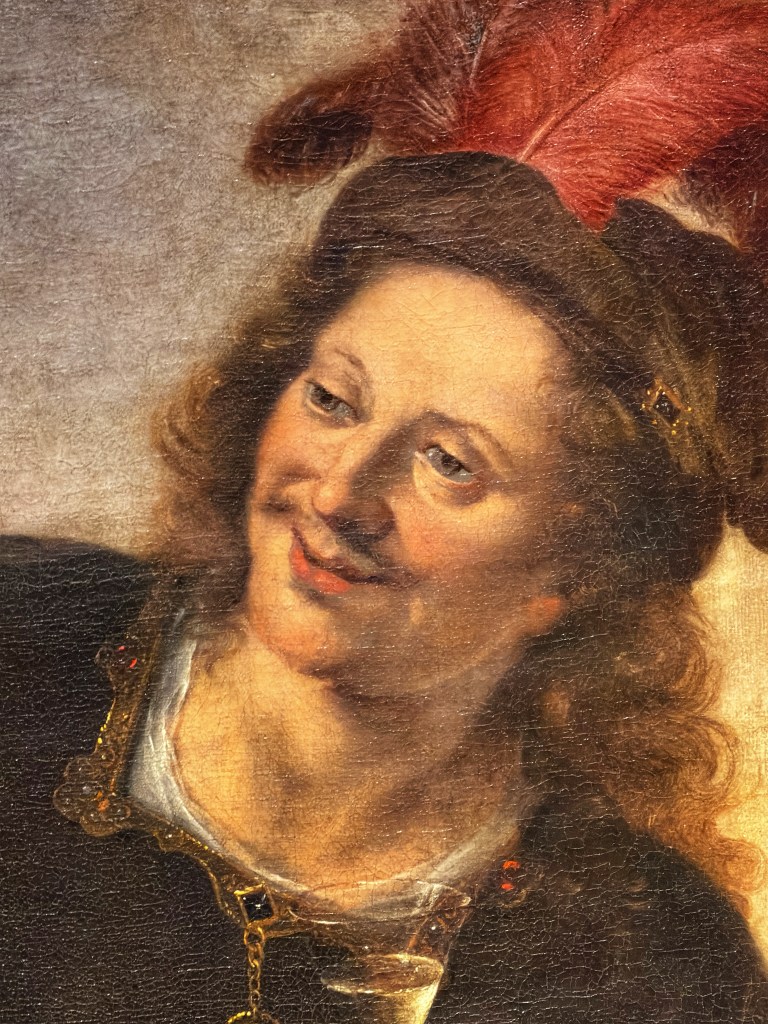
Cornelis Stangerus (1616-1667), A man playing a viola da gamba being offered a glass of wine by a young man, Oil on canvas, 122.5 x 102.2 cm, Old Masters to Modern Day Sale, 3 December , Christie’s, LondonCornelis Stangerus (1616-1667), A man playing a viola da gamba being offered a glass of wine by a young man, Oil on canvas, 122.5 x 102.2 cm, Old Masters to Modern Day Sale, 3 December , Christie’s, London
Paintings of musicians from the mid-seventeenth century often linger at the threshold between sound and silence. Figures pause as if caught before a note can form, and the instrument becomes a register of temperament rather than performance.
In this period the viola da gamba carried a distinctive cultural charge as the most cultivated of the bowed instruments, associated with private study, intellectual refinement and a quiet, often melancholic composure. Its rich tone, unlike the violin’s brightness or the rustic character of village instruments, made it the favoured companion of scholars and the well-educated. Dutch inventories and contemporary poetry cast it as an emblem of inward discipline and reflective attention, an object whose physical integrity was tied to the steadiness of its player. Emblematic writing often used broken instruments to mark a lapse of judgement or a gift allowed to decay, and in still-life contexts the motif could allude more gently to fragility rather than to outright moral failure.
The viola da gamba in this painting stands at the intersection of these meanings. It is not worn down by time but torn apart by conduct: its upper bass string snapped, its soundboard gashed, its noble voice extinguished. Its owner, already drunk and offered more wine, holds it with the careless indifference of someone already turned away from his own capacities. For a seventeenth-century viewer the meaning would have settled quickly. An instrument associated with learning, discipline and interior balance appears in the hands of a man who has abandoned those qualities. The silence or bad sound it now holds becomes an image of that surrender: the noble voice is gone, and the shattered instrument forms the centre of the scene, a reminder of how swiftly inner steadiness and harmony can falter when judgement is lost and the violence of drink breaks the instrument apart.
Cornelis Stangerus (1616-1667), A man playing a viola da gamba being offered a glass of wine by a young man, Oil on canvas, 122.5 x 102.2 cm, Old Masters to Modern Day Sale, 3 December , Christie’s, LondonCornelis Stangerus (1616-1667), A man playing a viola da gamba being offered a glass of wine by a young man, Oil on canvas, 122.5 x 102.2 cm, Old Masters to Modern Day Sale, 3 December , Christie’s, LondonCornelis Stangerus (1616-1667), A man playing a viola da gamba being offered a glass of wine by a young man, Oil on canvas, 122.5 x 102.2 cm, Old Masters to Modern Day Sale, 3 December , Christie’s, LondonCornelis Stangerus (1616-1667), A man playing a viola da gamba being offered a glass of wine by a young man, Oil on canvas, 122.5 x 102.2 cm, Old Masters to Modern Day Sale, 3 December , Christie’s, London
References
Christie’s (2025) Cornelis Stangerus (Delft 1616–1667 Middelburg). A man playing a viola da gamba being offered a glass of wine by a young man, Lot 182, Old Masters to Modern Day Sale: Paintings, Drawings, Sculpture, Live auction 23862, 3 December. Available at: https://www.christies.com/en/lot/lot-6562609 (Accessed: 2 December 2025).
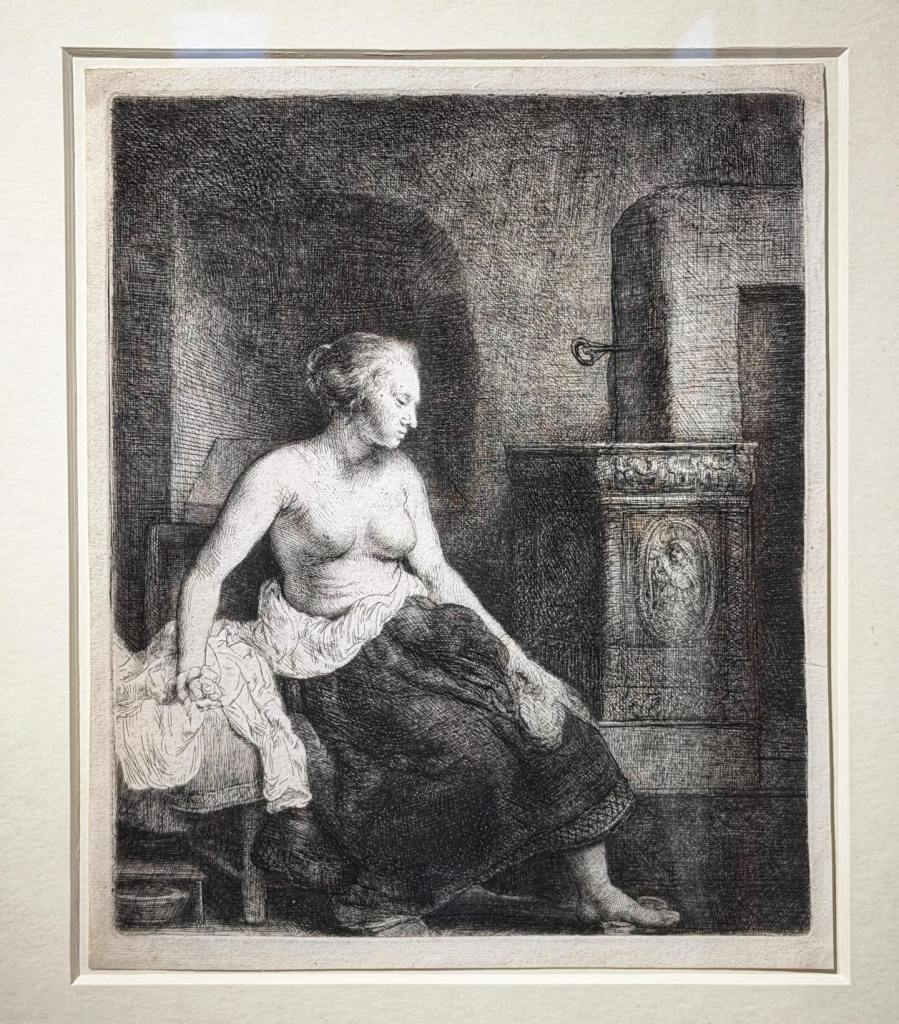
Rembrandt Harmensz. van Rijn (1606–1669), Woman Sitting Half Dressed beside a Stove, 1658, Etching, engraving and drypoint on laid paper, 6 state of 7, Plate 228 × 186 mm; Sheet 243 × 198 mm, Christie’s, The Sam Josefowitz Collection: Graphic Masterpieces by Rembrandt van Rijn – Part III, London, 3 December 2025
Rembrandt Harmensz. van Rijn (1606–1669), Woman Sitting Half Dressed beside a Stove, 1658, Etching, engraving and drypoint on laid paper, 6 state of 7, Plate 228 × 186 mm; Sheet 243 × 198 mm, Christie’s, The Sam Josefowitz Collection: Graphic Masterpieces by Rembrandt van Rijn – Part III, London, 3 December 2025
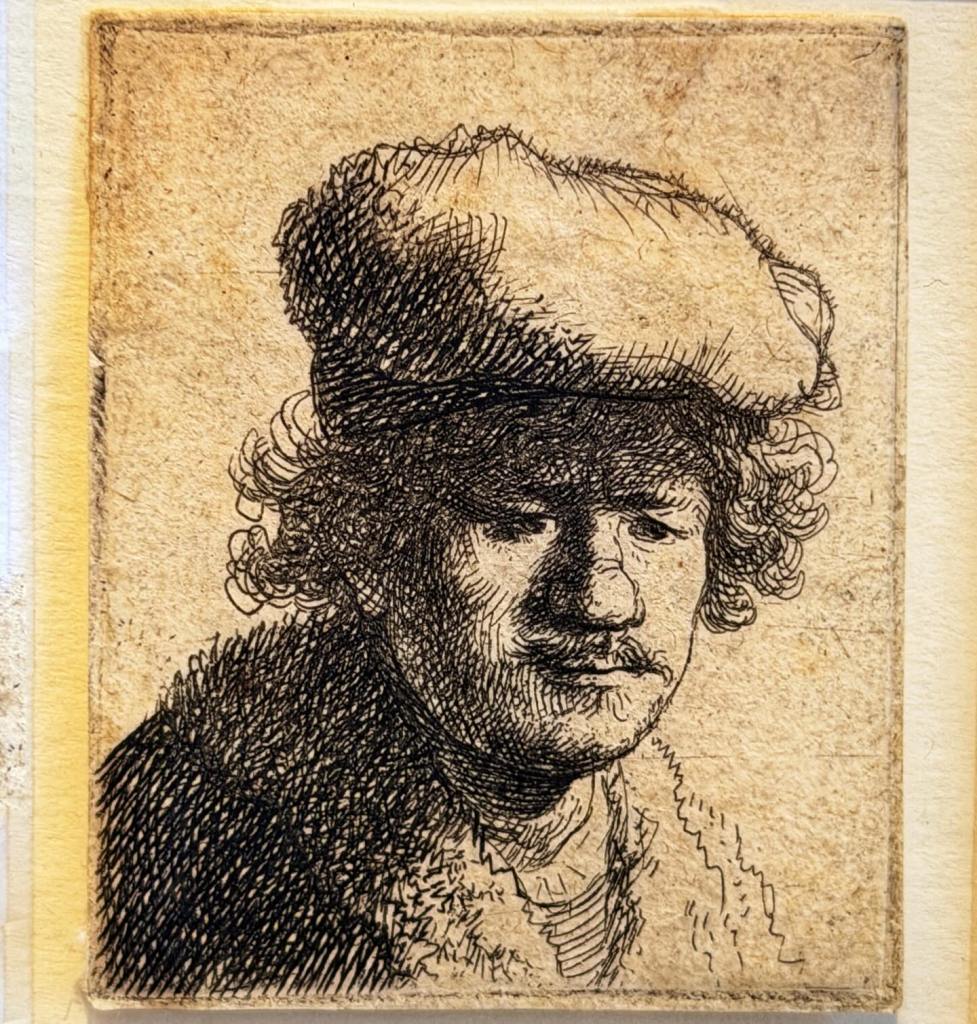
Rembrandt Harmensz. van Rijn (1606–1669), Self-Portrait with Cap Pulled Forward, c. 1630, Etching with touches of drypoint on laid paper, Plate 50 × 43 mm; Sheet 52 × 44 mm, Sixth state of ten, Christie’s, The Sam Josefowitz Collection: Graphic Masterpieces by Rembrandt van Rijn – Part III, London, 3 December 2025, lot 2
References
Christie’s (2025) Self-Portrait with Cap Pulled Forward, Rembrandt Harmensz. van Rijn (1606–1669). The Sam Josefowitz Collection: Graphic Masterpieces by Rembrandt van Rijn – Part III, Live Auction 23941. London: Christie’s, 3 December 2025. Available at: https://www.christies.com/en/lot/lot-6564142 (Accessed: 30 November 2025).
Rembrandt Harmensz. van Rijn (1606–1669), The Entombment, c. 1654, Etching and Drypoint on Vellum, Plate 206 × 157 mm; Sheet 218 × 161 mm, Third state of Four, The Sam Josefowitz Collection: Graphic Masterpieces by Rembrandt van Rijn – Part III, London, 3 December 2025Rembrandt Harmensz. van Rijn (1606–1669), The Entombment, c. 1654, Etching and Drypoint on Vellum, Plate 206 × 157 mm; Sheet 218 × 161 mm, Third state of Four, The Sam Josefowitz Collection: Graphic Masterpieces by Rembrandt van Rijn – Part III, London, 3 December 2025
This rare impression is almost entirely black, the plate wiped so heavily that only the thinnest traces of light survive. The mourners’ faces, the curve of Christ’s body and face, and the gestures that support him register only as slight, wavering outlines against the dark. The brightness that grazes the figures is produced solely by the ink thinning enough for the vellum to breathe through. In Rembrandt’s late etchings such near-erasure often carries a devotional charge: the scene is not offered in clarity but allowed to emerge gradually, as if the viewer must enter the darkness before any meaning can take shape. In seventeenth-century Amsterdam, impressions like this could invite a meditative way of seeing, where the Passion is approached through shadow, and the remaining light becomes the point at which grief, faith and reflection meet.
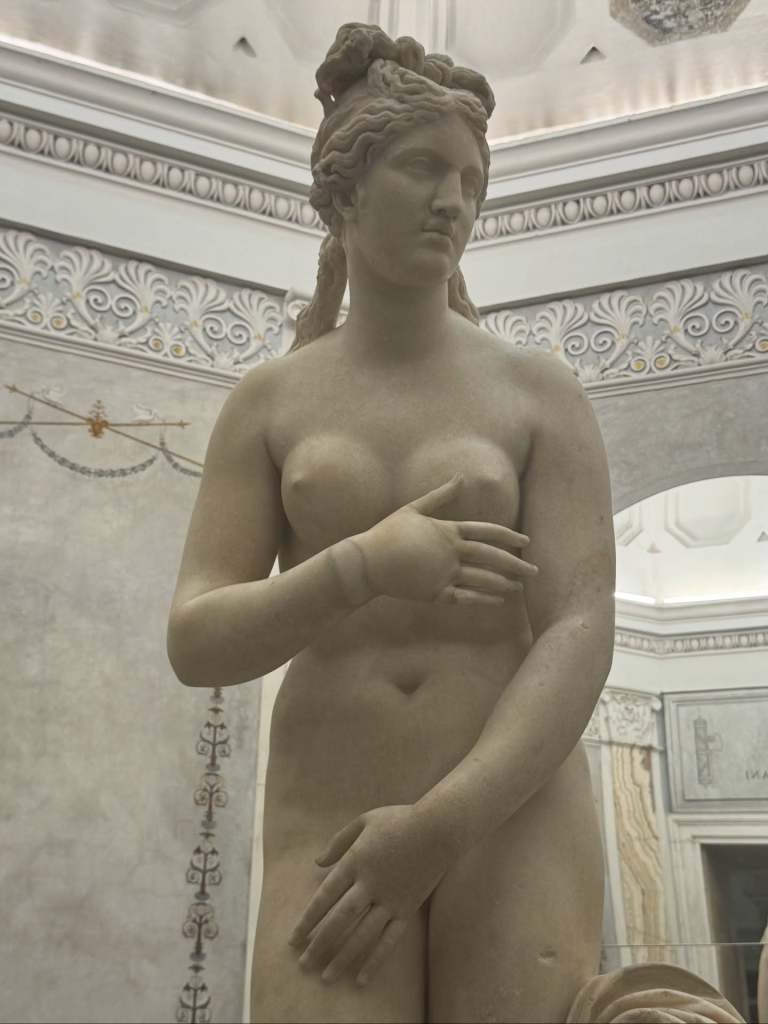
Unknown Roman artist, Capitoline Venus, 2nd century AD (after a Greek original by Praxiteles, 4th century BC), Marble, Height 193 cm, Capitoline Museums, Rome Unknown Roman artist, Capitoline Venus, 2nd century AD (after a Greek original by Praxiteles, 4th century BC), Marble, Height 193 cm, Capitoline Museums, Rome
Some time between 1667 and 1670, during the pontificate of Pope Clement X (r. 1670–1676), workmen digging in the gardens of the Stazi family estate near the Basilica of San Vitale, between the Quirinal and Viminal Hills in Rome, uncovered a marble figure of exceptional quality and near-miraculous preservation. She was missing her nose, a few fingers, and one hand, which was later reattached, but otherwise intact — a condition rare enough in a large-scale antique marble that had spent centuries underground to command immediate attention. She passed through private hands until 1752, when Pope Benedict XIV (r. 1740–1758) purchased her from the Stazi family and donated her to the Capitoline Museums. She was installed in a purpose-built niche on the ground floor of the Palazzo Nuovo, a small octagonal room that became known as the Gabinetto di Venere [Cabinet of Venus], where a mirror placed behind the figure allows her to be seen from all sides. She has remained there, with one brief and involuntary interruption, ever since.
In the middle of the fourth century BC, the Athenian sculptor Praxiteles (active c. 364–340 BC) produced a cult image of Aphrodite for a temple sanctuary that changed the representation of the female body in Western art for the next two millennia. He had made two versions: one draped, one nude. According to Pliny the Elder (23–79 AD), writing in his Naturalis Historia [Natural History], the draped figure was purchased by the people of Kos, who judged the nude version too indecorous for civic display; the nude was bought instead by the people of Knidos, a city on the southwestern coast of what is now Turkey, who placed her in a round open temple on a hillside overlooking the sea. Pliny called her “superior to anything not merely by Praxiteles, but in the whole world,” and recorded that many people sailed to Knidos specifically to see her (Pliny, Naturalis Historia, XXXVI.20–21). The original was destroyed in a fire in Constantinople in 475 AD. What survives is a vast body of copies: the scholar Kristen Seaman has catalogued 192 surviving ancient replicas, making the Aphrodite of Knidos perhaps the most reproduced sculpture from antiquity (Havelock, 1995).
The Capitoline Venus does not copy the Knidian Aphrodite directly. It belongs to a distinct sub-type of the broader Venus Pudica [Modest Venus] tradition that originated in a lost Hellenistic original, probably produced in Asia Minor in the third or second century BC, which modified the Praxitelean formula in a specific and significant way. Where Praxiteles had depicted Aphrodite covering only her pubis with one hand, the Hellenistic prototype from which the Capitoline type descends shows the goddess covering both her pubis and her breasts, using both hands simultaneously. The gesture is simultaneously more protective and more self-conscious, a figure more explicitly aware of being observed. The Capitoline Venus is recognisable as a type by precisely this doubled covering, which distinguishes it from the Venus de’ Medici and other Pudica variants, and which generated its own substantial family of copies across the Roman world. What stands in the Palazzo Nuovo is an Antonine copy, produced in the second century AD, of that lost Hellenistic intermediate, which was itself a development of Praxiteles.
The sculptural ancestry matters because Roman copies were not straightforward reproductions. Roman workshops copied Greek and Hellenistic originals in marble when the originals had been bronze, adjusted proportions, modified attributes, and supplied their own details — a support at the thigh, a water vessel at the feet, drapery over a nearby surface. The Capitoline Venus carries such additions, which identify her ritual context: the objects flanking the figure and the positioning of her hair allude to the goddess’s bath, the moment of purification that restored her perpetual virginity and the source of her power. The sculptural programme is not, in other words, erotic display in any straightforward sense; it is a representation of sacred ritual interrupted and a body simultaneously offered and withheld. That ambiguity is fundamental to the type, and to its endurance.
The question of the head deserves separate attention. Early in the nineteenth century, closer scrutiny revealed that the head of the Capitoline Venus did not match the body — the marble, the style, and the technical evidence all indicated that it was entirely modern, contributed by restorers working in the sixteenth century. Francis Haskell and Nicholas Penny, whose study Taste and the Antique: The Lure of Classical Sculpture 1500–1900 (1981) remains the standard reference for the reception of antique sculpture in the modern period, noted that the controversy this discovery generated damaged the statue’s reputation, though they also recorded the response of Charles Greville, who, writing in 1830, acknowledged the doubts freely and then continued: ‘it is impossible for the coldest imagination to look at this statue without interest, for it calls up a host of recollections and associations, standing before you unchanged from the hour when Caesar folded his robe around him and consented to death at its base’ (Haskell and Penny, 1981). That Greville’s final clause was factually wrong about the location of Caesar’s murder — which occurred in the Theatre of Pompey, not on the Capitoline — did not diminish his response. The statue had by this point accumulated enough associative weight to survive the inconvenience of facts.
The Capitoline Venus entered the public collection late, relative to the formation of the canon of admired antiquities in Rome. She was discovered after the Renaissance had already identified its preferred classical models — the Apollo Belvedere, the Laocoön, the Venus de’ Medici in Florence — and her reputation grew correspondingly slowly, hampered further by the head controversy. According to Haskell and Penny, her standing in relation to the Florentine Venus rose significantly only in the later eighteenth century, when growing unease about the extent of the restorations on the Medici Venus began to undermine confidence in that figure. The relative authenticity of the Capitoline version, despite its own restored head, became, paradoxically, a point in her favour as taste shifted towards the unrestored (Haskell and Penny, 1981). By the time the Grand Tour was at its height, she had acquired a place among the indispensable objects of the Roman itinerary, reproduced in bronze reductions and plaster casts for the libraries and collections of northern Europe, her octagonal cabinet one of the fixed destinations of any serious visitor to Rome.
In February 1797, under the terms of the Treaty of Tolentino imposed on the Papal States by Napoleon Bonaparte (1769–1821), French commissioners were authorised to confiscate works of art from any building — public, private, or ecclesiastical — as spoils of conquest. The Capitoline Venus was among the sculptures removed to Paris, arriving at the Louvre as part of a transfer that included the Apollo Belvedere, the Laocoön, and nearly three hundred further antiquities from Cardinal Albani’s collection alone. Napoleon commissioned a full marble replica from the sculptor Joseph Chinard (1756–1813), now at the Château de Compiègne, presumably in anticipation of the original not returning. The original did return, in 1816, following Napoleon’s defeat and the provisions of the Congress of Vienna. The plaster cast that had replaced her in the Capitoline during the Napoleonic years was shipped to Britain, where the sculptor John Flaxman (1755–1826) praised it to his students (Haskell and Penny, 1981). She has not left Rome since.
What the statue’s long history of admiration, reproduction, theft, and return tells is something about the nature of canonical status itself. The Capitoline Venus was not always among the most celebrated objects in Rome; her reputation was built slowly, contested, damaged, and rebuilt, inflected at every stage by the condition of rival objects, the tastes of successive generations of collectors and scholars, and the political ambitions of rulers who understood the possession of antique sculpture as a claim on the civilisations that had produced it. She is not, technically speaking, by Praxiteles; she is a Roman copy of a Hellenistic adaptation of a tradition he founded. The original Knidian Aphrodite is gone. The lost Hellenistic intermediate from which the Capitoline type derives is gone. What survives is a copy of a copy, produced in the second century AD, its head replaced in the sixteenth, its nose restored at some unrecorded moment, installed in a purpose-built cabinet by a pope in 1752, seized by a general in 1797, and returned by a treaty in 1816. That she is still regarded as one of the finest surviving representations of the ancient female nude, and that her cabinet in the Palazzo Nuovo remains among the most visited rooms in the Capitoline Museums, suggests that canonical status, once established, is surprisingly robust — and that what people come to see is as much the accumulated history of looking as the object itself.
References
Haskell, F. and Penny, N. (1981) Taste and the Antique: The Lure of Classical Sculpture 1500–1900. New Haven and London: Yale University Press
Havelock, C. M. (1995) The Aphrodite of Knidos and Her Successors: A Historical Review of the Female Nude in Greek Art. Ann Arbor: University of Michigan Press
Pasquier, A. and Martinez, J.-L. (eds) (2007) Praxitèle [Praxiteles]. Paris: Musée du Louvre
Pliny the Elder (c. 77–79 AD) Naturalis Historia [Natural History], XXXVI.20–21. Translated by H. Rackham (1952). Cambridge, MA: Harvard University Press
Pliny the Elder (c. 77–79 AD) Naturalis Historia [Natural History], XXXVI.20–21. Translated by H. Rackham (1952). Cambridge, MA: Harvard University Press
Stewart, A. F. (2010) ‘A Tale of Seven Nudes: The Capitoline and Medici Aphrodites, Four Nymphs at Elean Herakleia, and an Aphrodite at Megalopolis’, Antichthon, 44, pp. 12–32. Available at: https://escholarship.org/uc/item/6qr6q30g (Accessed: 18 October 2025).
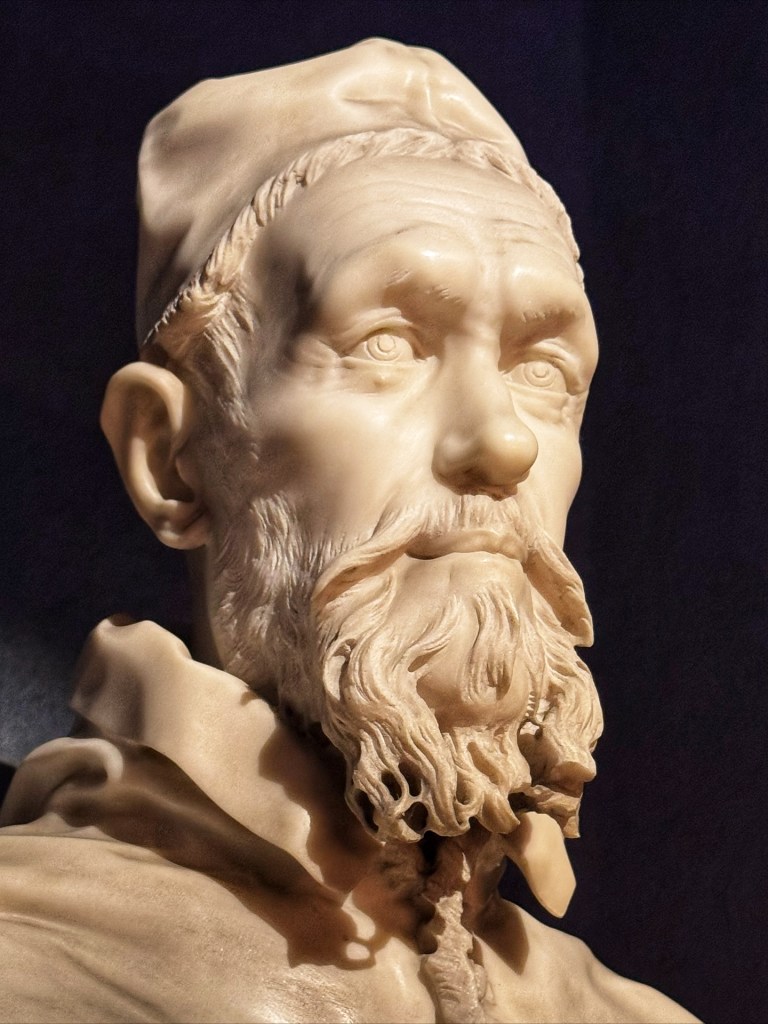
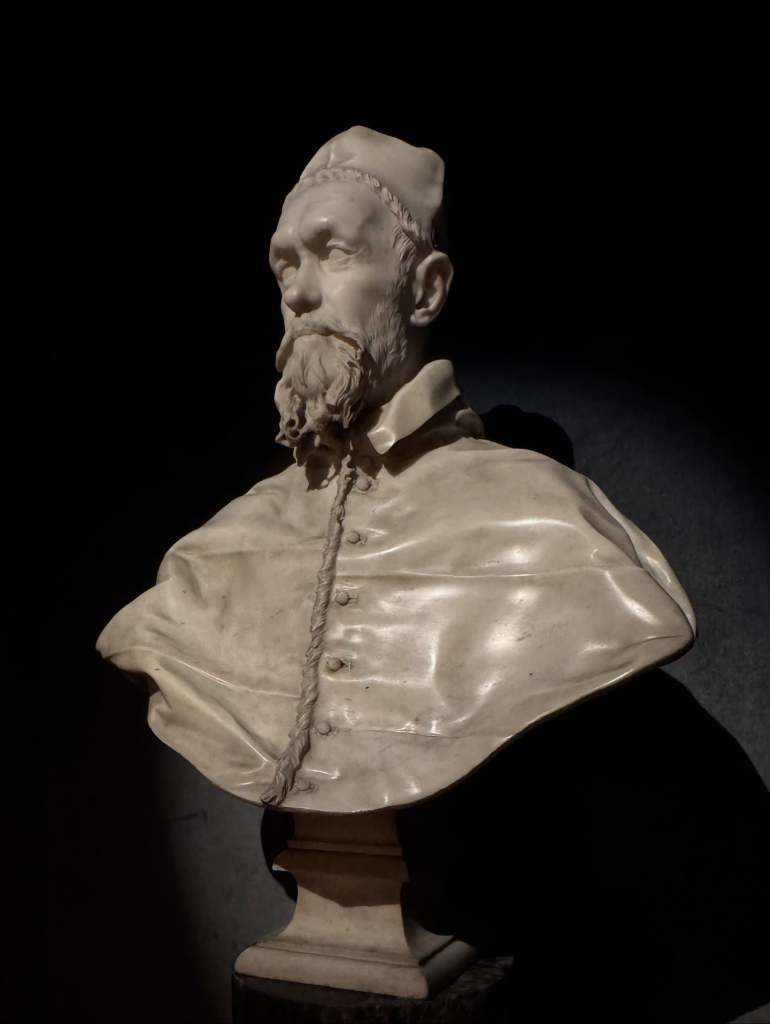
Gian Lorenzo Bernini (1598–1680), Bust of Pope Innocent X, c. 1650, Marble, Height 80 cm, Galleria Doria Pamphilj, Rome Gian Lorenzo Bernini (1598–1680), Bust of Pope Innocent X, c. 1650, Marble, Height 80 cm, Galleria Doria Pamphilj, Rome Gian Lorenzo Bernini (1598–1680), Bust of Pope Innocent X, c. 1650, Marble, Height 80 cm, Galleria Doria Pamphilj, Rome
Giovanni Battista Pamphilj (1574–1655) was elected pope in September 1644 at the age of seventy, after a conclave that had lasted over a month and left most of its participants exhausted. He took the name Innocent X and inherited a papacy financially depleted by his predecessor’s military campaigns and building projects in roughly equal measure. His relationship with Gian Lorenzo Bernini (1598–1680), who had dominated artistic production in Rome for two decades under that predecessor, was shaped from the outset by that inheritance. That predecessor, Maffeo Barberini (1568–1644), who had reigned as Urban VIII for twenty-one years, had been among the most consequential patrons in Bernini’s career, and the relationship between the two men had been as close as any between a seventeenth-century pope and a working artist. Urban VIII had effectively handed Bernini the keys to Rome: from his appointment as papal architect in 1629, Bernini had overseen the baldachin over the high altar at Saint Peter’s, the tomb monuments for Urban himself, the restructuring of the Piazza San Pietro, and a continuous flow of commissions that made any serious rival in Rome almost invisible by comparison. Alessandro Algardi (1598–1654) and Francesco Borromini (1599–1667), both of considerable ability, had found it difficult to compete in a city where Bernini was so thoroughly embedded in the structures of papal favour. When Urban VIII died in July 1644, he left the Church’s treasury exhausted by the costs of the Castro War — a territorial conflict of limited strategic consequence that had consumed enormous resources — and Innocent X, who had opposed many of Urban’s policies, regarded that inheritance with undisguised contempt. The sculptor and the new pope began, in other words, on the worst possible terms, and what makes the bust so historically loaded is precisely that it was made at all.
The consequences of the transition were immediate and professionally devastating for Bernini. Innocent X ordered structural investigations into Bernini’s bell tower at Saint Peter’s, and the conclusion was brutal: the tower was demolished, the works abandoned, and Bernini’s own property seized as a guarantee against further damage to the basilica. Whether the structural concerns were entirely genuine, or served as convenient cover for the political displacement of the Barberini circle and everything associated with it, has been disputed in the literature, with Sarah McPhee arguing persuasively that the financial difficulties of the papal state, attributable largely to Urban VIII’s Castro War, played a far greater role in the decision than any real doubts about Bernini’s architectural competence (McPhee 2002). What is not in dispute is the practical outcome. Alessandro Algardi (1598–1654), whose sober, classicising sensibility was temperamentally better suited to the new pontificate’s tone, absorbed much of the monumental patronage that had previously been directed at Bernini, including the Villa Pamphilj on the Janiculum, the large relief altarpiece at Saint Peter’s depicting the meeting of Pope Leo I (c.400–461) and Attila the Hun (c.406–453), and a substantial bronze portrait of Innocent now in the Musei Capitolini. The rivalry between the two sculptors, which had simmered throughout the Barberini years, became under Innocent not merely a matter of personal competition but of institutional consequence.
Bernini’s recovery of favour was gradual and, by all accounts, engineered through a combination of strategic intelligence and the willingness to exploit whatever channels of access remained open. The opportunity came through the commission for a monumental fountain at the centre of Piazza Navona, which Innocent was transforming into the public face of Pamphilj dynastic power. Francesco Borromini (1599–1667), Bernini’s great rival in architecture, was already embedded in the piazza’s projects and was the more obvious candidate. According to one version of the story, Bernini arranged for his fountain model to be placed where the pope could not avoid encountering it, and Innocent, after seeing it, reportedly exclaimed that if one did not want to carry out his designs, one must not see them. A parallel account holds that Bernini had a silver scale model, approximately a metre and a half in height, delivered to Olimpia Maidalchini (1594–1657), the pope’s sister-in-law and the most politically consequential figure in Innocent’s inner circle, who then used her considerable influence to redirect the commission. Maidalchini was no peripheral presence: she had effectively governed portions of papal policy throughout the pontificate, accumulated substantial personal wealth and institutional power, and her endorsement carried practical weight that artistic reputation alone could not supply. Both versions of the story may be embellished — they have the flavour of anecdotes improved in the retelling — but their persistence in the sources reflects something real about how patronage operated in mid-seventeenth-century Rome, where access and personal interest mattered as much as open competition. The Fountain of the Four Rivers was completed in 1651, the bust of Innocent followed at around 1650, and the relationship between sculptor and pope had by then shifted, however cautiously, into something resembling functional patronage.
There are actually two marble busts of Innocent X by Bernini, both now in the Doria Pamphilj. The first was marred by a flaw that appeared in the stone at the level of the beard during carving, a circumstance that the gallery’s own records note also reflects the speed at which Bernini typically worked. Rather than salvage a compromised block, he set it aside and began again. The situation had a direct precedent in Bernini’s practice with the two busts of Cardinal Scipione Borghese (1577–1633) in the 1630s, where a late-discovered flaw in the marble of the first version prompted a second carving that is now considered the superior work. That Bernini could repeat a portrait from his clay model at sufficient speed to complete a replacement before the flaw in the original had become widely known tells something important about where, within his working process, the actual creative investment resided. The clay bozzetto, prepared through careful prior observation of the sitter, was the true instrument of invention; the marble was its translation. This is not a trivial point, because it reframes what we are looking at: the finished bust is, in a technical sense, at least one step removed from the moment of conception, and the authority it projects is the result of accumulated preparation rather than spontaneous execution.
Bernini’s standard procedure for portrait busts, documented across his career and most fully recorded in connection with the bust of Louis XIV in 1665, was to spend extended time observing the sitter before any formal session in the studio began, making drawn records of characteristic expressions and natural poses, then building clay models from those observations as a basis for the marble carving. Formal sittings, when they came, were concentrated and focused rather than prolonged, used for the face and any detail requiring direct observation, while the dress and drapery were worked from the model. The rough blocking of the marble was carried out in advance by studio assistants, but the finishing, and certainly the face, remained throughout the work of Bernini’s own hand. Andrea Bacchi has noted that by mid-career Bernini reserved portrait busts almost exclusively for popes and kings, people he could not refuse, and that he valued them too highly to cede the carving to assistants — a telling indication of where, within an enormous and heavily studio-dependent output, he located his most personal investment (Bacchi and Hess 2008).
The optical management of the marble reflects a set of strategies that are easier to describe than to appreciate without direct experience of the object. Working in white stone, Bernini introduced the impression of pigmented eyes by incising the irises deeply so that they lay in shadow and appeared dark, a technique that gives the portrait an alertness and directness that photographs cannot convey. The mozzetta — the short cape covering the pope’s shoulders — is carved with sustained attention to the way fabric accumulates its own weight and distributes light differently across compressed and released folds, with the buttons individually described and the surface as a whole animated by the sense of a body occupying the garment from within. This is not decorative elaboration but argument: in papal portraiture, vestments carried precise hierarchical meaning, and the care Bernini gave to the mozzetta was part of what the portrait was saying about its subject, as much as the expression on the face. The bust proposes, implicitly, that authority inheres in the office as well as the man, and that marble, with its capacity for idealisation and permanence, is the appropriate medium for making that proposition visible.
That argument becomes most legible when the bust is read alongside Diego Velázquez’s (1599–1660) painted portrait of Innocent, made at almost exactly the same moment and, since 1927, displayed in the same room. Velázquez was in Rome around 1650 on behalf of the Spanish crown, with no particular political stake in how he rendered the pope, and his portrait is famously unsparing: a heavy, watchful, inwardly suspicious face, painted with a precision that records what it sees without softening or dramatising it. The quality of the observation is such that Innocent was reportedly reluctant to display the work publicly, and it remained largely out of view through the seventeenth and eighteenth centuries. Bernini, working in marble and in a political situation that had only recently recovered from near collapse, made a wholly different set of interpretive choices. The pope in the bust is purposeful and alert, the gaze directed slightly upward, the head turned just enough to imply that the figure has been caught in the middle of something rather than arranged for display. Where Velázquez constructed a record, Bernini constructed an argument, and the juxtaposition the Doria Pamphilj offers — two portraits of the same man, by two of the great artists then working in Europe, made within months of each other — is one of the most instructive comparisons the seventeenth century has to offer, not because the works are similar but because they disagree so fundamentally about what portrait art is for and what obligations it carries towards its subject.
Contemporaries described Innocent X as physically ugly, and there is no reason to suppose Bernini was unaware of that reputation when he undertook the bust. His decision to idealise rather than record was not a failure of looking but a deliberate interpretive act, one that reflects both the demands of the commission and his own understanding of what marble portraiture could legitimately do. A bust destined for a dynastic family collection is a memorial object as much as a likeness, and within those terms Bernini gave Innocent X something considerably more durable than physical truth: a posture of authority that the living man, by all accounts, did not consistently project on his own terms. Whether that represents the highest function of portrait sculpture, or a form of flattery so polished that it no longer resembles its subject, is a question the two portraits in that small room at the Doria Pamphilj continue to hold in productive tension.
References
Avery, C. (1997) Bernini: Genius of the Baroque. London: Thames and Hudson.
Bacchi, A. and Hess, C. (2008) ‘Creating a new likeness: Bernini’s transformation of the portrait bust’, in Bacchi, A., Hess, C. and Montagu, J. (eds.) Bernini and the Birth of Baroque Portrait Sculpture. Los Angeles: Getty Publications
Dombrowski, D. (2011) ‘Apotheosis and mediality in Bernini’s later portrait busts’, Artibus et Historiae, 32(64), pp. 183–218. Available at” https://www.jstor.org/stable/i40072095 (Accessed: 16 October 2025).
Basilica of Santa Maria del Popolo, 1472–1477, Rome, possibly designed by Baccio Pontelli (active c. 1470–1490) and Andrea Bregno (active c. 1460–1503), rebuilt under Pope Sixtus IV (1414 – 1484)
Old buildings almost never endure as single, resolved statements. Time will not allow it. They are reworked, broken open, refitted to new purposes, and the line between survival and alteration grows indistinct. What we inherit is a surface of revisions: each century laying down its own syntax upon the remains of the last. The past is legible, but only through interference. The vitality of architecture lies in this slow corrosion of purity, in the way new meanings press against old walls, creating a texture of historical unease. By reading these surfaces closely, one can discern the boundaries between epochs.
The Basilica of Santa Maria del Popolo in Rome embodies this process with exceptional clarity. Its origins are entangled with legend: Pope Paschal II (c. 1050–1118) is said to have founded a chapel on the site in 1099, over the supposed burial place of Nero, where a walnut tree had grown and the emperor’s ghost was believed to linger. The pope ordered the tree felled and a shrine raised in its place, consecrated to the Virgin. The Augustinian friars who were given charge of the church maintained it through the following centuries, but its transformation into a major Roman monument began under Pope Sixtus IV (1414–1484), who commissioned a complete rebuilding between 1472 and 1477. The new church, attributed to the architect Baccio Pontelli (c. 1450–1492), was among the first great expressions of Renaissance order in the city. Its measured proportions, groin vaults, and luminous interior established a language of equilibrium that later patrons continuously redefined.
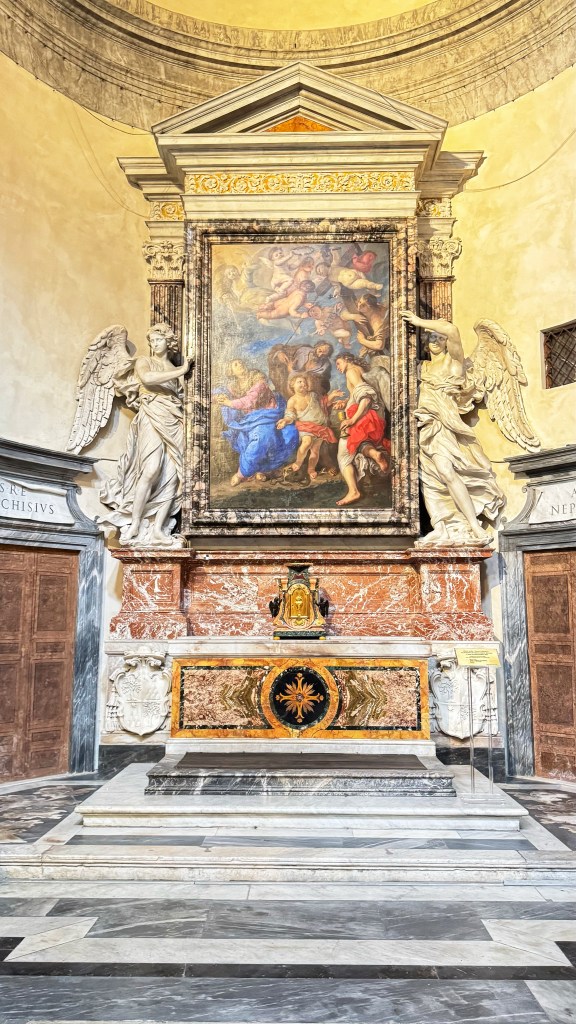
Over the following centuries, cardinals and noble families transformed this modestly scaled church into a sequence of private monuments, each reflecting its moment in Roman taste: from Pinturicchio’s quattrocento frescoes and the sculpted classicism of the choir tombs, to Raphael’s harmonious geometry, Caravaggio’s violent illumination, and Bernini’s exuberant ornament. The result is less a unified style than a living archive of artistic dialogue, where successive generations talked back to those who came before.
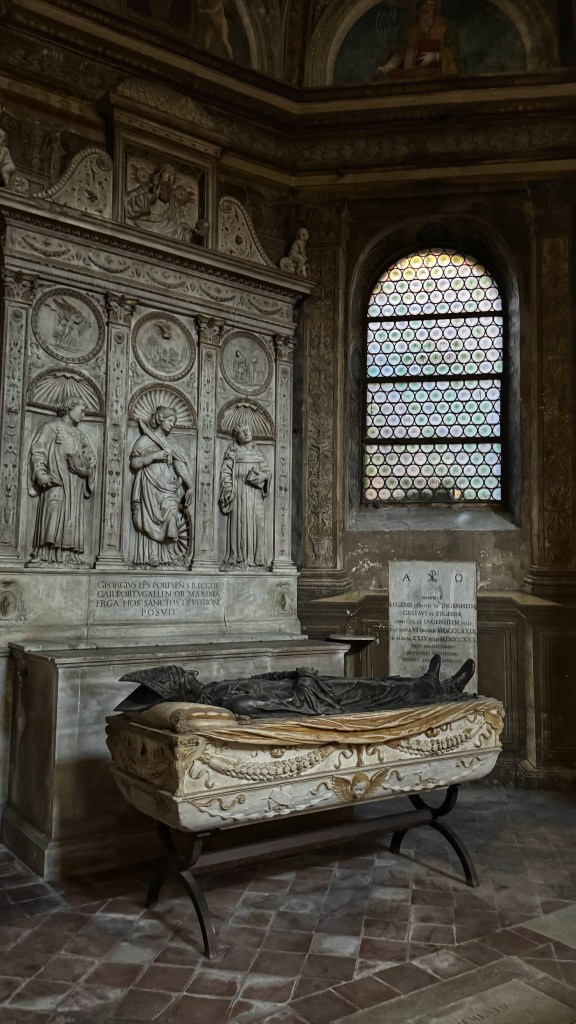
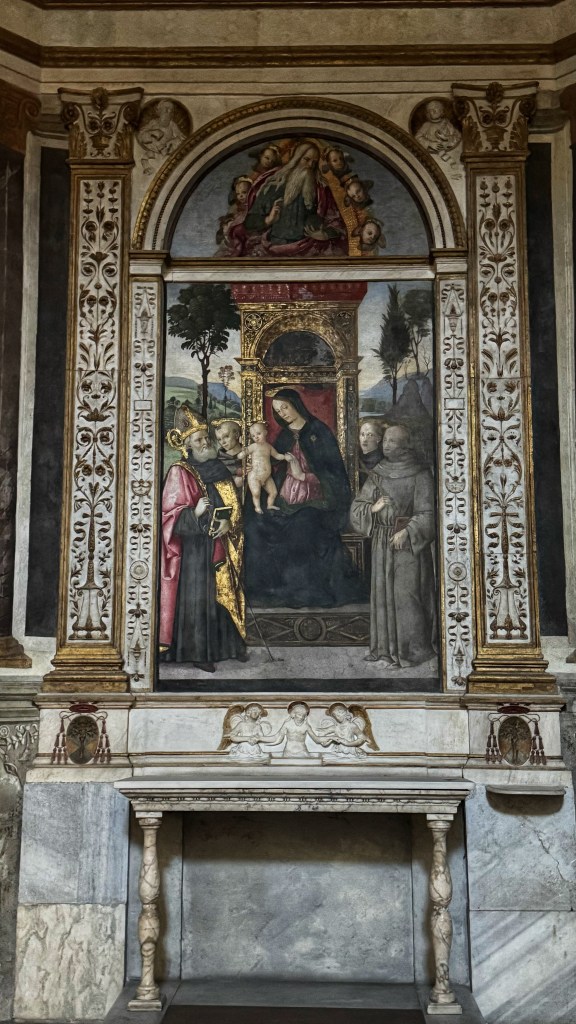
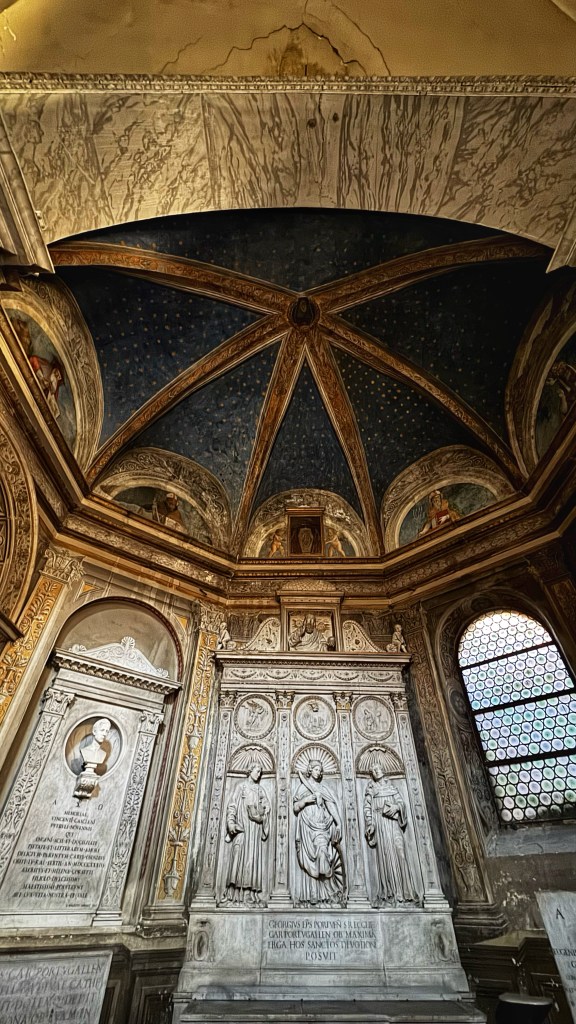
The Renaissance chapels preserve the calm geometry of the church’s original conception. The Della Rovere Chapel, commissioned by Cardinal Domenico della Rovere (c. 1442–1501) and painted by Pinturicchio (c. 1454–1513) in the late 1480s, still reflects the lucid linearity and brilliant colour of the early Renaissance. The Costa Chapel, completed around 1505 for the Portuguese Cardinal Jorge da Costa (c. 1406–1508), contains a marble dossal attributed to Gian Cristoforo Romano (c. 1465–1512), a tripartite aedicule framed by Corinthian pilasters and shell-headed niches whose stillness is defined by light rather than shadow. Around the same period, Pope Julius II (1443–1513) commissioned Donato Bramante (1444–1514) to redesign the choir, where Andrea Sansovino (c. 1467–1529) carved the monumental wall tombs of Cardinal Ascanio Sforza (1455–1505) and Cardinal Girolamo Basso della Rovere (1434–1507), their recumbent figures resting within deep arched recesses that draw equally on ancient sarcophagus types and the architectural language of the new church.
Raphael’s Chigi Chapel, begun in 1513 for the Sienese banker Agostino Chigi (1466–1520), extended this classical balance into a domed, centralised plan uniting sculpture and mosaic, the latter designed by Raphael himself and executed by the Venetian mosaicist Luigi de Pace . Yet Bernini’s completion of the chapel in the 1650s, undertaken for Pope Alexander VII (1599–1667), transformed stillness into movement. His additions, including the dramatically posed figures of Daniel and the Lion and Habakkuk and the Angel, introduced a theatrical energy that pulled the chapel’s restrained geometry into a new register.
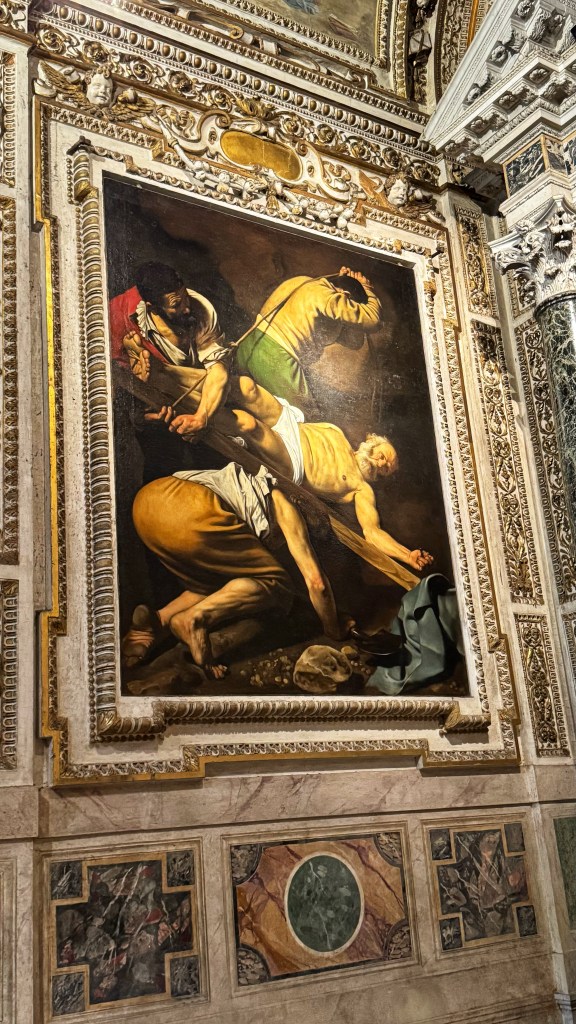
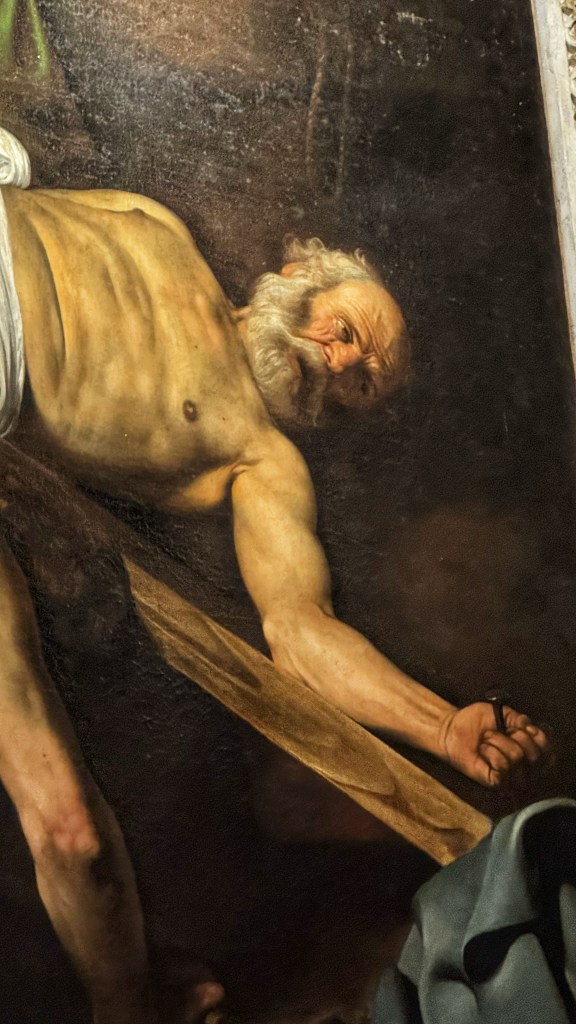
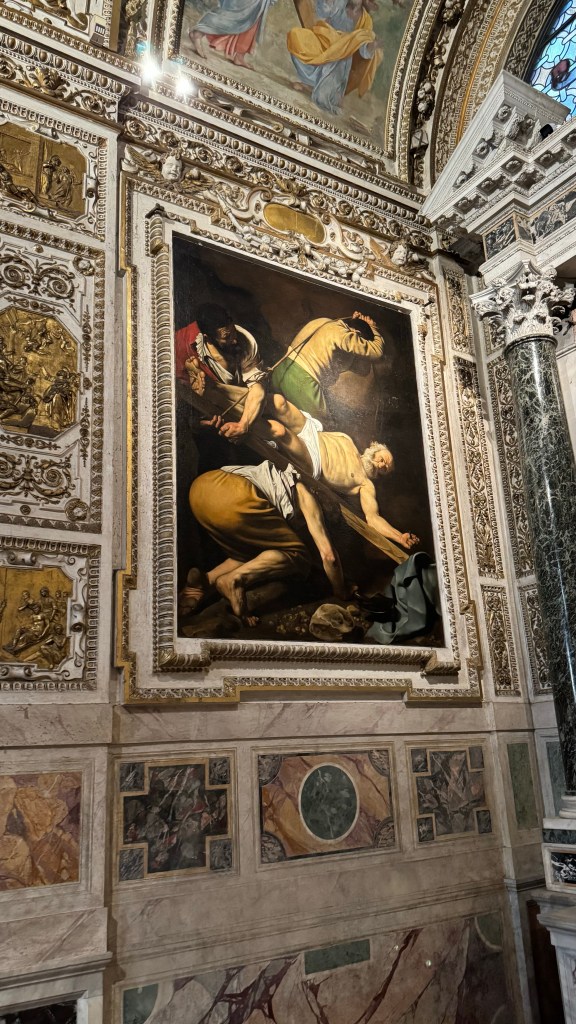
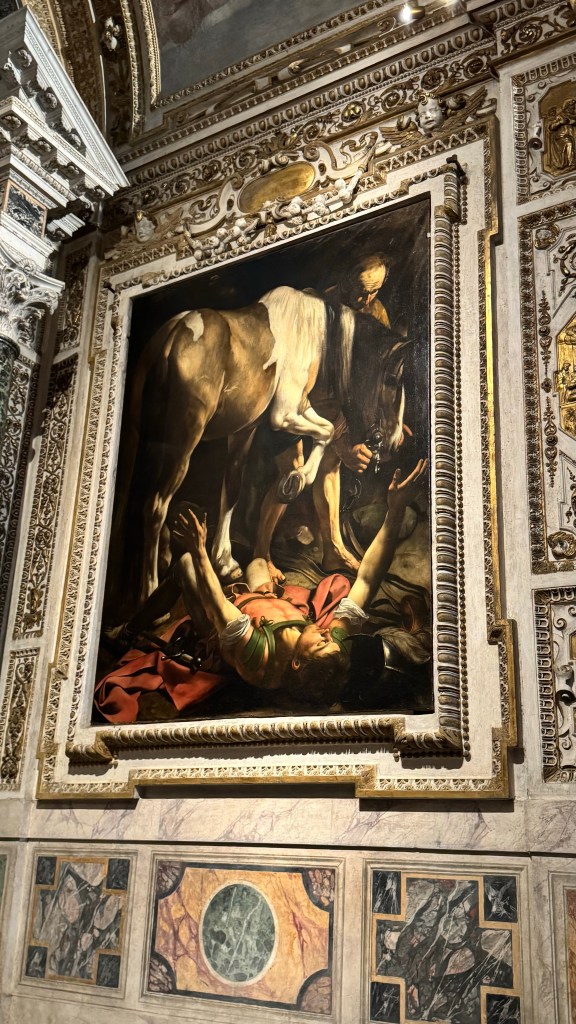
The rupture becomes most vivid in the Cerasi Chapel, where Caravaggio’s Conversion of Saint Paul and Crucifixion of Saint Peter (1600–1601) introduced a pictorial language so immediate that it seemed to violate the calm architecture around it. Commissioned by Tiberio Cerasi (c. 1544–1601), Treasurer General of the Apostolic Chamber, the chapel also houses an altarpiece by Annibale Carracci (1560–1609), whose Assumption of the Virgin occupies a more conventional idealism, and the contrast between the two painters only sharpens what Caravaggio was doing. In his canvases, light explodes from darkness, space collapses into the viewer’s field, and the sacred assumes the texture of the real. One might ask whether contemporaries, raised on the idealised balance of the late Renaissance, grasped the full scale of what had changed, or whether the shock took time to register. Giovanni Baglione (1566–1643), a rival painter and early biographer of Caravaggio, later described his manner as intensely naturalistic and striking in its contrasts of light and dark, acknowledging both its truth and its capacity to unsettle. Baglione’s account, published in his Le vite de’ pittori, scultori et architetti (1642) [The Lives of the Painters, Sculptors and Architects: from the Pontificate of Gregory XIII in 1572 to the Times of Pope Urban VIII in 1642], is coloured by personal animosity (the two men had clashed bitterly, including in court), and yet even through that hostility the force of Caravaggio’s achievement is legible.Within the same church that had once embodied composure and harmony, art now demanded confrontation.
The church remains a microcosm of Rome itself: a city built on renewal, where every act of preservation is also an act of transformation, and where the dialogue between order and invention has never ceased.
Giovanni di Stefano (active c. 1450–1506), Tomb of Cardinal Pietro Foscari, c. 1480, Marble, Costa Chapel (Chapel of Saint Catherine), Basilica of Santa Maria del Popolo, RomeCerasi Chapel, Basilica of Santa Maria del Popolo, RomeMichelangelo Merisi da Caravaggio (1571–1610), Crucifixion of Saint Peter, 1600–1601, Oil on canvas, 230 × 175 cm, Cerasi Chapel, Basilica of Santa Maria del Popolo, RomeMichelangelo Merisi da Caravaggio (1571–1610), Crucifixion of Saint Peter, 1600–1601, Oil on canvas, 230 × 175 cm, Cerasi Chapel, Basilica of Santa Maria del Popolo, RomeMichelangelo Merisi da Caravaggio (1571–1610), Crucifixion of Saint Peter, 1600–1601, Oil on canvas, 230 × 175 cm, Cerasi Chapel, Basilica of Santa Maria del Popolo, RomeMichelangelo Merisi da Caravaggio (1571–1610), Crucifixion of Saint Peter, 1600–1601, Oil on canvas, 230 × 175 cm, Cerasi Chapel, Basilica of Santa Maria del Popolo, RomeMichelangelo Merisi da Caravaggio (1571–1610), Crucifixion of Saint Peter, 1600–1601, Oil on canvas, 230 × 175 cm, Cerasi Chapel, Basilica of Santa Maria del Popolo, RomeMichelangelo Merisi da Caravaggio (1571–1610), Conversion of Saint Paul, 1600–1601, Oil on canvas, 230 × 175 cm, Cerasi Chapel, Basilica of Santa Maria del Popolo, RomeMichelangelo Merisi da Caravaggio (1571–1610), Conversion of Saint Paul, 1600–1601, Oil on canvas, 230 × 175 cm, Cerasi Chapel, Basilica of Santa Maria del Popolo, Rome Ercole Antonio Raggi (1624–1686), Cantoria dell’organo (right choir loft), 1656–1657, Marble and gilded wood, after a design by Gian Lorenzo Bernini (1598–1680), Basilica of Santa Maria del Popolo, Rome Bernardino Mei (1612–1676), The Holy Family with Angels and Symbols of the Passion, c. 1658, Oil on canvas, Basilica of Santa Maria del Popolo, Rome Basilica of Santa Maria del Popolo, 1472–1477, Rome, possibly designed by Baccio Pontelli (active c. 1470–1490) and Andrea Bregno (active c. 1460–1503), rebuilt under Pope Sixtus IVChigi Chapel, the Basilica of Santa Maria del Popolo, Rome Pasquale de’ Rossi (1641–1722), The Baptism of Christ, c.1674, Altarpiece for the Montemirabile Chapel, Basilica of Santa Maria del Popolo, Rome Pinturicchio (c. 1454–1513), Madonna and Child with Saints, 1488–1490, Fresco, Basso Della Rovere Chapel, Basilica of Santa Maria del Popolo, Rome Leonardo Sormani (active c. 1550–1590), Funeral Monument of Vincenzo Parenzi, c. 1585, Marble, Basilica of Santa Maria del Popolo, Rome The Costa Chapel (also known as the Chapel of Saint Catherine), c. 1505, Basilica of Santa Maria del Popolo, Rome. Commissioned by Cardinal Jorge da Costa (1406–1508), the chapel is situated in the south aisle of the basilica and contains Gian Cristoforo Romano’s marble Dossal of Saint Catherine of Alexandria, framed by Corinthian pilasters and shell-headed niches, along with frescoes attributed to Pinturicchio (c. 1454–1513)
References
Blunt, A. (2026) A Guide to Baroque Rome: The Churches. Edited by M. Erwee. 3rd edn. London: Pallas Athene
Dunlop, A. (2003) ‘Pinturicchio and the pilgrims: devotion and the past at Santa Maria del Popolo’, Papers of the British School at Rome, 71, pp. 259–285.Available at , https://www.jstor.org/stable/i40012730 (Accessed 18 Octobe 2025)
Murray, C. (2011) Blue Guide Rome. 9th ed. London: A. & C. Black
Shearman, J. (1961) ‘The Chigi Chapel in S. Maria del Popolo’, Journal of the Warburg and Courtauld Institutes, 24(3/4), pp. 129–160.Available at, https://www.jstor.org/stable/i230433 (Accessed 18 October 2025)
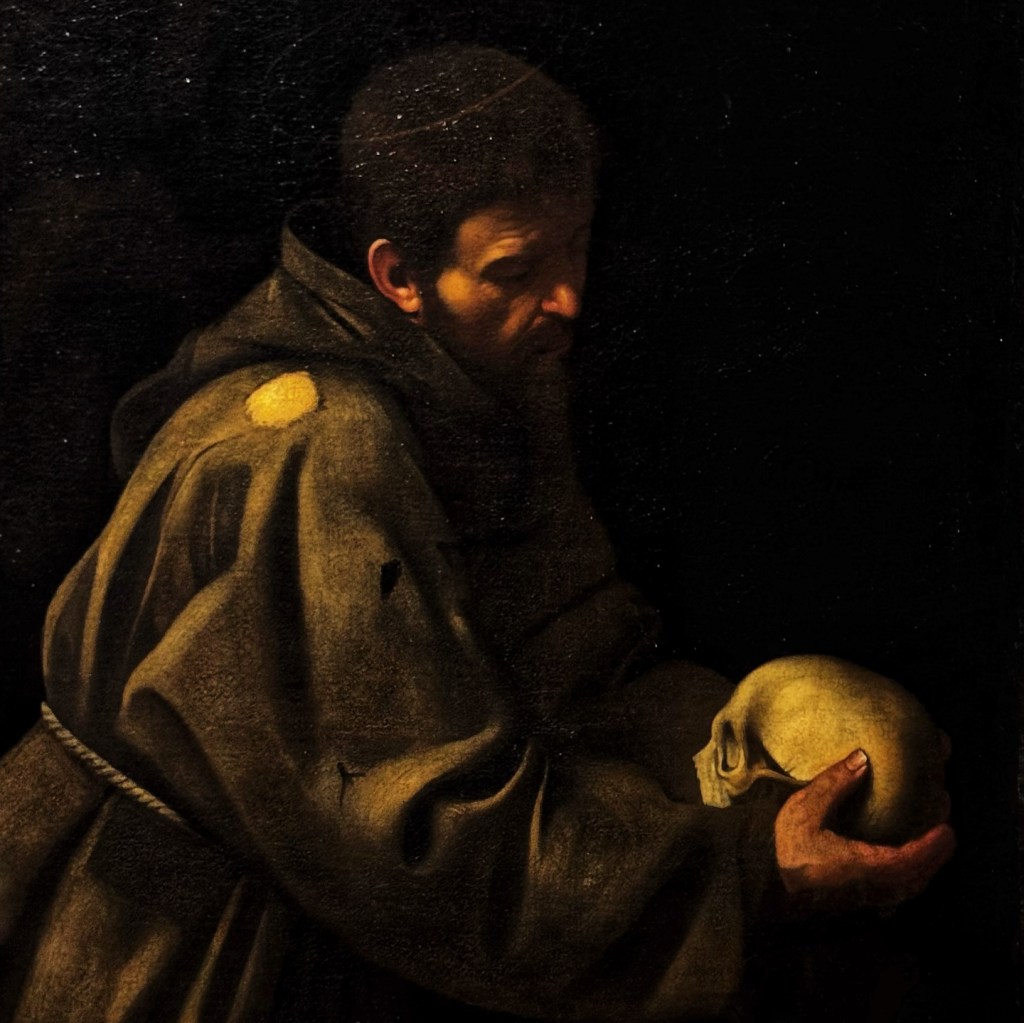
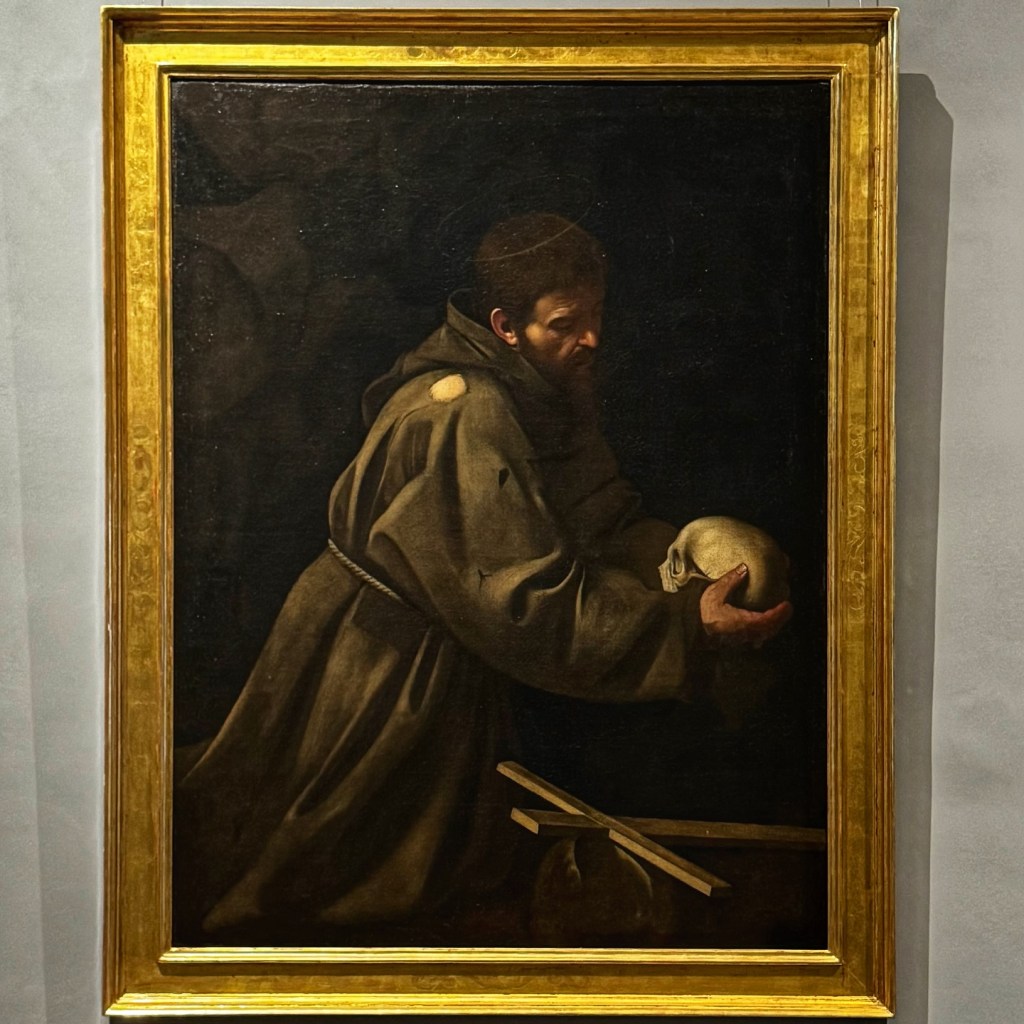
Michelangelo Merisi da Caravaggio (1571–1610), Saint Francis in Meditation, 1606, Oil on canvas, 125 × 93 cm, Galleria Nazionale d’Arte Antica, Barberini Collection, RomeMichelangelo Merisi da Caravaggio (1571–1610), Saint Francis in Meditation, 1606, Oil on canvas, 125 × 93 cm, Galleria Nazionale d’Arte Antica, Barberini Collection, Rome
The evening of 28 May 1606 had been building for some time. Caravaggio and Ranuccio Tomassoni (c. 1580–1606) were not strangers who fell into an argument: the animosity between them was longstanding, rooted in overlapping worlds of money, sex, and honour. Tomassoni was a young Roman man whose livelihood was partly organised around the prostitution trade — his protégée and sometime lover Fillide Melandroni (c. 1581–1618) had been one of Caravaggio’s regular models, the face he gave to the Old Testament’s Judith in the act of beheading Holofernes (Graham-Dixon,2010). Whether the two men were still in competition over Melandroni, or whether the dispute had turned on an unpaid gambling debt, or both, remains unresolved. What the documents confirm is that what happened near the pallacorda courts off the Campo Marzio was not a spontaneous brawl but something closer to a planned confrontation, a formal duel fought with seconds on both sides. Caravaggio was accompanied by his friend and associate the architect Onorio Longhi (c. 1568–1619). Tomassoni was joined by his brother Giovan Francesco and his brothers-in-law. When swords were drawn the fight involved multiple participants.
Caravaggio wounded Tomassoni in the groin and upper thigh, severing his femoral artery. The location of the wound has led some scholars to suggest an intention to castrate rather than simply kill, since wounds carried meaning in the honour culture of the period: a genital wound marked a dispute over a woman, a facial wound an insult to reputation. Whether that reading is correct, or whether Caravaggio was targeting the largest accessible blood vessel in a sword fight, cannot be determined. What is certain is that the barber-surgeon who examined the body filed a formal relazione, the standard legal document in papal Rome recording wounds as evidence, confirming death from the femoral artery. Tomassoni bled out. Caravaggio, seriously wounded about the head, fled.
That such detailed records survive is not accidental. Seventeenth-century Rome maintained an elaborate judicial bureaucracy — police logs, notarial records, barber-surgeons’ reports, court depositions — all filed in what is now the Archivio di Stato di Roma. A major archival exhibition in 2011 brought previously unknown documents into scholarly circulation, and Caravaggio’s file was substantial: between 1600 and 1606 he appeared in police records at least fourteen times. He was stopped for carrying a sword and dagger without a permit, arrested for throwing stones at policemen, accused of striking a Vatican notary from behind, sued for libel, and charged with assaulting a waiter who brought him artichokes dressed in butter rather than oil. The criminal record reads partly as comedy and partly as something grimmer. Rome in these years was a city in which street violence was ordinary and personal weapons were routinely carried. Popes periodically attempted to restrict the bearing of arms and largely failed. The question was not whether one went armed but whether one had the correct permit, and for men with patronage connections the permit question could usually be resolved. Cardinal Francesco Maria del Monte (1549–1626) had personally instructed the police that Caravaggio was authorised to carry weapons. The French Ambassador had secured his release in an earlier arrest. The system operated through clientelismo: what mattered was whose household you were associated with and how much trouble your patron was prepared to absorb.
The killing of Tomassoni was a different order of problem. A death sentence — bando capitale — was issued, authorising anyone who encountered Caravaggio to kill him and collect a reward. Del Monte’s intercessions could not reach this far. The Colonna family could, and did, provide immediate cover. Costanza Colonna (1554–1626), who had administered the Sforza-Colonna interests in the town of Caravaggio in Lombardy since her husband’s death, used her family’s feudal network to shelter the painter in a succession of estates south of Rome — Paliano, Marino, Zagarolo, Palestrina — while managing distractions in the capital. Caravaggio was in the hills, wounded, and carrying the knowledge that he had killed a man whose family and associates would not necessarily wait for the law’s convenience.
It was in these circumstances, almost certainly during the second half of 1606 while still under Colonna protection near the Aldobrandini estates at Carpineto Romano, that the painting was made. It was found there in 1968, in the church of San Pietro at Carpineto Romano, and attributed to the patronage of the Aldobrandini family, whose estates neighboured the Colonna strongholds where Caravaggio was sheltering. A restoration carried out in 2000, alongside a simultaneous examination of a closely related version at Santa Maria della Concezione in Rome, confirmed the autography of the Barberini canvas through the presence of numerous pentimenti — the revisions buried beneath the paint surface that mark an original working through a composition rather than a copy reproducing one. Even under extreme pressure, Caravaggio thought on the canvas.
Francis of Assisi (1181/82–1226) was not a subject Caravaggio came to only in 1606. Around 1595, during his years under Del Monte’s protection, he had painted Saint Francis of Assisi in Ecstasy (c. 1595, Wadsworth Atheneum, Hartford), an early and unusually tender work in which the saint, apparently unconscious, is supported by an oversized angel who steadies his body with something close to tenderness. That painting belongs to the register of supernatural encounter: the divine has arrived, the saint has been overwhelmed by it, and the event is the painting’s subject. Orazio Gentileschi (1563–1639) would testify in a 1603 libel trial that he had lent Caravaggio a monk’s robe and a pair of wings — the robe for a Francis, the wings for an angel — placing the two men’s studios in close conversation around Franciscan imagery in the early years of the century.
The 1606 Barberini painting removes the angel entirely. No wings, no supernatural encounter, no event. Francis kneels alone, his battered Franciscan habit marking the voluntary poverty of a man who has stripped himself of everything the world offers, and holds a skull with a concentration that is wholly interior. A crucifix lies below his hands, painted in sharp foreshortening, angled acutely toward the viewer and cut off by the picture frame as though the image has arrived mid-thought. A barely indicated rocky setting registers in the darkness to the left. A cypress tree, just visible, echoes the tree in the Corsini John the Baptist — a quiet compositional rhyme. Otherwise almost nothing. The darkness is not a backdrop but the painting’s condition: Francis emerges from it partially, the right cheek and the creased brow lit with particular care, as though Caravaggio has illuminated only what the meditation strictly requires.
The iconographic tradition Caravaggio enters with this work had been accumulating for three centuries. Francis was one of the most extensively represented saints of the Counter-Reformation, and for specific reasons. The Tridentine programme emphasised voluntary poverty, the imitation of Christ, and the physical lives of the saints as models of devotional discipline. Francis met all three requirements, and more: he had received the stigmata on La Verna in 1224, making him uniquely the alter Christus, the saint who bore Christ’s wounds in his own flesh rather than merely in image. The Church had at its disposal three standard pictorial formulas for the subject. The stigmatisation showed the supernatural event itself, Francis extending toward a seraph as the wounds arrived in fire or light. The ecstasy showed its aftermath, the saint swooning or unconscious, supported by an angel. The meditation showed the saint alone with a skull, a crucifix, or both, in the Hieronymite-Franciscan tradition of meditatio mortis — the deliberate contemplation of death as preparation for prayer and moral clarity.
Caravaggio had used the ecstasy formula in 1595 and now turned to the meditation. What he does with it is characteristically reductive. He removes every element the formula had accumulated through two centuries of workshop elaboration and leaves only what the image strictly requires: a man, a skull, and a cross. The skull is the memento mori, the object around which Franciscan and Jesuit devotional practice organised the individual’s confrontation with mortality. The crucifix at Francis’s feet carries a further charge: in the Gethsemane scene, Christ prays before the chalice, the symbol of the suffering he is about to undergo. Francis prays before the skull, the symbol of the death that his imitation of Christ demands. The visual parallel is exact and requires no theological annotation. The two objects — skull and cross — occupy the foreground in sharp focus while Francis’s face retreats toward darkness, which reverses the usual hierarchy of devotional painting, where the saint’s expression carries the image’s emotional weight. Here the meaning is distributed between the saint and the objects, and the viewer is placed in the same position as Francis, looking down at mortality from above.
In M: The Man Who Became Caravaggio, Peter Robb observed that Francis, alongside John the Baptist and Saint Jerome, forms a recurring trio in Caravaggio’s work, each a solitary male, young, mature, and old respectively, withdrawn from society into a condition of extremity.The observation carries weight as long as one does not reduce it to autobiography. Caravaggio returned to these subjects not simply because they mirrored his circumstances but because they gave him the formal conditions he most valued: a single figure, minimal setting, concentrated light, and an object or gesture on which the image’s entire argument rests. The Saint Francis in Meditation is an extreme version of this tendency. The composition is among the most austere things he ever produced, and it was produced in the most exposed circumstances of his life. Whether the correspondence between the painting’s stripping-away and the painter’s situation is causal or coincidental, both are operating at the same register of reduction. What remains when everything is removed is the question the painting poses, and it poses it without sentimentality or resolution.
References
Langdon, H. (1998) Caravaggio: A Life. London: Chatto and Windus
Robb, P. (1998) M: The Man Who Became Caravaggio. Sydney: Duffy and Snellgrove
Graham-Dixon, A. (2010) Caravaggio: A Life Sacred and Profane. London: Allen Lane
Hibbard, H. (1983) Caravaggio. New York: Harper and Row
Spike, J.T. (2001) Caravaggio. New York: Abbeville Press.
Schütze, S. (ed.) (2009) Caravaggio and His Circle in Rome. Exhibition catalogue. Munich: Hirmer