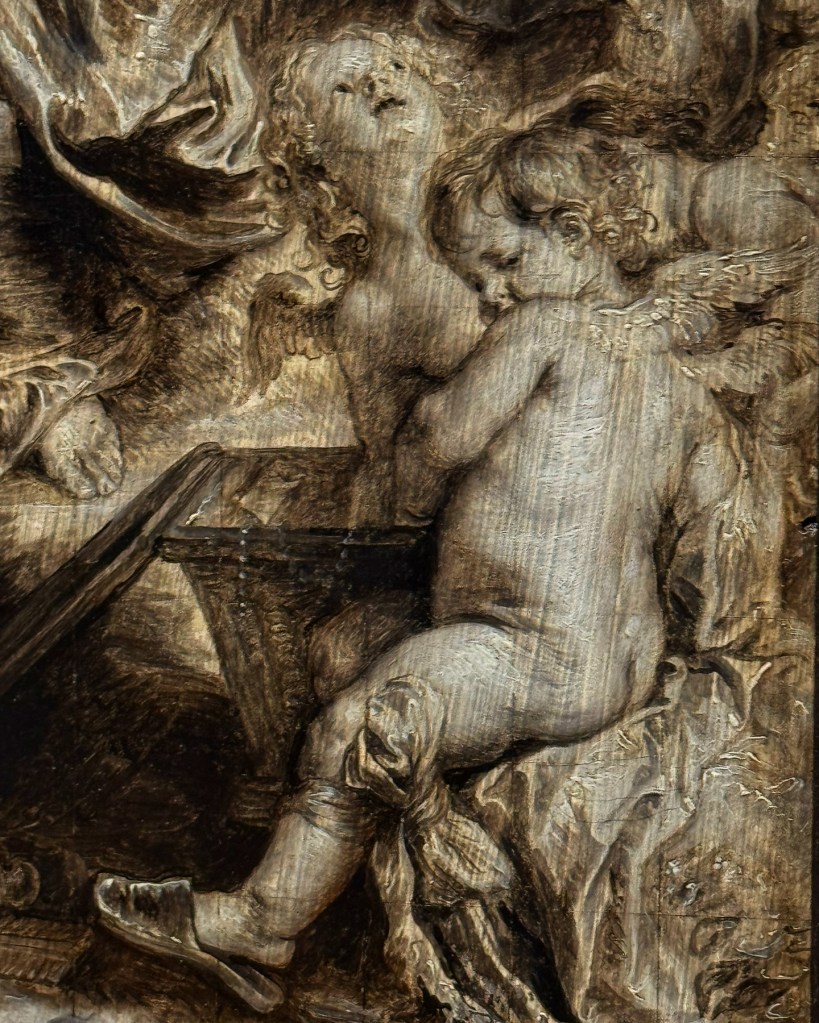
Antoon van Dyck (1599–1641), Carlo and Ubaldo See Rinaldo Conquered by Love for Armida, 1634–5, Oil on wood, 57 x 41.5 cm, The National Gallery, London
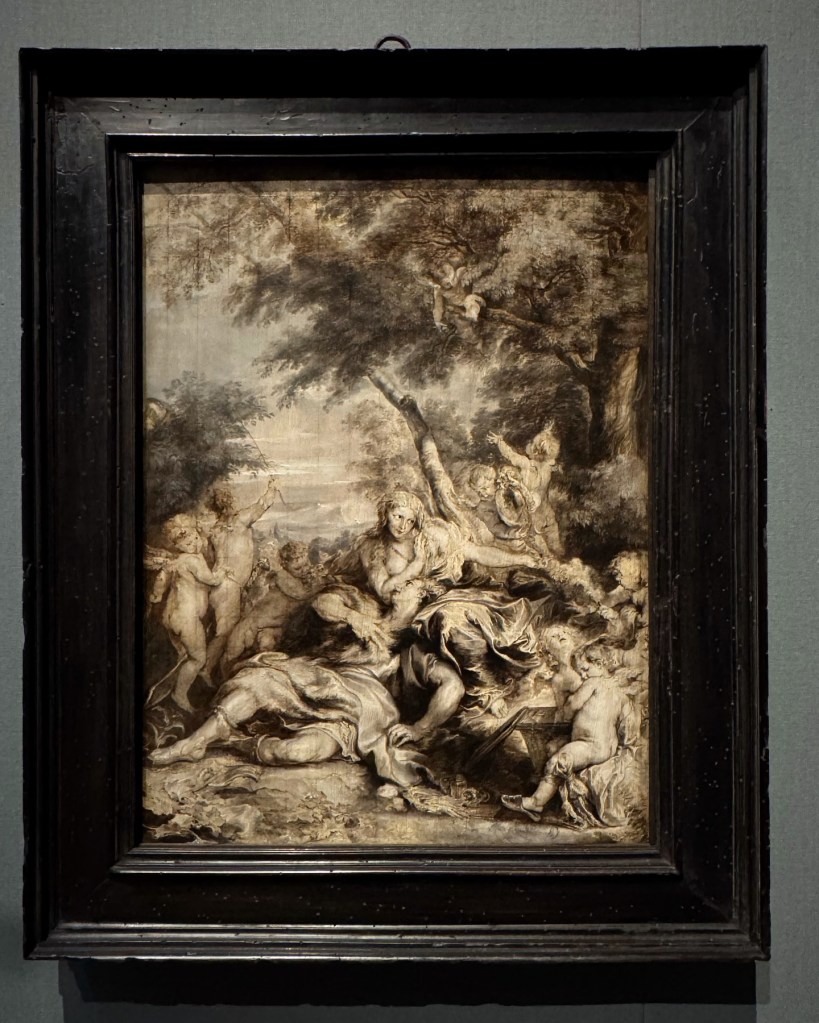
Van Dyck painted this work shortly before his permanent move to England. From Rubens he took strategy rather than style: the understanding that myth could serve politics, and that careful ambiguity could carry force without giving offence. Rubens showed him how to move within courts; Van Dyck learned to speak their language through restraint, allegory, and a beauty that was never merely decorative.
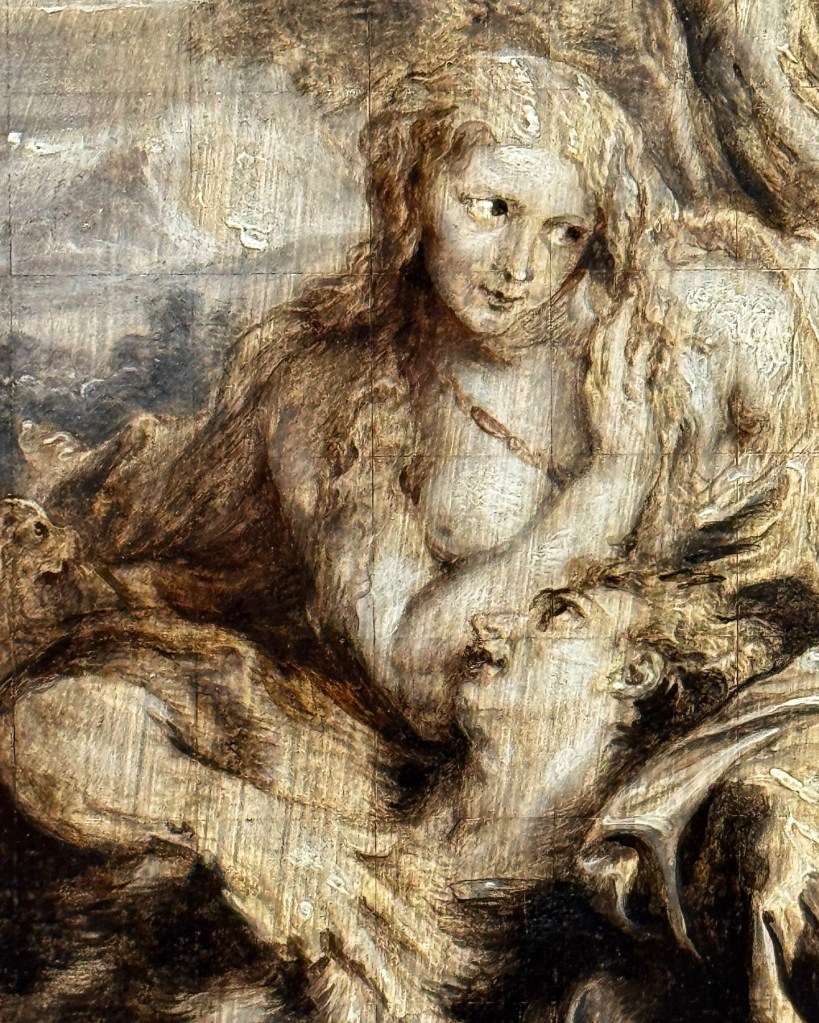
The subject comes from Torquato Tasso’s La Gerusalemme liberata (1581), an epic of Christian warfare, erotic entrapment, and spiritual crisis. Rinaldo, the young crusader, lies asleep in Armida’s arms. His mission in the First Crusade, the recapture of Jerusalem, has been forgotten under the spell of pleasure. Sent to destroy him, she has instead fallen in love, turning her task into a kind of willing captivity. Van Dyck captures the moment just before interruption: Rinaldo still entirely seduced, while Carlo and Ubaldo, his fellow knights, emerge quietly through the brush, signalled only by the glint of polished iron on the left.
Tasso’s poem has often been read as a clash between East and West, or as a morality tale of seduction and rescue. Van Dyck is drawn to something subtler: the texture of drift, how purpose slips away, how resolve softens, how a man forgets what he set out to do. The painting inhabits delay rather than decision, and asks to be taken in slowly. What matters is the held moment, the spell not yet broken, and the viewer caught, like Rinaldo, between staying and turning back.
Van Dyck’s Orient is quiet, domestic almost, stripped of any theatrical distance. Rinaldo lies entirely passive, his will surrendered as completely as his arms. Armida bends over him with something genuinely tender, her power rooted in what she withholds: time, duty, the promises he has stopped remembering. The danger is not cruelty but softness, and that is precisely what makes the scene linger.

References
Barnes, S.J., De Poorter, N., Millar, O. and Vey, H., 2004. Van Dyck: A Complete Catalogue of the Paintings. New Haven and London: Yale University Press